

Parenting has a far deeper impact on mental health than most people realise. A staggering 33 percent of parents report significant psychological strain, far higher than other adults. That sounds obvious, right? Actually, this stress is not just a burden carried by parents but an emotional ripple that profoundly shapes children too. These ties run in both directions and hold surprising power in every family.
Table of Contents
- What Is The Link Between Parenting And Mental Health?
- Why Mental Health Matters For Parents And Children
- How Parenting Styles Influence Mental Health Outcomes
- Understanding The Emotional Challenges Of Parenthood
- The Role Of Support Systems In Parenting And Mental Health
Quick Summary
| Takeaway | Explanation |
|---|---|
| Parental mental health impacts child development. | Parents’ emotional states significantly influence their children’s emotional and psychological well-being. |
| High stress levels are common among parents. | One-third of parents report substantial psychological strain, affecting their daily lives and family interactions. |
| Support systems are crucial for parental well-being. | Emotional, professional, and community support help parents manage stress and create a healthy family environment. |
| Parenting styles shape children’s emotional resilience. | Different approaches to parenting significantly affect children’s ability to regulate emotions and cope with challenges. |
| Self-care is essential for effective parenting. | Parents must prioritise their mental well-being to enhance their caregiving abilities and maintain healthy family dynamics. |
What is the Link Between Parenting and Mental Health?
Parenting represents a profound psychological journey that intricately connects with mental health, influencing both parents and children in complex and transformative ways. The relationship between parenting and mental wellness is not simply a one directional experience, but a dynamic interaction where emotional states, stress levels, and psychological well-being are constantly reciprocally exchanged.
The Psychological Dynamics of Parental Mental Health
Mental health in parenting extends far beyond traditional perceptions of child-rearing. Research from the U.S. Surgeon General reveals that parents consistently report higher stress levels compared to other adult populations, with 33% experiencing significant psychological strain. These elevated stress levels can manifest through various psychological symptoms:
- Increased anxiety and emotional exhaustion
- Potential development of depressive episodes
- Challenges in maintaining emotional regulation
- Reduced capacity for empathetic parental interactions
Intergenerational Impact of Parental Mental Wellness
Children are extraordinarily perceptive to their parents’ emotional landscapes. The psychological state of parents directly influences child development, creating what researchers call an “emotional transmission” between parent and child. When parents experience consistent mental health challenges, children may:
- Develop heightened sensitivity to emotional fluctuations
- Experience increased risk of developing their own emotional regulation difficulties
- Potentially inherit stress response patterns
Understanding these intricate connections allows parents to proactively manage their mental health, recognizing that their psychological well-being is not just a personal journey but a critical component of creating a nurturing family environment. Explore our guide on childhood brain development to understand more about how parental interactions shape young minds.
Why Mental Health Matters for Parents and Children
Mental health represents a critical foundation for overall family well-being, profoundly impacting both parental functioning and childhood development. Understanding its significance goes beyond recognizing symptoms, requiring a holistic approach to emotional and psychological resilience.
The Developmental Consequences of Parental Mental Health
Research from the National Center for Biotechnology Information highlights that children of parents experiencing mental health challenges face significantly higher risks of developing psychological and behavioral difficulties. The transmission of emotional patterns occurs through multiple interconnected mechanisms:
- Genetic predispositions to certain mental health conditions
- Learning emotional regulation through parental modeling
- Exposure to chronic stress environments
- Disrupted attachment and bonding processes
Psychological Resilience in Family Systems
Mental health is not merely an individual experience but a systemic interaction within family units. Parents who prioritize their psychological well-being create environments that support children’s emotional growth. Key aspects of this supportive ecosystem include:
- Developing healthy communication strategies
- Practicing emotional transparency
- Seeking professional support when needed
- Cultivating positive coping mechanisms
Understanding these dynamics allows families to create nurturing environments where mental wellness becomes a shared journey. Learn more about supporting childhood emotional development through intentional parental engagement and psychological awareness.
How Parenting Styles Influence Mental Health Outcomes
Parenting styles represent powerful psychological frameworks that fundamentally shape children’s emotional development, long-term mental health trajectories, and overall psychological resilience. Understanding these styles provides crucial insights into how early interactions create lasting psychological foundations.
The following table compares the most commonly discussed parenting styles highlighted in the article and summarises their reported impacts on children's mental health outcomes.
| Parenting Style | Key Characteristics | Impact on Child Mental Health |
|---|---|---|
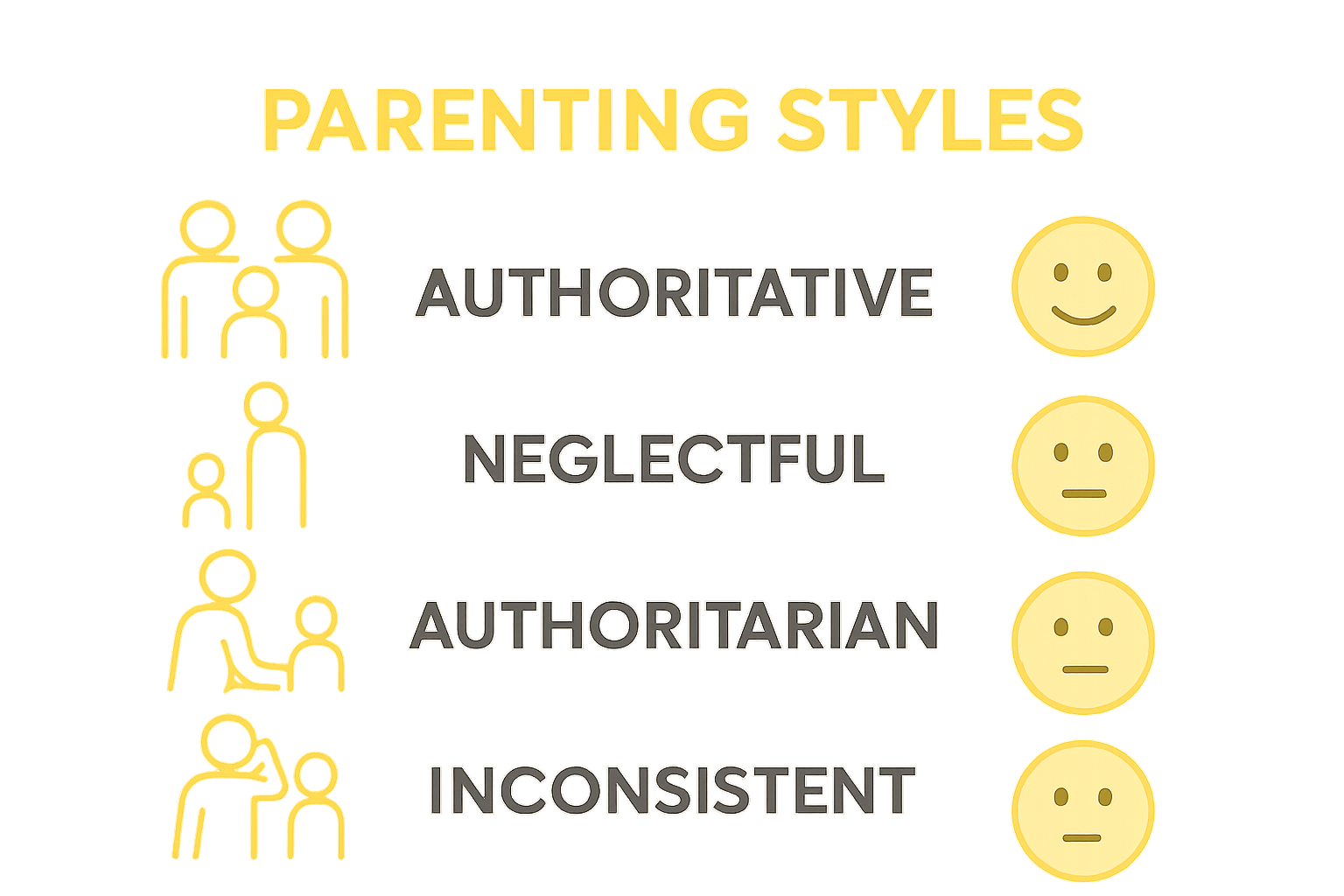
| Authoritative | Warmth, clear boundaries, supportive guidance | Associated with lower depression risks |
| Authoritarian | Strict rules, limited empathy, high expectations | May heighten anxiety symptoms |
| Neglectful | Lack of involvement, limited supervision | Increases vulnerability to mental health challenges |
| Inconsistent | Unpredictable discipline, mixed messages | Disrupts emotional regulation development |
Mapping Parenting Style Impacts
Research from systematic literature reviews reveals profound connections between parenting approaches and mental health outcomes. Different parenting styles demonstrate distinctly varied psychological impacts on children:
- Authoritative parenting correlates with lower depression risks
- Neglectful parenting increases vulnerability to mental health challenges
- Authoritarian approaches potentially heighten anxiety symptoms
- Inconsistent discipline disrupts emotional regulation development
Psychological Mechanisms of Parental Influence
Children absorb emotional patterns through complex neurological and psychological mechanisms. Parents essentially serve as primary emotional architects, constructing psychological frameworks through:
- Consistent emotional modeling
- Communication patterns
- Demonstrating stress management techniques
- Providing secure attachment environments
These interactions create neurological pathways that influence future emotional processing, relationship dynamics, and psychological resilience. Discover more about nurturing childhood emotional intelligence to understand how early experiences shape lifelong mental wellness.
Understanding the Emotional Challenges of Parenthood
Parenthood represents a profound emotional landscape where joy, exhaustion, love, and complexity intertwine, creating a nuanced psychological experience that challenges even the most resilient individuals. This journey involves navigating unprecedented emotional territories with limited preparation and constant adaptation.
The Psychological Complexity of Parental Stress
Research from the U.S. Surgeon General reveals a startling reality: 33% of parents report experiencing high stress levels, significantly higher than other adult populations. These emotional challenges manifest through multiple interconnected dimensions:
- Persistent feelings of inadequacy and self-doubt
- Continuous emotional and physical exhaustion
- Difficulty maintaining personal identity beyond parental roles
- Complex negotiations of personal expectations versus reality
Emotional Resilience and Adaptive Strategies
Successful navigation of parental emotional challenges requires developing robust psychological mechanisms. Parents must cultivate strategies that support their mental well-being while maintaining effective caregiving. Critical adaptive approaches include:
- Establishing clear emotional boundaries
- Practicing regular self-compassion
Learn more about supporting childhood emotional development and understanding the intricate emotional dynamics of parenting. Recognizing that emotional challenges are universal can help parents feel less isolated and more empowered in their journey.
The Role of Support Systems in Parenting and Mental Health
Support systems represent essential psychological scaffolding that enables parents to navigate the complex emotional landscape of child-rearing. These networks provide critical resources, emotional validation, and practical assistance that directly influence parental mental wellness and family dynamics.
This table organises the main types of parental support networks described in the article, highlighting their respective sources and examples of support they provide to parents.
| Support Network Type | Main Source | Example of Support Provided |
|---|---|---|
| Emotional Support | Partners, family members, friends | Listening, reassurance, shared responsibilities |
| Professional Mental Health | Counselors, therapists, health services | Therapy, advice, mental health interventions |
| Community & Parent Networks | Local groups, parenting organisations | Practical tips, shared experiences, social ties |
| Workplace Support | Employers, HR policies | Parental leave, flexible working arrangements |
| Digital Platforms | Online communities, apps | Forums, guidance, virtual peer support |
Dimensions of Parental Support Networks
Research from the U.S. Department of Health and Human Services underscores the critical importance of comprehensive support mechanisms. Effective support systems encompass multiple interconnected domains:
- Emotional support from partners and close family members
- Professional mental health resources and counselling
- Community networks and parental support groups
- Workplace policies supporting parental well-being
- Digital platforms offering parental guidance and connection
Transformative Impact of Collaborative Support
Support systems function as dynamic psychological buffers, helping parents process challenges, reduce isolation, and develop resilient coping strategies. These networks provide more than temporary relief they fundamentally reshape parental experience by:

- Normalizing emotional struggles
- Offering practical problem-solving strategies
- Creating spaces for vulnerability and authentic sharing
- Reducing stigma around parental mental health challenges
Explore strategies for nurturing childhood emotional intelligence and understand how comprehensive support systems contribute to holistic family well-being.
Strengthen Family Bonds and Nurture Mental Wellness with The Zoofamily
Are you looking for simple ways to improve your family’s mental well-being after learning how deeply parenting and mental health are connected? The article reveals how stress, emotional challenges, and communication struggles can shape your child’s long-term emotional development. At The Zoofamily, we understand how overwhelming it can feel to support your child’s growth while managing your own mental health too. Our mission is to create tools that foster meaningful connections through creativity and time in nature, both of which are proven to ease stress and inspire resilience in families.
Turn what you’ve learned about emotional connection into real-world change today. Discover The Zoofamily’s innovative kids’ cameras, walkie-talkies, and binoculars designed to spark curiosity, encourage healthy communication, and strengthen your child’s sense of wonder for the world. Each camera sold helps restore natural beauty for generations by planting a tree, giving you another reason to act now. Visit The Zoofamily to empower your family’s journey of mental wellness and joyful discovery, and explore more ways to make positive memories together.
Frequently Asked Questions
What are the impacts of parental mental health on children?
Parental mental health can significantly influence children’s emotional and psychological development. Children may develop heightened sensitivity to emotional fluctuations and face increased risks of emotional regulation difficulties if parents experience consistent mental health challenges.
How can parents improve their mental health while raising children?
Parents can enhance their mental well-being by practising self-compassion, establishing emotional boundaries, seeking professional support when needed, and developing positive coping mechanisms. Prioritising open communication and emotional transparency within the family is also beneficial.
What parenting styles are linked to better mental health outcomes for children?
Research indicates that authoritative parenting is associated with lower risks of depression in children, whereas neglectful parenting can increase vulnerability to mental health challenges. Authoritarian approaches may heighten anxiety symptoms in children, emphasizing the importance of adopting nurturing parenting styles.
How can support systems benefit parents dealing with stress?
Support systems provide essential emotional, practical, and psychological resources for parents, helping them navigate stress and reduce feelings of isolation. These networks facilitate authentic sharing, normalise emotional struggles, and contribute to overall family well-being.