

TL;DR:
- 97% of children in UK nature photography projects report a deeper connection with nature.
- Child-led photography fosters curiosity, patience, and a lifelong appreciation for the environment.
- Real European projects and competitions help children share and deepen their nature engagement.
A staggering 97% of children aged 8 to 10 who took part in UK nature photography projects reported deeper connection with the natural world, which directly challenges the idea that handing a child a camera pulls them away from nature. Children are naturally curious, but that curiosity needs a channel. Without one, a walk in the park becomes background noise. With one, a beetle under a leaf becomes the most fascinating thing in the world. Photography gives children a reason to stop, look, and wonder. This article explores how nature photography projects ignite curiosity and connection, with practical methods and real European examples to help you get started.
Table of Contents
- Understanding wonder and curiosity in children
- Practical tools and methodologies for inspiring wonder
- European nature photography projects and competitions
- Navigating challenges and boosting passion over perfection
- Why igniting wonder with photos works best when adults step back
- Explore more ways to nurture curiosity with The Zoofamily
- Frequently asked questions
Key Takeaways
| Point | Details |
|---|---|
| Child-led exploration | Letting your child lead the photography project sustains their curiosity and wonder most effectively. |
| Practical tools matter | Smartphones and simple cameras are accessible and encourage creativity in nature photography for children. |
| European competitions | Participating in workshops and competitions helps children deepen their connection with nature and gain confidence. |
| Reflection boosts learning | Journaling, portfolios, and explaining photo meaning allow children to engage more deeply with their discoveries. |
| Focus on passion | Prioritising enthusiasm and patience over perfection fosters lifelong curiosity and connection to nature. |
Understanding wonder and curiosity in children
Wonder is not a vague, poetic idea. It is a measurable state of heightened attention and openness to new information. When a child crouches down to photograph a spider spinning its web, something real happens in their brain. They slow down. They ask questions. They begin to notice things they would ordinarily walk past without a second glance.
Researchers have found empirical support for curiosity and wellbeing gains in child-led photography projects, even though there is no single benchmark for measuring wonder directly. What we do know is that the effects are consistent and meaningful. Children who engage in these projects report feeling more connected, more alert, and more enthusiastic about the natural world around them.
The role of questions is crucial here. Research shows that question-asking boosts curiosity and helps children place greater value on the information they discover, particularly those who are newer to a subject. When a child asks “Why does this flower only open in the morning?” after photographing it, they are not just being inquisitive. They are building the foundation for a lifelong relationship with learning.
You can support this at home in simple ways:
- Encourage open questions after every outing. Ask your child what surprised them most.
- Let children choose their subjects rather than directing every shot.
- Celebrate the ordinary. A close-up of a muddy boot can be as exciting as a robin on a branch.
- Create a photo journal where children write one sentence about why they took each image.
Exploring ecological photography for children is one of the most natural ways to bring this kind of learning into daily life. The benefits of kids’ cameras go well beyond taking pictures; they teach observation, patience, and a genuine appreciation for detail.
Having set the stage for what wonder is, we now explore the practical mechanics behind inspiring it with photos.
Practical tools and methodologies for inspiring wonder
With an understanding of curiosity, parents can use practical approaches to ignite wonder in even the most distracted child.
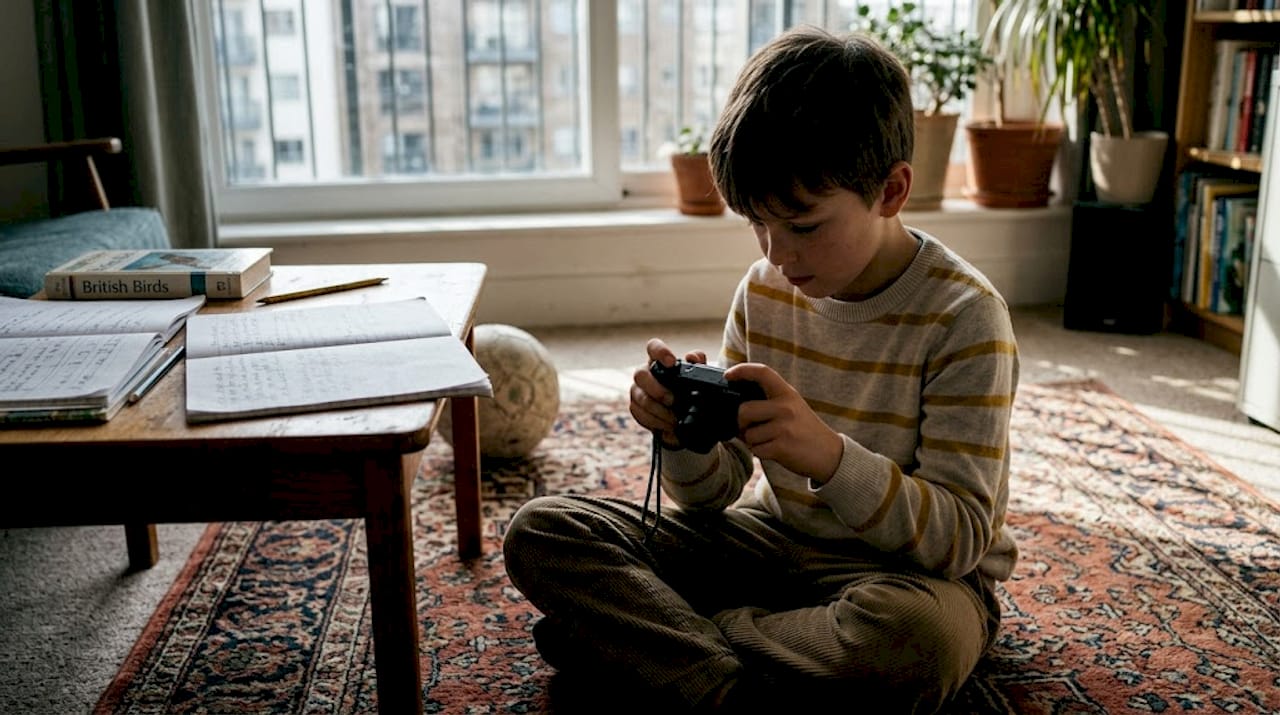
One of the most important distinctions in nature photography for children is the difference between child-led and parent-guided approaches. Child-led means your child chooses the subject, the angle, and the moment. Parent-guided means you set a loose theme or destination but allow freedom within it. Both work well, but the research consistently shows that children engage more deeply when they feel ownership over their work.
When it comes to tools, prioritise low-cost options like smartphones or entry-level digital cameras, and focus on integrating reflection and small exhibitions to build a deeper connection with the work. A macro lens attachment for a smartphone, often available for under ten pounds, can transform a garden into an entirely new world.
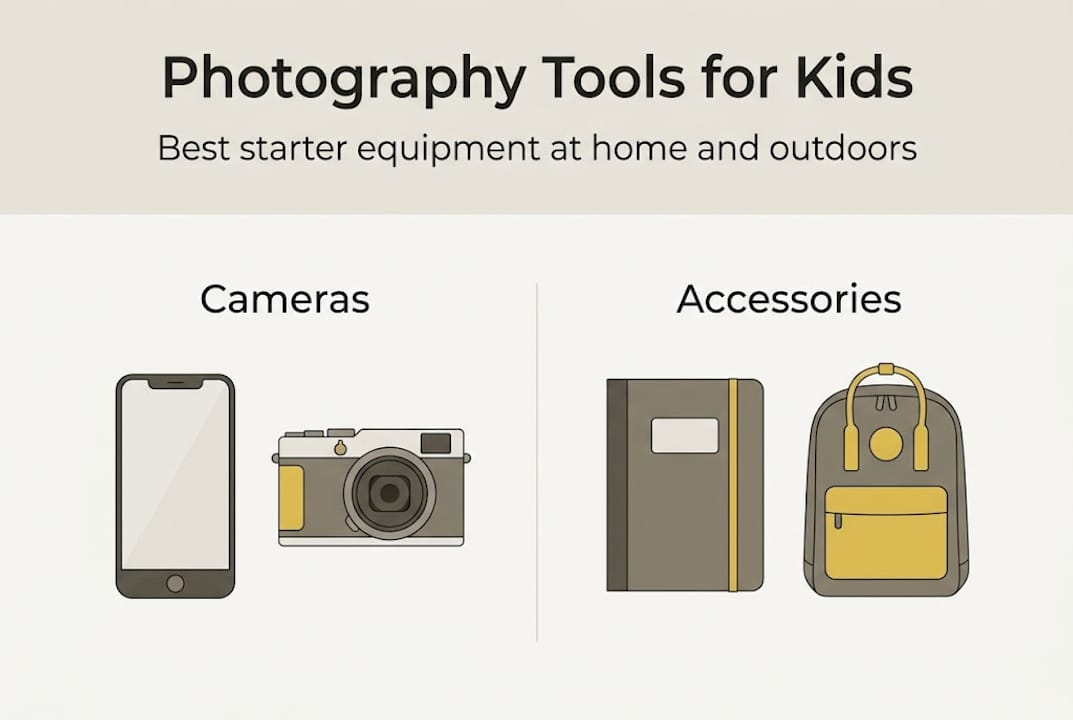
Here is a simple comparison to help you decide:
| Tool | Best for | Key advantage |
|---|---|---|
| Smartphone | Beginners aged 5 to 8 | Familiar, lightweight, easy to share |
| Entry-level digital camera | Ages 8 to 12 | Tactile experience, builds ownership |
| Macro lens attachment | Any age | Reveals hidden miniature worlds |
| Binoculars | Bird and wildlife spotting | Extends range without disturbing subjects |
A stepwise progression works brilliantly for keeping children engaged over time. Experts suggest starting in a backyard, then progressing to local trails, macro photography, night sky sessions, and eventually group workshops, always being careful never to disturb the natural subjects you find.
A practical four-step approach:
- Start close to home. Your garden or local park holds more subjects than you might expect.
- Introduce macro gradually. Let children get very close to flowers, insects, and bark textures.
- Try dawn or dusk outings. Light is softer and wildlife is more active at these times.
- Host a mini exhibition. Print five photos and let your child explain each one to the family.
Pro Tip: When photographing bugs with children, tell them to move slowly and breathe gently. Insects respond to sudden movement, and learning to be still is itself a profound nature lesson. You will find more outdoor photography tips on our blog to keep the momentum going.
European nature photography projects and competitions
These practical tools are often brought to life through real projects and competitions across Europe, giving children a genuine audience for their work.
One of the most inspiring UK examples is the Ridgeway workshops run in partnership with Alpkit Foundation. These sessions involved 390 children and produced remarkable results, with participants reporting dramatically shifted perspectives on the natural landscape around them. Many children who had walked the same paths for years suddenly saw them differently through a lens.
For children ready to share their work more widely, several major competitions are open across Europe:
- NHM Young Wildlife Photographer of the Year: One of the most prestigious wildlife photography competitions in the world, open to under-18s.
- BBC nature photography awards: Resources and competitions through BBC Teach, accessible via BBC nature photography resources.
- Nat Geo Kids competitions: Open to children aged 5 to 17, with NHM Young Wildlife Photographer categories designed specifically for younger entrants.
- British Wildlife Photography Awards: Celebrates UK-based talent and champions conservation through imagery.
- Rewilding Europe photography camps: Immersive outdoor experiences for young photographers focused on rewilded landscapes.
Urban children benefit especially from these experiences. When a child from a city estate captures a fox pausing under a street lamp and then sees that image displayed alongside photographs from rural children, something shifts. They realise that nature is not somewhere else. It is everywhere, including where they live.
| Competition | Age range | Focus |
|---|---|---|
| NHM Young Wildlife Photographer | Under 18 | Wildlife, any habitat |
| Nat Geo Kids | 5 to 17 | Nature, adventure, exploration |
| British Wildlife Photography Awards | Under 18 | UK habitats and species |
| Rewilding Europe camps | Varies | Rewilded European landscapes |
Pro Tip: Before entering any competition, encourage your child to choose their favourite image and explain in one sentence what made them take it. This reflection deepens the emotional connection to their work. Explore how nature photography creativity can be developed through this kind of structured reflection.
Navigating challenges and boosting passion over perfection
Despite enticing opportunities, parents and children must navigate real-world challenges with enthusiasm and flexibility. The biggest mistake most families make is expecting too much too soon.
Common challenges include:
- Poor light conditions: Overcast days, harsh midday sun, and low indoor light all require patience and experimentation.
- Impatience with subjects: Birds fly away. Butterflies land for one second. Learning to wait is genuinely hard for younger children.
- Night sky photography: Patience and understanding light are the most critical skills for night sky and macro photography, along with learning about the subjects you are hoping to find.
- Urban settings: Finding accessible green spaces can feel limiting, but even a window box or a crack in a pavement can host surprising wildlife.
- Pursuit of perfection: When children focus on technical quality too early, joy disappears quickly.
The antidote to most of these challenges is remarkably simple. Research into forest school and outdoor learning shows that unstructured free exploration consistently outperforms rigid lesson formats when it comes to igniting genuine curiosity. Child-led exploration avoids the over-structure pitfalls that cause enthusiasm to fade.
“The most memorable photographs children take are rarely the technically perfect ones. They are the ones that capture something the child genuinely noticed and cared about.”
For guiding animal photography for children, the approach is the same: model enthusiasm, offer loose guidance, and then step back. Let your child surprise you.
Pro Tip: Keep a “bloopers folder” alongside the portfolio. Children who laugh at their out-of-focus, half-eaten-by-shadow images are children who keep trying. Failure, framed lightly, becomes part of the adventure.
Why igniting wonder with photos works best when adults step back
Here is something that took us time to fully accept: the adult in the room can be the single biggest barrier to a child’s sense of wonder.
Not because parents are unhelpful, but because the instinct to teach, correct, and guide is so strong that it can crowd out the very thing we are trying to nurture. When a child is told how to frame a shot before they have had the chance to frame it badly themselves, we rob them of a genuine moment of discovery.
Research is clear that children value science more when they are encouraged to question freely, and that rigid lesson structures actively undermine natural exploration. Photography, uniquely, gives adults permission to step back. Your role is to model curiosity, point at interesting things, share your own sense of awe, and then hand over the camera.
The most powerful thing you can do is let your child photograph something you find completely unremarkable, and then ask them why they found it beautiful. Their answer will tell you everything about how alive their curiosity really is. Explore more ideas through nature photography for inspiring creativity and see what happens when children are genuinely in charge.
Explore more ways to nurture curiosity with The Zoofamily
If this article has sparked ideas for your next outing, we would love to help you take the next step. At The Zoofamily, we design tools and resources specifically for families who want to build a genuine connection between their children and the natural world.
From cameras built to survive muddy adventures to guides on making the most of every outdoor moment, we are here to make nature feel accessible and exciting for children across Europe. Every camera we sell funds the planting of a tree, because we believe that the children who fall in love with nature today are the ones who will protect it tomorrow. Discover the full kids camera benefits and find the perfect tool to bring your child’s curiosity to life.
Frequently asked questions
What camera or phone is best for children to start nature photography?
Simple smartphones or basic digital cameras are ideal, as low-cost tools encourage creative exploration without the pressure of expensive equipment. Focus on ease of use and durability above all else.
How do I help my child connect more deeply with nature using photography?
Allow child-led exploration, incorporate reflection through journalling and small home exhibitions, and encourage question-asking. Child-led methodologies that include slowing down and observing details produce the deepest connections.
Are there any inspiring photography competitions for children in Europe?
Yes, including NHM Young Wildlife Photographer of the Year, BBC nature photography awards, and Nat Geo Kids competitions open to children aged 5 to 17 across Europe.
What if my child loses interest or wants perfect photos?
Focus on passion and enthusiasm rather than technical quality. Open exploration and patience are the guiding principles that keep children engaged over the long term.
What are common challenges in nature photography projects for urban families?
Finding accessible natural areas and building patience with unpredictable subjects are the main hurdles, but starting in a backyard or local park is entirely sufficient to spark genuine wonder.
Recommended
- Initier à la photographie écologique pour enfants facilement – The Zoofamily
- Photographier lumières naturelles : guide pour mamans créatives – The Zoofamily
- Nature photography for kids: inspiring creativity – The Zoofamily
- Creative letter ideas for mothers to deepen bonds with kids – Letters to Mama