

For deep cleaning, hire a certified, low-residue hot-water extraction specialist rather than trust a bottle labelled “organic” or “natural”. This method lifts embedded soil without the toxic residue that concerns most parents, though low-moisture systems suit delicate fibres or households needing a quick return to use. DIY eco mixes work only for small spot jobs, and always after a patch test.
TL;DR:
- Choose a certified hot-water extraction specialist for deep cleaning, ensuring minimal residue and avoiding overly moist or poorly performed jobs.
- Opt for low-moisture or encapsulation methods for quick turnaround, but only as interim maintenance rather than annual deep cleans.
- Verify eco claims through genuine certifications like EPA Safer Choice, CRI Seal of Approval, or WoolSafe, and request test reports and SDS before booking.
- Use DIY eco methods like baking soda, mild soap, or vinegar only for small, contained stains, patch-testing first and avoiding mixing chemicals.
- Be cautious of over-wetting during cleaning, and always follow recommended drying times and safety protocols to prevent microbial growth and resoiling.
Table of Contents
- What are the main eco-friendly carpet cleaning methods?
- How do you choose an eco organic carpet cleaner?
- Can you clean carpets safely with DIY eco methods?
- Which certifications actually prove eco-friendly cleaning claims?
- What does eco organic carpet cleaning typically cost and take?
- What safety habits separate a good eco clean from a risky one?
- Why certified, low-residue methods matter most for family homes
- Complementary eco options from Thezoofamily
- Sources
- FAQ
What are the main eco-friendly carpet cleaning methods?
Certified hot-water extraction remains the benchmark for deep cleaning. It flushes hot water and a measured cleaning solution through the pile, then pulls it back out with strong suction, following the four principles the Carpet and Rug Institute (CRI) sets out for effective cleaning: dry-soil removal, soil suspension, extraction and drying. Done correctly, residue is minimal. Done badly, with too much solution and not enough suction, it leaves a sticky film that attracts new dirt within weeks.
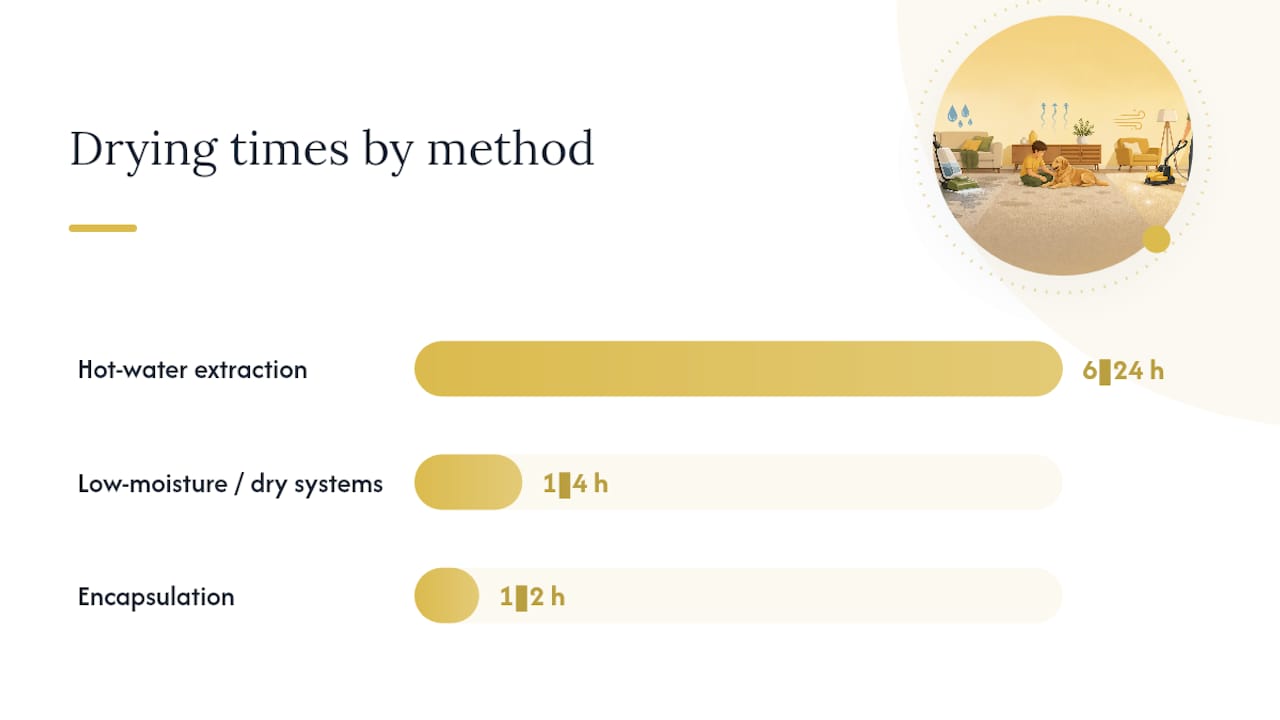
Low-moisture and dry-compound systems trade some depth for speed. They’re useful for wool carpets, rental properties, and households that cannot afford a room to be out of use for a day, but the CRI treats them as interim maintenance, not a substitute for periodic deep extraction. Encapsulation, a dry-compound method, crystallises soil for vacuuming afterwards, using little water and leaving less residue when applied with proper care.
Pet-odour restoration is its own category. Surface cleaning rarely solves urine contamination that has reached the pad or subfloor.
| Method | Soil removal | Residue risk | Drying time |
|---|---|---|---|
| Hot-water extraction | Deep, embedded soil | Low if measured correctly | 6 to 24 hours |
| Low-moisture/dry systems | Surface soil only | Variable | 1 to 4 hours |
| Encapsulation | Surface to moderate | Low if applied correctly | 1 to 2 hours |
| Pet-odour restoration | Depends on contamination depth | Depends on treatment | Varies, sometimes requires pad replacement |
- Choose hot-water extraction for annual deep cleans or before allergy season.
- Choose low-moisture methods when carpets must be back in use within hours.
- Choose pet-odour restoration only from a cleaner willing to inspect the backing first.
How do you choose an eco organic carpet cleaner?
The label “eco organic carpet cleaning” means little without proof to back it. What separates a genuinely low-impact service from clever marketing is certification, method transparency, and a willingness to put safety terms in writing.
- Ask whether products carry recognised certification, such as EPA Safer Choice, a CRI Seal of Approval, or WoolSafe approval for wool carpets.
- Confirm the technician assesses fibre type and backing condition before choosing a method.
- Check that pre-vacuuming is standard practice, not an optional extra.
- Request the exact dilution ratio being used, not a vague “eco-friendly solution” answer.
- Ask for an estimated drying time and a written re-entry rule for children and pets.
- Ask how wastewater is handled and disposed of.
Request the product name and its Safety Data Sheet (SDS) before booking. A cleaner confident in their process will hand this over without hesitation.
Pro Tip: Ask what happens if the carpet is still damp after 24 hours. A reliable cleaner has a stated re-treatment policy; a vague “it should be fine” answer is a warning sign.
Overconcentrated solutions leave residue that speeds up resoiling, according to CRI guidance, which is the opposite of what an eco-conscious household wants.
Can you clean carpets safely with DIY eco methods?
Small, contained jobs, a juice spill, a muddy paw print, respond well to DIY organic upholstery cleaning methods, provided you patch-test first on an inconspicuous corner and let it dry fully before judging the result.
- Baking-soda freshener: sprinkle plain baking soda over the area, leave for at least 15 minutes, then vacuum thoroughly. Good for odour, not for set-in stains.
- Mild soap solution: mix a teaspoon of unscented dish soap with a cup of warm water, dab (don’t scrub) with a clean cloth, then blot dry.
- Vinegar rinse: for some water-based stains, a diluted white vinegar solution can help lift residue after the soap step, but never apply it directly to wool.
Trusted DIY recipes exist for good reason, but they demand restraint: measured amounts, no soaking, and patience while the fibre dries. Never mix bleach with vinegar or any acidic ingredient, and never add homemade mixtures to a rented extractor. It can void the manufacturer’s guidance and leave a residue that draws in fresh soil, according to CRI.
Pro Tip: If you’re renting an extractor, follow the manufacturer’s dilution chart exactly and run at least one dry pass at the end. Skipping that step is the single biggest cause of lingering damp smell.
Stop and call a professional when the stain covers more than a small patch, when there’s any biological contamination (vomit, urine, sewage backup), when the backing feels saturated rather than just the surface pile, or when odour persists after full drying. These are jobs for specialist pet-odour restoration or full extraction, not a spray bottle.
Which certifications actually prove eco-friendly cleaning claims?
Verifiable labels matter more than adjectives. EPA Safer Choice ties ingredient safety evaluation to actual performance testing for carpet cleaners, and it accepts CRI or WoolSafe testing as equivalent evidence of cleaning efficacy. That’s a meaningful detail: Safer Choice doesn’t just check what’s in the bottle, it checks whether the product actually cleans, using recognised test methods including HCPA DCC-03 and AATCC 171-1995.
The CRI Seal of Approval and WoolSafe approval work as performance and fibre-compatibility signals rather than “green” claims on their own. A product can be non-toxic and still perform poorly, which is exactly the gap these labels are designed to close.
- Ask for the specific test report or certificate number, not just a logo on the label.
- Cross-check the product name against the certifying body’s published list.
- Be wary of terms like “natural” or “organic” used without any accompanying certification.
What does eco organic carpet cleaning typically cost and take?
Pricing usually follows a per-room or per-square-metre structure, with common extras for furniture moving, stairs, and heavy spot treatment. Many companies also apply a minimum call-out charge for small jobs.
Drying time depends on the method: hot-water extraction commonly needs 6 to 24 hours, while low-moisture or encapsulation methods can return a room to use in 1 to 4 hours. That gap matters directly for pet and child re-entry, since a damp carpet left unventilated can support microbial growth and prolong VOC off-gassing.
- A written quote should name the exact product and link its SDS.
- It should state an expected drying window, not just “a few hours.”
- It should include a guarantee or re-treatment policy if resoiling appears early.
What safety habits separate a good eco clean from a risky one?
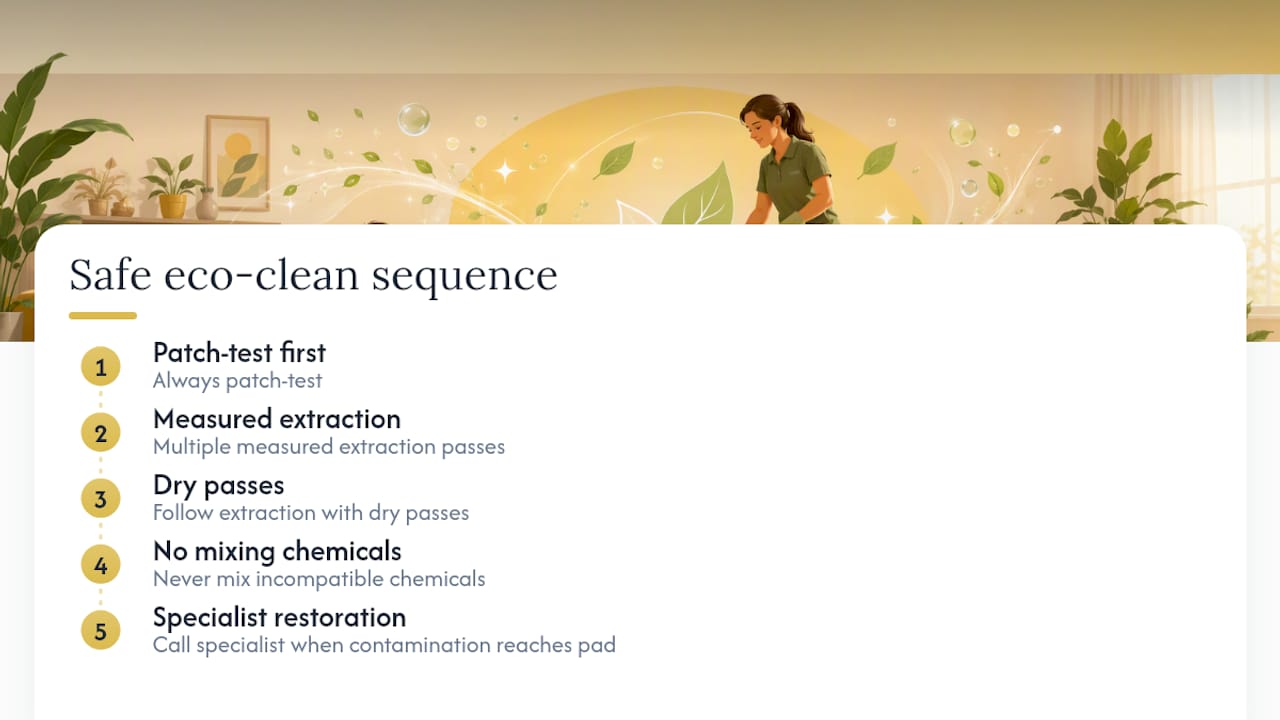
Over-wetting is the most common failure in both DIY jobs and rushed professional work. Multiple measured extraction passes followed by dry passes keep moisture out of the backing and lower microbial risk, per CRI. Always patch-test, never mix incompatible chemicals, and call in specialist restoration once contamination reaches the pad.
Why certified, low-residue methods matter most for family homes
For homes with children crawling on the floor and pets sleeping on the rug, the gap between “eco-friendly” as a slogan and as a verified practice is not academic. Certification and measured application protect health and extend carpet life; a residue-heavy job just looks clean while quietly resoiling faster. Follow the checklist and DIY notes above and you’ll rarely need to guess.
— ALAIN
Complementary eco options from Thezoofamily
Hiring a certified cleaner or running a careful DIY spot-treatment covers the deep-clean side of things, but day-to-day upkeep is where good habits actually protect your carpets between professional visits. Thezoofamily’s household content and product range sit alongside that work rather than replacing it.

Our guide to eco-friendly mops explains how to pick low-residue tools for everyday spills, and our cleaning tips for busy European mums covers quick, low-impact routines that fit around family life. If you want the fuller picture on ingredient choices and verification, our guide to sustainable cleaning breaks down what to look for beyond marketing labels, the same principle covered in the certifications section above.
Beyond cleaning advice, Thezoofamily designs animal-themed products that get children curious about nature rather than glued to a screen, from the Zoo Friends and Urban Zoo camera ranges to walkie-talkies and binoculars for outdoor play, and for every camera sold, a tree gets planted. If a cleaner household nudges you toward more nature-focused choices for your family generally, browse the full range and find a gift that keeps kids outside instead of on the carpet.
Sources
Before booking anyone, verify their claims against recognised standards rather than taking a leaflet at face value.
- EPA Safer Choice and Design for the Environment (DfE) criteria
- How to make a DIY carpet cleaner — Martha Stewart
Ask any provider to send their SDS and certification references before you confirm a booking. A cleaner with nothing to hide will send them within minutes.
FAQ
How can I clean my carpet without toxic chemicals?
Use certified, low-residue products from a provider recognised under EPA Safer Choice or the CRI Seal of Approval, which link ingredient safety to actual cleaning performance. For small spot jobs, baking soda, diluted mild soap, and a patch-tested vinegar rinse handle most everyday marks safely.
What is the best natural solution for cleaning carpets?
There’s no single best mix, since it depends on the stain and fibre, but a mild soap solution followed by blotting works for most water-based marks, and baking soda handles odour well. Always patch-test first and never mix vinegar with bleach.
What is the best carpet cleaner on the market in the UK?
The strongest choice is whichever service or product carries verifiable testing, such as a CRI Seal of Approval or WoolSafe approval, rather than a specific brand name. Ask any UK provider for their product name and SDS before booking so you can check certification yourself.
What is the most eco-friendly cleaner?
The most eco-friendly option is a certified, low-residue product used at the correct dilution, since overconcentrated “green” solutions still leave residue that speeds up resoiling. Look for Safer Choice recognition backed by CRI or WoolSafe testing rather than trusting the word “eco” alone.