

Did you know that children who learn outside show stronger creative thinking and higher academic achievement than those in traditional classrooms? Outdoor learning transforms education by turning nature into an active, sensory-rich classroom. This approach fuels curiosity, builds confidence, and helps kids become better problem solvers. Discover how creative outdoor experiences support not just academic success, but emotional growth and lifelong love of learning.
Key Takeaways
| Point | Details |
|---|---|
| Transformative Education | Creative learning outdoors shifts education beyond the classroom, using nature as an interactive space to foster curiosity and imaginative learning. |
| Benefits of Outdoor Learning | Engaging with natural environments enhances cognitive, emotional, and social development, supporting skills such as critical thinking and problem-solving. |
| Diverse Learning Approaches | Methods like Forest School and Garden-Based Learning offer unique, holistic strategies that promote independence, teamwork, and environmental literacy. |
| Emphasis on Safety | Effective outdoor learning involves smart risk management, ensuring safety while allowing children to explore and gain valuable experiences. |
Table of Contents
- Defining Creative Learning Outdoors For Kids
- Popular Outdoor Activities And Approaches
- Essential Tools And Resources For Outdoor Play
- Safety, Supervision, And Legal Considerations
- Maximizing Nature Connections For Child Development
Defining Creative Learning Outdoors for Kids
Creative learning outdoors transforms traditional education by shifting classrooms beyond four walls into vibrant, dynamic natural environments where children explore, discover, and grow. Nature becomes the ultimate classroom - a living, breathing space that nurtures curiosity and sparks imaginative learning experiences.
According to a systematic review published in Springer, spending time in natural settings profoundly impacts children’s development. The research reveals multiple benefits, including:
- Enhanced creative thinking skills
- Improved critical problem-solving abilities
- Reduced symptoms associated with attention challenges
- Increased academic performance
- Better overall cognitive and emotional wellbeing
Forest School pedagogy exemplifies this approach perfectly. As documented in educational research, this innovative learning style integrates hands-on woodland experiences that build crucial life skills. Children aren’t just learning academic concepts - they’re developing independence, teamwork, and practical problem-solving abilities through direct engagement with their natural surroundings. Read our comprehensive guide on making learning fun to understand how outdoor environments can transform educational experiences.
Ultimately, creative learning outdoors is about reimagining education as an immersive, interactive journey. It’s about transforming learning from a passive, structured activity into an adventurous exploration that connects children with the world around them, fostering a lifelong love of discovery and understanding.
Popular Outdoor Activities and Approaches
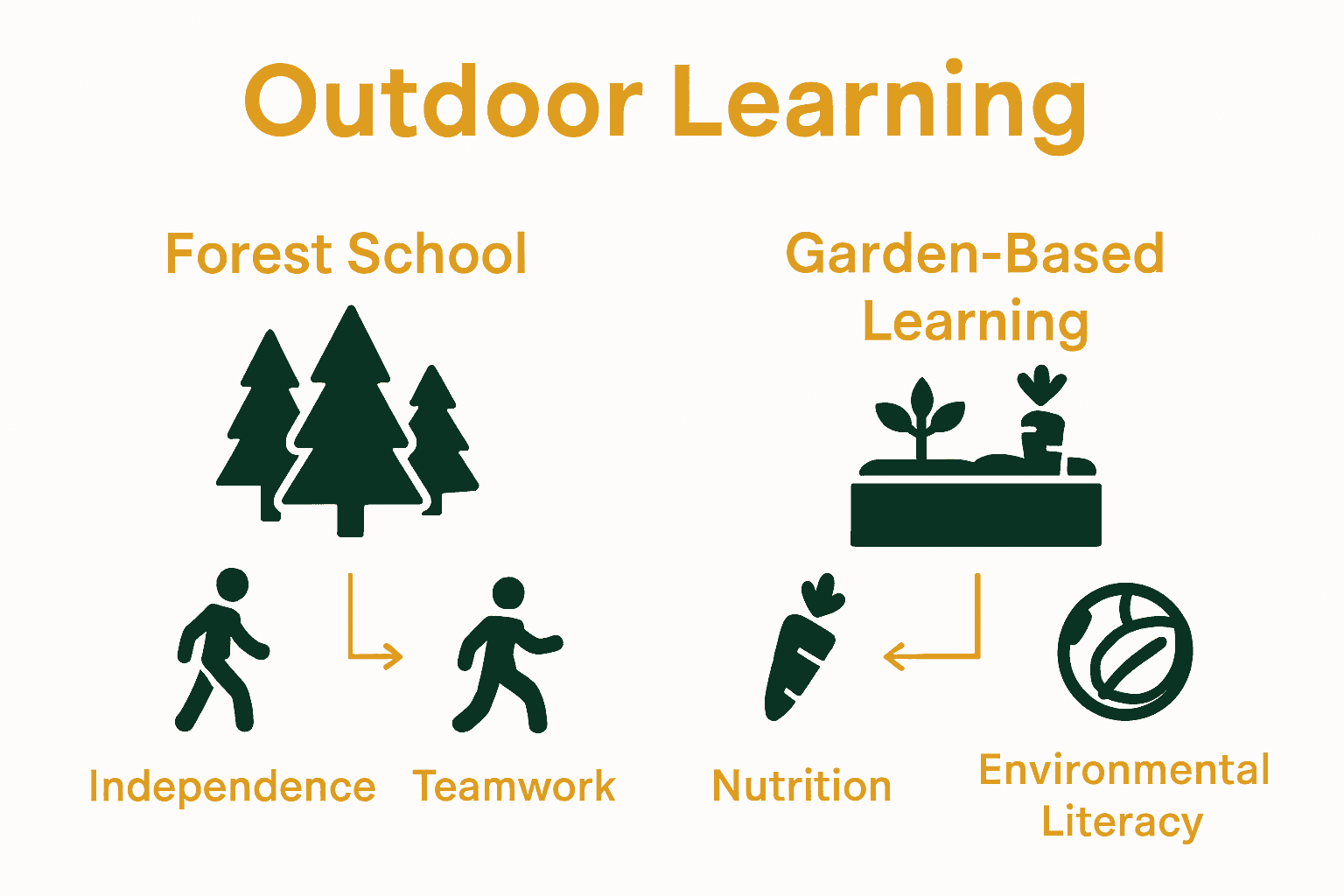
Here’s a comparison of the two leading outdoor learning approaches discussed:
| Approach | Learning Focus | Key Benefits |
|---|---|---|
| Forest School | Hands-on woodland activities Cross-curricular |
Independence Teamwork Ecosystem understanding |
| Garden-Based Learning | Garden-centred exploration Multidisciplinary |
Nutrition awareness Environmental literacy Life skills |
Outdoor learning offers diverse approaches that transform education into an engaging, immersive experience for children. Two prominent models stand out for their innovative and holistic educational strategies: Forest School and Garden-Based Learning.
According to research, Forest School is a remarkable outdoor education model that goes far beyond traditional classroom learning. As documented in educational studies, this approach enables children to engage in cross-curriculum, hands-on learning directly within forest environments. Key features include:
- Fostering personal independence
- Building self-esteem and confidence
- Developing robust teamwork skills
- Creating deep ecosystem understanding
- Integrating complex subjects like mathematics and communication through nature-based experiences
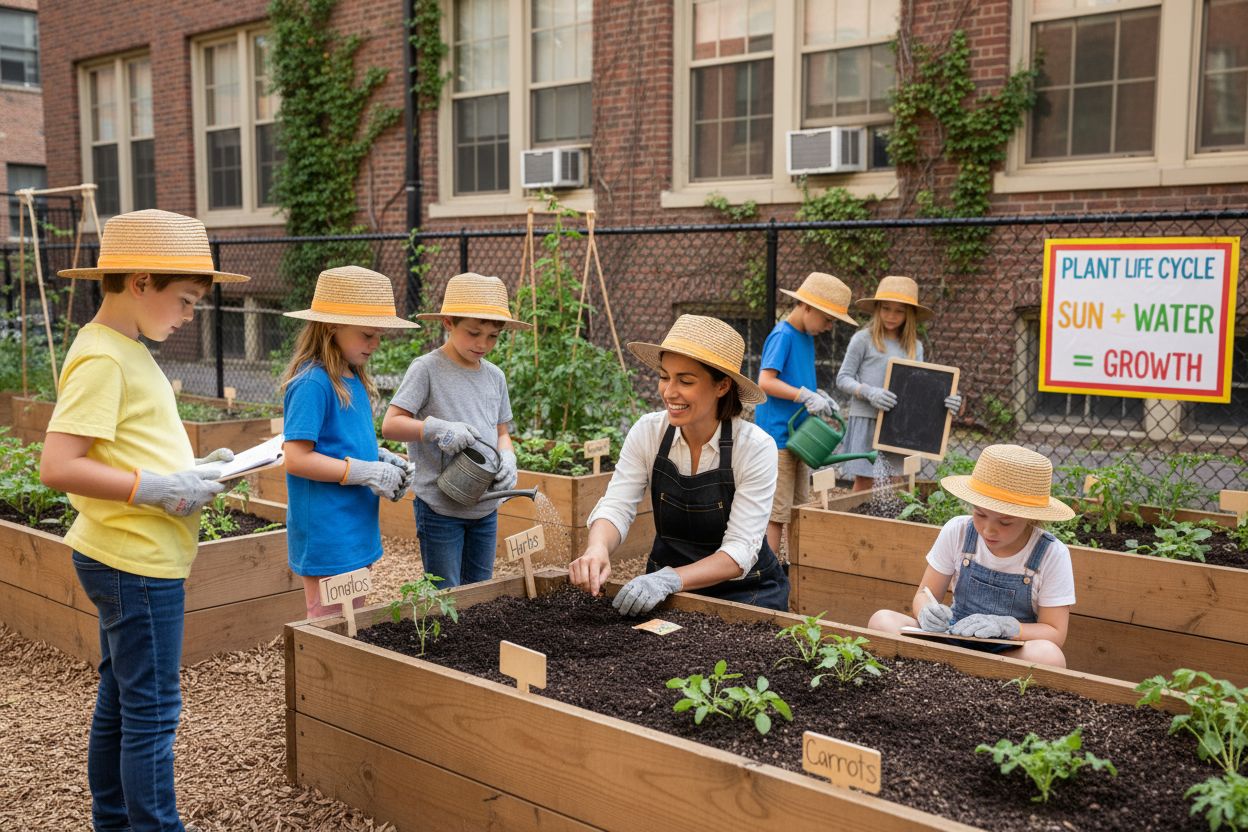
Garden-Based Learning presents another powerful outdoor educational strategy. Research indicates this approach uses gardens as dynamic, living classrooms across multiple disciplines. By engaging children in garden-centered activities, this method enhances:
- Nutrition awareness
- Environmental literacy
- Academic achievement
- Practical life skills
Discover more engaging activities for creative learning, which can complement these outdoor educational approaches. Whether exploring woodland ecosystems or cultivating garden spaces, these methods share a common goal: transforming learning from a passive experience into an active, sensory-rich adventure that connects children deeply with the natural world around them.
Essential Tools and Resources for Outdoor Play
Outdoor play is more than just fun - it’s a critical component of childhood development that requires thoughtful resources and intentional design. Playscapes represent the cutting edge of educational outdoor environments, transforming simple play areas into rich learning landscapes.
According to research on outdoor learning environments, playscapes can be both natural and constructed spaces that serve multiple developmental purposes. These carefully designed areas encourage:
- Enhanced physical activity
- Improved motor skill development
- Advanced cognitive processing
- Stronger social interaction skills
- Reduced potential for play-related injuries
Natural playscapes particularly shine by leveraging terrain, vegetation, and organic materials to spark children’s imagination. They create dynamic environments where learning happens organically, using the landscape itself as an interactive classroom. Learn more about imaginative play techniques to complement these outdoor learning strategies.
Research from outdoor education experts highlights that using nature as a classroom provides extraordinary benefits. This approach supports diverse learning styles, nurtures problem-solving skills, and develops environmental stewardship. Essential tools for outdoor play aren’t just physical items - they’re opportunities for exploration, discovery, and connection with the natural world around us.
Safety, Supervision, and Legal Considerations
Outdoor learning requires a balanced approach that embraces adventure while prioritizing children’s safety and well-being. Understanding and implementing comprehensive safety strategies is crucial for creating positive, risk-managed outdoor experiences.
Research on outdoor learning environments reveals that safety isn’t about eliminating all risks, but managing them intelligently. According to global education research, effective safety management involves:
- Conducting thorough risk assessments
- Selecting age-appropriate activities
- Ensuring proper sun protection
- Providing appropriate protective clothing
- Maintaining constant, attentive supervision
- Developing hazard awareness skills
Interestingly, playscapes demonstrate how design can inherently enhance safety. Modern outdoor learning spaces are strategically designed to minimize potential injuries by reducing fall heights and using terrain thoughtfully. This approach significantly lowers injury rates compared to traditional playground structures.
Explore our Montessori-inspired nature discovery techniques to understand how structured yet flexible approaches can create safe, engaging outdoor learning environments. The key is creating spaces that allow children to explore, learn, and grow while maintaining clear safety boundaries and adult supervision.
Maximizing Nature Connections for Child Development
Nature connection is far more than a simple outdoor experience - it’s a transformative developmental pathway that shapes children’s cognitive, emotional, and social growth. Research reveals that consistent interactions with natural environments can fundamentally reshape how children learn, think, and understand the world around them.
According to extensive research in developmental psychology, natural settings provide extraordinary benefits for child development. These environments support multiple critical developmental domains:
- Enhanced attention restoration
- Reduced stress levels
- Improved social and emotional skills
- Development of critical thinking capabilities
- Increased environmental awareness
- Strengthened problem-solving resilience
Outdoor learning experiences go beyond traditional educational models by creating immersive, multi-sensory learning environments. Research indicates that these nature-based experiences nurture creativity, imagination, and self-confidence while simultaneously developing crucial 21st-century competencies. Discover insights about childhood brain development to understand how these natural interactions profoundly impact cognitive growth.
Ultimately, maximizing nature connections isn’t just about spending time outdoors - it’s about creating meaningful, intentional experiences that allow children to explore, experiment, and connect with the living world around them. By prioritizing these connections, we help children develop not just academic skills, but a holistic understanding of themselves and their environment.
Inspire Outdoor Exploration and Learning With The Zoofamily
If you want to transform outdoor learning from uncertain and passive into something truly engaging and memorable for your child, The Zoofamily can help you overcome the challenges highlighted in this guide. Many parents and educators struggle to find resources that spark children’s curiosity and keep them actively involved in nature-based, creative learning. Our animal-inspired kids’ cameras, walkie-talkies, and binoculars are specifically designed to encourage children to explore their surroundings, build independence, and form real connections with the natural world – echoing the very benefits of creative outdoor learning discussed in the article. Learn more about our unique mission and products at The Zoofamily website.
Ready to give your child the practical tools for discovery and environmental care? Every Zoofamily kids’ camera sold helps restore nature, as we plant one tree in return. Support your child’s growth and the planet by visiting The Zoofamily or start exploring our inspiring resources on making learning fun and imaginative play today. Help your child take their outdoor learning journey to the next level now.
Frequently Asked Questions
What is creative learning outdoors?
Creative learning outdoors involves transforming traditional education by moving learning experiences beyond classrooms into natural environments, allowing children to explore, discover, and grow in engaging and immersive ways.
What are the benefits of creative outdoor learning for children?
Creative outdoor learning offers numerous benefits, including enhanced creative thinking skills, improved problem-solving abilities, better academic performance, and enhanced emotional wellbeing by connecting children with nature.
How does Forest School differ from Garden-Based Learning?
Forest School focuses on hands-on woodland activities that promote independence and teamwork, while Garden-Based Learning emphasizes garden-centered exploration to improve nutrition awareness and environmental literacy across multiple disciplines.
What are essential tools and resources for facilitating outdoor play?
Essential tools for outdoor play include carefully designed playscapes that enhance physical activity, motor skill development, cognitive processing, and social interaction. Natural materials and diverse terrains are also crucial for creating dynamic learning environments.