

More than 60 percent of British parents report that keeping children engaged in science experiments at home is a real challenge. Finding activities that spark curiosity and match your child’s developmental stage is key to turning frustration into discovery. This guide highlights smart ways to choose, set up, and lead safe experiments that build genuine excitement for science, whether your child is just starting or ready for something a bit more advanced.
Table of Contents
- Step 1: Select Age-Appropriate Science Experiment Themes
- Step 2: Gather Safe Materials and Set Up the Space
- Step 3: Guide Children in Conducting Simple Experiments
- Step 4: Encourage Observation and Discussion of Results
- Step 5: Celebrate Discoveries and Reinforce Learning
Quick Summary
| Key Point | Explanation |
|---|---|
| 1. Select age-appropriate themes | Choose science experiments that match the child’s developmental stage to keep them engaged and foster curiosity. |
| 2. Organise a safe workspace | Prepare a dedicated, hazard-free area with appropriate materials for conducting experiments safely and effectively. |
| 3. Guide with enthusiasm | Conduct experiments in a supportive manner, using clear explanations and encouraging active participation from the child. |
| 4. Foster observation and discussion | Encourage children to share their observations and thoughts, helping them develop critical thinking and communication skills. |
| 5. Celebrate discoveries meaningfully | Acknowledge and celebrate your child’s scientific achievements to reinforce their learning and build confidence in exploration. |
Step 1: Select age-appropriate science experiment themes
Choosing science experiments that match a child’s developmental stage is critical for maintaining engagement and fostering genuine curiosity. When selecting scientific activities for young learners, parents must consider the child’s cognitive capabilities, motor skills, and comprehension levels.
Research indicates that children’s scientific understanding evolves through specific age ranges. Preschoolers aged 3 to 5 benefit most from simple, sensory-based experiments that involve direct manipulation and observable changes. These might include colour mixing, watching seed germination, or exploring basic physical properties like floating and sinking. For instance, curriculum research on early childhood learning suggests that hands-on experiments which produce immediate, visible results help young minds develop foundational scientific thinking skills.
As children progress, experiment complexity can gradually increase. Between ages 6 and 8, children become more capable of predicting outcomes and understanding basic cause-effect relationships. Experiments involving simple chemical reactions, basic robotics, or natural phenomenon observations become more appropriate. The key is maintaining a sense of wonder and keeping activities short, interactive, and predominantly fun.
Warning: Always supervise young children during scientific explorations and select experiments with minimal risk of injury or exposure to harmful substances.
Step 2: Gather safe materials and set up the space
Preparing a safe and organised workspace is essential for successful science experiments with young children. Preschool science centre guidelines recommend creating a dedicated area that encourages exploration while minimising potential hazards.
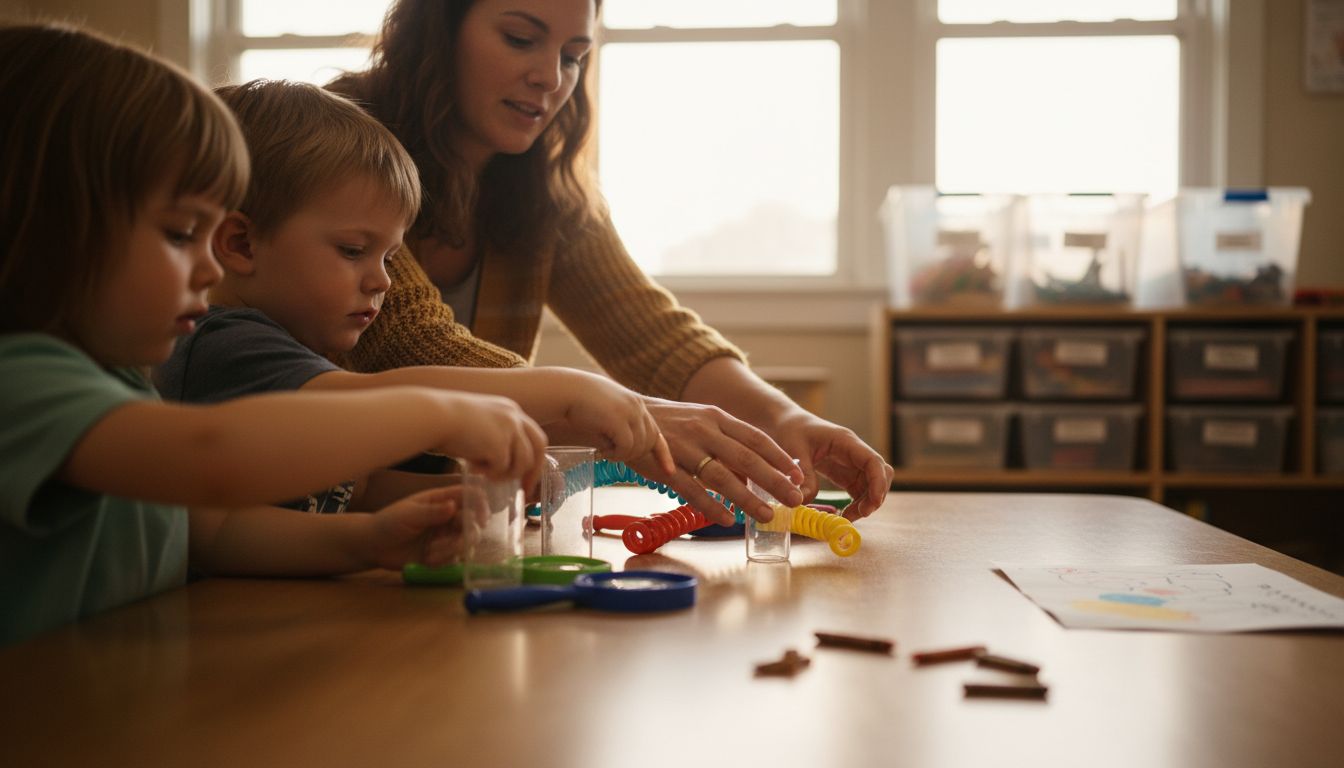
Start by selecting a sturdy table or workspace with a washable surface. Collect age appropriate materials like clear plastic containers, measuring spoons, safety goggles, disposable gloves, and protective aprons. Chemistry set research emphasises the importance of using child safe materials that are non toxic and resilient. For younger children aged 3 to 5, focus on larger tools with no sharp edges and supervise all interactions closely.
Organise materials in clear plastic containers or trays, ensuring everything is easily accessible but not within uncontrolled reach. Keep a separate container for cleaning supplies and have paper towels readily available for quick spill management. Designate specific areas for different experiment stages: one for preparation, another for active experimentation, and a final space for observation and cleaning up.
Warning: Always maintain direct adult supervision and ensure no potentially dangerous items are left within children’s unsupervised reach.
Step 3: Guide children in conducting simple experiments
Conducting science experiments with young children requires patience, enthusiasm, and a strategic approach to maintaining their curiosity and engagement. Research on early childhood scientific exploration emphasises the importance of creating an interactive and supportive learning environment that encourages natural discovery.
Begin by explaining the experiment in simple, clear language. Break down each step into manageable actions that match your child’s cognitive abilities. Use visual demonstrations and invite your child to participate actively. Early years science activities suggest using hands on approaches that transform complex concepts into playful learning experiences. For instance, when exploring plant growth, let your child measure water, place seeds, and track daily changes in a personal observation journal.
Encourage questions and hypothesis making, even if their scientific reasoning seems naive. Validate their curiosity by listening carefully and responding with open ended questions that prompt further thinking. Praise their observations and experimental efforts, focusing on the process of discovery rather than perfect outcomes. Remember that at this age, scientific learning is about building excitement and wonder about the natural world.
Warning: Maintain a positive and patient attitude. If an experiment becomes frustrating, be prepared to pause and return to it another day.
Step 4: Encourage observation and discussion of results
Play-based learning strategies reveal that children develop critical thinking skills through guided observation and meaningful conversation about their scientific discoveries. This step transforms simple experiments from passive activities into powerful learning experiences that spark intellectual curiosity.
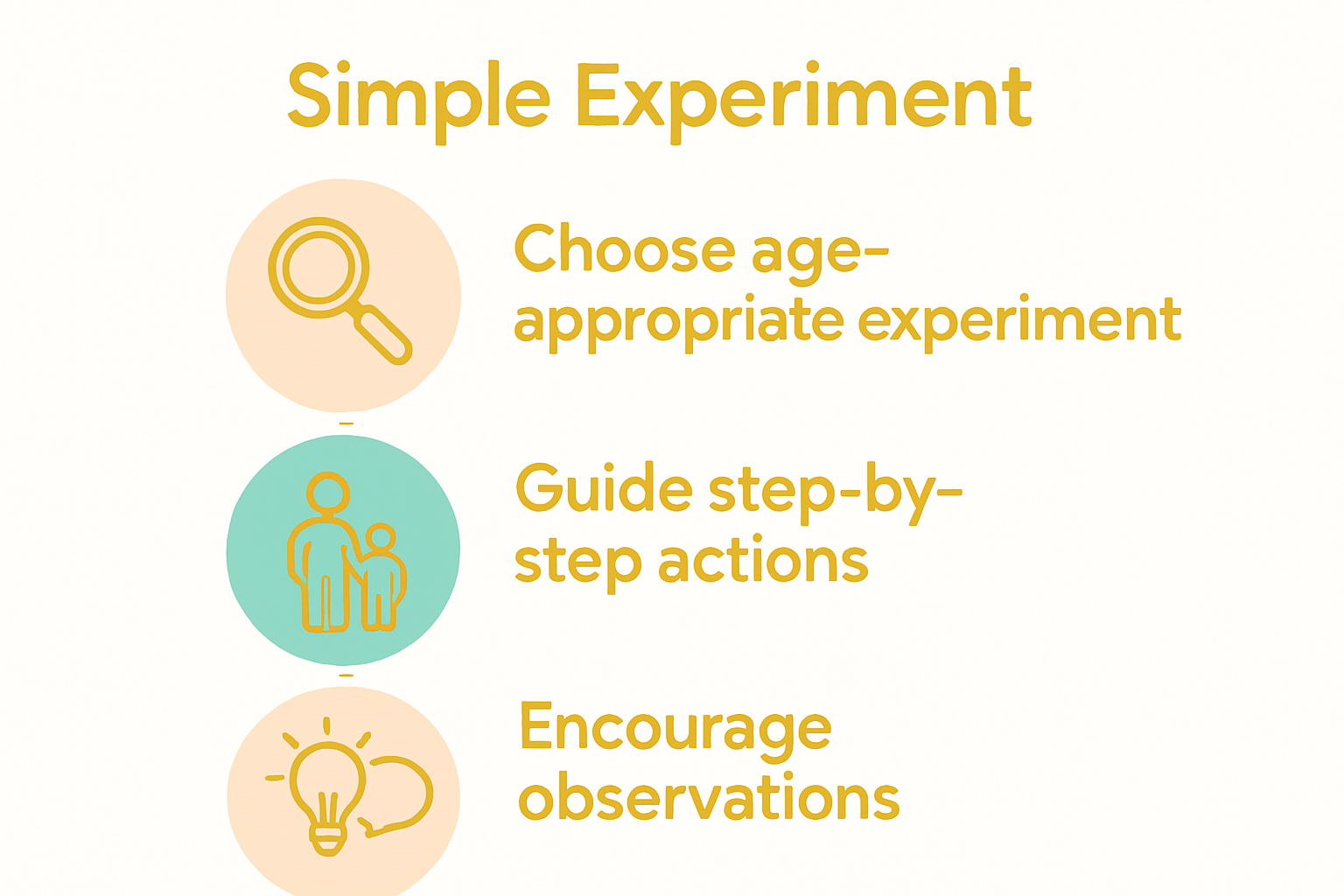
Create a comfortable space for reflection where your child feels safe sharing their observations. Use open ended questions that encourage detailed responses rather than simple yes or no answers. Ask prompts like “What did you notice happening?” or “Why do you think this changed?” Child development research on play activities emphasises that these conversations help children develop complex cognitive and communication skills by allowing them to articulate their understanding and thought processes.
Document the experiment together through drawings, photographs, or written notes in a special science journal. This approach not only helps children remember their discoveries but also validates their scientific exploration. Celebrate their observations regardless of whether they align perfectly with expected outcomes. The goal is nurturing a positive attitude towards scientific inquiry and building confidence in their ability to explore and understand the world around them.
Warning: Avoid correcting every observation. Instead, guide their thinking by asking follow up questions that help them discover insights independently.
Step 5: Celebrate discoveries and reinforce learning
Early intervention research demonstrates that positive reinforcement plays a crucial role in children’s cognitive development. Celebrating scientific discoveries transforms experimental activities from mere tasks into meaningful learning experiences that build lasting curiosity and confidence.
Create a special celebration ritual that acknowledges your child’s scientific exploration. This might involve displaying their experiment results, sharing their findings with family members, or creating a special ‘scientist of the day’ recognition. Scientific communication resources for children highlight the importance of helping young learners articulate and share their discoveries, which reinforces their understanding and builds communication skills.
Help your child connect their experimental findings to broader scientific concepts by asking reflective questions. Encourage them to think about how their small discovery relates to the world around them. Take photographs or videos of their experiments to create a personal science portfolio that they can review and discuss over time. This approach not only validates their scientific efforts but also helps build a lifelong love of learning and exploration.
Warning: Avoid overshadowing their personal discoveries with adult explanations. Let their natural wonder and curiosity guide the learning process.
Inspire Curiosity with Creative Tools for Young Explorers
The article highlights the challenge many parents face when trying to find age-appropriate, safe, and engaging science experiments that truly spark curiosity in young children. Key goals include encouraging hands-on learning, fostering observation skills, and building a lasting love of discovery through playful scientific exploration. To bridge this gap, The Zoofamily offers innovative products like kids’ cameras, walkie-talkies, and binoculars that not only support creative connections between children but also deepen their interest in nature and the world around them.
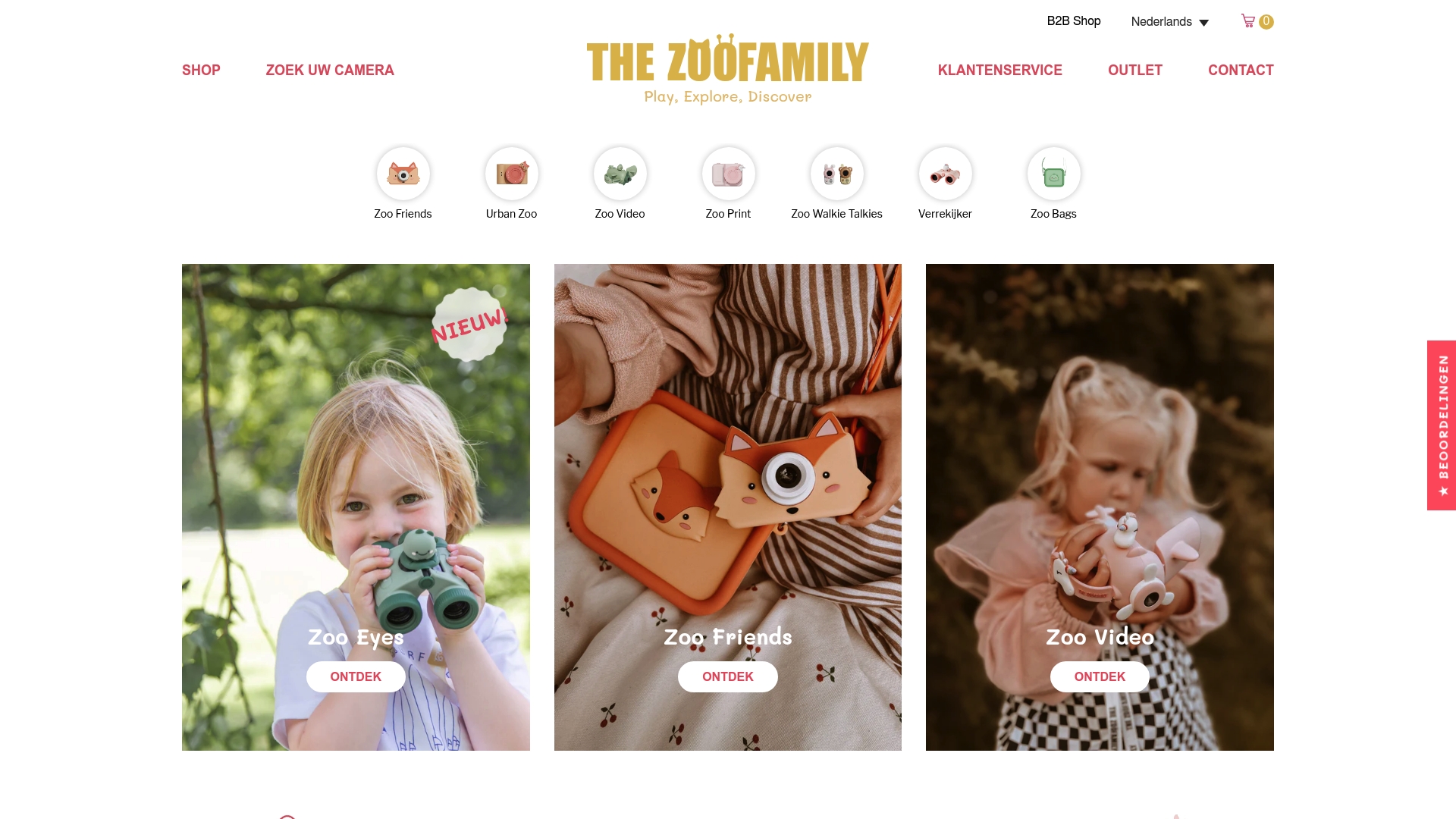
Discover how you can make every experiment more memorable and meaningful by equipping your child with tools designed to engage their senses and imagination. Each item from The Zoofamily is inspired by animals and nature to spark wonder and support learning in a playful way. Plus, every camera sold helps restore natural beauty for future generations with a tree planted on your child’s behalf. Ready to turn curiosity into joyful discovery today? Visit The Zoofamily and explore our creations designed for young scientists. Learn more about making learning fun at https://thezoofamily.com and encourage your child’s scientific journey with trusted tools that connect play and nature.
Frequently Asked Questions
What are some age-appropriate science experiments for preschoolers?
Preschoolers aged 3 to 5 thrive with simple, sensory-based experiments like colour mixing or observing seed germination. Select activities that involve direct manipulation and visible changes to keep them engaged.
How can I safely gather materials for science experiments with young children?
Create a dedicated workspace with child-safe materials such as clear plastic containers, measuring spoons, and safety goggles. Organise these materials in accessible, labelled containers to ensure a safe and structured environment for exploration.
What steps should I take to guide my child during a science experiment?
Explain each step of the experiment using clear language and break it down into manageable actions. Encourage active participation, validate their questions, and praise their efforts to foster a positive learning experience.
How can I encourage my child to observe and discuss their experiment results?
Set up a comfortable space for your child to share their observations and ask open-ended questions that stimulate discussion. Guide their thinking with follow-up questions rather than correcting every observation.
What are some ways to celebrate my child’s scientific discoveries?
Create a special ritual to acknowledge their experiments, such as displaying results or recognising them as ‘scientist of the day’. Encourage reflective thinking by connecting their discoveries to broader scientific concepts and maintain a focus on their personal experiences.
Recommended
- Making Learning Fun: Engaging Activities for Your Kids – The Zoofamily
- Understanding the Benefits of Imaginative Play – The Zoofamily
- Making Learning Fun: Engaging Activities for Your Kids – The Zoofamily
- Childhood Brain Development: A Guide for Modern European Mums – The Zoofamily
- What Age Is Acceptable for Introducing DnD to Kids?
- 6 Types of Educational Toys to Boost Learning Fun – Learning Bugs