

Nearly 80 percent of children feel more engaged with nature when they use the right gear. Helping your child spot birds or distant animals starts with a pair of binoculars built for young hands. The right fit and setup can turn an ordinary walk outside into a day filled with discovery. This guide breaks down simple steps to help you choose, adjust, and care for binoculars so your family’s outdoor adventures stay exciting and frustration free.
Table of Contents
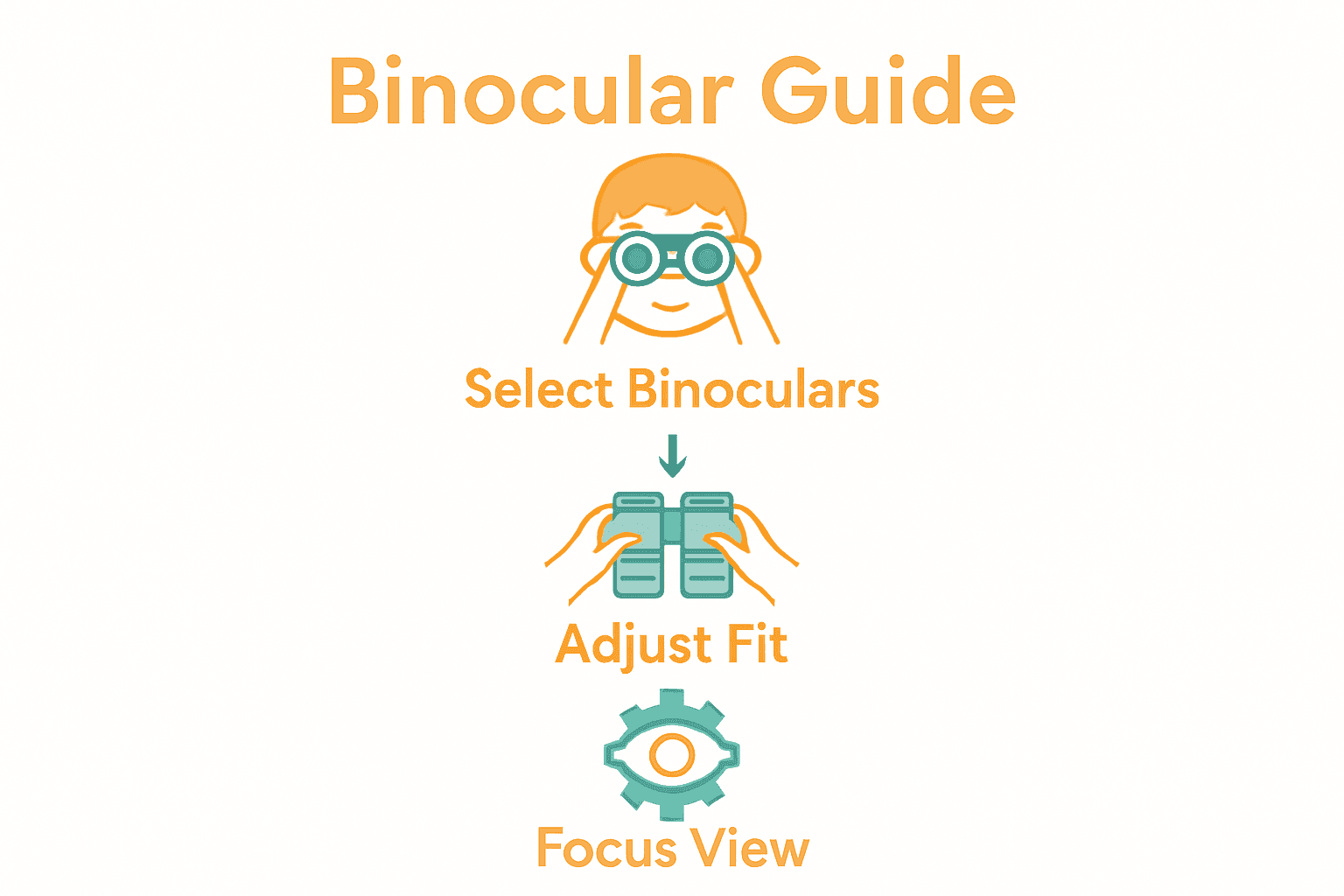
- Step 1: Choose The Right Binoculars For Your Child
- Step 2: Adjust The Fit For Comfort And Safety
- Step 3: Set The Focus For Clear Viewing
- Step 4: Guide Kids To Spot And Observe Wildlife
- Step 5: Check And Maintain Binoculars After Use
Quick Summary
| Key Point | Explanation |
|---|---|
| 1. Choose binoculars with 7x-8x magnification | This range provides a wider field of view, making it easier for children to find and track wildlife. |
| 2. Adjust interpupillary distance for comfort | Correct spacing between eyepieces ensures a clear and comfortable viewing experience while preventing eye strain. |
| 3. Teach proper focusing techniques | Encourage children to focus using a stationary object, first adjusting for one eye, then the other to enhance clarity. |
| 4. Encourage slow scanning and patience | Before using binoculars, teach children to observe their surroundings with bare eyes to identify movement and wildlife effectively. |
| 5. Regularly maintain binoculars after use | Clean lenses with a microfiber cloth and store binoculars in a protective case to prevent damage and prolong lifespan. |
Step 1: Choose the right binoculars for your child
Selecting the perfect pair of binoculars for your young explorer involves more than just picking something that looks fun. According to Cornell Lab of Ornithology, the right binoculars can transform outdoor adventures into magical learning experiences for children.
When choosing binoculars for kids, focus on magnification and size. The recommended sweet spot is between 7x and 8x magnification with lens sizes ranging from 25 to 40 millimetres. Lower magnification provides a wider field of view, making it easier for children to locate and track objects like birds or wildlife. A wider view means less frustration and more excitement for young explorers.
Comfort is key. Bresser emphasises the importance of adjusting the eyepiece distance to match your child’s unique eye spacing. This ensures a clear, single image and prevents eye strain. Look for lightweight models with rubber grips that are easy for small hands to hold steady. Durability matters too, so choose binoculars that can withstand occasional drops and outdoor adventures.
Pro tip: Let your child test different binoculars if possible. Some children might prefer slightly different configurations based on their comfort and visual preferences.
Step 2: Adjust the fit for comfort and safety
Making sure binoculars fit correctly is crucial for your child’s comfort and viewing experience. According to BH Photo Video, proper adjustment ensures a clear and comfortable view that prevents eye strain and frustration.
The key adjustment is the interpupillary distance the space between the two eyepieces. To find the right fit, have your child hold the binoculars and gently move the barrels closer together or further apart. The goal is to create a single clear image without any gaps or blurriness. BH Photo Video emphasises that correct alignment prevents double vision and ensures a comfortable viewing experience.
Help your child by guiding their hands and watching their reaction. Look for signs of comfort like a relaxed grip, steady hands, and a smile when they look through the lenses.
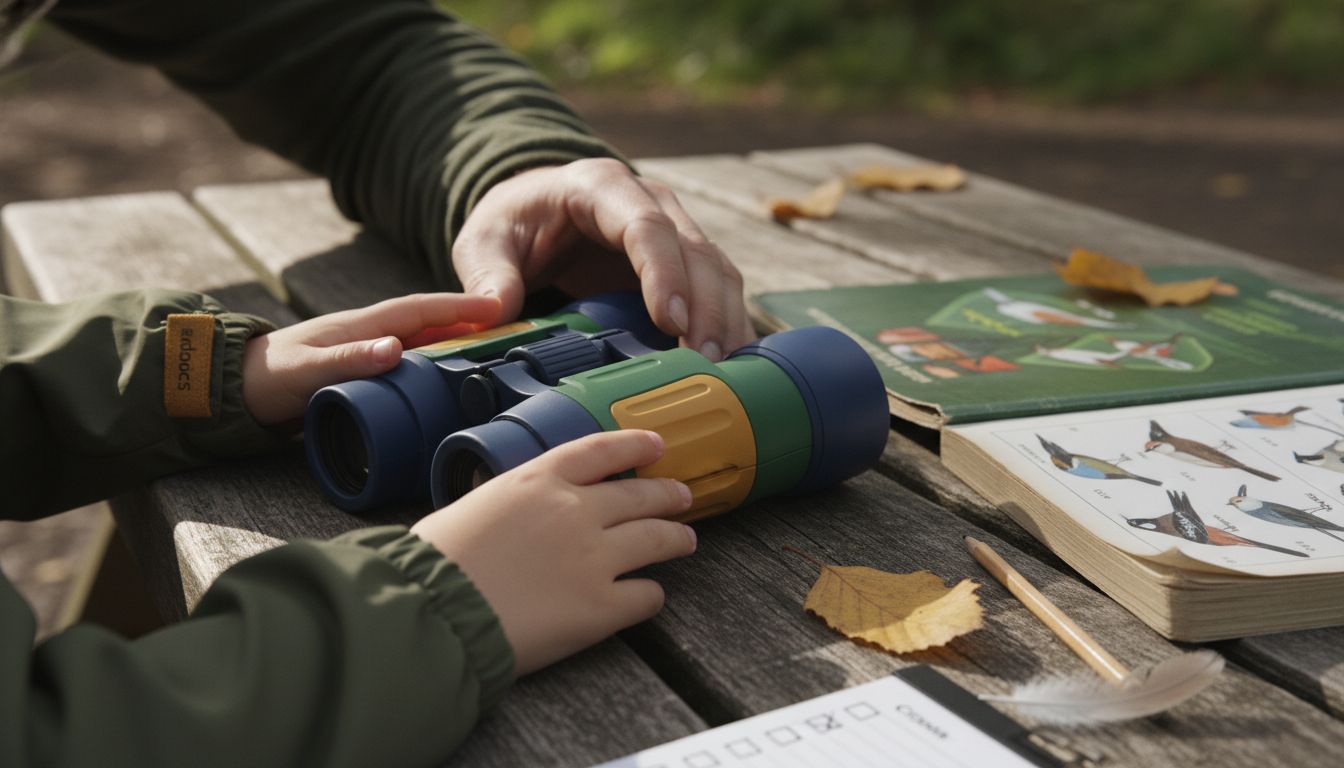 If they squint or seem uncomfortable, readjust the width. Some children might need help finding their perfect setting the first few times.
Quick safety tip: Always supervise young children when using binoculars and teach them to handle the equipment gently. The right fit not only improves viewing but also helps prevent accidental drops or mishandling.
Step 3: Set the focus for clear viewing
Focusing your binoculars is like tuning an instrument every child needs to learn the right technique. New York State Department of Environmental Conservation recommends a careful approach to achieving crisp and clear images that will make your outdoor explorations truly magical.
Start by locating the central focusing wheel typically found between the two barrels. First, close your right eye or cover the right lens. Use your left eye to adjust the focus wheel until the image becomes sharp and clear for your left eye. Then close your left eye and adjust the right eyepiece separately to compensate for any difference in vision between your eyes. Cornell Lab of Ornithology suggests this individual eye adjustment ensures the most precise viewing experience.
Encourage your child to take their time with this process.
Practice makes perfect and focusing is a skill that improves with experience. If they struggle, help them by pointing out interesting details and guiding their hands gently. Remember that patience is key some children might take a few tries to get comfortable with the focusing mechanism.
Pro tip: Always start focusing on a stationary object like a tree or distant landmark. Moving targets can be tricky for beginners and might frustrate young learners.
Step 4: Guide kids to spot and observe wildlife
Wildlife observation is an exciting adventure that transforms an ordinary walk into a magical exploration. University of Georgia EcoReach offers expert guidance on helping children discover the fascinating world of animals in their natural habitat.
The key to successful wildlife spotting is patience and technique. Cornell Lab of Ornithology recommends starting without binoculars first. Teach your child to scan the environment slowly with their naked eyes, looking for movement in trees, bushes, or open spaces. Once they spot something interesting, instruct them to keep their eyes fixed on the animal while slowly raising the binoculars to their eyes without shifting their gaze.
Make the experience playful and educational. Create a simple wildlife spotting game where children earn points for different types of animals they observe. Encourage them to notice details like bird colours, animal movements, and unique sounds. Remind them to stay quiet and move slowly to avoid startling wildlife. Watching animals in their natural environment can be a wonderful opportunity to teach respect for nature and wildlife conservation.
For a fun family bird observation guide, consider turning your wildlife spotting into a shared family activity that creates lasting memories and connects everyone with the natural world.
Step 5: Check and maintain binoculars after use
Taking care of binoculars is essential to ensure they remain in top condition for future adventures. BH Photo Video provides crucial guidance on protecting these delicate instruments that help children explore the wonders of nature.
After each outdoor expedition, start by gently cleaning the lenses with a soft microfibre cloth specifically designed for optical equipment. Avoid using rough materials or your clothing, which can scratch the delicate lens surfaces. Bushnell recommends storing binoculars in a cool dry place away from direct sunlight and heat sources. Never leave them in a hot car or near heaters, as extreme temperatures can damage the internal mechanisms.
Establish a routine with your child to check the binoculars after each use. Teach them to look for any signs of damage like loose parts, dust accumulation, or minor scratches. Create a simple checklist that makes maintenance feel like a fun game. Wipe down the exterior with a clean soft cloth, check the lens caps are secure, and store the binoculars in their protective case. This not only protects the equipment but also helps children learn responsibility and care for their tools.
Pro tip: Keep a small cleaning kit with a microfibre cloth and lens cleaning solution in your outdoor bag. This simple preparation can help maintain your binoculars and make cleaning a quick and easy post adventure ritual.
Inspire Young Explorers with Tools That Bring Nature Closer
The article reveals that choosing the right binoculars for children involves tackling common challenges such as ensuring comfort, correct focus, and gentle care after use. Parents want to spark their child’s curiosity while avoiding frustration with difficult equipment. Young explorers need lightweight, easy-to-adjust binoculars that fit small hands and help them enjoy discovering wildlife without strain or disappointment. These pain points align perfectly with our mission at The Zoofamily.
Unlock the magic of nature for your child with our thoughtfully designed kids’ binoculars and outdoor gear. At The Zoofamily, we create not just tools but unforgettable experiences that connect children to the natural world. Every product is crafted to be simple to use, durable, and inspiring, encouraging careful observation and playful learning. Start your family’s adventure today and give your child the perfect window to the wild. Explore our unique collection and find exactly what your young nature lover needs to make every exploration joyful and meaningful. Visit The Zoofamily now and make outdoor discovery a lasting family tradition.
Frequently Asked Questions
How do I choose the right binoculars for my child?
To choose the right binoculars for your child, look for a magnification of 7x to 8x and lens sizes between 25 to 40mm. This setup allows for a wider field of view, making it easier for your child to observe wildlife.
What adjustments should I make to the binoculars for my child’s comfort?
Adjust the interpupillary distance, which is the space between the eyepieces, to fit your child’s eyes. Have your child hold the binoculars and move the barrels closer together or further apart until they see a single clear image.
How can my child focus the binoculars correctly?
To focus binoculars, first cover one lens and use the focusing wheel to get a sharp image with the exposed eye. Then, switch eyes and adjust the right eyepiece as needed to ensure both eyes see clearly.
What are some tips for helping kids spot wildlife using binoculars?
Encourage your child to first scan for movement with their naked eyes before bringing the binoculars up to their sight. Teach them to stay calm and quiet while gently lifting the binoculars to maintain focus on the animal they want to observe.
How should we maintain binoculars after using them?
After each use, gently clean the lenses with a soft microfibre cloth and store the binoculars in a cool, dry place away from extreme temperatures. Create a simple checklist for your child to use after each outing to check for damage and keep care routine easy.
What should I do if my child is struggling to use the binoculars?
If your child is struggling, guide their hands to help them adjust the binoculars and focus correctly. Encourage them to practice on stationary objects to build their confidence before trying to observe moving targets.