

Getting children outside and into nature is one of the most rewarding things a parent can do, yet many families hesitate because of genuine safety concerns. Sharp edges, toxic materials, and poorly designed gear can turn an exciting woodland walk into a stressful experience. The good news is that a new generation of child safe exploration tools makes outdoor discovery both accessible and environmentally responsible. In this guide, we cover what makes a tool truly child-safe, which types work best for different adventures, how to choose wisely, and how to build lasting eco-habits that your child will carry into adulthood.
Table of Contents
- What makes an exploration tool child-safe?
- Top types of child safe exploration tools for outdoor adventures
- How to choose the right exploration tools for your child
- Encouraging environmental awareness and safety habits
- Activity ideas for safe outdoor exploration with children
- Our perspective: why safe exploration leads to lifelong environmental values
- Looking for eco-friendly child exploration tools?
- Frequently asked questions
Key Takeaways
| Point | Details |
|---|---|
| Child-safe design matters | Look for tools that use non-toxic materials, robust construction and ergonomic shapes. |
| Eco-friendliness is possible | You can find exploration tools that are safe for your child and gentle on the planet. |
| Matching tools to age | Selecting the right tool for your child’s age and environment boosts both safety and engagement. |
| Teach and explore together | Guided, hands-on activities develop both environmental respect and practical safety habits. |
What makes an exploration tool child-safe?
Not every product labelled “for children” is genuinely safe. True child-safe exploration tools share a specific set of characteristics that go beyond simple branding. Understanding these principles helps you filter out the noise and invest in gear that actually protects your child while encouraging curiosity.
Here are the core features to look for:
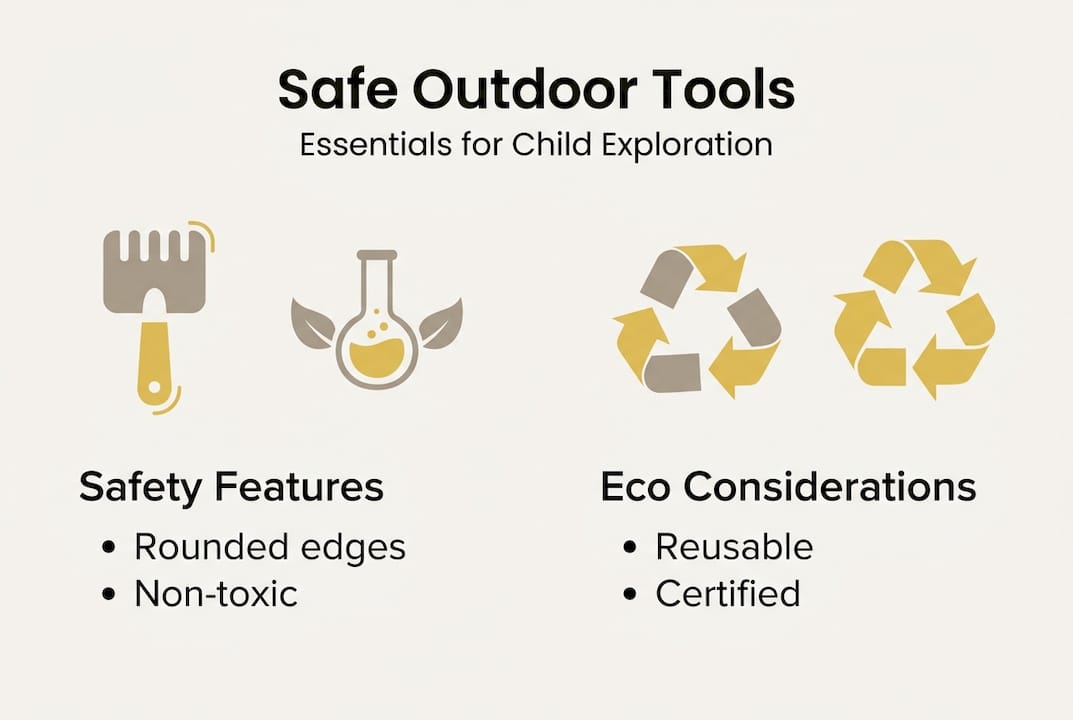
- Non-toxic materials: Paints, coatings, and plastics should be free from BPA, phthalates, and heavy metals.
- Rounded edges and ergonomic grips: Small hands need tools shaped to fit them, reducing the risk of drops and strain.
- Durable construction: Quality tools withstand the inevitable bumps, drops, and mud that come with real outdoor use.
- Age-appropriate certification: Look for EN71 (Europe) or equivalent safety marks, especially for children under eight.
- Eco-friendly materials: Recycled plastics, sustainably sourced wood, and natural dyes reduce environmental impact.
- Easy cleaning: Smooth surfaces and removable parts mean you can quickly wipe away dirt, pollen, and bacteria after each adventure.
Many leading brands design children’s tools using non-toxic materials and ergonomic handles, making it far easier for parents to find genuinely safe options than it was a decade ago.
“The best exploration tool is one your child trusts completely. When a tool feels right in their hands, they focus on discovery rather than discomfort.”
Maintenance matters more than most parents realise. A quick wipe-down after each outing prevents the build-up of allergens and keeps lenses, lids, and moving parts functioning properly. Store tools in a dry, ventilated bag rather than a sealed container to avoid mould.
Pro Tip: Before buying, run your thumb along every edge and check that all small parts are firmly attached. If anything wiggles or feels sharp, put it back on the shelf.
Choosing certified, eco-conscious tools is not just about safety today. It teaches children from the very start that the gear we use should respect both people and the planet.
Top types of child safe exploration tools for outdoor adventures
With a clear view of safety standards, let’s explore specific tool types that inspire safe outdoor adventure. The market has expanded enormously, and the best options combine scientific usefulness with genuine eco-credentials.
Essential tool types for young explorers:
- Children’s binoculars: Lightweight, rubberised, and fog-proof models let children spot birds and deer without disturbing wildlife.
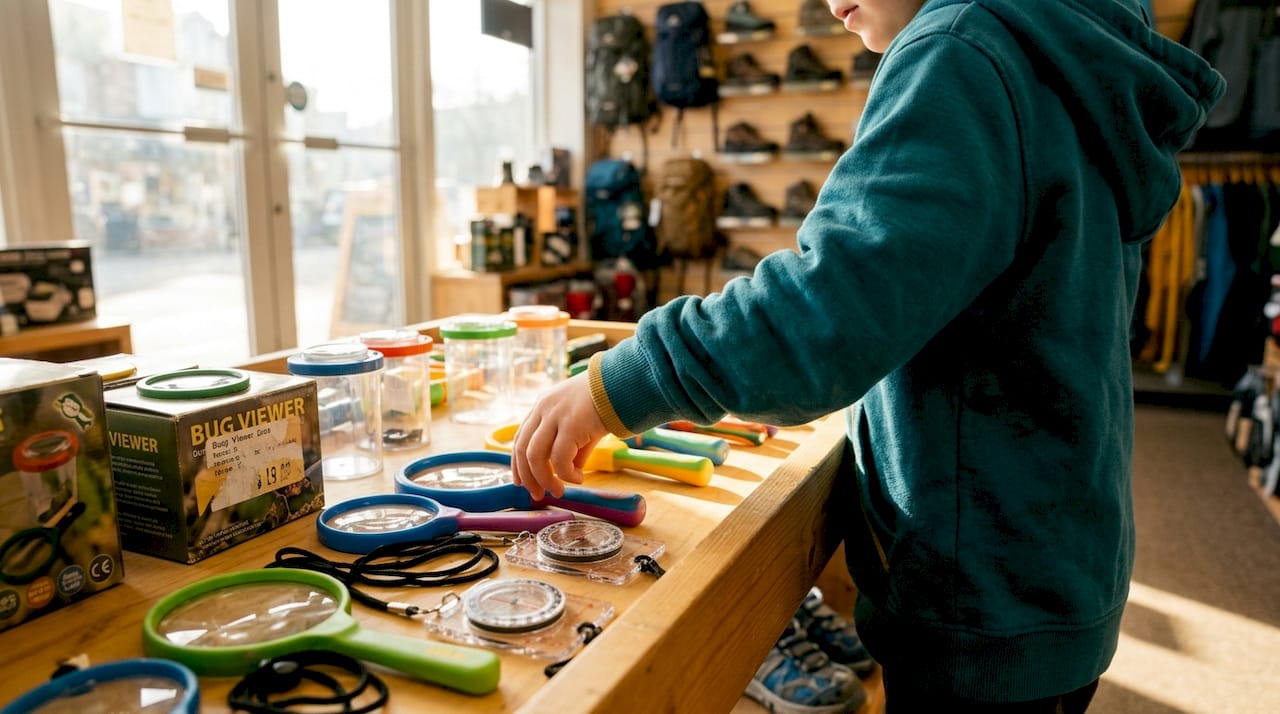
- Magnifying glasses: Simple, robust, and endlessly useful for examining bark, petals, and soil.
- Bug viewers and observation pots: Clear containers with magnifying lids allow close inspection and ethical release. Eco-friendly magnifiers and bug viewers enhance safe observation of nature while minimising disturbance.
- Field guides and nature notebooks: Lightweight, waterproof editions encourage recording and identification without screens.
- Reusable water bottles and hats: Practical safety essentials that also reduce single-use waste.
Here is a quick comparison of the most popular tool types:
| Tool | Best age | Key benefit | Eco-consideration |
|---|---|---|---|
| Binoculars | 4 and up | Wildlife observation | Recycled rubber grips |
| Magnifying glass | 3 and up | Close-up discovery | Sustainably sourced handle |
| Bug viewer | 3 and up | Ethical insect study | BPA-free plastic |
| Nature notebook | 5 and up | Recording and memory | Recycled paper |
| Reusable bottle | All ages | Hydration and safety | Eliminates plastic waste |
A practical scenario: imagine a Saturday morning walk through a local woodland. Your child uses binoculars to spot a woodpecker high in an oak, then crouches to examine a beetle with their magnifying glass before carefully placing it in an observation pot for a closer look. They sketch it in their nature notebook, then release it exactly where they found it. Every tool in that sequence is safe, purposeful, and environmentally considerate. You can find further inspiration in this first nature exploration guide and ideas for forest educational walks.
Pro Tip: Buy tools in sets where possible. Coordinated kits are often better value, and children feel more like real explorers when their gear matches.
How to choose the right exploration tools for your child
Knowing the types of tools available, it’s vital to choose wisely for your child’s age and favourite activities. A tool that is perfect for a seven-year-old may frustrate a four-year-old, and vice versa.
Use this age-based framework as your starting point:
- Ages 3 to 5: Simple magnifying glasses, soft-grip observation pots, and picture-based field guides. Focus on tools with no small detachable parts.
- Ages 6 to 8: Lightweight binoculars, bug hunting kits, and beginner nature journals. Introduce basic compass use with supervision.
- Ages 9 and up: More detailed field guides, waterproof notebooks, and multi-tool kits. Children at this stage can begin using tools more independently.
Selecting tools by age, environment, and child interest improves both engagement and safety, making every outing more rewarding for the whole family.
Beyond age, ask yourself these eco-conscious questions before purchasing:
- Is the material recycled, sustainably sourced, or biodegradable?
- Does the brand have a transparent environmental policy?
- Will this tool last several years, or is it likely to break within months?
- Can it be repaired rather than replaced?
Environment also shapes your choice. A beach outing calls for waterproof, sand-resistant tools. A woodland walk benefits from lightweight binoculars and a sturdy magnifier. A park visit is perfect for a bug viewer and a nature notebook. Match the tool to the terrain, and your child’s confidence grows naturally.
Finally, involve your child in the selection process. Children who choose their own gear feel genuine ownership over their adventures. Browse activities for young explorers together to spark ideas before you shop.
Pro Tip: Let your child hold a tool before you buy it. If they can grip it comfortably and their eyes light up, that is a far better indicator than any product description.
Encouraging environmental awareness and safety habits
Tool choice is crucial, but fostering the right habits completes the safe-explorer picture. The most beautifully designed magnifying glass achieves very little if a child uses it carelessly or leaves litter behind.
Start with these practical safety habits:
- Set clear boundaries before every outing. Agree on how far children can roam and always use the buddy system in larger open spaces.
- Wash hands thoroughly after handling soil, insects, or water. Make it a fun ritual rather than a chore.
- Teach gentle handling: show children how to pick up insects without harming them, and always return specimens to where they were found.
- Carry a small first-aid kit and ensure children know what to do if they feel unwell or get a minor cut.
Supervised, hands-on exploration with clear safety guidelines helps children stay safe while respecting nature, building confidence that grows with every outing.
Eco-friendly habits are equally important. Model the behaviour you want to see. Bring reusable bags for collecting finds and returning them. Follow leave-no-trace principles: take nothing but photographs, leave nothing but footprints. Explain why these rules matter in simple, honest terms your child can understand.
“Children who learn to tread lightly in nature grow into adults who fight to protect it. The habits we build today shape the world they inherit.”
For more structured ideas, explore these engaging learning activities and playground learning ideas that blend safety with genuine curiosity.
Integrating safety with fun is not a compromise. When children understand the reasons behind rules, they embrace them as part of the adventure rather than resisting them as restrictions.
Activity ideas for safe outdoor exploration with children
Finally, let’s put all these ideas into action with inspiring activities for your young explorer. Structure helps enormously, especially for first-time outdoor adventures.
Here are five tried-and-tested activities:
- Nature scavenger hunt: Create a simple illustrated list of items to find, such as a feather, a round stone, and a five-petalled flower. Children use magnifiers and field guides to identify each find before ticking it off.
- Bug safari: Arm your child with an observation pot and a gentle brush. Spend twenty minutes searching under logs and leaves, observe each creature carefully, then release it exactly where it was found.
- Mini-ecologist catalogue: Provide a nature notebook and coloured pencils. Encourage children to sketch and label leaves, insects, and rocks they encounter, building a personal field guide over several outings.
- Safe water exploration: At a shallow stream or rock pool, use a small net and a water viewer to observe aquatic life. Always supervise closely and wash hands and equipment afterwards.
- Sensory nature walk: No tools required beyond open senses. Ask children to identify five sounds, four textures, three smells, two colours, and one living creature. Simple, safe, and surprisingly absorbing.
Adventure activities like mini-safaris and scavenger hunts promote outdoor curiosity within safe, structured boundaries, making them ideal for families just starting their exploration journey.
Pro Tip: Photograph each activity with a child-safe camera and create a nature journal together at home. The act of reviewing and discussing discoveries deepens learning and makes children eager for the next outing.
For even more structured inspiration, the outdoor science activity list offers a wealth of ideas suited to different ages and environments.
Each of these activities teaches something beyond the obvious. Bug safaris build empathy. Cataloguing develops patience. Water exploration teaches respect for fragile ecosystems. The tools are the vehicle; the values are the destination.
Our perspective: why safe exploration leads to lifelong environmental values
Here is something we genuinely believe at The Zoofamily: the moment a child crouches down to examine a beetle with their own magnifying glass is not just a cute photo opportunity. It is the beginning of a relationship with the natural world that can last a lifetime.
Conventional wisdom says that keeping children safe means keeping them close and controlled. We think that gets it backwards. Real safety comes from giving children the right tools, the right knowledge, and the freedom to discover within clear, loving boundaries. Children who are trusted to explore develop confidence in nature rather than fear of it.
We have seen it repeatedly. Families who invest in quality, eco-conscious gear and pair it with honest conversations about environmental care raise children who genuinely want to protect what they love. It is not lecturing. It is living. Those early science adventures outdoors become the memories that shape adult values more powerfully than any classroom lesson ever could.
Balance is everything. Too much restriction breeds anxiety. Too much freedom without guidance breeds carelessness. The sweet spot is guided independence, and the right tools make that possible.
Looking for eco-friendly child exploration tools?
If this guide has sparked ideas for your family’s next outdoor adventure, The Zoofamily is here to help you take the next step. We design child-safe, nature-inspired gear with one clear purpose: to connect children with the world around them in a way that is safe, joyful, and genuinely good for the planet.
From animal-themed binoculars to carefully curated activity sets, every product in our range is built with non-toxic materials, ergonomic design, and environmental responsibility at its core. And for every camera sold, we plant one tree. Browse our full range of eco-friendly exploration gear and discover activity guides, nature inspiration, and tools that make every outdoor moment count. Your child’s adventure starts here.
Frequently asked questions
What age is appropriate to start using child exploration tools?
Children as young as three can use simple, child-safe exploration tools with adult supervision. Eco-friendly bug viewers and magnifiers are ideal for young children when used with guidance.
Are eco-friendly exploration tools just as durable as regular ones?
Yes, quality eco-friendly tools are designed to be just as robust and safe for children as conventional options. Many eco-friendly brands produce durable, child-safe adventure tools built to last through years of outdoor use.
How do you clean and maintain child-safe exploration tools?
Most child-safe tools can be wiped with a damp cloth and stored in a dry place to prevent damage. Regular cleaning and proper storage maintain the safety and longevity of exploration tools across many seasons.
Can children use these tools independently?
Older children can use most tools if taught proper techniques, but supervision ensures safety and environmental care. Supervised exploration promotes both safety and learning, particularly in unfamiliar outdoor environments.
What is the best first tool for a young child’s outdoor adventure?
A simple magnifying glass or observation pot is an excellent start for encouraging safe, hands-on discovery. Magnifiers and bug viewers are top choices for introductory exploration and are widely available in eco-friendly versions.
Recommended
- Engaging Science Experiments Outdoors for Kids – The Zoofamily
- Complete Guide to Child Development Outdoors – The Zoofamily
- Guider première exploration nature: une aventure éducative pour vos enfants – The Zoofamily
- 7 Exciting Outdoor Science Activities for Kids – The Zoofamily
- Wild Ice Cream Kids Rash Guard | Wild Surfwear