

Many parents in Europe want gifts that spark curiosity while honouring sustainable values. Choosing a touchscreen digital camera for your child blends creative play with environmental care, thanks to devices crafted from recycled materials and designed to last. These innovative cameras open new worlds for young explorers, combining intuitive controls and durable build with a strong commitment to eco-friendly manufacturing. Discover how these tools nurture both creativity and a deep respect for nature.
Table of Contents
- What Makes A Touchscreen Digital Camera Special
- Types Of Kids’ Touchscreen Cameras Explained
- Essential Features For Young Nature Explorers
- Safety, Durability, And Eco-Friendly Materials
- Encouraging Outdoor Discovery And Creativity
Key Takeaways
| Point | Details |
|---|---|
| Innovative Technology | Modern touchscreen digital cameras combine advanced features with eco-friendly production, enhancing user experience while promoting sustainability. |
| Educational Value for Children | Kids’ touchscreen cameras are designed not just for fun, but also to foster creativity, learning, and environmental awareness among young users. |
| Durability and Safety | Children’s cameras prioritise robust, safe materials and design to withstand the rigours of play while ensuring user safety. |
| Encouragement of Exploration | These cameras support outdoor discovery by allowing unstructured exploration and engaging children, fostering a deeper connection with nature. |
What Makes A Touchscreen Digital Camera Special
Today’s touchscreen digital cameras represent far more than just picture-taking devices - they are sophisticated tools designed for eco-conscious creators who care about both technological innovation and environmental responsibility. Sustainable photography tools are transforming how we capture memories while minimising our ecological footprint.
Modern touchscreen digital cameras offer unique features that set them apart from traditional photography equipment:
- Intuitive Touchscreen Interface: Allows instant image preview and editing
- Eco-Friendly Material Construction: Utilising recycled and bio-based materials
- Energy-Efficient Design: Reduced power consumption compared to older models
- Modular Components: Easier repair and longer product lifecycle
- Integrated Sustainability Features: Built-in recycling programme connections
The technological evolution of these cameras goes beyond mere functionality. Professional photographers and hobbyists alike appreciate how these devices combine cutting-edge digital interfaces with environmentally responsible manufacturing processes. Touchscreen capabilities provide immediate feedback, allowing users to adjust settings, preview images, and make creative decisions in real-time.
Here is a comparison of environmental and user benefits of modern touchscreen digital cameras:
| Benefit Type | Environmental Impact | User Experience |
|---|---|---|
| Material Choice | Reduced waste from recycled plastics | Lightweight and comfortable design |
| Energy Efficiency | Lower carbon emissions | Longer battery use per charge |
| Modular Design | Fewer products sent to landfill | Easy upgrades and maintenance |
| Recycling Programmes | Supports product end-of-life management | Simple access to recycling schemes |
Touchscreen digital cameras represent a harmonious blend of technological innovation and environmental consciousness, enabling photographers to capture stunning imagery while supporting sustainable practices.
Pro tip: When selecting a touchscreen digital camera, prioritise models with modular designs and manufacturers committed to sustainable production practices.
Types Of Kids’ Touchscreen Cameras Explained
Kids’ touchscreen cameras have evolved dramatically, transforming from simple point-and-shoot devices to sophisticated learning tools that inspire creativity and environmental awareness. Children’s camera classifications range widely, catering to different developmental stages and photographic interests.
The primary categories of kids’ touchscreen cameras include:
- Toddler-Friendly Cameras: Rugged designs with oversized buttons and protective casings
- Preschool Digital Cameras: Simple interfaces with educational game-like features
- Junior Photographer Cameras: More advanced models with manual settings
- Action-Ready Cameras: Waterproof and shockproof designs for adventurous children
- Creative Exploration Cameras: Enhanced editing features and artistic filters
Each camera type is meticulously designed to match specific age groups and skill levels. Digital camera technology for children has dramatically improved, offering intuitive touchscreen interfaces that make learning photography engaging and accessible. Professional designers carefully consider factors like durability, user experience, and educational potential when creating these specialised devices.
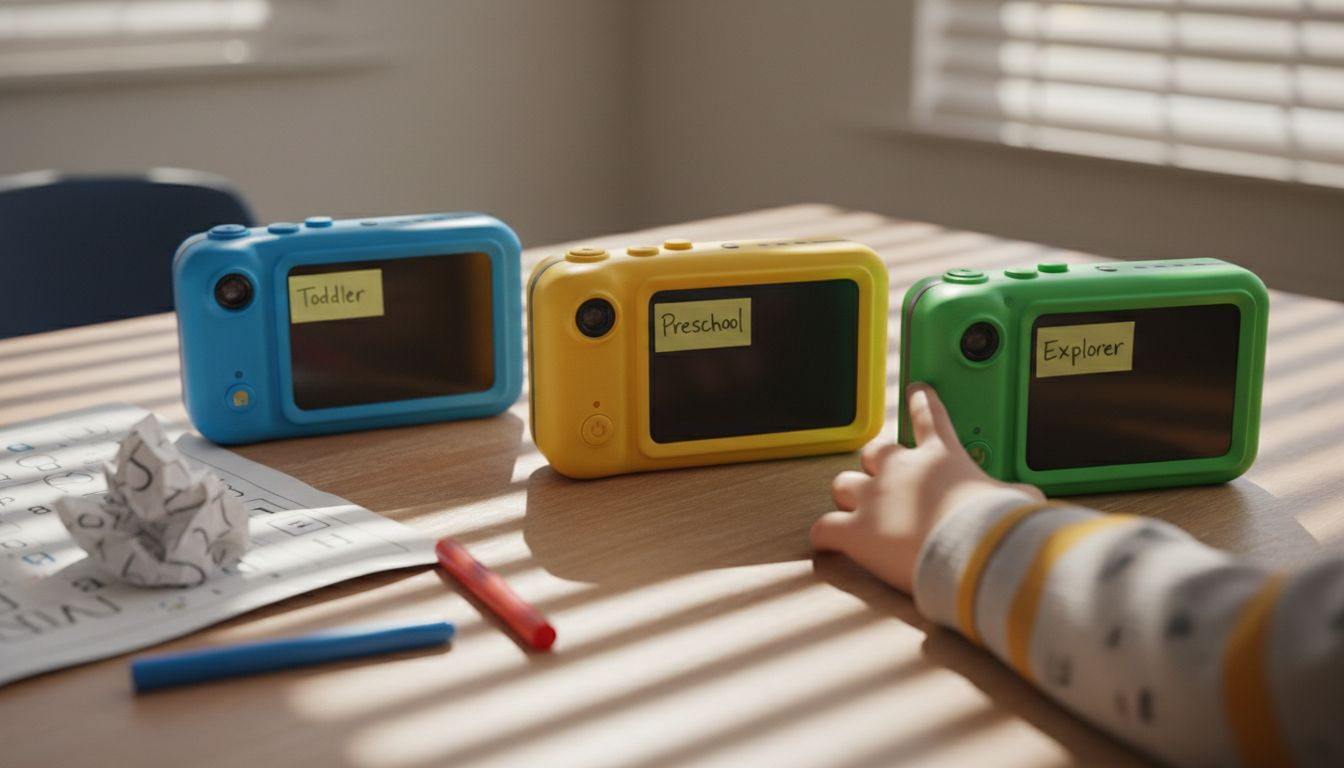
For quick reference, here are age-appropriate touchscreen camera categories and their main learning focus:
| Age Group | Camera Category | Learning Focus |
|---|---|---|
| 1-3 years | Toddler-Friendly | Sensory exploration and motor skills |
| 4-6 years | Preschool Digital | Basic photography and games |
| 7-10 years | Junior Photographer | Skill development and creative choices |
| 10+ years | Action/Creative Exploration | Advanced editing and outdoor discovery |
Modern kids’ touchscreen cameras are not just gadgets, but educational tools that develop visual literacy, creativity, and technological understanding.
Pro tip: When choosing a touchscreen camera for children, prioritise models that offer both fun features and opportunities for skill development.
Essential Features For Young Nature Explorers
Designing the perfect touchscreen digital camera for children requires a delicate balance between technological functionality and environmental education. Nature photography features must inspire curiosity while providing robust, child-friendly tools that encourage outdoor exploration and learning.
Key essential features for young nature explorers include:
- Robust Durability: Shockproof and water-resistant construction
- Educational Identification Modes: Built-in plant and animal recognition software
- Child-Safe Design: Ergonomic grips and protective casings
- Intuitive Touchscreen Interface: Simple, game-like navigation
- Eco-Learning Filters: Modes that highlight environmental details
- Long Battery Life: Extended exploration capabilities
- Sustainable Manufacturing: Recyclable materials and energy-efficient production
The most innovative cameras transform technological devices into interactive learning platforms. Professional designers carefully integrate educational elements that make photography an engaging experience for children, turning each snapshot into an opportunity for environmental discovery and connection with the natural world.
A truly exceptional children’s nature camera does more than capture images - it cultivates a lifelong passion for environmental stewardship and creative exploration.
Pro tip: Select cameras with multiple learning modes that encourage children to observe, document, and understand their natural surroundings.
Safety, Durability, And Eco-Friendly Materials
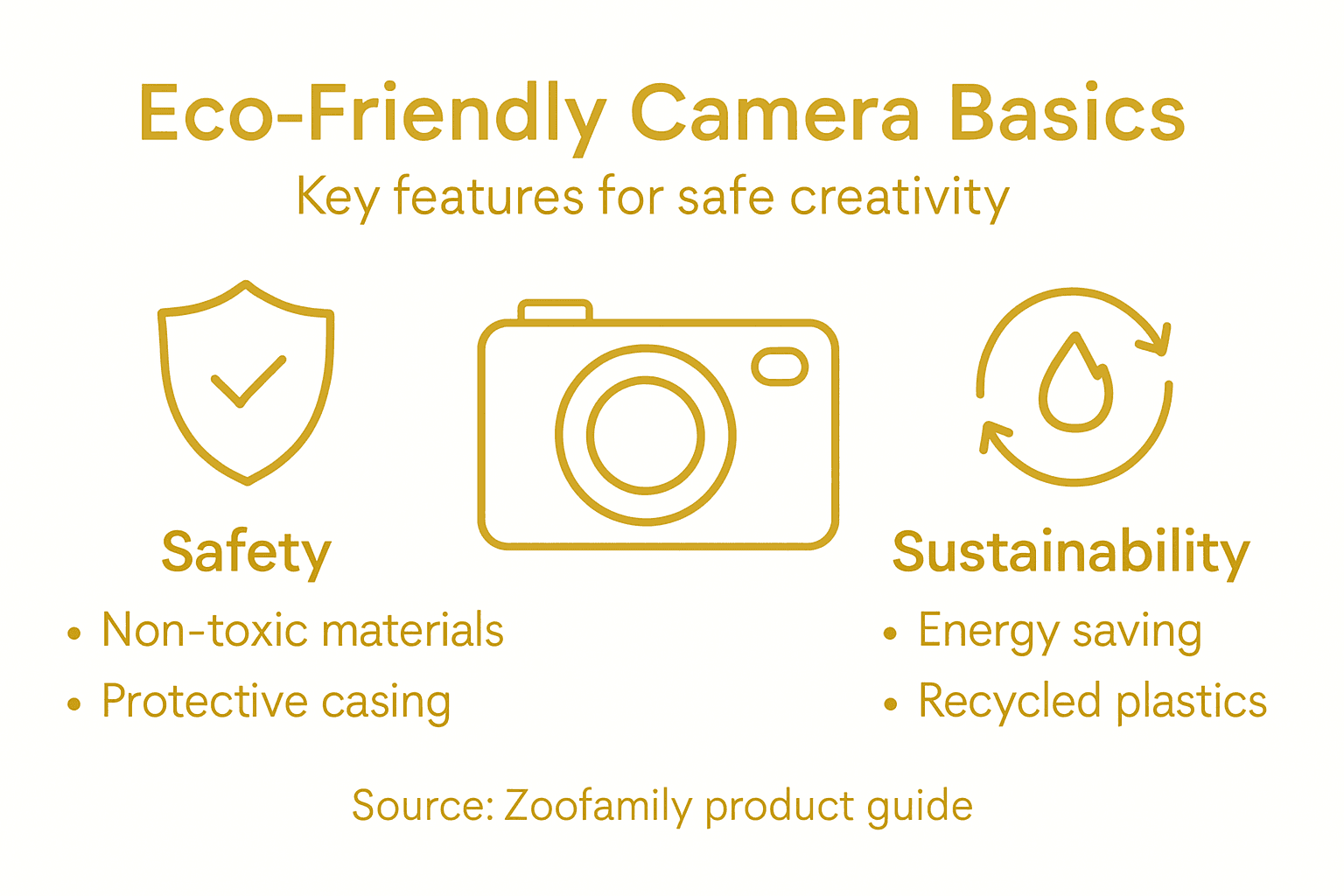
Today’s children’s digital cameras represent a remarkable intersection of technological innovation, safety considerations, and environmental responsibility. Child-friendly camera materials have undergone significant transformations, prioritising both user protection and sustainable manufacturing practices.
Key safety and sustainability features include:
- Non-Toxic Material Construction: BPA-free and food-grade polymers
- Shockproof Exterior Design: Robust casings that withstand accidental drops
- Water-Resistant Technology: Protection against environmental challenges
- Sustainable Manufacturing: Utilising recycled and renewable materials
- Safe Battery Containment: Secure compartments preventing accidental exposure
- Ergonomic Child-Friendly Grips: Designed for small hands and secure handling
- Recyclable Component Design: Easy disassembly for responsible disposal
Manufacturers are increasingly recognising that safety extends beyond physical protection. Modern cameras integrate intelligent design principles that protect children while simultaneously teaching environmental consciousness. The materials and construction methods reflect a holistic approach to product development, considering both immediate user experience and long-term ecological impact.
Truly innovative children’s cameras are more than technological devices - they are educational tools that demonstrate responsible manufacturing and environmental stewardship.
Pro tip: Inspect camera materials carefully, prioritising devices with transparent sustainability credentials and comprehensive safety certifications.
Encouraging Outdoor Discovery And Creativity
Touch screen cameras have become powerful tools for transforming children’s interactions with the natural world. Outdoor learning environments can stimulate extraordinary creativity by providing children with open-ended opportunities for exploration and sensory engagement.
Key strategies for nurturing outdoor creativity include:
- Unstructured Exploration: Allowing children to investigate without predetermined outcomes
- Sensory Material Interaction: Encouraging play with natural objects like leaves, stones, and sticks
- Photographic Storytelling: Using cameras to document personal nature discoveries
- Imaginative Interpretation: Creating narratives around photographed natural elements
- Environmental Problem-Solving: Challenging children to capture unique perspectives
- Collaborative Creative Projects: Developing group photography challenges
- Reflective Documentation: Discussing and analysing captured images together
The most transformative learning happens when children are empowered to see the world through their own unique lens. Professional educators recognise that creative discovery is not about perfect images, but about the journey of observation, imagination, and personal interpretation.
Outdoor creativity is less about technical perfection and more about awakening children’s innate sense of wonder and connection with the natural world.
Pro tip: Create weekly nature photography challenges that encourage children to explore different perspectives and tell visual stories through their images.
Empower Your Child’s Eco-Friendly Creativity with The Zoofamily
The article highlights the challenge of finding touchscreen digital cameras that combine advanced technology with environmental responsibility and child-friendly design. For parents seeking to nurture their children’s creativity while fostering a connection with nature, it is essential to select devices that are durable, educational and made from sustainable materials. The Zoofamily understands these needs and offers cameras designed not only to inspire visual storytelling but also to promote eco-conscious learning through carefully crafted animal references and sustainable production practices.
Discover how you can support your child’s outdoor exploration and creativity today with The Zoofamily’s innovative kids’ cameras. With every camera sold, a tree is planted, ensuring the natural beauty your child captures is protected for generations to come. Visit our website to explore our full range of eco-friendly products and start your child’s creative journey while making a positive impact on the planet.
Frequently Asked Questions
What are the environmental benefits of touchscreen digital cameras?
Touchscreen digital cameras are made from eco-friendly materials, designed to be energy-efficient, and often incorporate modular components for easier repair and a longer lifecycle, reducing waste.
How do touchscreen capabilities enhance the user experience in photography?
The intuitive touchscreen interface allows for instant image preview, quick adjustments, and real-time editing, making it easier for photographers to make creative decisions on the spot.
What types of touchscreen cameras are suitable for children?
Kids’ touchscreen cameras vary widely, including toddler-friendly models with oversized buttons, preschool cameras with simple interfaces, and junior cameras that provide manual settings for older children.
What essential features should I look for in a touchscreen camera for nature exploration?
Key features include robust durability (shockproof and water-resistant), educational identification modes, ergonomic design, intuitive interfaces, eco-learning filters, and long battery life for extended outdoor use.