

Every parent knows the joy of finding an activity that brings the family together under the stars. Discovering night photography with your children offers a creative way to connect with nature and nurture curiosity about the night sky. With the right blend of essential camera gear and thoughtful location choices, you can transform a simple evening walk into a magical moment of learning and discovery for both you and your children.
Table of Contents
- Step 1: Prepare Essential Camera Gear For Moon Shots
- Step 2: Select An Ideal Outdoor Location With Your Children
- Step 3: Adjust Camera Settings For Optimal Night Photos
- Step 4: Frame And Focus On The Moon For Perfect Clarity
- Step 5: Review Your Moon Photos And Inspire Nature Talks
Quick Summary
| Key Insight | Explanation |
|---|---|
| 1. Use a manual control camera | A camera with manual settings enables precise adjustments for optimal moon shots. Choose DSLR or mirrorless models for best results. |
| 2. Select appropriate outdoor locations | Opt for areas with open views and low light pollution, ensuring safety for children and opportunities for exploration. |
| 3. Master essential camera settings | Adjust aperture, ISO, and shutter speed to capture detailed moon images, aiming for f/8 to f/11 aperture and ISO 200-800. |
| 4. Apply compositional techniques | Use the rule of thirds and incorporate foreground elements to create visually interesting photographs that tell a story. |
| 5. Engage in post-photo discussions | Review images to highlight lunar details, encouraging discussions about the moon and fostering curiosity in children. |
Step 1: Prepare essential camera gear for moon shots
Photographing the moon requires specific equipment that transforms amateur snapshots into stunning celestial imagery. Your goal is to capture lunar details with precision and clarity.
To get started, you’ll need a camera with full manual control. Advanced astrophotography cameras offer the best results, typically DSLR or mirrorless models that allow complete control over settings. Essential gear includes:
- A telephoto lens with 300-600mm focal length
- A sturdy tripod for rock-solid stability
- A remote shutter release to prevent camera shake
When selecting your lens, opt for longer focal lengths that bring lunar craters and surface textures into sharp focus. Telephoto lenses between 300-600mm will let you zoom in and capture intricate lunar landscape details.
Stability is the secret weapon for crisp moon photographs.
Your tripod becomes crucial here - choose a model heavy enough to support your camera and lens without wobbling. A professional-grade tripod with robust leg locks and minimal flex will make a remarkable difference in your image quality.
Top tip: Consider using a cable release or camera’s built-in timer to further minimise vibrations during your lunar photography session.
Step 2: Select an ideal outdoor location with your children
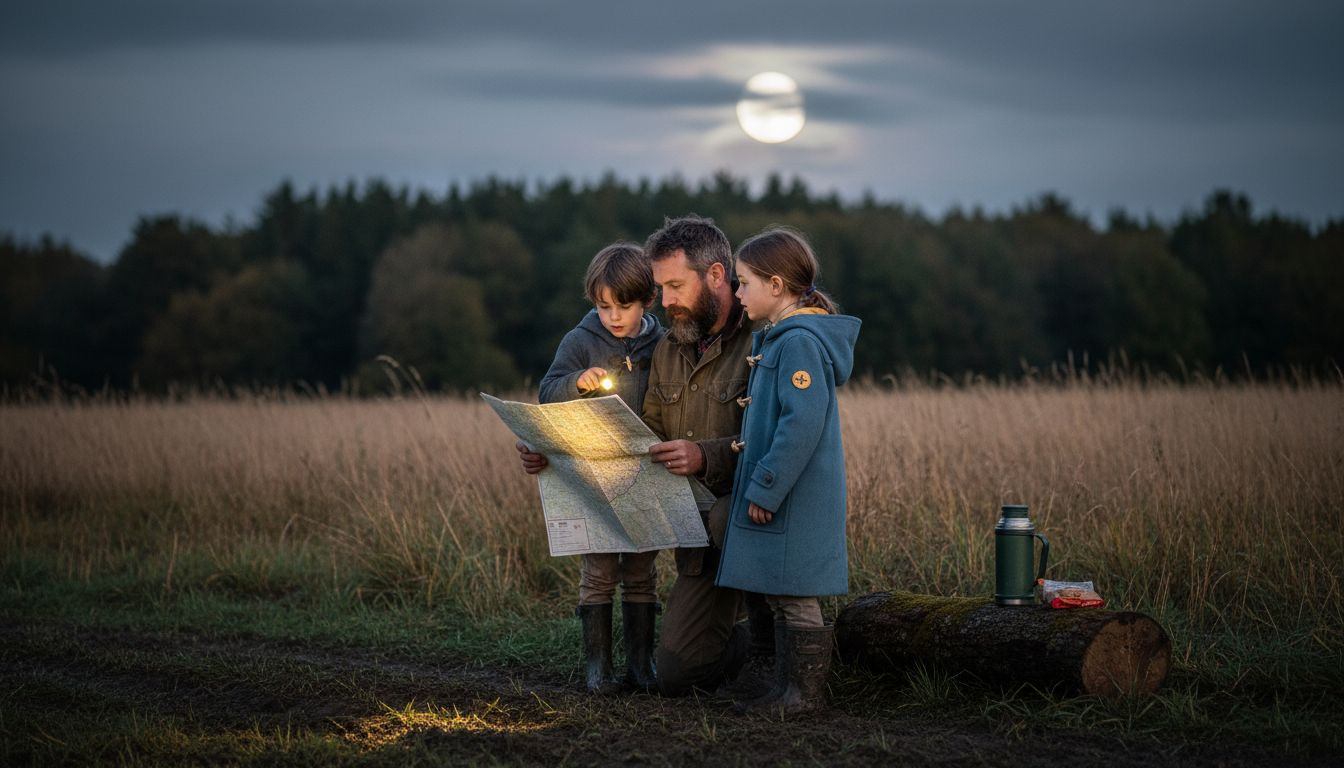
Choosing the perfect outdoor location for moon photography requires finding a space that offers both natural beauty and practical shooting conditions. Your mission is to discover a spot that keeps your children engaged while providing an unobstructed view of the night sky.
Child-friendly photography locations should balance safety, comfort, and opportunities for exploration. Consider these key elements when selecting your lunar photography site:
- Open spaces with minimal light pollution
- Areas near natural landscapes like fields or parks
- Locations with safe, stable ground for setting up equipment
- Spaces that allow children to move around comfortably
Ideal locations might include quiet countryside areas, spacious park edges, or designated nature reserves. These spots offer multiple advantages for your lunar photography adventure. Look for locations that provide:
Here is a summary comparing key aspects of ideal moon photography locations when involving children:
| Location Type | Visual Appeal | Safety Considerations | Child Engagement Benefit |
|---|---|---|---|
| Countryside fields | Wide open horizons | Fewer trip hazards | Space for exploration |
| Park edges | Natural backdrops | Well-maintained ground | Playground nearby for variety |
| Nature reserves | Rich outdoor scenery | Monitored and regulated | Wildlife enhances curiosity |
| Suburban gardens | Accessible setting | Supervised environment | Familiar, comfortable atmosphere |
- Clear horizon views
- Stable ground for tripod placement
- Nearby sheltered areas for breaks
- Minimal distractions for children
The best photography locations invite curiosity and comfort for young explorers.
Remember that involving your children in location scouting can transform the experience from a simple photography session into an exciting family adventure. Let them help choose the spot, making them active participants in the evening’s exploration.
Top tip: Scout your chosen location during daylight hours to identify potential challenges and exciting visual elements that might enhance your moon photography experience.
Step 3: Adjust camera settings for optimal night photos
Crafting breathtaking moon photographs requires understanding the delicate balance of camera settings that capture lunar details while maintaining image quality. Your goal is to transform technical knowledge into stunning celestial imagery that will inspire your children’s imagination.
Night photography camera techniques demand precision and patience. Key camera settings to master include:
- Manual mode for complete control
- Low ISO settings to reduce digital noise
- Wide aperture for maximum light collection
- Longer shutter speeds to capture lunar details
Start by switching your camera to manual mode, which allows you to individually adjust aperture, ISO, and shutter speed. For moon photography, aim for:
- Aperture around f/8 to f/11 for sharp details
- ISO between 200-800 depending on your camera’s capabilities
- Shutter speeds between 1/125 to 1/250 second
Precision in camera settings transforms ordinary shots into extraordinary memories.
Remember that each camera model performs differently, so experiment with settings and review your images frequently. Involve your children in this process, turning technical adjustments into an educational adventure about light, photography, and celestial exploration.
This reference table outlines common camera setting mistakes and their effects on moon photography:
| Mistake | Result in Image | How to Correct |
|---|---|---|
| High ISO | Excessive grain/noise | Reduce ISO to 200-800 |
| Wide aperture | Loss of lunar detail | Use f/8 to f/11 |
| Slow shutter speed | Motion blur or overexposure | Use 1/125 to 1/250 sec |
Top tip: Always shoot in RAW format to give yourself maximum flexibility during post-processing and image editing.
Step 4: Frame and focus on the moon for perfect clarity
Capturing the moon’s magnificent details requires more than technical knowledge - it demands an artistic approach that transforms a simple photograph into a memorable family experience. Your goal is to create an image that sparks wonder and curiosity in your children’s minds.
Lunar photography framing techniques involve precision and creative composition. When positioning your shot, consider these essential strategies:
- Rule of thirds for visual interest
- Off-centre placement to create dynamic compositions
- Incorporate foreground elements for context and scale
- Manual focus for razor-sharp lunar details
Start by positioning the moon slightly off-centre, following the rule of thirds. This technique creates visual tension and draws the viewer’s eye across the image. Look for natural elements like silhouetted trees or distant landscapes that can provide scale and depth to your lunar photograph.
Composition transforms a technical image into a storytelling moment.
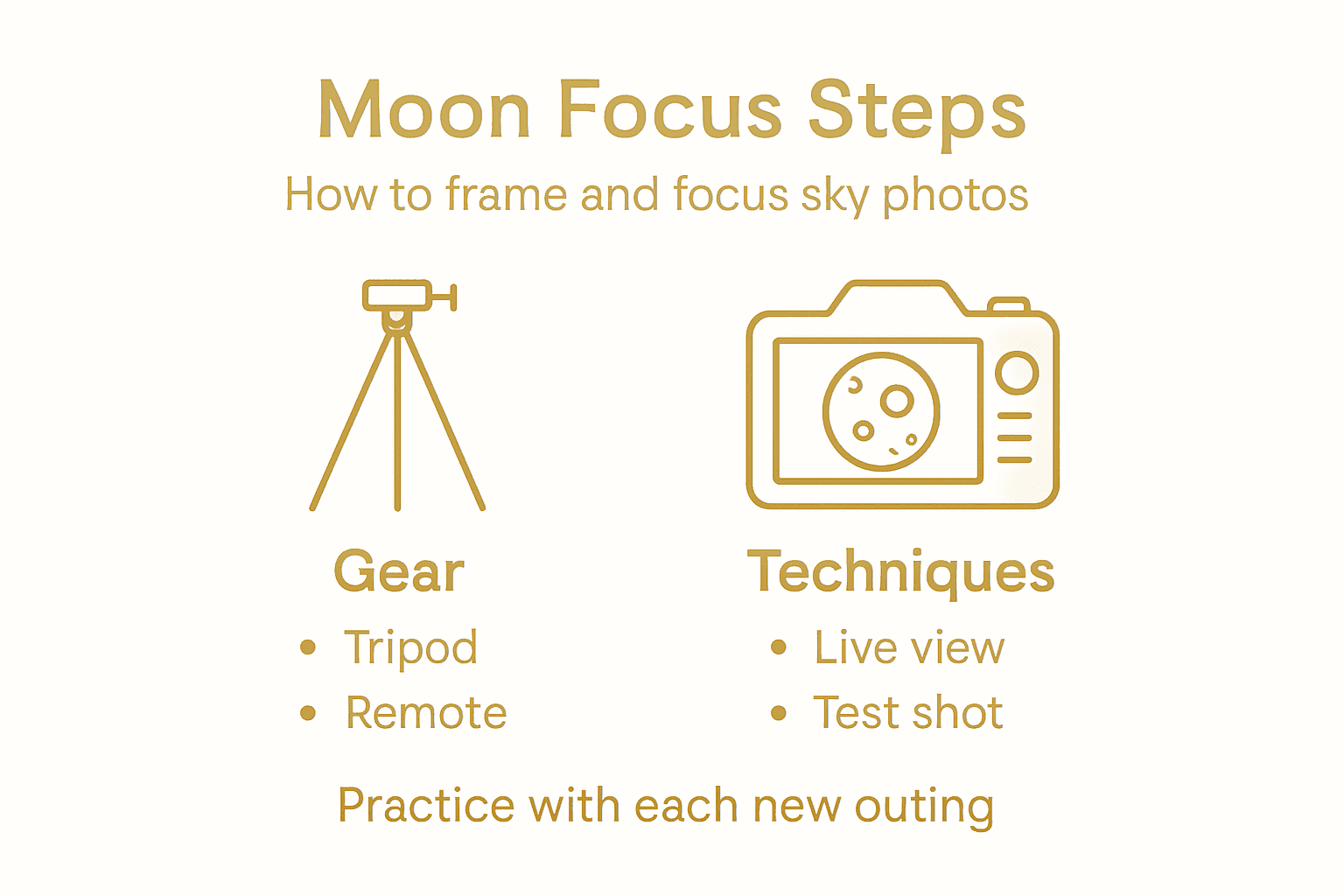
Utilise your camera’s live view function to fine-tune focus, zooming in digitally to ensure the moon’s edges are crisp and detailed. Engage your children in this process, explaining how tiny adjustments can dramatically improve the final image.
Top tip: Experiment with different focal lengths and compositions, encouraging your children to share their perspective on what makes a compelling moon photograph.
Step 5: Review your moon photos and inspire nature talks
Photography is more than capturing images - it’s about creating conversations and sparking curiosity about our natural world. Your moon photographs offer a unique opportunity to connect with your children and deepen their understanding of lunar landscapes and celestial wonder.
Nature photography discussion techniques transform simple snapshots into powerful learning experiences. When reviewing your lunar images together, focus on these engaging strategies:
- Highlight unique lunar details you discovered
- Discuss the moon’s changing phases
- Compare your images from different nights
- Explore scientific curiosities about lunar surfaces
Encourage your children to share their observations, asking open-ended questions like “What fascinating details do you notice?” or “How does the moon’s appearance change throughout the month?” This approach turns photo review into an interactive learning adventure.
Every photograph tells a story waiting to be explored.
Look for opportunities to connect your images with broader scientific concepts. Point out crater formations, discuss lunar exploration, and help your children understand how photography can document and celebrate natural phenomena.
Top tip: Create a family moon photography journal where you record observations, sketch lunar features, and track your growing understanding of our celestial neighbour.
Inspire Your Child’s Creative Night Photography Journey with The Zoofamily
Capturing the moon’s magic can be challenging, especially when balancing the right camera gear, perfect settings, and engaging little explorers outdoors. If you want to overcome common hurdles like stability issues, tricky focus adjustments, or keeping kids curious about nature the way the article suggests with terms like “telephoto lens”, “manual focus”, and “child-friendly photography locations”, The Zoofamily offers a wonderful solution. Our specially designed kids’ cameras and binoculars are not only easy to use but also built to spark imagination through animal-themed designs that connect young minds to the natural world.

Equip your family for memorable moonlit adventures with tools made just for creative outdoor kids. Discover how our gear supports your child’s learning and love for nature while you create timeless photos under the night sky. Don’t wait to nurture your child’s curiosity and protect the planet—explore our collection at The Zoofamily and start your next astronomy-inspired family outing today.
Frequently Asked Questions
What camera settings should I use for moon photography with children?
To capture stunning moon photographs, set your camera to manual mode, use a low ISO (between 200-800), an aperture of f/8 to f/11, and shutter speeds between 1/125 to 1/250 second. Experiment with these settings during your shoot to find the best results while involving your kids in the process.
How can I make moon photography engaging for my children?
Involve your children in the entire process, from scouting locations to adjusting settings. Encourage them to ask questions, share their observations, and even discuss the moon’s phases, thereby turning photography into an educational adventure.
What type of lens is best for moon photography when shooting with kids?
Using a telephoto lens with a focal length between 300-600mm is ideal for capturing detailed moon images. This will allow you to focus on the moon’s surface textures while keeping your children engaged in the excitement of seeing such details.
How do I ensure my photos are stable and clear during night photography?
A sturdy tripod is essential to prevent camera shake during exposures. Choose a heavy tripod that can support your equipment and set it up on stable ground to achieve crisp moon images.
Why is location important for moon photography with children?
Selecting the right outdoor location offers safety, minimal light pollution, and opportunities for exploration, which keeps your children interested and engaged. Look for open spaces like parks or fields that allow for a clear view of the night sky and make the experience enjoyable for all.
What should I do after reviewing our moon photos with my kids?
After reviewing your moon photos, discuss the unique details you captured and encourage your children to express their thoughts. Start a family moon photography journal to document your experiences and share observations, making it a fun and educational activity.
Recommended
- Aventure Nocturne Nature : Éveiller L’écologie chez l’Enfant – The Zoofamily
- 7 idées goûter nature enfants pour éveiller leur curiosité – The Zoofamily
- 7 top livres enfants nature pour éveiller l’écologie – The Zoofamily
- Meilleurs gadgets plein air enfants – Comparatif 2025 – The Zoofamily
- Pumpkin Party – Glowing Halloween Jack-O’-Lanterns – 3 Wizard Clothing