

TL;DR:
- Nature photography fosters genuine curiosity and skills while encouraging outdoor exploration that benefits children’s wellbeing.
- Starting with simple tools like smartphones or basic cameras and focusing on playful challenges helps children develop creativity and environmental awareness.
- Allowing children to make their own choices and experience the consequences promotes authentic creative growth and a lasting connection to nature.
Every mum knows that feeling of standing in a gift shop, scanning shelves full of plastic toys, wondering which one will still matter in six months. If you want something that sparks genuine curiosity, builds real skills, and pulls children away from screens and into the garden, nature photography ticks every box. Research involving 390 children in the UK’s Ridgeway50 project showed measurable improvements in wellbeing and nature connection when young people engaged with outdoor creative activities. This guide shows you how to start, what to buy, and how to make it last.
Table of Contents
- Why nature photography for children is the perfect creative gift
- Getting started: Tools and preparation for young nature photographers
- Step-by-step guide: Making nature photography fun and effective for kids
- Common pitfalls, troubleshooting, and expert shortcuts
- From first photo to future passion: Building skills and confidence through nature photography
- What most guides miss: Creativity comes from choice, not complexity
- Take your child’s nature photography adventure further
- Frequently asked questions
Key Takeaways
| Point | Details |
|---|---|
| Easy to start | Children can begin exploring nature photography with simple tools and playful activities. |
| Evidence-backed benefits | Photo-based nature exploration improves wellbeing, creativity, and environmental attitudes. |
| Stepwise skill-building | Progression from basic handling to creative projects sustains interest over time. |
| Support creativity | Limiting choices and encouraging curiosity nurtures original thinking and fun. |
| Educational and bonding | Nature photography sessions offer enjoyable, shared learning for both parents and children. |
Why nature photography for children is the perfect creative gift
Most creative hobbies are either purely artistic or purely educational. Nature photography is both at once, and that rare combination is exactly why it works so well as a long-term gift. Rather than sitting at a table following instructions, children move through real environments, noticing textures, light, and movement they would ordinarily walk straight past.
The outdoor element matters enormously. Fresh air and physical movement are obvious benefits, but nature photography adds a layer of intentional observation that changes how children see the world around them. When a child is hunting for the perfect shot of a bumblebee or a raindrop on a leaf, they slow down. That mindful attention is something many children rarely practise in day-to-day life.
The emotional benefits are well documented. Evidence from the Ridgeway50 project shows that children who engage with nature through creative activities develop stronger pro-environmental attitudes and improved executive function, which covers skills like planning, focus, and self-regulation. These are the same skills that support academic learning, social confidence, and problem-solving.
Key benefits you can expect your child to experience:
- Improved patience and attention to detail through waiting for the right moment
- Stronger emotional connection to local nature, from garden birds to woodland fungi
- Creative confidence, as every image is a personal expression
- Physical activity woven naturally into the session
- A hobby that scales, from a backyard at age five to European wildlife reserves at fifteen
Exploring nature through cameras is one of the most natural bridges between screen-based play and outdoor adventure, and children rarely notice the transition because it feels like a game. Meanwhile, kids’ cameras fostering creativity have become a growing category precisely because parents are recognising this powerful combination.
Ready to get started? Let’s look at the practical tools and preparation that make the early sessions genuinely enjoyable.
Getting started: Tools and preparation for young nature photographers
The biggest mistake most parents make is overcomplicating the gear. A child does not need an expensive DSLR to take beautiful, meaningful nature photographs. In fact, starting simple is backed by teaching methodology research that recommends smartphones or basic kids’ cameras and playful challenges like photo hunts to find five different leaf shapes as the most effective entry point.
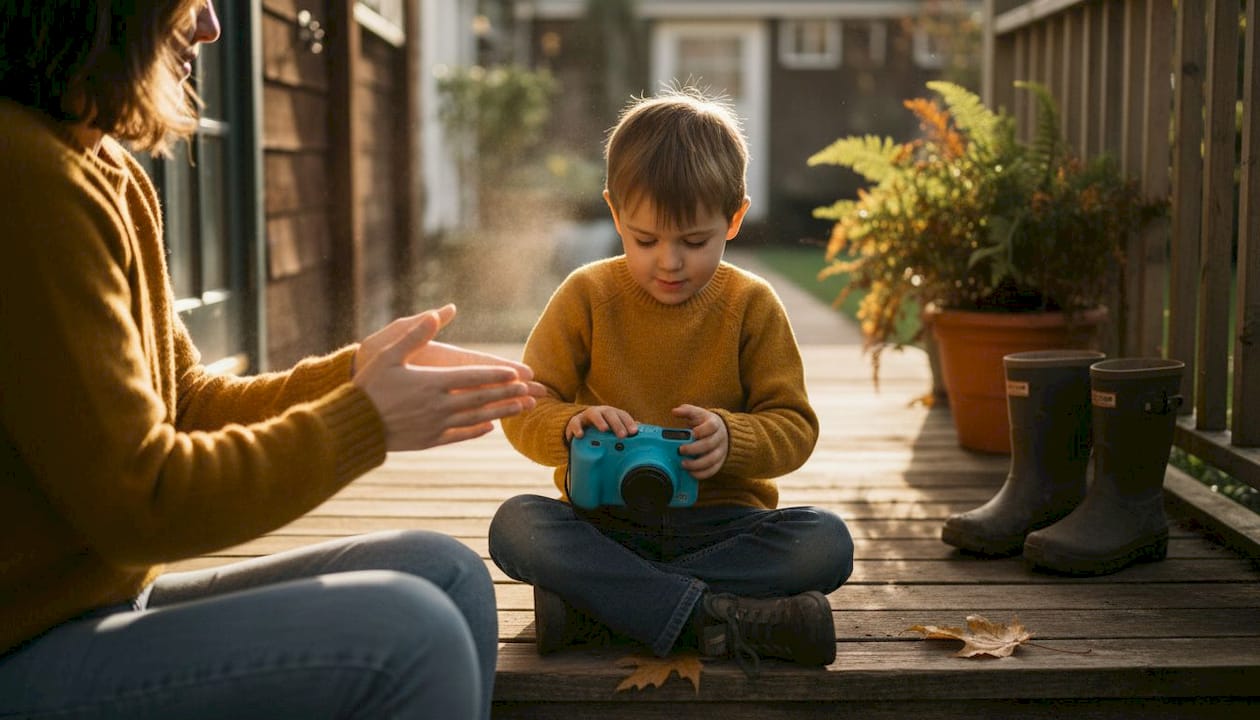
Here is a practical overview of age-appropriate equipment and session length:
| Age group | Recommended tool | Session length | Focus activity |
|---|---|---|---|
| 5 to 7 years | Kids’ camera or smartphone | 15 to 30 minutes | Photo hunt: colours or shapes |
| 8 to 10 years | Kids’ camera or entry DSLR | 30 to 45 minutes | Close-up textures, bugs |
| 11 to 12 years | Entry DSLR or mirrorless | 45 to 60 minutes | Composition, light, wildlife |
Beyond the camera itself, a few additional items make outdoor sessions run smoothly:
- Weather protection: A simple waterproof bag or case keeps cameras safe on unpredictable European days
- Backup battery or power bank: Nothing ends a session faster than a flat battery
- Snacks and water: Genuinely underestimated for maintaining enthusiasm in younger children
- Simple attachments: A clip-on macro lens for smartphones costs very little and opens up a whole new world of tiny subjects
- Notebook or sticker journal: Encourages children to record what they photographed and why
Camera basics for young children are simpler than most parents expect, and a fifteen-minute introduction before the first session is usually enough to get things moving confidently. If you want more structured guidance, European workshops are widely available. Julius Kramer’s children’s workshops in Germany cater to ages six to sixteen, welcome smartphones, and cost around €79. Wild Intrigue in the UK runs sessions for ages seven to twelve, and Wildlife Photographer UK offers family walks led by experienced naturalists. These are brilliant options for a birthday treat or school holiday activity.
Pro Tip: Choose your first location carefully. Your own back garden or the nearest local park is genuinely ideal. Familiar surroundings mean children feel safe to explore, and you will be surprised by how much photographic potential exists within fifty metres of your front door.
Ecological photography for children frames these sessions as small acts of environmental care, which adds a sense of purpose that resonates strongly with children aged eight and above. Now that you are equipped and prepared, let’s move into the practical session itself.
Step-by-step guide: Making nature photography fun and effective for kids
A well-run thirty-minute session produces better results than an exhausting two-hour marathon. The key is a clear, simple structure that feels like play rather than a lesson.
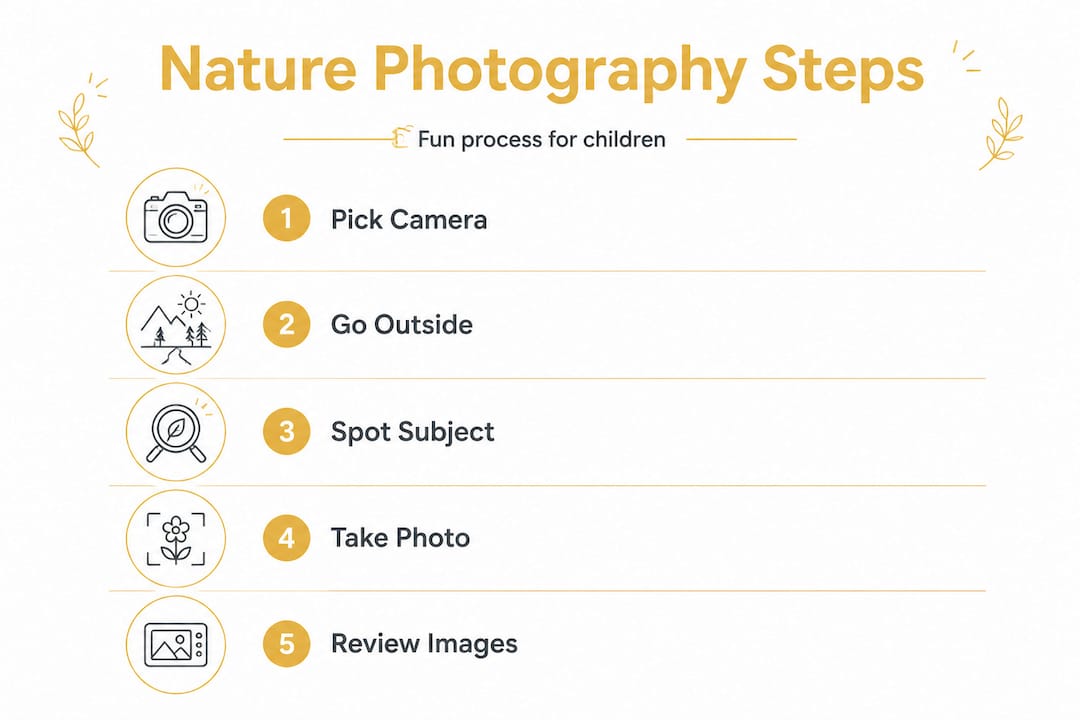
Here is a reliable sequence for a beginner’s session:
- Camera handling (five minutes): Let your child hold the camera, press the shutter, and look through the viewfinder. No pressure to create great images yet.
- The photo hunt challenge: Give a theme. “Find three things that are smaller than your thumbnail.” Themes transform wandering into purposeful exploration.
- Slow down and look closer: Crouch down together and examine a patch of ground, bark, or a flower from different angles before shooting.
- Review one image together: Pick one photo from the session and talk about what you both love about it. Not what could be better. What works.
- Celebrate the session: A small ritual like choosing a favourite image to display at home reinforces that this matters.
The manual versus auto mode debate is worth addressing early. Core photography principles show that understanding aperture for depth of field, shutter speed for freezing motion, and ISO for low-light sensitivity builds genuine creative understanding rather than lucky snaps. However, forcing manual mode on a frustrated six-year-old is counterproductive. A practical middle ground is to use auto mode for the very first session, then introduce one manual setting per outing.
| Mode | Best for | What the child learns |
|---|---|---|
| Full auto | Very first sessions | Camera handling, composition |
| Aperture priority | Insects, flowers | Depth of field, blurry backgrounds |
| Shutter priority | Birds, moving water | Freezing motion, creative blur |
| Manual | Advanced sessions | Full creative control |
Ethics should enter the conversation from the very beginning. Teaching wildlife respect means explaining that a good nature photographer observes from a respectful distance, never disturbs nests or burrows, and never uses food to lure animals. Children absorb these values quickly when they are framed as part of being a real photographer rather than as rules imposed from outside.
Pro Tip: Print one photograph from each session and let your child blu-tack it to their bedroom wall. A growing gallery of their own work is one of the most powerful motivators for continued enthusiasm.
The companion guide on animal photography tips for children covers specific techniques for photographing garden birds, insects, and small mammals without causing disturbance. Pairing these with teaching photography ethics ensures your child builds good habits from the start.
Common pitfalls, troubleshooting, and expert shortcuts
Even the most enthusiastic start can hit a wall. Recognising common pitfalls before they happen saves a lot of frustration on both sides.
The most common issues parents encounter:
- Too much structure too soon: Children need space to discover. If every session feels like a lesson, curiosity fades fast.
- Ignoring the child’s own ideas: When a child wants to photograph a puddle instead of a butterfly, let them. Their instincts are part of the creative process.
- Technical overload: Introducing aperture, shutter speed, and ISO in the same session overwhelms even enthusiastic children.
- Leaving gear unprotected: Cameras left in direct sun or caught in a shower without protection stop working. A simple drawstring bag solves this.
- Blurry images: Usually caused by camera shake. Teach children to hold the camera with both hands and tuck their elbows into their body.
“The most important thing you can give a beginner photographer is not technique. It is permission to make interesting mistakes and time to notice what worked.”
When it comes to camera choice, research comparing camera types highlights a genuine tension. Screen-free cameras like Camp Snap remove all digital distraction and work brilliantly for younger children or those prone to getting lost in menus. Feature-rich cameras like those from VTech offer guided settings and built-in games that some children respond to better. Neither is universally correct. Match the device to your child’s learning style and personality rather than to what works for someone else’s child.
Expert shortcuts that consistently improve creative sessions:
- Restrict choices deliberately: Give your child only one subject category per session. This constraint, oddly, produces more creative results than total freedom.
- Pre-visualise together: Before the session, look at one or two nature photographs online and ask what makes them interesting. This visual warm-up activates creative thinking.
- Brief reviews only: Spend no more than five minutes reviewing images at the end of a session. Long critiques exhaust children and can dampen enthusiasm for the next outing.
Guidance on photography ethics for children is especially useful here, because ethical behaviour in the field is one of the first places sessions go wrong when children get excited around animals.
From first photo to future passion: Building skills and confidence through nature photography
The progression from first blurry image to confident young photographer follows a natural arc, and your role as a mum is mostly to celebrate each stage rather than push towards the next.
A simple progression looks like this:
- Stage one: Backyard and simple tools. Discover what a camera can do, build confidence, enjoy the process.
- Stage two: Macro and close-up work. A clip-on macro lens or a camera with a close-up mode opens up an entirely new scale of subject matter.
- Stage three: Workshops and projects. A personal project like “Twelve months of our garden” gives older children sustained creative purpose.
- Stage four: Advanced gear and community. Joining a junior photography club or entering a nature photography competition adds social dimension and healthy challenge.
Nature study photography progression research consistently shows that regular review of past images reinforces learning and builds genuine creative development over time. A monthly family photo review session, where everyone shares a favourite image and says one thing they love about it, is a small ritual with a surprisingly large impact.
The wellbeing benefits compound as children grow. A child who has spent years quietly observing garden wildlife and noticing seasonal change develops a form of environmental literacy that shapes how they relate to the natural world well into adulthood. Creative nature photography benefits extend far beyond the individual images. They grow a relationship with nature itself.
What most guides miss: Creativity comes from choice, not complexity
Here is something most photography guides for children get wrong. They focus too heavily on technique and not enough on agency. A child who is told exactly what to photograph, from which angle, and at which settings, is not really being creative. They are following instructions with a camera in their hands.
True creative growth happens when children make choices and experience the direct consequences of those choices. Expert guidance from Visual Wilderness supports this strongly, noting that children who are given fewer options but genuine control over those options develop both technical skills and creative instincts faster than those given maximum freedom or maximum instruction.
The uncomfortable truth is that the parent’s job in these sessions is to step back more than most of us feel comfortable doing. Offer the camera. Suggest a theme. Then follow their lead. The instinct to correct a composition or suggest a better angle is natural, but resisting it consistently produces children who genuinely own their creative voice.
Allowing mistakes is not permissive parenting. It is good creative education. A blurry image that the child chose intentionally for artistic reasons is more valuable than a technically perfect shot they took because you pointed them at it. Encouraging creative animal photography means giving children real creative problems to solve, not just subjects to point at.
This philosophy is built into everything we do at The Zoofamily. Our cameras are designed with animal references that spark children’s curiosity about the natural world, and for every camera sold, we plant one tree. Because nurturing a child’s love of nature is not just good for them. It matters for the planet they will inherit.
Take your child’s nature photography adventure further
If this guide has sparked ideas for your family, you are in exactly the right place to take the next step.
At The Zoofamily, we have brought together inspiring resources for creative families who want to connect their children with nature through play, creativity, and purposeful exploration. Whether you are looking for the right first camera, a new outdoor challenge, or ideas for keeping the momentum going through every season, our guides and community are built around families just like yours. Start by browsing our guide to exploring nature with cameras for practical next steps that will have your child outside and shooting within the hour.
Frequently asked questions
What is the best age to introduce children to nature photography?
Children as young as five can start with simple cameras or smartphones, using short, playful sessions tailored to their attention span, with photo hunts that make learning feel like a game.
Do children need expensive cameras to start nature photography?
No. Most children begin very successfully with a smartphone or a basic kids’ camera, and simple tools are often recommended as the most effective starting point for building genuine creative confidence.
How long should photography sessions last for children?
For ages five to eight, keep sessions under sixty minutes to maintain enthusiasm and avoid fatigue. Shorter, more frequent sessions produce better results than occasional long outings.
Are there nature photography workshops for kids in Europe?
Yes. Options include Julius Kramer’s workshops in Germany, Wild Intrigue in the UK, and family-friendly photography walks run by Wildlife Photographer UK, with similar programmes in Denmark and Sweden.
Is manual mode too difficult for young learners?
With calm, simple guidance, many children pick up manual controls surprisingly quickly, and having real creative control over settings actually encourages deeper thinking rather than passive point-and-shoot behaviour.
Recommended
- Photographier lumières naturelles : guide pour mamans créatives – The Zoofamily
- Initier à la photographie écologique pour enfants facilement – The Zoofamily
- Nature photography for kids: inspiring creativity – The Zoofamily
- What to Wear: The Ultimate Kids Photoshoot Outfit Guide for Mallorca | Journal | Arnd v. Wedemeyer
- Create Cinematic Digital Memories for Kids: A Parent’s Guide — WonderLens | WonderLens