

TL;DR:
- Children’s interactions with animals foster empathy, curiosity, and responsibility toward nature. Repeated, meaningful animal play enhances long-term ecological awareness, especially in urban settings. Genuine engagement and sustainable, respectful toys are key to building lasting nature connections.
Most parents sense that children who spend time with animals grow up caring more about the world around them. But this is not just a warm feeling. Animal encounters have a measurable positive effect on children’s connection to nature, and the implications for raising eco-conscious kids are significant. Whether you live close to farmland or in the heart of a city, the way your child plays with, learns about, and relates to animals shapes their environmental values far more deeply than most parents realise. This article shows you exactly how to harness that power.
Table of Contents
- Why relating to animals in play matters
- Types of animal-related play that drive connection
- Choosing animal play activities and toys for eco-awareness
- Integrating animal play into everyday routines
- A fresh perspective: why true connection matters more than cute toys
- Support your child’s nature journey with The Zoofamily
- Frequently asked questions
Key Takeaways
| Point | Details |
|---|---|
| Animal play boosts nature bonds | Evidence shows children playing with animals or animal themes develop stronger connections to nature. |
| Interactive play is most effective | Hands-on and imaginative animal play, including eco-toys, significantly raises environmental awareness. |
| Product choices matter | Selecting repairable, sustainable toys helps model real environmental values for children. |
| Daily routine integration | Embedding animal-themed play into family routines maximises eco-benefits and keeps children engaged. |
Why relating to animals in play matters
Animal-centred play is not simply a childhood pastime. It is, in fact, one of the most effective tools available for building genuine environmental awareness in young children. Research consistently shows that when children interact with animals, whether real or through thoughtfully designed play, they develop empathy, curiosity, and a sense of responsibility towards the natural world.
A wide-ranging meta-analysis (d=0.18) confirmed that animal encounters produce a real, if modest, boost to children’s nature connection. That might sound small, but across hundreds of thousands of children and repeated experiences, those effects compound into lasting values. Think of it like building a muscle: each encounter adds a little more strength, and over time the difference becomes profound.
Data from educational settings reinforces this further. Children attending a zoo preschool scored 10.3% higher on environmental awareness measures than children in a typical urban preschool. That is a substantial gap, and it points to something important: the context in which children encounter animals genuinely shapes how they see the world.
“When children are given repeated, meaningful contact with animals, they stop seeing nature as a backdrop and start seeing it as a community they belong to.”
For parents, the practical takeaway is clear. You do not need to move to the countryside or sign up for an expensive wildlife programme. Eco education through play can start right at home, in your garden, at a local park, or even with the right toys on a rainy afternoon. The key is making animal interaction a regular, intentional part of your child’s world.
Key reasons why animal-centred play builds eco-awareness:
- It develops empathy by encouraging children to consider how another creature feels
- It builds observational skills as children watch animal behaviour closely
- It creates emotional investment in wildlife, making conservation feel personal rather than abstract
- It encourages questions about habitats, food chains, and ecosystems naturally and joyfully
- Understanding animal interaction benefits helps parents select the most meaningful experiences
Types of animal-related play that drive connection
Not all animal play is created equal. Some types of interaction are far more effective at building a lasting sense of nature connection, particularly for children growing up in urban environments who may rarely encounter wildlife in their daily lives.
Research into interactive animal-mimicking toys found that relational nature play using these tools significantly increased urban children’s sense of connection to nature. This is striking because it means even symbolic or imaginative animal play, when designed thoughtfully, can have real effects. The child does not need to hold a live hedgehog to start developing genuine empathy for it.
At the same time, repeated nature contacts maximise well-being and nature bonding far more than infrequent, spectacular events. A single trip to a safari park is memorable, but it is the weekly garden wildlife spotting, the daily walk where your child mimics a fox’s trot, and the regular bedtime story featuring a real animal that builds the deeper bond.
| Type of animal play | Environmental impact | Best for |
|---|---|---|
| Live animal encounters (farms, zoos, wildlife gardens) | Very high nature connection | All ages, especially 3 to 8 |
| Animal role-play and mimicry games | High empathy and curiosity development | Toddlers and preschoolers |
| Animal-themed interactive toys | Strong connection for urban children | City families, indoor play |
| Wildlife spotting walks | Builds observational skills | School-age children |
| Eco-crafts using natural materials | Combines creativity with nature respect | Mixed ages, family projects |
There are also nature-based play ideas that blend several of these approaches, combining imaginative play with real outdoor encounters for maximum effect.
Pro Tip: Rotate between different types of animal play throughout the week. A Monday morning of animal-mimicry games at home followed by a Saturday morning of birdwatching creates the kind of repeated, varied contact that research shows builds the strongest nature bond.
Choosing animal play activities and toys for eco-awareness
When you are selecting toys or activities for your child, the question is not simply “Does my child enjoy this?” It is also “Does this teach something meaningful about the natural world, and does it do so in a way that is itself environmentally responsible?”
The concept of repair and regeneration is central to truly sustainable play. Toys that break after two weeks, end up in landfill, and are instantly replaced teach children exactly the wrong lesson about how we relate to the natural world. Instead, look for products that can be repaired, passed on, or made from compostable or recycled materials. The toy itself becomes part of the environmental message.
Equally important is how the toy or activity frames the relationship between children and animals. Products that model multispecies respect rather than a human-dominant perspective, where the animal is something to be commanded or used, help children develop genuine empathy rather than just superficial affection. A toy that invites your child to observe, mimic, and learn from an animal is fundamentally different from one that turns an animal into a prop.
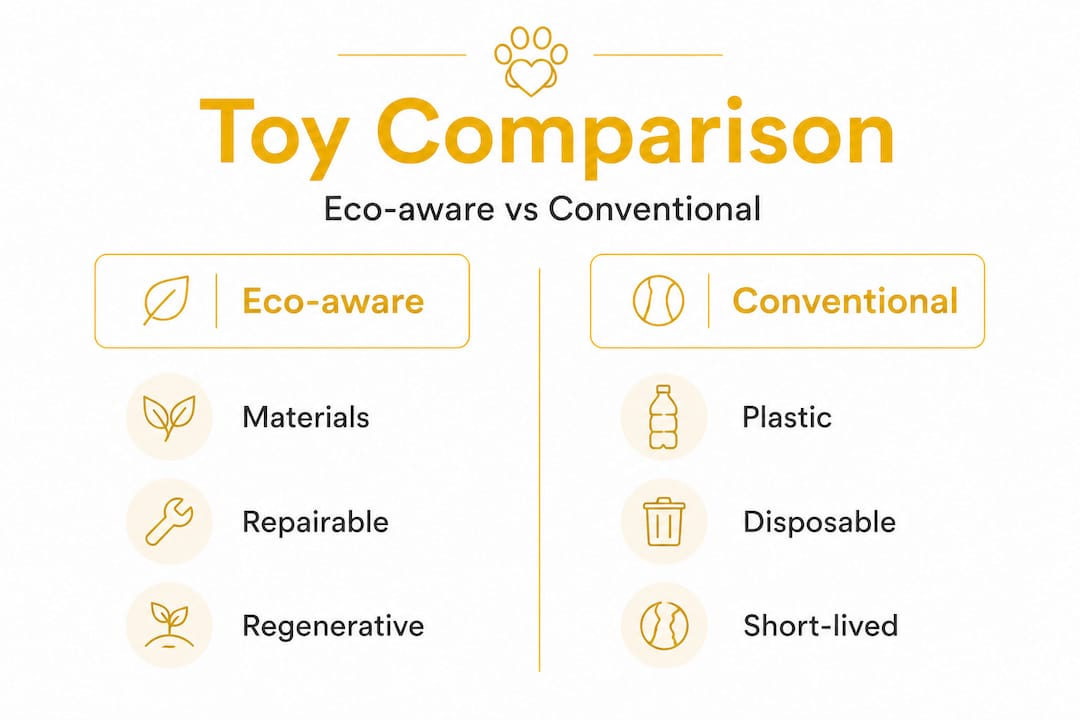
| Feature | Eco-aware toy | Conventional toy |
|---|---|---|
| Material | Recycled, natural, or compostable | Virgin plastic |
| Durability | Designed for repair and reuse | Designed to be replaced |
| Animal portrayal | Respectful, behaviourally accurate | Anthropomorphised or trivialised |
| Learning potential | Encourages curiosity and empathy | Primarily decorative or competitive |
| Environmental message | Embedded in design and play | Absent or incidental |
Consider also looking at eco-friendly pet products as a reference point for the kinds of sustainability standards that well-designed, nature-respecting items can meet. The same principles translate directly into the world of children’s play.
Here is a straightforward process for embedding environmental messages into everyday play:
- Choose an animal your child is fascinated by and research it together, focusing on its real habitat and behaviours
- Select a toy or activity that represents the animal accurately and respectfully
- Build a story around the animal’s world: What does it eat? Where does it sleep? What threatens it?
- Extend the play into a conservation action, such as planting a flower to support pollinators or picking up litter on a nature walk
- Reflect together at the end of the play session: What did we learn? How can we help?
Pro Tip: Check out nature play parenting tips for more structured guidance on turning everyday play into genuine eco-education moments.
Integrating animal play into everyday routines
One of the most powerful things you can do as a parent is make animal-related play a normal, unremarkable part of daily life rather than a special occasion. When nature connection is woven into routines, it becomes part of who your child is, not just something they do on a school trip.
Here are practical ways to bring animal themes into every part of the week:
- Morning walks: Encourage your child to spot and identify birds, insects, or squirrels before school. Keep a simple tally in a notebook
- Bedtime stories: Choose books featuring real animals in their natural habitats rather than purely fantastical ones. Discuss the animal’s real life after the story
- Weekend outings: Visit local nature reserves, farms, or even a well-run urban zoo to give context to the animals your child plays with at home
- Eco-crafts: Make simple feeders for garden birds, build an insect hotel from cardboard and sticks, or press and label wildflowers
- Role-play at home: Invite your child to “be” a particular animal for an afternoon, thinking about what it eats, how it moves, and what its world feels like
- Geography and habitat learning: Connect learning through geography play to animal habitats, placing animals on maps and exploring why certain creatures live in certain places
The academic benefits of this approach are well documented. Nature play programmes have been shown to improve collaboration, motivation, self-regulation, and even mathematics skills, all without any negative impact on core academic outcomes. When children are engaged with nature and animals, they are not sacrificing their education; they are enriching it.
The social and emotional growth is equally valuable. Children who regularly engage in animal-centred play tend to show stronger empathy in their peer relationships, greater patience, and a more developed sense of responsibility. These are qualities that serve them across every area of life.
A fresh perspective: why true connection matters more than cute toys
Here is something we at The Zoofamily have come to believe strongly, even when it is not always comfortable to say: not every animal-themed product or activity genuinely builds nature connection. Some of it is surface-level. Some of it is, frankly, just cute branding.
There is a real risk that children anthropomorphise animals so completely that they stop seeing them as real creatures with real needs and start seeing them purely as emotional mirrors. A child who loves their stuffed lion but has no idea what a lion actually eats, where it lives, or why its habitat is disappearing has not developed eco-awareness. They have developed a preference for a shape and a colour.
The same applies to toys marketed as “eco-friendly” but designed with the same disposable logic as conventional plastic products. A wooden toy that snaps on first use and cannot be repaired teaches children nothing meaningful about sustainability. The design philosophy behind a product matters just as much as the material it is made from.
What actually works, in our experience, is building genuine relationship. Not performing closeness to nature, but actually fostering it through repeated, honest, curious engagement. That means guiding your child to ask real questions about real animals. It means being comfortable saying “I do not know, let’s find out together.” It means choosing products, activities, and experiences that invite your child into a real deep nature connection rather than a simulated one.
The most powerful thing you can model for your child is genuine curiosity. When they see you stop to watch a bee, identify a bird call, or pick up a worm from the pavement with care, they learn that other creatures matter. That lesson will outlast any toy.
Support your child’s nature journey with The Zoofamily
At The Zoofamily, everything we create is designed to make genuine nature connection accessible, joyful, and lasting. Our kids’ cameras, binoculars, and walkie-talkies are built around real animal references, not because animals are cute, but because they are the most powerful gateway into the natural world.
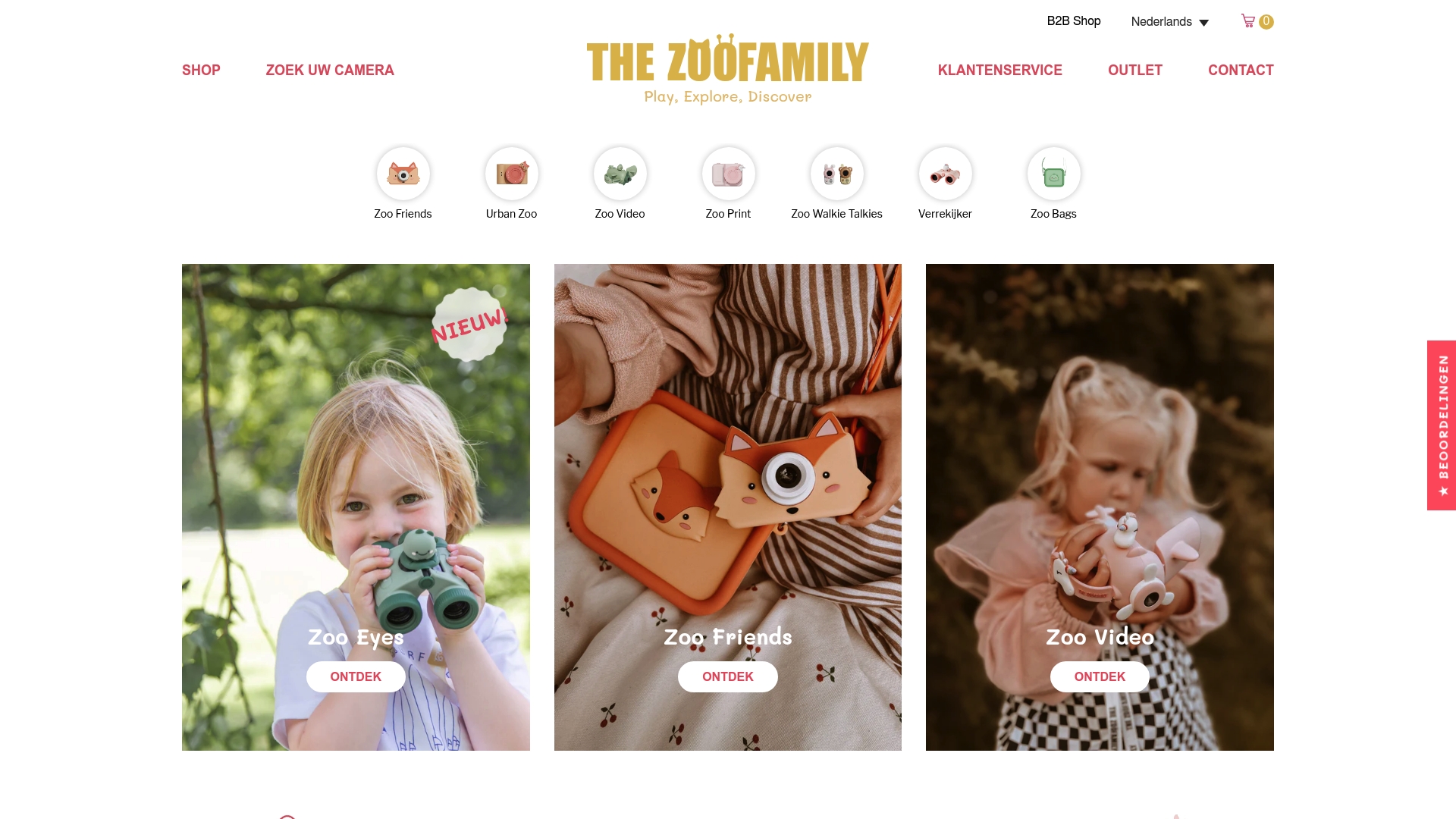
Every camera sold through The Zoofamily results in a tree being planted, because we believe the best way to teach children to love nature is to visibly invest in it ourselves. Explore our guides, browse our thoughtfully designed products, and discover how further animal play reading can support your family’s eco-aware journey. We have made it easy to take the next step, whatever that looks like for your family today.
Frequently asked questions
Does animal play actually increase environmental awareness in kids?
Yes, research shows children in animal-rich environments such as zoo preschools had 10.3% higher environmental awareness scores than peers in conventional urban settings.
How can urban families use animal-themed play for nature connection?
Interactive animal-mimicking toys have been shown to meaningfully increase urban children’s sense of nature connection, alongside role-playing and neighbourhood wildlife spotting.
Is there an age when animal play is most beneficial for eco-awareness?
Early childhood is the most formative window, as foundational attitudes towards nature and other creatures are established during these years and tend to persist into adulthood.
What should I look for in eco-friendly animal play products?
Prioritise toys that are durable, repairable, and made from sustainable materials. Strong evidence suggests that repair and regeneration cycles embedded in toy design are what make eco-play genuinely sustainable rather than simply well-marketed.
Are nature-based play programmes effective for learning?
Absolutely. Research confirms that nature play programmes improve self-regulation, collaboration, motivation, and number skills, all without any negative effect on standard academic attainment.