

TL;DR:
- Letting children walk barefoot on natural surfaces fosters health benefits through direct contact with Earth’s electrons. Evidence suggests that earthing improves sleep, reduces stress, and supports immune development in children, with low risk involved. Urban and rural European families can easily incorporate outdoor earthing into daily routines by utilizing parks, beaches, gardens, and natural landscapes.
Most parents would never guess that the simple act of letting a child run barefoot across a patch of grass could carry genuine health implications. Yet direct skin contact with the Earth’s surface, whether on grass, soil, sand, or in water, is the foundation of earthing: a practice rooted in the idea that reconnecting with the planet’s natural electrons supports the body’s own systems. For eco-conscious families across Europe, earthing is not a trend to chase but a quiet return to something children have always done. This article covers what the science says, how to practise it safely, and why it matters beyond the headlines.
Table of Contents
- What is earthing and how does it work?
- Proven and potential benefits for children
- How to practise earthing safely with children
- Earthing in European family lifestyles: real-life examples
- The whole-child view: what most guides miss about earthing
- Support your family’s nature connection journey
- Frequently asked questions
Key Takeaways
| Point | Details |
|---|---|
| Outdoor earthing is simple | Direct contact with grass, soil or sand is the easiest and safest way for children to connect with nature. |
| Potential wellbeing gains | Benefits may include better sleep, less stress and stronger immune function, though proof in children is growing. |
| Make earthing a habit | Regular outdoor play and barefoot time can be woven into everyday family routines year-round. |
| Prioritise safety always | Avoid unsafe places, storms, and household devices that may pose risks, especially for younger children. |
What is earthing and how does it work?
Earthing, sometimes called grounding, is exactly what it sounds like. Walking barefoot on grass, soil, sand, or in a stream reconnects the body with the electrons on the Earth’s surface. Proponents suggest that modern lifestyles, including rubber-soled shoes, raised beds, and indoor living, have cut us off from this natural exchange.
“The Earth’s surface carries a mild negative charge, and direct contact is thought to allow free electrons to transfer into the body, where they may act as antioxidants, reducing oxidative stress and inflammation.”
This mechanism is primarily studied in adults, and rigorous trials specifically in children are still limited. That said, the theoretical basis draws on well-established principles in bioelectromagnetism, and the practice itself costs nothing and poses almost no risk when done with common sense.
Earthing is not limited to barefoot walking. It includes:
- Playing in soil or mud with bare hands
- Wading through a stream or sitting on a sandy beach
- Sitting or lying on grass, especially in warm months
- Nature-based play that naturally involves ground contact, such as den building or garden digging
- Hugging trees or pressing hands to bark
Each of these involves direct, uninsulated contact between skin and a natural surface. The principle is consistent: remove the barrier, allow contact, repeat regularly.
Proven and potential benefits for children
Now that we understand what earthing involves, let’s examine the science and possible benefits for children.
Research on earthing for adults is more developed than for children, but the findings offer a useful reference point. A randomised controlled trial on earthing mats in adults demonstrated significant improvements in sleep quality, insomnia severity, daytime sleepiness, and stress reduction after 31 days, with all results reaching statistical significance at p<0.05. While this trial did not include children, the outcomes point to mechanisms that are likely relevant across age groups.
For children specifically, reported benefits span a range of physical and emotional areas. These include improved sleep quality and duration, reduced stress and anxiety, better emotional regulation, enhanced focus, decreased inflammation, immune support, and richer sensory development. Many of these are consistent with what we know about outdoor and child development and outdoors research more broadly.
| Benefit area | Evidence in adults | Evidence in children |
|---|---|---|
| Sleep quality | Strong (RCT confirmed) | Emerging, anecdotal |
| Stress and anxiety | Moderate | Promising, nature-based studies |
| Immune support | Theoretical | Finnish playground studies |
| Sensory development | Not studied | Positive practitioner reports |
| Emotional regulation | Indirect | Nature exposure studies support |
A note on the Finnish playground research: Studies from Finnish daycare centres found that when artificial surfaces were replaced with natural elements such as soil, mud, and plants, children showed measurable shifts in gut and skin microbiota. These changes were linked to decreased pathogen load and increased immune-regulating T cells, suggesting that regular contact with natural ground surfaces carries real biological consequences for young bodies.
Pro Tip: You do not need to wait for peer-reviewed certainty to introduce earthing. The practice carries virtually no downside for healthy children and fits naturally into outdoor routines you may already have.
The picture that emerges is one of a low-risk activity with meaningful potential. More child-specific clinical trials are needed, but the absence of harm combined with evidence from adult studies and nature-exposure research makes earthing worth incorporating into family life.
How to practise earthing safely with children
With a clear view of potential benefits, it is crucial to understand how to introduce earthing safely and enjoyably in everyday family life.
The most important distinction is between outdoor and indoor earthing. Outdoor earthing, meaning barefoot contact with natural surfaces, is safe for children of all ages in the same way that ordinary outdoor play is safe. It requires no equipment, no specialised knowledge, and no financial investment. Indoor options, such as grounding mats and sheets connected to a grounded electrical outlet, are more complicated, particularly for young children.
| Method | Suitable age | Key safety note |
|---|---|---|
| Barefoot on grass or soil | All ages | Check for sharp objects beforehand |
| Beach or sand play | All ages | Supervise near water at all times |
| Mud and garden play | All ages | Wash hands before eating |
| Grounding mats (indoor) | 3 and above | Cords must be fully secured |
| Grounding sheets (indoor) | Age 4 and above | Cord risks outweigh benefits for under-4s |
Here is a simple routine for introducing outdoor earthing to children of different ages:
- Start with play they already love. Let toddlers dig in the garden barefoot. Let older children explore a park path without shoes on warm days.
- Make it a ritual. After school, ten minutes of barefoot time in the garden before homework becomes an anchor point in the day.
- Combine it with other outdoor science activities. Counting worms, pressing leaves, or collecting stones all involve ground contact naturally.
- Dress for the season. In cooler months, brief barefoot exposure followed by warm socks keeps the practice going without discomfort.
- Model it yourself. Children ground more willingly when they see adults doing it alongside them.
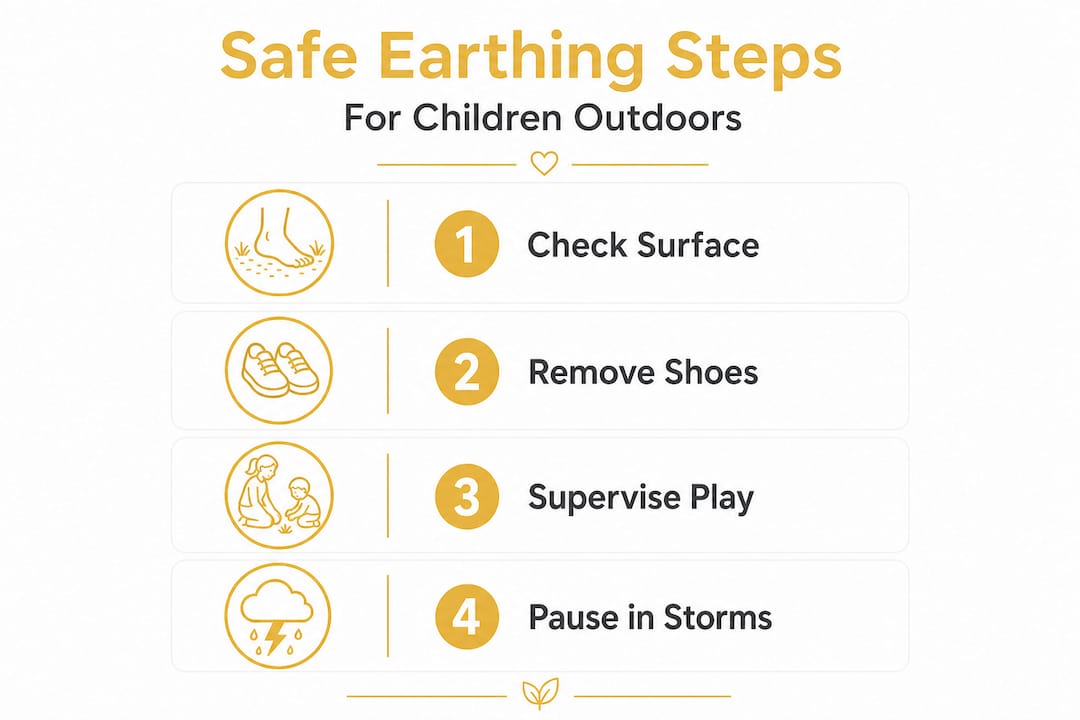
There are specific situations where earthing should be paused. Never practise earthing outdoors during electrical storms or in areas with unsafe terrain, such as broken glass, heavily contaminated soil, or near open water without supervision. Children with medical implants or devices should receive clearance from a paediatrician before using any indoor grounding products. For the vast majority of healthy children, outdoor earthing is as safe as going to the playground.
Nature play ideas that incorporate earthing need not be elaborate. A muddy puddle, a sandy path, and a patch of lawn are all you need. The best earthing sessions often happen when parents stop planning and simply let children be in a natural space.
Pro Tip: Common methods like barefoot walking, gardening, and wading are also the most enjoyable for children. The activity does not need to feel therapeutic to have therapeutic value.
Earthing in European family lifestyles: real-life examples
To make earthing part of real family life, here are practical ways European parents are already connecting their children to nature year-round.
One of the strengths of earthing for European families is that the continent is extraordinarily well-suited to it. Urban greenspaces, coastal regions, forests, and community gardens are part of the fabric of daily life in cities from Amsterdam to Barcelona. Eco-conscious parenting finds a natural home in this landscape, where outdoor connection is part of the cultural identity, not an add-on.
Consider what earthing might look like across different European settings:
- Urban families in cities can use public parks, riverside paths, and community allotments. Even a small balcony with a tray of soil gives a toddler meaningful contact with the earth.
- Coastal families have a natural advantage. Sand and shallow water are two of the most effective earthing surfaces available, and beach visits already form a central part of many European family routines.
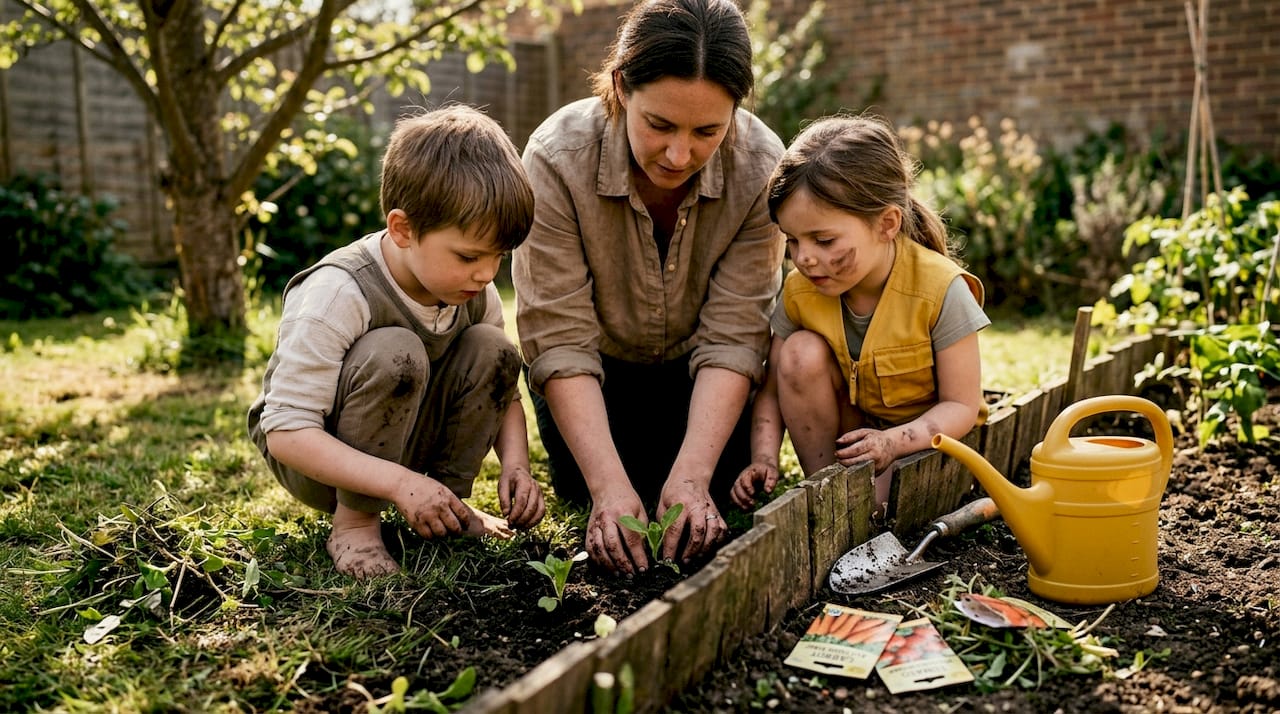
- Rural families with garden access can build earthing into daily outdoor time, letting children play barefoot from spring through autumn as a matter of course.
- Forest-rich regions such as Scandinavia, Germany, and Central Europe offer forest bathing opportunities that combine earthing with the broader benefits of time among trees.
The Finnish research adds an important layer here. Finnish daycare studies that introduced natural ground elements like mud and soil into playgrounds saw measurable improvements in children’s immune profiles, including shifts in microbiota that reduced inflammation risk and the likelihood of developing allergies. This is not merely about electrons. Physical contact with living soil introduces children’s bodies to a rich ecosystem of microorganisms that appear to train the immune system in beneficial ways.
Winter is the most common barrier for European families. A few practical solutions:
- Short barefoot sessions indoors on a natural floor surface (wood, stone) maintain the habit without cold exposure
- Indoor potting activities let children get hands into soil even in January
- On mild winter days, even five minutes of barefoot contact with a garden surface carries value
- Parent-child outdoor bonding in cooler months, dressed appropriately and with brief barefoot moments, keeps the connection alive
The point is not perfection. A child who plays in a muddy park twice a week year-round is getting far more from the earth than one who manages a single organised outdoor event each month. Frequency and regularity matter more than duration.
Creative outdoor activities that involve ground contact, from nature art to barefoot treasure hunts, keep the practice feeling like play rather than a health intervention, which is exactly as it should be.
The whole-child view: what most guides miss about earthing
Most guides to earthing for children focus on the physical: inflammation, sleep, immunity. These are important, but they tell only part of the story. What earthing really offers families is something quieter and more lasting: a shared reason to slow down together.
When a parent and child sit on a patch of grass together without a screen or an agenda, something shifts in the relationship. The conversation becomes more open. The child becomes more observant. The parent becomes more present. These are not measurable outcomes in any trial, but they are real. Nature connection literature consistently finds that children who spend regular time in natural environments develop stronger emotional bonds with caregivers who join them.
We also want to raise a caution about the indoor grounding products market. Grounding sheets and mats are being marketed with significant confidence, but contrasting expert views reveal a real split: therapeutic practitioners report strong benefits, while paediatric health commentators point to cord risks, unverified claims, and the possibility that the product category is substituting for something far simpler and better: outdoor play. For children, particularly those under four, the risks of indoor cord-based products outweigh the unproven benefits when free, safe, effective outdoor earthing is available.
Our perspective is this: the most grounded children we have ever seen were not connected to a mat. They were connected to a garden, a beach, or a forest. Products can complement outdoor practice for older children when used carefully, but they should never replace it. Spend the money on a good waterproof jacket and go outside instead. The earth is free, available, and waiting.
Support your family’s nature connection journey
For parents looking to take the next step in connecting their children with nature, having the right guidance and inspiration can make all the difference.
At The Zoofamily, we believe that a child who discovers the wonder of the natural world early carries that curiosity for life. Our resources are designed to help families make outdoor time richer, more creative, and more frequent. Whether your child is just beginning to explore their garden barefoot or already leading woodland adventures, our child outdoor development guides offer practical support for every stage.

We also know that the best ideas come from other families doing the same thing. Our community of eco-conscious parents across Europe is a source of inspiration, seasonal ideas, and honest conversation about what works. From nature play inspiration to guidance on choosing outdoor tools that grow with your child, The Zoofamily is built around one belief: that time in nature is one of the greatest gifts you can give your family.
Frequently asked questions
Is earthing safe for babies and toddlers?
Yes, outdoor barefoot earthing is as safe as ordinary play for children of any age. Avoid indoor grounding sheets with cords for children under four due to strangulation risks, and consult a paediatrician if you have any concerns.
How long should children spend earthing each day?
Even 15 to 30 minutes of regular contact with natural surfaces can be beneficial, though any consistent outdoor barefoot time supports wellbeing.
Are there times when earthing should be avoided?
Yes. Do not practise earthing during electrical storms, on terrain with sharp debris, or if your child uses a medical device without prior medical approval.
Do indoor grounding products offer the same benefits as outdoor earthing?
Outdoor earthing is better supported by evidence for children. Indoor sheets carry safety concerns for young children and their efficacy has not been confirmed in child-specific trials.
Can urban families still practise earthing effectively?
Absolutely. Parks, sandy beaches, community gardens, and grassy squares are all effective earthing environments that most European urban families can access regularly.