

European migratory birds cover astonishing distances, soaring thousands of kilometres each year across continents and seas. Most people marvel at their beauty or envy their sense of freedom. What stops most in their tracks is the fact that these tiny travellers rely on biological navigation systems so precise they can detect the Earth’s magnetic field through their eyes. The real wonder is not just the journey but the ingenious ways these birds keep entire ecosystems running along the way.
Table of Contents
- What Are European Migratory Birds?
- Why Are European Migratory Birds Important?
- How Do European Migratory Birds Navigate?
- Key Threats Facing European Migratory Birds
- The Role Of European Migratory Birds In Ecosystems
Quick Summary
| Takeaway | Explanation |
|---|---|
| European migratory birds follow key flyways. | These avian routes include the Atlantic, East Atlantic, and Mediterranean Flyways, crucial for their seasonal journeys. |
| Migration is influenced by seasonal factors. | Changing daylight and temperature trigger migration, addressing food scarcity and breeding needs. |
| Migratory birds are vital for ecosystems. | They aid in seed dispersal, pest control, and serve as indicators of environmental health. |
| Human activities threaten migratory birds. | Habitat loss, climate change, and mortality risks from infrastructure pose significant challenges to their survival. |
| International cooperation is essential for conservation. | Protecting migratory habitats and routes requires collaboration across countries to maintain biodiversity. |
What Are European Migratory Birds?
European migratory birds represent a fascinating group of avian species that embark on extraordinary seasonal journeys across vast geographical landscapes. These remarkable creatures navigate complex migration routes, travelling thousands of kilometres between their breeding and wintering grounds, driven by instinctive survival strategies developed over millennia.
Understanding Migratory Patterns
Migratory birds in Europe follow specific routes known as flyways, which serve as biological highways connecting different ecological regions. According to European Bird Portal, these primary migration corridors include:
- The Atlantic Flyway
- The East Atlantic Flyway
- The Mediterranean Flyway
These routes are not random but carefully selected pathways that offer optimal conditions for survival, including food availability, suitable habitats, and minimal environmental risks.
Species Diversity and Migration Triggers
European migratory birds encompass a wide range of species, including storks, swallows, swifts, geese, and many songbirds. Their migration is typically triggered by changing seasonal conditions, primarily alterations in daylight duration and temperature.
Key factors motivating migration include:
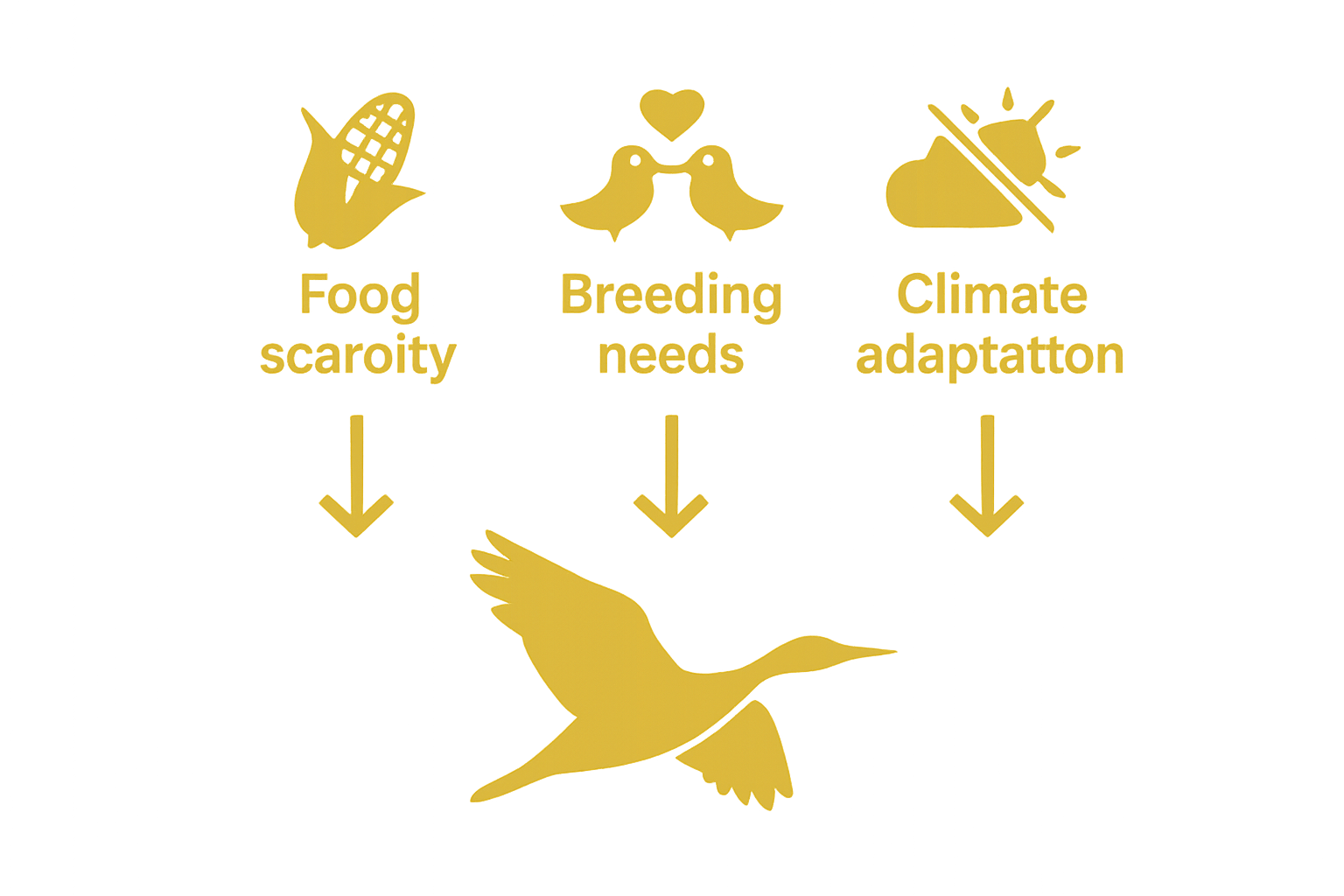
- Seasonal food scarcity
- Breeding requirements
- Climate adaptation
The intricate process of migration involves complex biological mechanisms, with birds using multiple navigation techniques such as magnetic field sensing, celestial orientation, and landmark recognition to traverse continents with remarkable precision.
These incredible journeys demonstrate nature’s extraordinary adaptability and the remarkable survival strategies of European migratory birds.
Why Are European Migratory Birds Important?
European migratory birds play a critical role in maintaining global ecological balance, functioning as intricate components of complex environmental systems that sustain biodiversity and support numerous interconnected natural processes.
Ecosystem Balance and Biodiversity
These remarkable avian species contribute significantly to ecosystem health through multiple essential functions. According to BirdLife International, migratory birds act as critical environmental indicators, signalling changes in habitat conditions and climate patterns.
Key ecological contributions include:
- Seed dispersal across different geographical regions
- Pollination of numerous plant species
- Population control of insect and small animal populations
Environmental and Agricultural Significance
Migratory birds are fundamental to agricultural sustainability and natural pest management. They consume substantial quantities of insects that could potentially damage crops, providing a natural and cost-effective pest control mechanism that supports agricultural productivity.
Additionally, these birds serve as important research subjects for understanding broader environmental changes. Their migration patterns and population dynamics offer scientists valuable insights into climate change impacts, habitat transformations, and broader ecological shifts.
Conservation and Global Interconnectedness
The migration of European birds represents a powerful demonstration of global ecological interconnectedness. These species traverse multiple countries and continents, highlighting the necessity of international cooperation in wildlife conservation.
By protecting migratory bird habitats and migration routes, we not only preserve these extraordinary creatures but also maintain the delicate balance of ecosystems that support life on our planet. Their journeys remind us of the intricate, interdependent nature of global environmental systems.
How Do European Migratory Birds Navigate?
The navigation skills of European migratory birds represent one of nature’s most extraordinary navigational feats, involving sophisticated biological mechanisms that enable precise long-distance travel across continents and oceans.
Biological Navigation Systems
Migratory birds possess an astonishing array of navigation techniques that combine multiple sensory and biological capabilities. According to Max Planck Institute for Ornithology, these birds utilise complex navigational strategies that integrate several remarkable mechanisms.
Key navigation techniques include:
- Magnetic field detection
- Celestial orientation using stars and sun
- Landmark recognition
- Inherited migratory route memory
Sensory Perception Mechanisms
Birds have specialised sensory capabilities that allow them to perceive environmental cues invisible to humans. They can detect the Earth’s magnetic field through a process called magnetoreception, which involves cryptochrome proteins in their eyes that interact with geomagnetic signals.
Additionally, these birds possess an extraordinary ability to create mental maps of landscapes, remembering specific geographical features, wind patterns, and topographical details that guide their intricate migratory journeys.
Evolutionary Adaptation and Learning
Navigation skills are not purely instinctive but represent a complex interplay between genetic inheritance and learned behaviours. Young birds often learn migration routes from older, experienced members of their species, combining inherited navigational blueprints with practical knowledge gained through observation and experience.
This remarkable navigation system demonstrates the incredible adaptability and sophisticated biological intelligence of European migratory birds, enabling them to undertake extraordinary intercontinental journeys with remarkable precision.
The following table offers a concise comparison of the key navigation mechanisms used by European migratory birds, highlighting their essence and how each supports migration.
| Navigation Mechanism | Description | Example Function |
|---|---|---|
| Magnetic Field Detection | Sensing Earth’s magnetic field using cryptochrome proteins in eyes | Determines north-south orientation for long journeys |
| Celestial Orientation | Using the sun and stars as visual cues | Night and day guidance across continents |
| Landmark Recognition | Remembering and identifying geographic features | Following rivers, coastlines, or mountain ranges |
| Inherited Route Memory | Genetic inheritance and learned knowledge from other birds | Following traditional migration paths year after year |
Key Threats Facing European Migratory Birds
European migratory birds confront an array of complex challenges that threaten their survival, with human activities and environmental changes increasingly undermining their intricate ecological existence.
Habitat Loss and Fragmentation
One of the most significant threats to migratory birds is the progressive destruction and fragmentation of natural habitats. According to the European Environment Agency, these birds are experiencing dramatic reductions in suitable breeding and stopover locations due to urbanisation, agricultural expansion, and infrastructure development.
Key habitat disruption factors include:
- Deforestation of crucial breeding grounds
- Conversion of wetlands into agricultural land
- Urban sprawl encroaching on natural ecosystems
- Destruction of coastal and riverine habitats
Climate Change and Environmental Shifts
Climate change poses a profound challenge to migratory bird populations, dramatically altering their traditional migration patterns and ecological relationships. Shifting temperature patterns and unpredictable weather conditions disrupt breeding cycles, food availability, and migration timing.
Critical climate-related challenges involve:
- Earlier spring arrivals
- Misalignment between bird migration and food source availability
- Increased frequency of extreme weather events
Human-Induced Mortality Risks
Human activities present direct and indirect mortality risks for migratory birds. These range from deliberate hunting and illegal bird trapping to unintentional deaths caused by infrastructure and environmental pollution.
Significant human-related threats encompass:
- Collisions with buildings and wind turbines
- Electromagnetic radiation interference
- Light pollution disrupting navigation
- Illegal hunting along migration routes
Addressing these multifaceted challenges requires comprehensive international conservation strategies and a profound commitment to protecting these extraordinary avian species and their complex ecological networks.
Below is a table summarising the main threats facing European migratory birds, their causes, and the associated impacts. This helps to clarify the different challenges these birds encounter across Europe.
| Threat | Cause | Impact on Birds |
|---|---|---|
| Habitat Loss & Fragmentation | Urbanisation, agriculture, infrastructure | Fewer breeding/stopover sites, disrupted migration routes |
| Climate Change | Shifting temperatures, extreme weather | Mismatched migration timing, food scarcity, altered breeding cycles |
| Human-induced Mortality | Hunting, collisions, pollution | Population declines due to deaths en route, disorientation, and increased predation risk |
| Light & Electromagnetic Pollution | Artificial lights, radiation | Disrupted navigation and orientation, increased energy expenditure |
The Role of European Migratory Birds in Ecosystems
European migratory birds serve as critical ecological architects, performing intricate and essential functions that maintain complex environmental balance and support diverse biological systems across multiple geographical regions.
Ecological Balance and Nutrient Distribution
Migratory birds play a fundamental role in nutrient cycling and ecosystem connectivity. According to European Ecological Federation, these avian species contribute significantly to transferring nutrients across different habitats through their migratory movements and excretory patterns.
Key ecological contributions include:
- Seed dispersal across extensive geographical ranges
- Nutrient transportation through faecal deposits
- Cross-ecosystem fertilisation
- Facilitating plant genetic diversity
Predation and Population Management
These birds function as critical components in complex food webs, managing populations of insects, small mammals, and other organisms. Natural population control occurs through their predatory behaviours, which help maintain delicate ecological equilibriums across different habitats.
Their predation activities encompass:

- Controlling insect populations
- Regulating small rodent numbers
- Preventing potential agricultural pest proliferation
- Maintaining biodiversity through selective feeding
Biodiversity Indicators and Environmental Health
Migratory birds serve as sophisticated environmental sentinels, providing invaluable insights into ecosystem health and environmental changes. Their population dynamics, breeding patterns, and migration routes offer scientists critical data about broader ecological transformations.
By monitoring these birds, researchers can assess environmental conditions, climate change impacts, and potential ecosystem disruptions, making them essential contributors to understanding and preserving global environmental systems.
Inspire Your Child’s Love for Nature and Conservation
European migratory birds face real threats such as habitat loss and climate change. Teaching children about these journeys does more than educate. It builds empathy and a lifelong sense of responsibility towards our planet. By helping young explorers connect with the wonders of migration and biodiversity, you can empower them to notice, protect, and cherish the natural world.

Spark curiosity and action with The Zoofamily. Equip your children with playful binoculars, cameras, and walkie-talkies, each inspired by nature and European wildlife. Every camera sold helps the earth by planting a tree. Give your child the tools to witness bird migrations and become a guardian of nature today. Visit our website now to discover how your family can make a positive impact.
Frequently Asked Questions
What are European migratory birds?
European migratory birds are species that travel thousands of kilometres between their breeding and wintering grounds, following specific routes known as flyways. These birds demonstrate extraordinary navigational skills and adapt to seasonal changes for survival.
What triggers the migration of European migratory birds?
Migration in European migratory birds is primarily triggered by changing seasonal conditions, including variations in daylight duration and temperature. Key factors include food scarcity, breeding requirements, and climate adaptations.
How do European migratory birds navigate during their long journeys?
European migratory birds navigate using a combination of techniques including magnetic field detection, celestial orientation, and landmark recognition. They also possess an inherited memory of migratory routes, enabling them to traverse vast distances with precision.
What are the key threats facing European migratory birds?
European migratory birds face several threats including habitat loss and fragmentation due to urbanisation and agriculture, climate change affecting migration patterns, and human-induced mortality risks such as collisions with buildings and illegal hunting.