

Every british parent wants their child to learn and grow while having fun outdoors. Studies show that kids who spend time in nature are more likely to develop curiosity and observational skills. Outdoor activities like scavenger hunts, obstacle courses, and wildlife watching not only keep children active but also build teamwork, creativity, and environmental awareness. Discover enjoyable ways to turn everyday outdoor moments into powerful learning opportunities for young explorers.
Table of Contents
- 1. Nature Scavenger Hunts to Spark Curiosity
- 2. Creative Obstacle Courses for Active Learning
- 3. DIY Nature Art with Leaves and Stones
- 4. Team Games to Teach Collaboration
- 5. Wildlife Watching for Observation Skills
- 6. Eco-Friendly Gardening with Kids
- 7. Water Play for Sensory Discovery
Quick Summary
| Key Message | Explanation |
|---|---|
| 1. Use Scavenger Hunts for Exploration | Develop a checklist of natural items for children to find during outdoor walks, enhancing their observation skills. |
| 2. Create Obstacle Courses for Active Learning | Utilize household items to design fun obstacle courses that improve physical skills and problem-solving. |
| 3. Engage in Nature Art Projects | Encourage children to collect natural materials and create art, promoting creativity and respect for the environment. |
| 4. Implement Team Games for Collaboration | Design group activities that build communication and teamwork, showcasing the importance of cooperative skills. |
| 5. Encourage Wildlife Watching for Observation | Introduce children to wildlife observation techniques, fostering patience and scientific curiosity about local ecosystems. |
1. Nature Scavenger Hunts to Spark Curiosity
Nature scavenger hunts transform ordinary outdoor experiences into extraordinary learning adventures for young explorers. These engaging activities invite children to become curious investigators, turning every walk in the park or garden into a thrilling discovery mission.
Drawing inspiration from structured nature exploration techniques, scavenger hunts encourage children to engage all their senses while developing keen observation skills. The Woodland Trust recommends several fascinating approaches that make these hunts both educational and entertaining.
Key Elements of an Effective Nature Scavenger Hunt:
- Develop a simple checklist of natural objects to find
- Create age appropriate challenges
- Encourage careful observation and gentle interaction with environment
Children can search for specific items like leaves with unique shapes, rocks of different colours, or small wildlife tracks. This approach transforms a simple walk into an immersive learning experience that stimulates curiosity about the natural world.
By guiding children to look closely at their surroundings, these hunts teach valuable skills: pattern recognition, categorisation, and environmental awareness. Young minds learn to appreciate the intricate details often overlooked in everyday landscapes.
Pro tip: Always supervise children during these explorations and teach them to respect nature by observing without disturbing habitats. The goal is to nurture wonder, not collect specimens.
2. Creative Obstacle Courses for Active Learning
Obstacle courses transform ordinary play spaces into dynamic learning environments that challenge children physically and mentally. These interactive pathways engage young minds through movement, problem solving, and imaginative exploration.
Engaging activities for kids become extraordinary when children transform their surroundings into personal adventure zones. Researchers suggest obstacle courses are not merely physical challenges but powerful tools for developmental learning.
Design Principles for Effective Obstacle Courses:
- Use household and garden items as course elements
- Create varying difficulty levels
- Encourage creative problem solving
- Integrate spatial reasoning challenges
Drawing from research by NRICH, obstacle courses can help children develop crucial skills like balance, coordination, and spatial awareness. Young learners can crawl under chairs, jump between cushions, walk along taped lines, and navigate makeshift tunnels.
Parents can turn these courses into learning opportunities by introducing mathematical concepts such as measuring distances, counting steps, or describing movement directions. The key is making physical activity an intellectual adventure.
Safety remains paramount. Always supervise children, use soft surfaces, and ensure obstacles are age appropriate. Modify challenges to match your child individual capabilities and confidence levels.
Pro tip: Involve children in course design. Their creativity often surpasses adult expectations, transforming simple play into an extraordinary learning experience.
3. DIY Nature Art with Leaves and Stones
Nature becomes a vibrant canvas when children transform simple natural materials into imaginative artwork. This creative process connects young minds directly with the environment, turning ordinary outdoor discoveries into extraordinary artistic expressions.
Engaging activities for kids reach new heights when children learn to see beauty in natural objects. The Woodland Trust encourages exploring creative potential through carefully selected outdoor materials.
Key Elements of Nature Art Projects:
- Collect diverse leaves and stones during outdoor exploration
- Sort materials by colour, shape, and texture
- Create pictures or patterns on flat surfaces
- Experiment with different arrangement techniques
Children can design intricate mandala patterns using stones of various sizes, create animal silhouettes with leaf outlines, or construct landscape scenes using natural found objects. These activities develop fine motor skills, colour recognition, and spatial reasoning.
Safety and respect for nature are paramount. Teach children to gather materials gently without damaging living plants. Encourage careful observation and appreciation of natural beauty without disrupting ecosystems.
Pro tip: Photograph your nature artwork before dismantling it. This preserves the memory and allows children to reflect on their creative process while leaving natural materials in their original environment.
4. Team Games to Teach Collaboration
Collaboration is a superpower children can develop through playful group activities that transform learning into an exciting shared adventure. Teamwork skills are not inherited but carefully cultivated through strategic interactive experiences.
Engaging activities for kids reach their peak when children learn to communicate, support, and problem solve together. Drawing from Project COPE principles, team games can systematically build crucial interpersonal capabilities.
Effective Collaboration Game Strategies:
- Create challenges requiring collective problem solving
- Design activities with shared goals
- Rotate leadership roles among participants
- Reward cooperative behaviour
Consider the classic “human knot” game where children stand in a circle, reach across, and try to untangle themselves without releasing hands. This seemingly simple activity demands communication, patience, and mutual trust.
Another powerful approach involves building complex structures using limited resources like cardboard, tape, or wooden blocks. Teams must negotiate, plan, and execute their vision collaboratively.
Parents and educators should focus on process over outcome. Praise communication attempts, strategic thinking, and supportive interactions rather than just successful completion.
Pro tip: Keep team challenges short, engaging, and age appropriate. Success lies in creating an environment where cooperation feels fun and rewarding.
5. Wildlife Watching for Observation Skills
Wildlife watching transforms ordinary outdoor experiences into extraordinary learning adventures that sharpen children’s perception and curiosity about the natural world. By transforming observation into an engaging game, children develop critical cognitive skills that extend far beyond simple nature appreciation.
Engaging activities for kids reach new heights when children learn to perceive their environment with scientific curiosity. Research on environmental perception strategies demonstrates how systematic observation can enhance cognitive development.
Wildlife Watching Observation Techniques:
- Use binoculars or simple magnifying glasses
- Create wildlife spotting journals
- Learn to identify local animal tracks and signs
- Practice silent and patient watching
- Sketch or photograph wildlife respectfully
Children can transform their outdoor experiences by developing a systematic approach to observation. Encourage them to record their findings draw animals they spot or note interesting behaviours. This practice helps develop patience, attention to detail, and scientific thinking.
Start with accessible environments like local parks, gardens, or woodland edges where wildlife is more likely to be visible. Teach children to move slowly, wear neutral colours, and remain quiet to avoid startling potential animal visitors.
Pro tip: Make wildlife watching a regular family activity. The more children practise observing, the more nuanced their perception becomes. Remember that the goal is not just to see wildlife but to understand and respect the intricate ecosystems around us.
6. Eco-Friendly Gardening with Kids
Gardening transforms outdoor spaces into living classrooms where children learn about nature, sustainability, and environmental stewardship through hands-on experiences. By getting their hands dirty, young learners connect with the natural world in profound and meaningful ways.
Protecting our planet with children begins with simple yet impactful activities that nurture both plants and environmental consciousness. The Woodland Trust emphasises the importance of engaging children directly with natural processes.
Eco-Friendly Gardening Activities:
- Create small container gardens
- Start seed germination projects
- Build insect hotels and wildlife habitats
- Compost kitchen vegetable scraps
- Use recycled materials as planting containers
Children can learn about plant life cycles by growing quick germinating seeds like cress or radishes. These fast growing plants provide immediate gratification and teach patience and observation skills.
Encourage children to track plant growth through journals, drawings, or photography. This helps develop scientific thinking and creates a sense of accomplishment as they witness their garden flourish.
Pro tip: Choose native plant species that support local ecosystems. Every small garden becomes a miniature habitat supporting biodiversity and teaching children about environmental interconnectedness.
7. Water Play for Sensory Discovery
Water transforms ordinary play into an extraordinary sensory learning experience that engages children’s natural curiosity and developmental potential. Through carefully designed water activities, children explore physical properties, scientific concepts, and sensory understanding in the most playful manner possible.
Engaging activities for kids reach new heights when children interact with water as a dynamic learning medium. Research on obstacle course design suggests incorporating sensory elements to enhance cognitive development.
Water Play Learning Strategies:
- Create water exploration stations
- Use different sized containers
- Experiment with water temperature
- Introduce simple scientific tools
- Design water transfer challenges
- Explore floating and sinking concepts
Children can learn measurement by pouring water between containers of various sizes, understanding volume and displacement through hands on experience. Simple tools like measuring cups, droppers, and small funnels transform water play into a scientific investigation.
Outdoor water play offers additional benefits of connecting with nature. Set up stations where children can explore water flow, create small stream channels, or observe how water interacts with different surfaces and materials.
Pro tip: Always supervise water activities closely. Use shallow containers, dress children in quick drying clothes, and ensure a safe environment that allows maximum exploration with minimal risk.
Below is a comprehensive table summarising the main activities and strategies for engaging children in outdoor learning and play as discussed throughout the article.
| Activity | Key Elements & Actions | Benefits/Outcomes |
|---|---|---|
| Nature Scavenger Hunts | Develop checklists, create challenges, encourage interaction | Curiosity, observation skills |
| Obstacle Courses | Use household items, vary difficulty, problem solve | Balance, coordination, spatial awareness |
| DIY Nature Art | Collect leaves/stones, sort materials, create patterns | Fine motor skills, creativity |
| Team Games | Create shared goals, rotate leadership, reward collaboration | Communication, teamwork skills |
| Wildlife Watching | Use binoculars, keep journals, practice silent watching | Perception, attention to detail |
| Eco-Friendly Gardening | Start seed projects, build habitats, use recycled containers | Environmental awareness, patience |
| Water Play | Set up stations, explore properties, use scientific tools | Sensory exploration, science understanding |
Ignite Your Child’s Natural Curiosity with The Zoofamily
The article highlights the importance of engaging children in outdoor play activities that nurture observation skills, creativity, and collaboration. Challenges like sparking sustained curiosity, fostering environmental respect, and developing sensory and cognitive abilities are at the heart of keeping young minds inspired. Our carefully designed products, such as kids’ cameras, walkie-talkies, and binoculars, are created to enrich experiences like nature scavenger hunts, wildlife watching, and eco-friendly gardening by making exploration interactive and memorable.
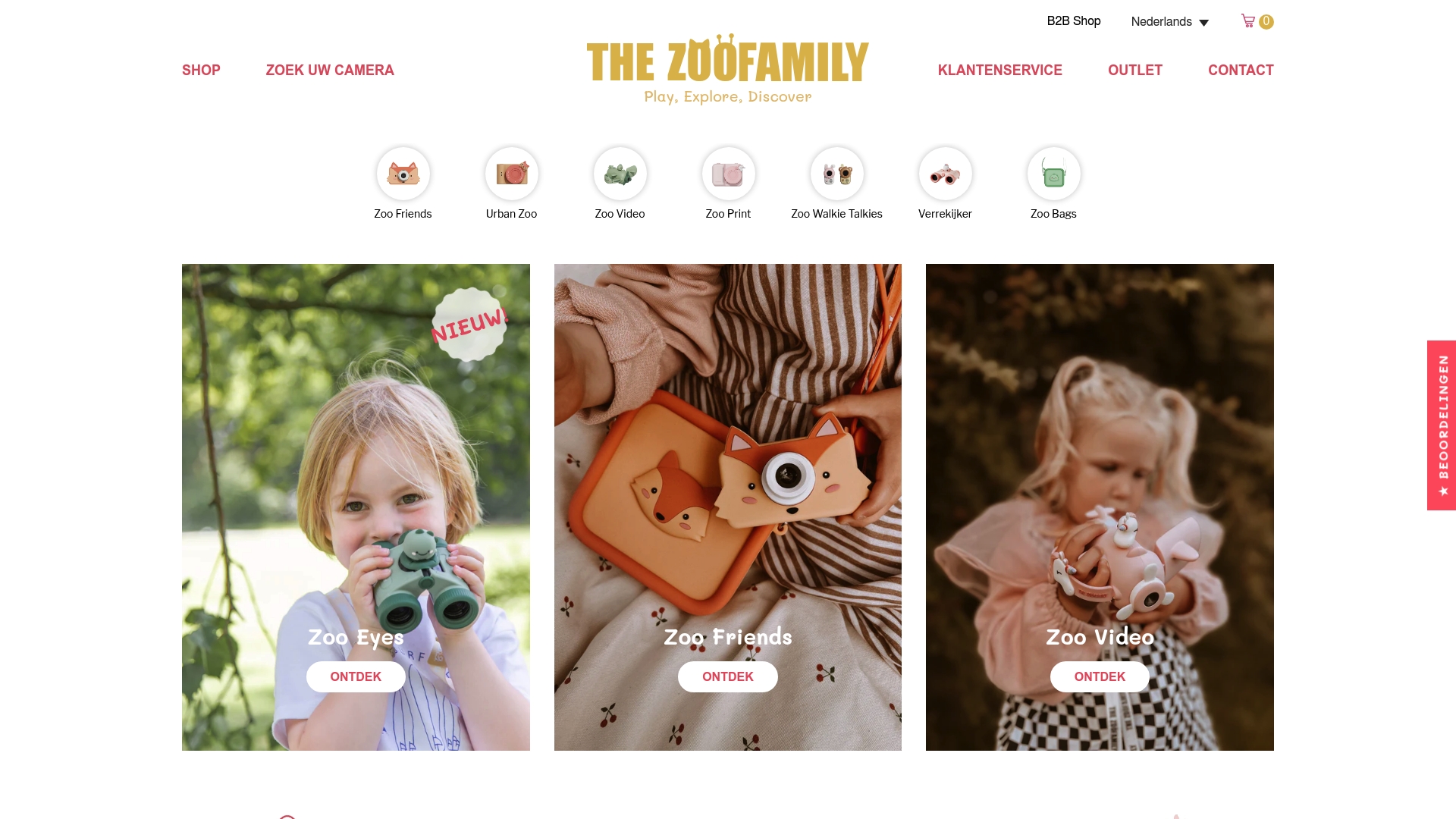
Discover how you can transform every outdoor adventure into a learning journey filled with creativity and fun. Visit The Zoofamily today to equip your child with tools that stimulate their connection to nature while supporting sustainability. Explore our full range to spark curiosity and foster environmental respect through play at The Zoofamily Kids’ Cameras, Walkie-Talkies, and Binoculars. Start your child’s journey towards becoming a young steward of the planet now and help us plant a tree for every camera sold. Explore more at Making Learning Fun with Engaging Activities for Kids and give your child the perfect companion for their next outdoor discovery.
Frequently Asked Questions
What are nature scavenger hunts and how can they inspire curiosity in children?
Nature scavenger hunts encourage children to explore their surroundings and engage their senses. To implement one, create a simple checklist of items for children to find, such as unique leaves or stones, during your outdoor walks.
How can I create an effective obstacle course for my children at home?
To design an effective obstacle course, use household items and adjust challenges based on your child’s age and abilities. Start by setting up simple tasks, such as crawling under tables or jumping over cushions, and gradually increase the difficulty as they gain confidence.
What materials do I need for DIY nature art with leaves and stones?
For DIY nature art, gather diverse leaves and stones during your outdoor explorations. Create artwork by sorting these materials by colour or shape and arranging them into patterns or pictures on flat surfaces.
How can I encourage teamwork in children’s outdoor play?
To foster teamwork, organise group games that require communication and collective problem-solving. Implement activities like trust exercises or building challenges, where each child has a role, ensuring everyone participates and collaborates effectively.
What are some simple techniques for wildlife watching with kids?
Wildlife watching techniques include using binoculars for better viewing, maintaining silence, and creating journals to record observations. Encourage children to draw or note down their findings, which enhances their observation skills and fosters a deeper appreciation for nature.
How can I start eco-friendly gardening with my children?
Begin eco-friendly gardening by creating small container gardens or planting quick-growing seeds, such as cress. Engage your children by tracking plant growth through drawings or journals, which helps teach them about plant life cycles and responsibility toward the environment.
Recommended
- Making Learning Fun: Engaging Activities for Your Kids – The Zoofamily
- Understanding the Benefits of Imaginative Play – The Zoofamily
- Making Learning Fun: Engaging Activities for Your Kids – The Zoofamily
- Childhood Brain Development: A Guide for Modern European Mums – The Zoofamily
- 7 Interactive Classroom Ideas for Engaging Learning - Projector Display
- How Toys Inspire Creativity: Complete Guide for Parents – Learning Bugs