

TL;DR:
- Just 28 days of nature-based play can boost children’s immune systems and microbial diversity.
- Engaging children with clean, natural soil fosters immunity, sensory skills, and environmental empathy.
- Safe soil projects and outdoor activities can effectively teach ecological awareness and soil health.
Just 28 days of nature-based play can transform a child’s immune system. A Finnish daycare study found that adding forest soil and undergrowth to playgrounds improved children’s immune regulation and microbial diversity within a single month. Most parents assume soil is something to wash off quickly, not something to learn from. This guide shows you exactly how to turn everyday soil contact into a powerful act of environmental stewardship, with practical projects, safety guidance, and activities your family can start this weekend.
Table of Contents
- Why soil health matters for kids: More than just dirt
- Successful hands-on soil health projects for kids
- Safeguarding children’s health: Clean dirt, safety, and the hygiene hypothesis
- Bringing soil lessons home: Activities, tips, and next steps for families
- Why kids need real soil—and what’s often overlooked by well-meaning adults
- Discover more ideas for nature-loving kids
- Frequently asked questions
Key Takeaways
| Point | Details |
|---|---|
| Soil boosts immunity | Regular, safe soil contact helps strengthen children’s immune systems and microbiota diversity. |
| Hands-on projects matter | Citizen science and creative programmes make soil learning fun and meaningful for families. |
| Safety is key | Choosing clean, natural soils means children get the health without the hazard. |
| European resources available | Parents can access local projects and guides to support soil and nature education at home. |
| Practical tips for home | Simple activities and frameworks like the 5E method keep soil education engaging and ongoing. |
Why soil health matters for kids: More than just dirt
Soil is one of the most complex living systems on Earth. A single teaspoon holds more microorganisms than there are people on the planet. For children, this living world underfoot is not just fascinating. It is genuinely good for them.
The science behind this is rooted in the hygiene hypothesis, which suggests that reduced exposure to environmental microbes in early life may contribute to rising rates of allergies and autoimmune conditions. Targeted exposure to beneficial microbes in forest soil trains the immune system to distinguish between real threats and harmless substances. This is not about letting kids eat mud. It is about thoughtful, regular contact with clean natural soils.
Beyond immunity, soil connection builds something harder to measure: environmental empathy. Children who dig, plant, and observe soil creatures develop a sense of care for the natural world. They begin to understand that the ground beneath their feet is alive, and that their actions affect it. This is the foundation of genuine stewardship, not just recycling habits.
It is also worth understanding the difference between garden soil and compost. Soil versus compost are not interchangeable. Soil is a living ecosystem containing minerals, organic matter, water, air, and billions of microbes. Compost is decomposed organic material used to enrich soil. Teaching children this distinction early gives them a richer vocabulary for talking about the natural world, and a more accurate mental model of how ecosystems function.
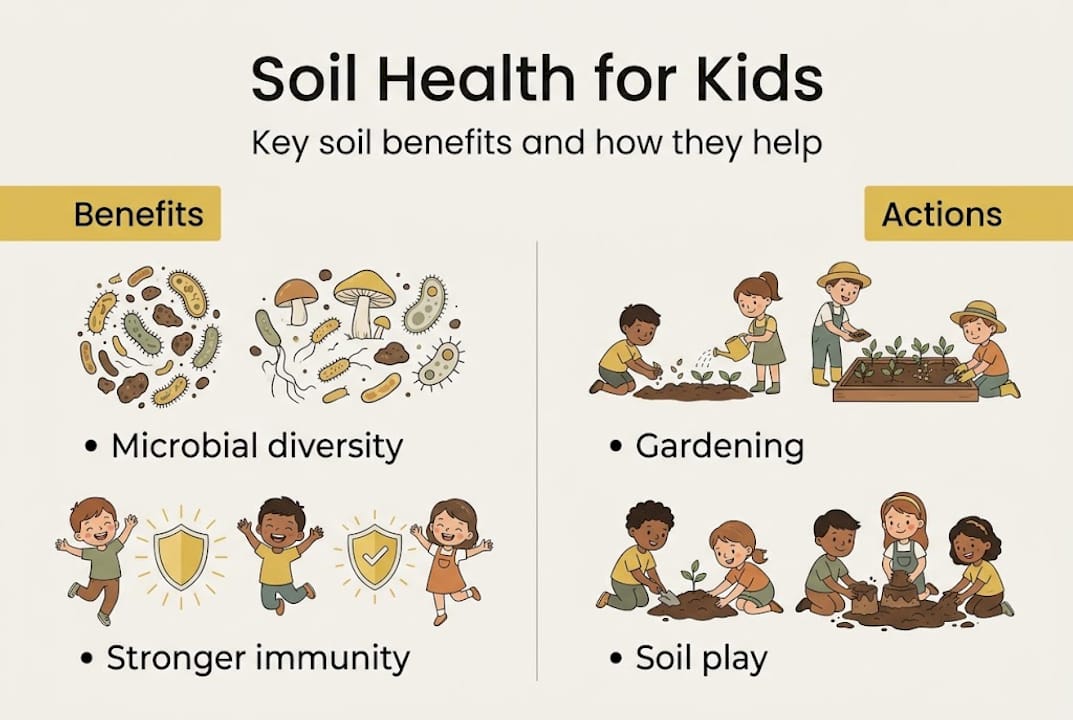
Here is a quick overview of what healthy soil offers children:
- Immune training: Diverse soil microbes stimulate healthy immune responses
- Sensory development: Texture, smell, and temperature engage multiple senses
- Scientific thinking: Observing soil life builds curiosity and patience
- Ecological awareness: Understanding soil connects children to food, water, and biodiversity
- Emotional wellbeing: Time in nature and hands-on activity reduces anxiety
You can extend this learning further by creating wildlife-friendly gardens that give children regular, meaningful contact with living soil ecosystems.
“Children who interact with healthy soil are not just playing. They are building the biological and emotional foundations of a lifelong relationship with the natural world.”
| Soil benefit | What it means for your child |
|---|---|
| Microbial diversity | Supports gut and immune health |
| Sensory richness | Builds fine motor skills and curiosity |
| Ecological connection | Develops empathy for living systems |
| Scientific observation | Encourages inquiry and patience |
Successful hands-on soil health projects for kids
Now that we know why soil matters, how do we put it into action with kids? Fortunately, several excellent programmes across Europe make this straightforward, even for families with no scientific background.
GroundTruth is a citizen science project run by Teagasc in Ireland that engages students, teachers, and communities in hands-on soil health assessments using simple, accessible tests. Children conduct earthworm surveys, flower insect timed counts, and the now-famous “underwear test,” where cotton pants are buried in soil and dug up weeks later to reveal how active the soil life is. The more the fabric has decomposed, the healthier the soil. It is messy, memorable, and genuinely scientific.
ECHO Soil Challenge operates across nine European countries including Italy, Poland, Spain, Scotland, Greece, Romania, Germany, Portugal, and Finland. The ECHO Soil Challenge invites children aged 6 to 19 to create art, run experiments, and produce short videos about soil. It is a brilliant option for families who want creative, cross-curricular engagement rather than purely scientific activities.
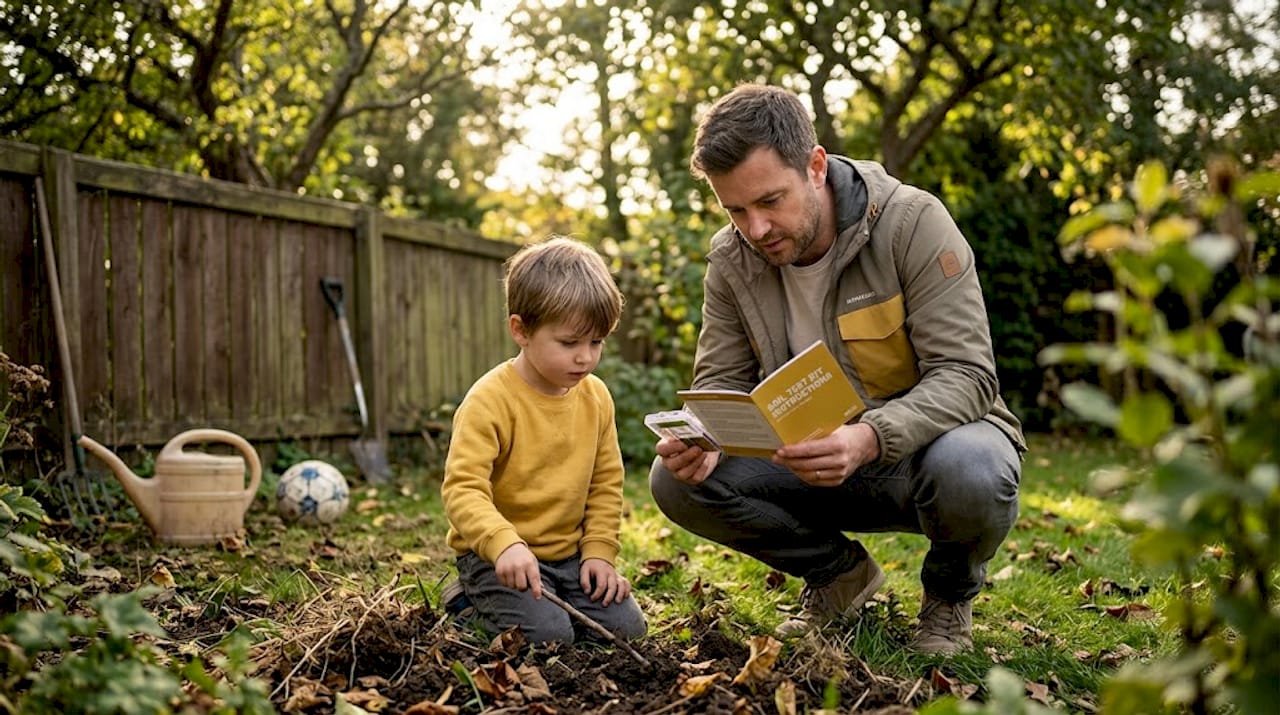
For families wanting to go further, understanding soil testing basics is a great next step. A simple home soil test kit, available from most garden centres, can reveal pH levels, nutrient content, and drainage quality. Children love the colour-change results and the sense that they are doing “real science.”
Here is how to try a basic home soil test with your child:
- Collect a small amount of soil from your garden or a local park, avoiding paths or roadsides
- Remove any visible stones, roots, or debris
- Follow the kit instructions to mix soil with the provided solution
- Observe the colour change and compare it to the reference chart
- Record the results in a nature journal and repeat in different spots to compare
Pro Tip: Keep a simple soil diary with your child. Note the date, location, weather, and what you observed. Over a season, patterns emerge that spark genuinely interesting questions about why one patch of earth behaves differently from another.
Here is a comparison of four leading soil education projects for European families:
| Project | Age range | Countries | Activity type | Cost |
|---|---|---|---|---|
| GroundTruth | 8 to 16 | Ireland | Citizen science | Free |
| ECHO Soil Challenge | 6 to 19 | 9 EU countries | Creative and scientific | Free |
| LOESS Blueprint | 6 to 18 | EU-wide | School-based inquiry | Free |
| Home soil test | Any age | Everywhere | DIY experiment | Low cost |
For seasonal inspiration on connecting soil activities to wider environmental themes, Earth Day ideas for kids offers a wealth of creative starting points.
Safeguarding children’s health: Clean dirt, safety, and the hygiene hypothesis
Understanding the fun, let us look squarely at how parents can keep soil play safe and productive.
Not all soil is equal. Forest and garden soils in clean, well-maintained spaces are generally safe for children. Urban soils near roadsides, industrial sites, or older buildings may contain heavy metals, pesticide residues, or parasites. Targeted exposure to beneficial microbes trains the immune system effectively, but only when the soil itself is clean and uncontaminated.
The goal is not to eliminate all contact with soil. It is to be thoughtful about which soil your child engages with and how. Here is what to look for before allowing play:
- Choose forest edges, meadows, or home gardens over roadside verges or vacant urban lots
- Avoid soil near old painted structures, as lead contamination is a real risk in older European cities
- Check for visible debris such as broken glass, animal waste, or chemical containers
- Avoid waterlogged soil after heavy rain, which can harbour harmful bacteria
- Wash hands thoroughly after play, but do not over-sterilise. A normal handwash is sufficient
Red flags that should prompt you to keep children away from a soil area include a chemical smell, oily sheen on nearby water, proximity to industrial sites, or visible animal waste in quantity. These are not common in most family gardens or managed parks, but they are worth knowing.
For guidance on preparing healthy soil in your own garden, a few simple steps can make your outdoor space both safer and more ecologically rich for children to explore.
Pro Tip: If you are unsure about soil quality in your garden, a basic heavy metal test kit is available online for under €20. It gives peace of mind and is itself a great teaching moment about environmental monitoring.
The research is clear: the benefits of soil exposure are strongest when exposure is intentional and the environment is clean. For ideas on creating safe, enriching outdoor spaces, natural playground safety offers practical, tested approaches that balance adventure with sensible precautions.
A useful statistic to keep in mind: children in urban environments, where microbial diversity in the environment is typically lower, tend to show the strongest immune benefits from intentional nature contact. This makes deliberate soil engagement especially valuable for city-dwelling families.
Bringing soil lessons home: Activities, tips, and next steps for families
With safety in place, here is how to extend learning and enjoyment into everyday family life.
The LOESS project Blueprint provides a structured approach to soil education using the 5E model: Engage, Explore, Explain, Extend, and Evaluate. Originally designed for schools, this framework translates beautifully to home learning. You do not need a curriculum or a science degree. You need curiosity and a patch of earth.
Here is how to apply the 5E model at home over a weekend:
- Engage: Ask your child, “What do you think lives in this soil?” before digging. Predictions make the discovery more exciting.
- Explore: Dig a small patch together. Count the worms, note the colour, smell the earth. Use a magnifying glass to look for tiny creatures.
- Explain: Look up what you found together. Why are worms good for soil? What do they eat? Let the child lead the questions.
- Extend: Try the same activity in a different location, such as a pot of compost versus garden soil, and compare the results.
- Evaluate: Ask your child to draw or describe what they learned. What surprised them? What would they like to find out next?
Beyond this framework, here are some activities that work well across different ages and settings:
- Worm hotel: Fill a clear container with alternating layers of soil and sand. Watch worms mix the layers over days.
- Mini compost bin: Start a small compost container with kitchen scraps. Compare the soil it produces to garden soil after six weeks.
- Seed germination race: Plant the same seeds in three different soil types and track which grows fastest.
- Soil colour map: Collect small samples from five different locations and compare the colours. Discuss why they differ.
Connecting with your child’s school is also worthwhile. Many European schools are now integrating soil education into science and geography curricula, particularly through ECHO and LOESS resources. Asking teachers about existing programmes can open doors to community projects and shared resources.
Pro Tip: Use a simple nature journal with your child to track soil observations across seasons. Even a small notebook with sketches and dates becomes a genuinely interesting scientific record over a year, and it builds the habit of careful observation.
For more inspiration on outdoor learning spaces, innovative outdoor play offers ideas that complement soil-based activities beautifully. If you want to bring some of this learning indoors during winter months, indoor plant activities bridge the gap between seasons without losing momentum.
Why kids need real soil—and what’s often overlooked by well-meaning adults
Taking stock of everything above, it is worth considering what most conventional advice leaves out.
There is a growing market for indoor “nature kits,” subscription boxes with plastic trays of sanitised growing medium and pre-packaged seeds. They are neat, convenient, and genuinely fun. But they do not replicate what real soil contact provides. The microbial diversity of a forest floor or a well-tended garden simply cannot be bottled and posted. The sensory richness, the unpredictability, the actual living ecosystem underfoot — these are irreplaceable.
The benefits are strongest in urban environments where children’s daily exposure to environmental microbes is lowest. This is a crucial insight for European city parents. If your child spends most of their time in flats, schools, and cars, intentional soil engagement is not a luxury. It is one of the most impactful things you can offer them.
The uncomfortable truth about overzealous cleanliness is this: it does not protect children. It deprives them. The goal is not messier parenting. It is smarter parenting. Choosing the right soil, in the right place, with appropriate handwashing afterwards, gives children the biological and emotional benefits of nature contact without unnecessary risk.
We also think there is something deeper here. When children learn to care for soil, to understand it as a living system rather than just “ground,” they develop a relationship with the planet that no classroom lesson can fully replicate. At The Zoofamily, we see this connection as the foundation of genuine environmental stewardship. Not rules about recycling, but a felt sense that the natural world is worth protecting because it is alive, fascinating, and part of us.
Busy families do not need elaborate programmes. They need a patch of earth, a curious child, and the confidence to let things get a little muddy.
Discover more ideas for nature-loving kids
If you are ready to take your child’s soil journey further, these resources await.
At The Zoofamily, we believe that real nature connection starts with real experiences outdoors. Our blog is full of practical, parent-tested ideas for bringing children closer to the living world, from gardening for wildlife with kids to seasonal Earth Day inspiration that keeps environmental learning alive all year round. Whether you are just starting out with a first worm count or planning a full garden biodiversity project, you will find ideas that fit your family’s pace and your child’s curiosity. Every camera we sell plants a tree, because we believe the natural world your child is learning to love deserves to grow alongside them.
Frequently asked questions
How does soil exposure help my child’s immune system?
Soil contact introduces beneficial microbes that train children’s immune responses, reducing risks of allergies and asthma. Forest soil exposure increased skin microbial diversity and improved immune regulation in children within just one month.
What are simple soil health projects I can do at home with kids?
Easy projects include an earthworm count, a flower insect timed count, a mini compost comparison, or a DIY soil testing kit. The GroundTruth citizen science project uses exactly these kinds of simple, hands-on tests with children.
Are all garden soils safe for children’s play?
Not all soils are safe. Always choose clean, uncontaminated locations away from roadsides, industrial sites, and visible debris. Parents should select clean soil to avoid hazards such as parasites or pollutants.
Where can I find more ideas for soil learning tailored to European families?
Initiatives like ECHO, GroundTruth, and LOESS Blueprint offer free, accessible guides and projects for families and schools across Europe. The LOESS project Blueprint provides a structured, inquiry-based framework that works equally well at home or in the classroom.