

TL;DR:
- Family photo challenges in nature promote outdoor exploration, connection, and respect for the environment. They incorporate ethical principles, age-appropriate prompts, and flexible timeframes to foster mindful observation and lasting memories. Preparing with simple roles and a focus on leave-no-trace principles ensures enjoyable, responsible family experiences outdoors.
Finding genuinely rewarding, screen-free activities for the whole family can feel like searching for a needle in a haystack, especially when you want something that blends outdoor exploration with real connection. Family photo challenges in nature tick every box. They get everyone moving, spark curiosity about the natural world, and create memories that go well beyond a standard walk in the park. This article covers exactly how to structure these challenges, what ethical principles to weave in, and which ideas work best depending on your family’s ages, energy levels, and whether your dog is coming along too.
Table of Contents
- What makes a great family photo challenge?
- Top nature-themed family photo challenge ideas
- How to pick the best family photo challenge for your outing
- Keeping it ethical: teaching kids and pets respect for nature
- Why ethical family photo challenges build lasting memories
- Plan your next adventure with The Zoofamily
- Frequently asked questions
Key Takeaways
| Point | Details |
|---|---|
| Ethical fun first | Family photo challenges are most rewarding when they follow ‘look, don’t disturb’ nature guidelines. |
| Flexible, prompt-led play | Using simple prompt lists and time limits keeps outings stress-free and engaging for all ages. |
| Pet and child friendly | Adapt activities so everyone—including pets—can safely join in without impacting nature. |
| Memories over perfection | The real value comes from shared moments and nature connection, not flawless photographs. |
What makes a great family photo challenge?
To explore these bonding ideas, it’s essential to recognise the core elements that make family photo challenges genuinely rewarding. Not every outing with a camera qualifies. The best challenges share a handful of features that keep things light, inclusive, and truly meaningful for both parents and children.
A great family photo challenge is:
- Outdoor and sensory-rich: Being in a park, woodland, or beach encourages kids to observe their surroundings rather than stare at a screen.
- Inclusive for all ages: Prompts should work whether your child is four or twelve. Simple items like “something yellow” or “an insect at rest” work for every age group.
- Ethically grounded: Look but don’t disturb is the golden rule. Encouraging children never to pick flowers, move rocks, or chase animals protects nature and builds respect.
- Time-boxed: Shorter outings of thirty to sixty minutes suit young children. Older kids can handle ninety minutes. Either way, a clear end point reduces pressure.
- Flexible: Prompts are suggestions, not mandates. Swap or skip any that don’t fit your environment that day.
A photography scavenger hunt that combines a prompt list of ten to twenty-five items with ethical nature rules keeps the outing low-stress and bonding-focused. Research consistently shows that time-boxed activities with a clear goal help families stay present rather than distracted.
What matters most is that everyone feels capable of contributing. A toddler can point at a butterfly while an older sibling frames the shot. Both feel proud. That shared sense of achievement is the heartbeat of a successful challenge.
Pro Tip: Before you head out, prepare a small kit together. Pack the camera, a printed prompt list, snacks, and water. Assign simple roles, such as “chief spotter,” “prompt reader,” or “photo assistant,” to every family member. This sets a fun, purposeful tone before you’ve even left the house.
You’ll find additional 7 tips for scavenger hunts on The Zoofamily blog if you’d like a deeper preparation guide before your first outing.
Top nature-themed family photo challenge ideas
With these priorities in mind, dive into some hands-on nature photo challenge prompt ideas. The following list covers a range of difficulty levels, seasons, and settings across European parks, forests, and coastlines.
- Texture trail: Photograph five different textures: rough bark, smooth stone, fuzzy moss, a crinkled leaf, and sandy soil. Age tip: Younger children love touching before shooting. Older kids can experiment with close-up angles.
- Colour of the season: Each family member picks one colour and must find three natural objects in that shade. Autumn orange, spring green, winter silver. Ethical reminder: Photograph the colour, don’t collect it.
- Sky and shadow: Capture a cloud that looks like an animal and a shadow cast by a tree or person. Age tip: Great for dreamers of all ages. No moving of any objects required.
- Tiny world: Get low and photograph something small. A ladybird on a leaf, a snail trail, a spider’s web catching the light. Ethical reminder: Never disturb the creature. Photograph, don’t pick.
- Family silly faces in nature: Find a hollow log, a big leaf, or a mossy rock and take a group photo with everyone pulling a different expression. Pure joy with zero environmental impact.
- Candid pet moment: If your dog joins the outing, capture them sniffing a flower or watching a bird. Check pet-friendly activity ideas for inspiration on keeping four-legged family members engaged.
- Found feather or seed: Photograph a feather or seed head without touching it. Discuss how seeds travel and where birds go in winter. Age tip: Brilliant conversation starter for children aged five and above.
- Light and water: Find a puddle, a stream, or a dew-covered leaf and photograph the reflection or droplets. Ethical reminder: Stay on paths near waterways to protect bank habitats.
“Take photos, not souvenirs.” This simple motto transforms children into mindful observers rather than collectors, and it sticks with them long after the outing ends.
For even more prompt inspiration, browse nature scavenger hunt ideas to extend your prompt list across different seasons and locations.
Pro Tip: Set a gentle time limit of fifteen minutes per theme or add a friendly competition. Whoever photographs the most items on the list by the time you reach the picnic bench wins the honour of choosing next week’s challenge. Friendly rivalry keeps energy high without adding stress.
How to pick the best family photo challenge for your outing
Now that you have several ideas to try, considering your family’s set-up can help you choose the most enjoyable challenge. The right challenge depends on several practical factors that vary from family to family and week to week.
Factors to consider:
- Child ages: Toddlers need simple, highly visual prompts. School-age children enjoy more abstract categories like “something surprising” or “a shape in nature.”
- Duration available: A thirty-minute slot calls for a focused mini-challenge with five prompts. A half-day outing can accommodate a full list of twenty-five.
- Weather: Overcast days are actually brilliant for photography as there are no harsh shadows. Rainy mornings bring slugs, puddle reflections, and atmospheric mist shots.
- Mobility and terrain: Flat, paved parks work well for pushchairs and dogs. Forest trails suit older, more confident children.
- Pet-friendliness: Many European parks and coastal paths welcome dogs. Plan routes using dog-friendly outings guidance to keep your pet safe and comfortable.
- Location type: Urban parks, woodland, beaches, and botanical gardens each offer unique photographic opportunities.
| Challenge type | Best ages | Duration | Pet-friendly | Weather flexibility | Difficulty |
|---|---|---|---|---|---|
| Colour hunt | 3 and above | 30 mins | Yes | Any | Easy |
| Tiny world | 6 and above | 45 mins | Yes | Dry preferred | Medium |
| Sky and shadow | 4 and above | 30 mins | Yes | Sunny or cloudy | Easy |
| Texture trail | 5 and above | 45 mins | Yes | Any | Easy |
| Light and water | 7 and above | 60 mins | Leads on | Overcast ideal | Medium |
A photography scavenger hunt method works best when you match prompt complexity to your youngest child’s ability, then add optional bonus prompts for older siblings. This keeps everyone genuinely challenged rather than bored or frustrated.
The most important rule is this: flexibility and fun come first. If your planned “tiny world” challenge leads you down an unexpected path where a deer stands fifty metres away, abandon the list entirely. That moment is worth more than any completed prompt sheet.
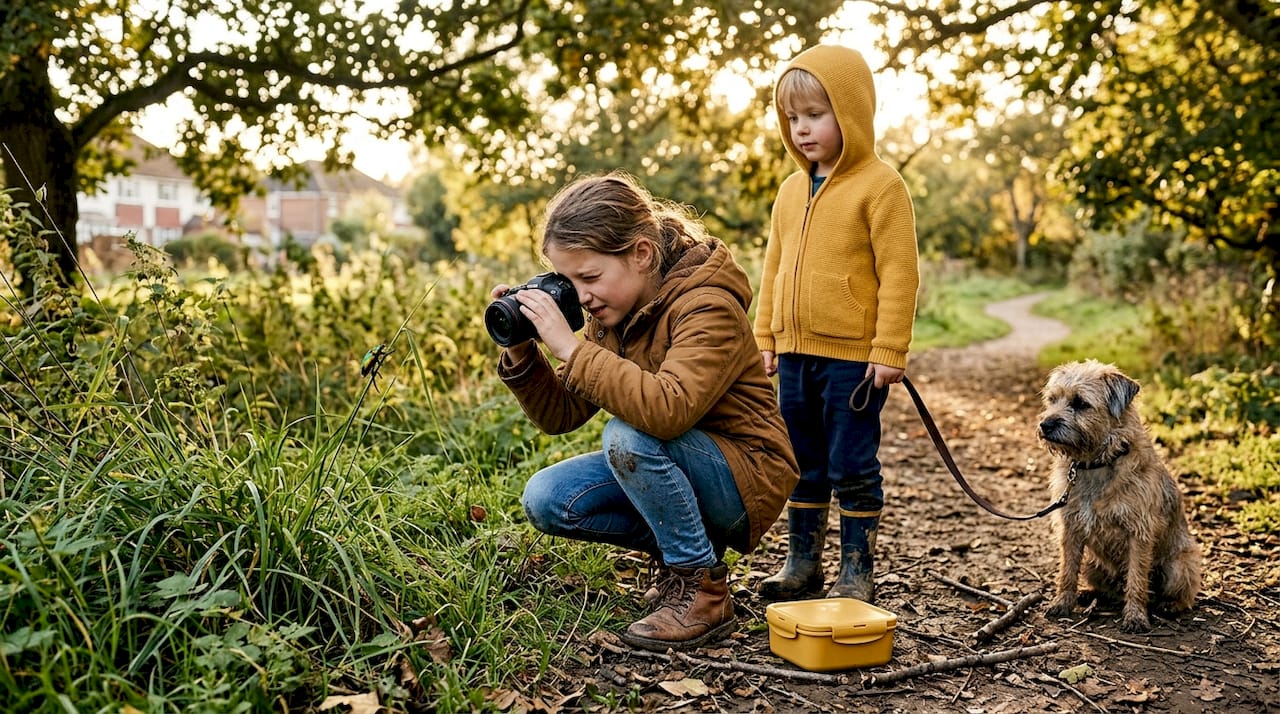
For more inspiration on tips for family photo outings and a guide to children’s nature photography, the Zoofamily blog has plenty of practical resources to support your planning.
Keeping it ethical: teaching kids and pets respect for nature
With the challenge chosen, here’s how to ensure the outing is positive for you, your children, pets, and the environment. Ethical behaviour in nature doesn’t need to feel like a lecture. Woven naturally into the activity, it becomes a value rather than a rule.
The basics of Leave No Trace for families:
Leave No Trace is a set of principles designed to protect outdoor spaces. For families with young children, three principles matter most: leave what you find, be careful with wildlife, and respect other visitors. These translate directly into photo challenge behaviour.
A simple script for parents:
When your child spots something beautiful, say: “Let’s see how close we can get with the camera without disturbing it.” This frames ethical behaviour as a skill rather than a restriction. Children feel clever and capable, not told off.
Nature photo challenges are most rewarding when they’re non-disruptive. Avoid collecting plants or animals, and remind children regularly that every creature is at home in this space and we are visitors.
Including pets safely:
- Keep dogs on leads near ground-nesting birds, especially in spring.
- Choose challenge prompts that don’t require entering long grass where ticks are common in many parts of Europe.
- Assign a “pet photographer” role to an older child. Their job is to capture the pet’s reactions during the challenge.
- Always carry a water bowl and waste bags. Model the same Leave No Trace behaviour for pets as you would for people.
Do’s and don’ts for ethical family photo challenges:
- Do photograph insects, birds, and plants from a comfortable distance.
- Don’t move or lift rocks, logs, or bark to find creatures underneath.
- Do stay on marked paths in protected nature areas.
- Don’t pick wildflowers, seeds, or berries, even for a short time.
- Do celebrate every sighting with excitement, camera or not.
- Don’t chase or corner animals for a better shot.
Pro Tip: Turn “spotting but not picking” into a badge of honour. Create a small sticker chart at home where children earn a nature star each time they resist the urge to collect and choose to photograph instead. After five stars, they choose the next outing destination. This positive reinforcement works beautifully.
Visit the eco-friendly photo tips guide on The Zoofamily blog for more ways to teach children ethical photography skills outdoors.
Why ethical family photo challenges build lasting memories
There is a common assumption that rules and guidelines dampen the spirit of adventure, particularly for children. In our experience at The Zoofamily, the opposite is consistently true. Boundaries do not restrict creativity. They focus it.
When a child knows they cannot pick up the beetle, they slow down. They study it. They crouch lower, move quieter, and look more carefully than they ever would if they were simply allowed to scoop it into their palm. The constraint produces genuine attention, and genuine attention is the root of wonder.
We hear this from families across Europe regularly. The outings they remember most vividly are not the ones with the longest prompt lists or the prettiest locations. They are the ones where something unexpected happened quietly. A heron stood motionless by a stream. A spider rebuilt her web in the morning light. These moments are only accessible to families who have slowed down enough to receive them.
There is also something powerful about shared ethical commitment. When a family agrees together to inspire children’s creativity through observation rather than collection, it creates a shared identity. We are a family that notices things. We are a family that leaves places better than we found them. Children carry that identity into adulthood in ways that a brilliant photograph never quite captures.
Our belief is that the ethical framework around family photo challenges is not an add-on. It is the whole point. It transforms a pleasant activity into a formative experience that shapes how a child relates to the natural world for decades.
Plan your next adventure with The Zoofamily
If you’re inspired to organise your own family challenge, leveraging purposeful resources can make your next outing even more memorable.

At The Zoofamily, we design cameras, binoculars, and walkie-talkies specifically to help children engage with nature rather than simply pass through it. Every product is built with animals in mind, because we believe curiosity about creatures is the gateway to lifelong environmental care. For every camera sold, we plant one tree. So when your child frames that perfect shot of a robin on a mossy fence, they are also contributing to restoring natural habitats. Browse our more scavenger hunt ideas for seasonal prompt lists, printable challenge cards, and real family stories from our community. Your next adventure is closer than you think.
Frequently asked questions
What should we bring on a family photo challenge outing?
Bring a camera or smartphone, a printed prompt list, snacks, water, and ensure everyone wears comfortable shoes and weather-appropriate clothing. A small rucksack keeps everything manageable on longer outings.
How do we include younger children in family photo challenges?
Allow them to help spot items, assign simple roles like “photo assistant,” and keep the outing short and focused to match their attention span. Toddlers thrive with five prompts rather than twenty-five.
How can we make family photo challenges pet-friendly?
Choose outdoor areas where pets are welcome, keep dogs on leads near wildlife habitats, and add prompts like “capture your dog’s happiest moment.” Following ethical nature guidelines applies to pets as much as people.
How do we keep nature photo challenges ethical?
Remind every family member to photograph only, never pick or disturb plants or animals, and leave the environment exactly as they found it. Model the behaviour yourself and children will naturally follow.