

Every eco-conscious mother in Germany knows the joy of gifting something that helps her child connect with nature. Selecting an outdoor present goes beyond bright colours and clever packaging. The right educational camera offers creativity-promoting features with durable construction, safe materials, and simple controls that let children explore the outdoors without struggle. This guide uncovers how these thoughtfully designed tools not only spark artistic curiosity but also nurture appreciation for the natural world your family cares deeply about.
Table of Contents
- What Makes A Camera Suitable For Children
- Types Of Kids’ Cameras And Key Differences
- Features Promoting Creativity And Nature Play
- Safety And Durability For Outdoor Exploration
- Eco-Friendly Choices And Planet-Friendly Initiatives
Key Takeaways
| Point | Details |
|---|---|
| Child-Suitable Cameras | Cameras for children should have simple controls, durable construction, and ergonomic design to support their exploration and creativity. |
| Camera Types | Different camera types serve varying age groups and purposes, from digital compacts for beginners to action cameras for older children. |
| Promoting Creativity | Features that encourage observation, such as easy-to-use interfaces and multiple creative modes, enhance children’s connection with nature. |
| Eco-Friendly Choices | Selecting sustainable cameras not only supports environmental values but also teaches children about the importance of conservation and responsibility. |
What Makes A Camera Suitable For Children
Finding the right camera for your child goes far beyond simply picking up whatever looks cute. A truly suitable children’s camera combines three essential elements: simplified usability, robust construction, and design features that support your child’s developmental stage. When you hand a camera to a young person, you’re not just giving them a tool—you’re opening a window to how they see the world around them.
The most effective children’s cameras feature uncomplicated controls that don’t overwhelm. Your child should be able to hold the camera comfortably, press a button to capture, and understand what happened without needing a manual. Research shows that simple, user-friendly designs with intuitive interfaces actually enhance creativity and social interaction, allowing children to focus on observation rather than wrestling with technology. Equally important is durability. Children drop cameras, squeeze them, expose them to sand and moisture. A suitable camera must withstand these inevitable mishaps with rugged construction and materials designed to survive real childhood adventures, not just pristine playtime in a studio.
Design considerations matter enormously for younger users. Lightweight construction ensures children can hold the camera steady without arm fatigue during extended play outdoors. Soft edges and comfortable grips reduce accidents when little hands lose their grip. Head-mounted cameras designed for children demonstrate how thoughtful engineering—such as soft helmets and balanced weight distribution—prioritises safety whilst maintaining functionality. Beyond the physical design, the best cameras for children incorporate features that naturally promote observational skills and visual literacy. When your child frames a photograph of a beetle or wildflower, they’re learning to notice details, understand light, and document the world with intention.
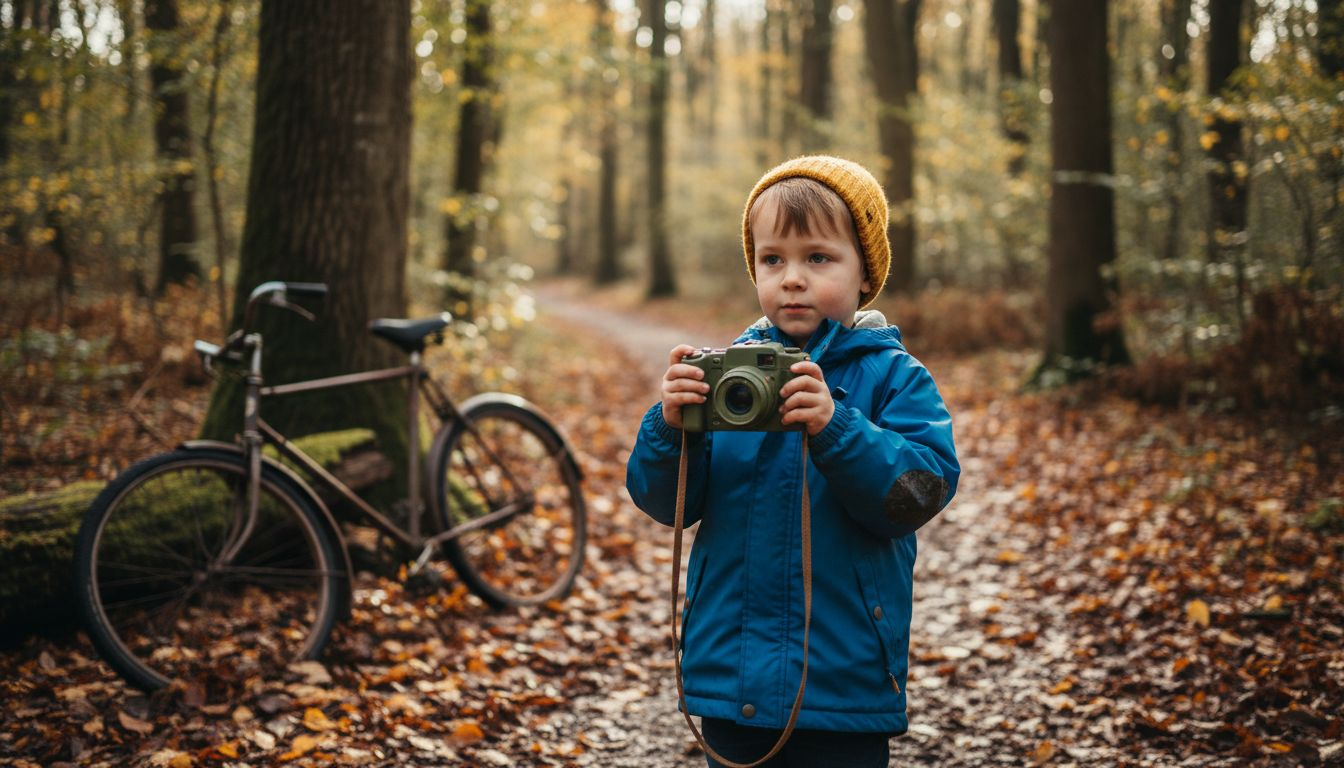
At The Zoofamily, we believe your camera choice should also reflect your values. Cameras designed for preschoolers combine creative potential with environmental responsibility, ensuring that your child’s first steps into photography support both their development and your commitment to a sustainable future.
Pro tip: Start by observing how your child naturally uses technology and outdoor tools—a child who struggles with tiny buttons needs larger controls, whilst an older child might benefit from manual focus adjustments that encourage deeper engagement with their surroundings.
Types Of Kids’ Cameras And Key Differences
When you start looking at cameras for children, you’ll quickly discover that not all cameras are created equal. Different types serve different purposes, age groups, and interests. Understanding these categories helps you match a camera to your child’s actual needs rather than simply grabbing the first colourful option you see.
Digital compact cameras represent the most common choice for younger children. These straightforward devices feature fixed lenses, simple one-button operation, and often come with built-in games or filters to keep children entertained. They’re lightweight, durable, and typically affordable—making them ideal for children aged 4 to 8 who are just discovering the joy of capturing their own perspective. Instant print cameras offer something magical: photographs that develop in your hands within minutes. Children find this immediate gratification wonderfully engaging, and there’s something special about holding a physical photograph your child created. These work beautifully for documenting nature adventures, though they require purchasing film, which adds ongoing costs.
Action cameras appeal to older children and those who love outdoor exploration. These rugged, waterproof devices can attach to helmets, bicycle handlebars, or wrists, making them perfect for active kids documenting their adventures. Different types of kids’ cameras vary significantly in durability, age appropriateness, and creative capabilities—action models excel when your child wants to capture movement and outdoor excitement. For children aged 10 and up, beginner DSLR or mirrorless cameras open doors to more serious photography with manual controls, interchangeable lenses, and improved image quality. These cameras teach genuine photographic principles and can sustain interest as your child’s skills develop.
Key differences across these types extend beyond just how they function. Consider waterproofing for children who play near water, battery life for extended outdoor sessions, connectivity options for sharing photos with family, and educational value through available controls and features. Your choice ultimately depends on your child’s age, outdoor habits, interest level, and how you want to support their creative journey. An action camera suits the adventurous eight-year-old explorer differently than an instant camera serves the imaginative six-year-old documenting backyard discoveries.
Here’s how different camera types suit various age groups and needs:
| Camera Type | Typical Age Range | Best For | Key Limitation |
|---|---|---|---|
| Digital compact | 4–8 years | Beginners, simple operation | Lower image quality |
| Instant print | 5–10 years | Enjoying physical photographs | Ongoing film cost |
| Action | 7+ years | Outdoor adventure, durability | Limited manual controls |
| Beginner DSLR/mirrorless | 10+ years | Learning photographic skills | Heavier, more complex setup |
Pro tip: Watch how your child engages with existing devices—do they prefer immediate results or patient observation? A child who loves instant gratification thrives with instant print cameras, whilst one who enjoys tinkering and learning benefits more from compact digitals with manual adjustments.
Features Promoting Creativity And Nature Play
The most transformative camera features for children are those that step back and let nature speak. When you give your child a camera designed with creativity in mind, you’re not loading it with distracting bells and whistles. Instead, you’re providing a tool that encourages observation, exploration, and genuine connection with the outdoor world. Immersion in nature is linked to enhanced creativity, and the right camera features amplify this natural relationship between children and their environment.
Simplicity stands as the cornerstone of creativity-promoting design. A cluttered menu system or overwhelming options actually diminishes a child’s creative thinking because they spend mental energy navigating technology rather than observing their surroundings. Look for cameras with straightforward interfaces that allow children to frame a shot and capture it without technical distraction. Multiple creative modes matter more than you might expect. Filters, black and white settings, or adjustable brightness don’t overwhelm young photographers—they invite experimentation. When your child discovers they can capture the same wildflower in colour, greyscale, or with a vintage filter, they’re learning that perspective and presentation shape how we interpret the world. This is genuine creative thinking at work.
Durability for real outdoor adventure goes hand in hand with creativity promotion. Children cannot fully engage in imaginative play when they’re anxious about damaging equipment. Rugged construction, water resistance, and weatherproof materials mean your child explores muddy stream banks, rainy forest paths, and sandy beaches without hesitation. Camera features that promote creativity and nature play include ease of use to encourage children to capture diverse natural subjects, flexible modes for creative experimentation, and durability for outdoor exploration. Another underrated feature is comfortable handling. A camera that fits naturally in small hands, with intuitive button placement, invites extended exploration. When a child can hold their camera comfortably for an hour of backyard nature watching, they develop deeper observational skills and capture more authentic moments.
The connection between outdoor exploration and creative thinking cannot be overstated. When your child photographs insects, leaves, water reflections, and cloud formations, they’re not simply taking pictures. They’re training their mind to see patterns, notice light, understand composition, and appreciate the extraordinary detail hidden in ordinary nature. These cognitive skills transfer directly to art, writing, problem solving, and scientific thinking.
Pro tip: Encourage your child to set creative challenges before heading outdoors, such as photographing five different textures or capturing morning light in three different ways. These self-imposed constraints paradoxically spark greater creativity than unlimited freedom.
Safety And Durability For Outdoor Exploration
Your child’s camera needs to survive what childhood actually looks like. Real outdoor exploration means cameras getting dropped on rocks, splashed in puddles, covered in sand, and squeezed in backpacks alongside snacks and stones. A camera designed for genuine outdoor use isn’t just a nice idea—it’s the foundation that lets your child explore confidently without you constantly worrying about equipment failure.
Shockproof and waterproof construction forms the essential baseline. When a camera can withstand drops from typical play heights and survive unexpected rain or stream splashes, your child explores freely without hesitation. Kids’ cameras intended for outdoor use prioritise durable construction such as shockproof and waterproof bodies, easy-to-hold ergonomic designs, and protective features against drops and rough play. Beyond waterproofing, rubberised protective cases and reinforced bodies absorb the inevitable bumps of active childhood. Materials matter enormously here. Non-toxic rubber grips, rounded edges throughout, and stable button placement prevent both accidental injury and equipment damage during enthusiastic use. A camera with sharp corners or fragile components simply won’t survive a curious five-year-old’s investigation.
Ergonomic design directly impacts both safety and durability. A camera that fits comfortably in small hands, with intuitive controls positioned logically, reduces fumbling and accidental drops. Lightweight construction prevents hand fatigue during extended outdoor sessions, and wrist or neck straps provide an essential safety layer that prevents loss or water submersion. Consider battery type as well—rechargeable batteries prove far safer than disposable alkaline cells, which pose swallowing hazards and leakage risks. Waterproof models enable use in wet conditions like pools or rain, with safety considerations including rechargeable batteries and stable controls that allow children to handle them confidently whilst exploring outdoors.
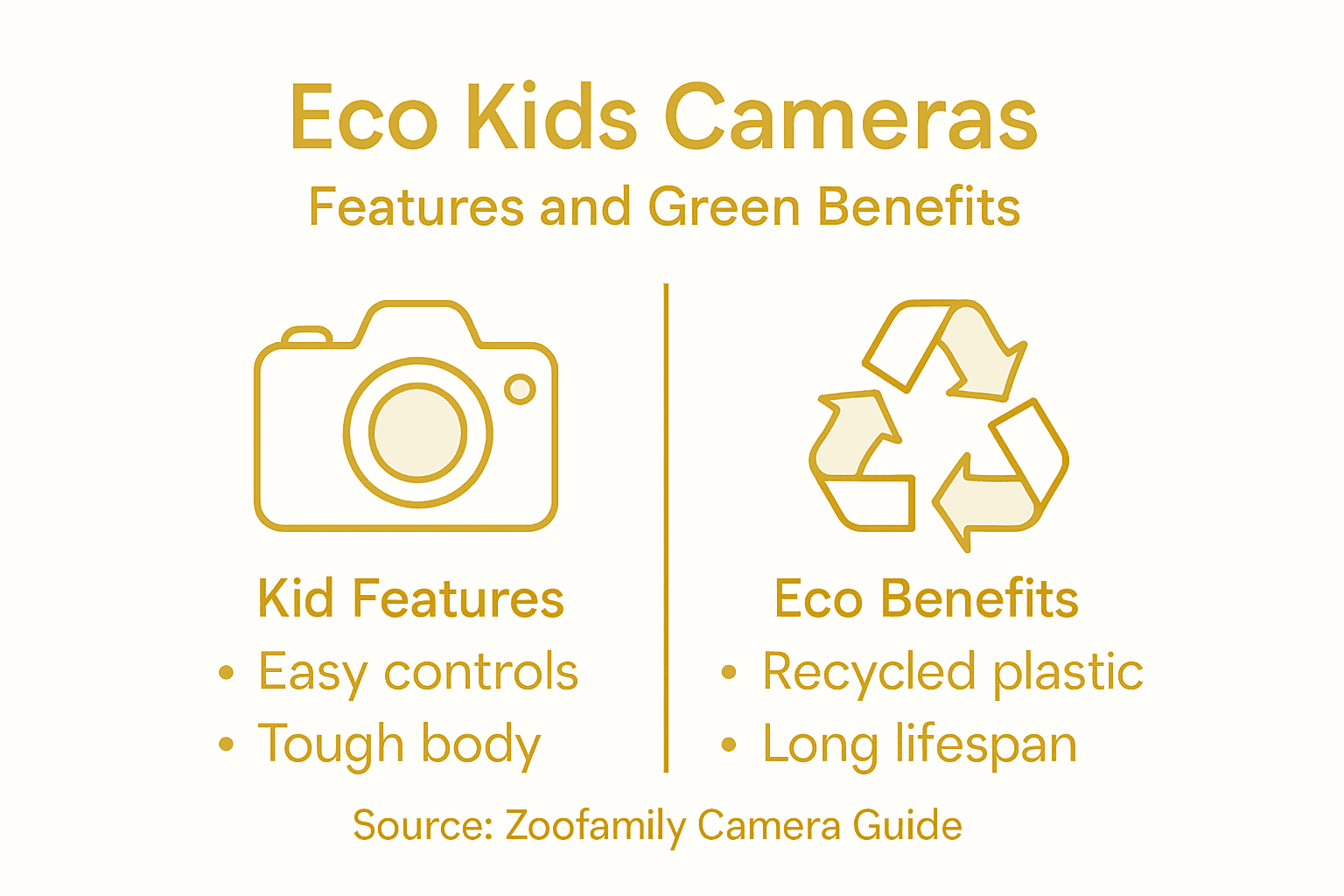
As an eco-conscious parent, you’ll appreciate that durable construction actually aligns with sustainability values. A camera built to last through years of sibling use, rather than one that fails after a few months, reduces waste and unnecessary replacement. When your child’s camera survives genuine childhood adventures, you’re investing in both their safety and your planet’s future.
Pro tip: Before your child’s first outdoor adventure, test the camera’s durability yourself by dropping it gently onto carpet from waist height and splashing it with water. This builds confidence that the camera can handle real exploration without catastrophic failure.
Eco-Friendly Choices And Planet-Friendly Initiatives
Choosing a camera for your child is more than a purchasing decision—it’s a statement about the world you want them to inherit. As an eco-conscious mother, you understand that every choice ripples outward. When you select a camera made with environmental responsibility in mind, you’re teaching your child that sustainability matters, that our purchases have consequences, and that we can choose differently.
The camera industry is shifting. Manufacturers are recognising that families like yours want products that don’t compromise environmental values for convenience. Emerging eco-friendly action cameras highlight sustainability through materials like biodegradable plastics, recycled metals, and renewable components. Beyond materials, greener production processes matter enormously. Look for cameras manufactured using renewable energy, with significantly reduced manufacturing waste. Plastic-free packaging has become standard among responsible producers, with recycled cardboard and downloadable digital manuals replacing throwaway instruction booklets. When you unbox a camera and find no plastic, your child observes that sustainability extends to every detail.
What makes The Zoofamily’s commitment distinctive is the integration of environmental action into every sale. For each camera sold, one tree is planted. This isn’t marketing language—it’s a tangible commitment that transforms your child’s creative hobby into direct planetary healing. When your child understands that their camera purchase planted an oak tree that will grow for decades, they grasp the profound connection between personal choices and global impact. They’re not just documenting nature; they’re actively restoring it. Understanding eco-friendly routines for modern families shows how small daily choices compound into significant environmental action.
Durability itself is an eco-friendly choice. A camera designed to last through multiple children, to survive years of outdoor adventure, produces far less waste than disposable alternatives. When your daughter’s camera eventually passes to her younger brother, and then to a cousin, you’ve multiplied its environmental benefit whilst reducing the carbon footprint of manufacturing replacement devices. This approach aligns perfectly with circular economy principles that German families increasingly embrace.
These eco-friendly camera features help families support the planet whilst nurturing creativity:
| Eco Feature | Environmental Benefit | Family Advantage |
|---|---|---|
| Biodegradable materials | Reduces landfill footprint | Safer for children, less waste |
| Recycled packaging | Minimises single-use plastic | Teaches sustainable values |
| Tree planting with purchase | Offsets product impact | Connects child to conservation |
| Durable construction | Fewer replacements needed | Cost-effective over time |
The camera your child holds represents hope. Hope that technology can serve nature rather than exploit it. Hope that the next generation will prioritise planetary health. Hope that we can spark creativity whilst protecting the ecosystems children photograph and explore.
Pro tip: When selecting a camera, ask manufacturers specific questions about materials, production energy sources, and packaging—your inquiry signals consumer demand for sustainability, encouraging more companies to adopt greener practices.
Inspire Your Child’s Eco-Friendly Creativity With The Zoofamily
The challenge many parents face is finding a camera that encourages their child’s creativity while being easy and safe to use outdoors. This article highlights the need for children’s cameras that combine durability, simplicity, and features promoting nature play alongside environmental responsibility. Your little explorer deserves a camera designed not just for capturing moments but for sparking imagination and fostering a connection with our planet.
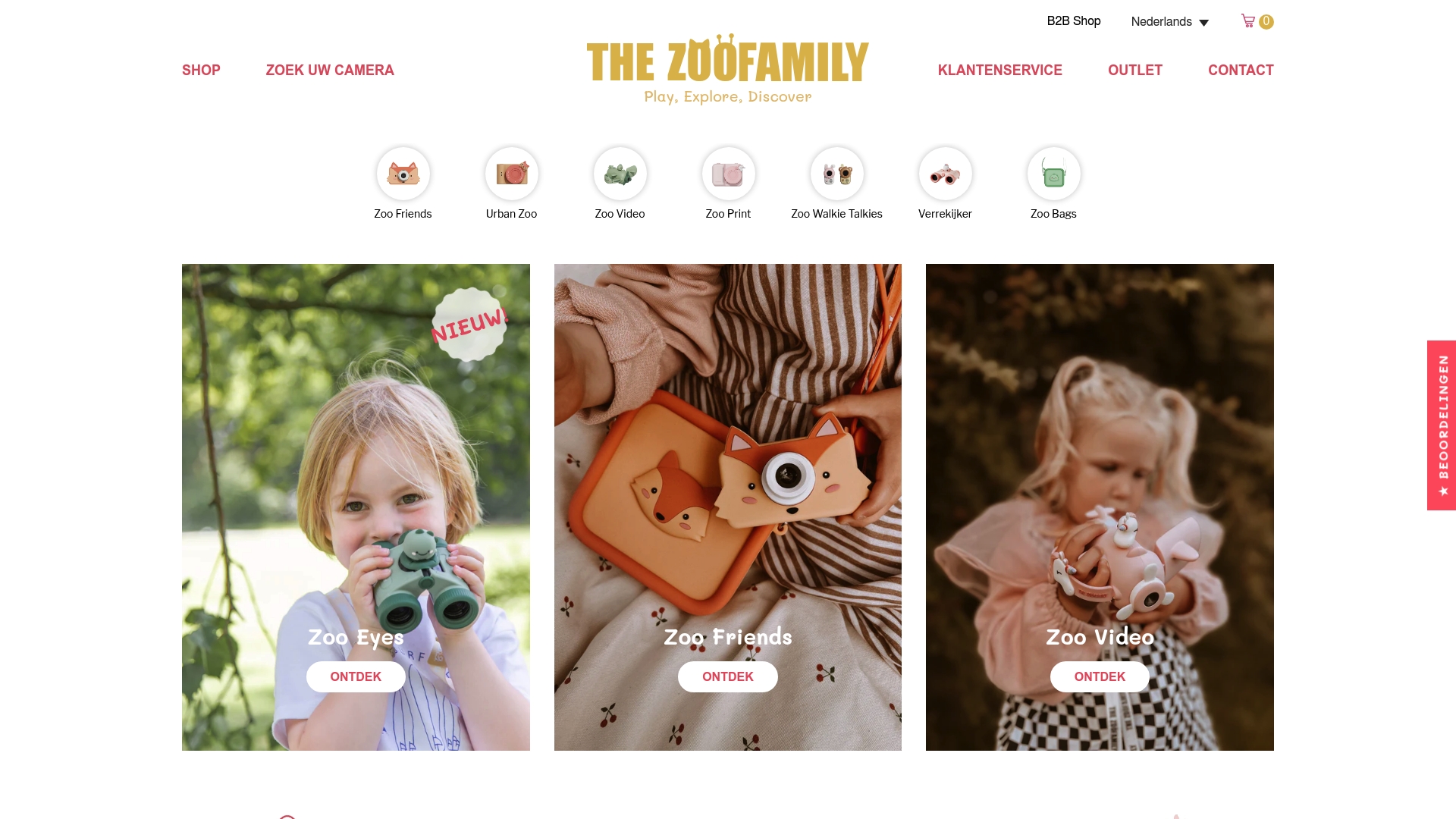
Discover how The Zoofamily answers these needs through cameras crafted to stimulate creativity and sustainability. Every camera sold supports nature restoration with a tree planted for your child’s future. Explore our range designed for young adventurers, where animal-inspired designs make learning about nature joyful and meaningful. Start your child’s journey with us today and turn their curiosity into lasting environmental action. Visit The Zoofamily main site to find the perfect eco-friendly camera waiting to inspire your child’s outdoor adventures.
Frequently Asked Questions
What features should I look for in a camera for my child?
When selecting a children’s camera, prioritise uncomplicated controls, durability, lightweight design, and features that encourage creativity—such as multiple creative modes and straightforward interfaces.
How can I ensure a camera is environmentally friendly?
Look for cameras made from biodegradable materials, with recyclable packaging, and those that support eco-friendly initiatives like tree planting for each purchase.
What types of cameras are suitable for different age groups?
Digital compact cameras are best for ages 4-8, instant print cameras for ages 5-10, action cameras for 7+, and beginner DSLRs or mirrorless cameras for children aged 10 and up, facilitating growth in photography skills and creative exploration.
How do camera features promote creativity and nature play for kids?
Simplicity, durability, and comfortable handling allow children to explore their environment without distraction or concern for damage, fostering observational skills and encouraging experimentation with photography in natural settings.
Recommended
- Meilleurs gadgets plein air enfants – Comparatif 2025 – The Zoofamily
- Trouver Inspiration Dans La Nature : Stimuler La Créativité Enfantine – The Zoofamily
- Cameras Suitable for Preschoolers: Creative, Safe, and Green – The Zoofamily
- Cameras Suitable for Preschoolers: Creative, Safe, and Green – The Zoofamily
- Fun Colour Mixing for Toddlers: Monster Trucks and Paint!
- Eco Friendly Cleaning Solutions: For Safer Homes – naturessoulshop