

Play-based learning is defined as a child-led, adult-supported approach where children acquire literacy, numeracy, social-emotional intelligence, and executive functioning through purposeful, enjoyable activity. Understanding why play based learning is important matters for every parent and educator who wants to give children the strongest possible start. A 2026 analysis of 102 studies confirms that play-based approaches match or exceed conventional instruction across core developmental outcomes. The National Academies’ 2024 report reinforces this, stressing that playful pedagogy from birth to age eight builds the collaboration, communication, and problem-solving skills children need for life.
Why play based learning is important: what the science says
The evidence is unambiguous. A 2026 meta-analysis covering 102 studies found that play-based approaches are at least as effective as conventional instruction for literacy, numeracy, and social-emotional skills. That finding overturns the assumption that structured, teacher-led lessons are inherently superior.
Professor Paul Ramchandani, cited in the same research, describes play as a critical scientific endeavour, not a break from learning. Children who play are experimenting, forming hypotheses, and testing outcomes. That mirrors exactly what researchers do in laboratories.
The distinction between free play and guided play matters here. Guided play gives children agency within a structure shaped by a learning goal. Guided play research shows it produces superior results to direct teaching in literacy, numeracy, and spatial reasoning, particularly when children retain choice over how they engage. Free play is valuable, but guided play is the most powerful tool educators have for early learning.
Key outcomes supported by the evidence include:
- Executive function: Play builds self-regulation, working memory, and cognitive flexibility, the three pillars of executive function.
- Creativity and problem solving: Children who play regularly generate more original solutions to novel problems.
- Social-emotional skills: Cooperative play teaches negotiation, empathy, and conflict resolution in real time.
- Motivation: Children who learn through play sustain interest longer and return to tasks voluntarily.
Pro Tip: Distinguish guided play from free play when planning sessions. Guided play has a clear learning aim, such as sorting objects by colour to build early maths concepts, but lets the child lead the activity.
How play supports social, emotional, and physical growth
Play is the primary mechanism for building executive function, enabling children to regulate emotions, delay gratification, and persist through difficulty. These are not soft skills. They predict academic achievement and wellbeing more reliably than early reading scores alone.
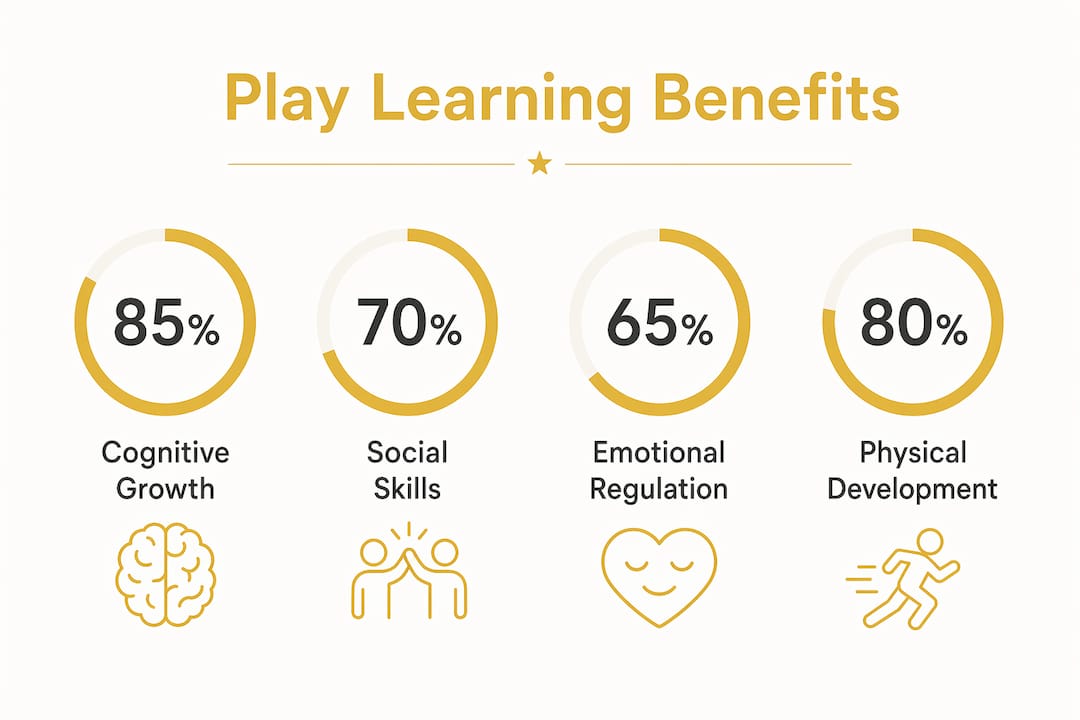
Parent-child play carries particular weight. The Harvard Centre on the Developing Child highlights that parent-child play strengthens caregiver bonds, sharpens a child’s ability to read nonverbal cues, and builds the emotional security children need to take risks in learning. A child who feels safe exploring is a child who learns faster.
Peer play adds a different dimension. When children negotiate roles in pretend play, manage disagreements in a game, or collaborate to build something, they practise social skills that no worksheet can replicate. These interactions are where resilience is actually formed.
Physical play contributes too, often underestimated by parents focused on academic readiness:
- Gross motor play (running, climbing, balancing) develops coordination, spatial awareness, and body confidence.
- Fine motor play (threading, drawing, building with blocks) builds the hand strength and control children need for writing.
- Outdoor play reduces stress hormones, improves attention, and supports healthy sleep, all of which directly improve learning capacity.
Pro Tip: Device-free, unstructured play uniquely fosters self-regulation and emotional resilience that digital tools cannot replicate. Aim for at least one hour of screen-free play each day, ideally outdoors.
How can parents and educators implement play-based learning?
Effective play-based learning does not happen by accident. Intentional adult facilitation is the difference between children simply passing time and children building genuine skills. Adults observe, ask open questions, and scaffold without taking over.
A practical framework for parents and educators:
- Set a clear learning intention. Decide what skill or concept you want the child to encounter. It might be counting, colour recognition, or turn-taking. The child does not need to know the goal explicitly.
- Prepare the environment. Lay out materials that invite exploration. Natural objects, building blocks, art supplies, and simple tools all work well. A stimulating space signals that discovery is expected.
- Observe before intervening. Watch what the child does first. Their choices reveal their current understanding and give you a starting point for questions.
- Ask open questions. “What do you think will happen if…?” and “How did you do that?” extend thinking without directing it. Closed questions shut down exploration.
- Scaffold, then step back. Offer just enough support to keep the child moving forward. Then withdraw so the child consolidates the skill independently.
- Blend play with structured time. Play-based learning does not replace all instruction. Short, focused teaching moments followed by play to practise the concept produces strong results.
The National Academies report stresses that playful pedagogy from birth to age eight is the window where these foundations set. Starting early and sustaining the approach through early primary school matters enormously.
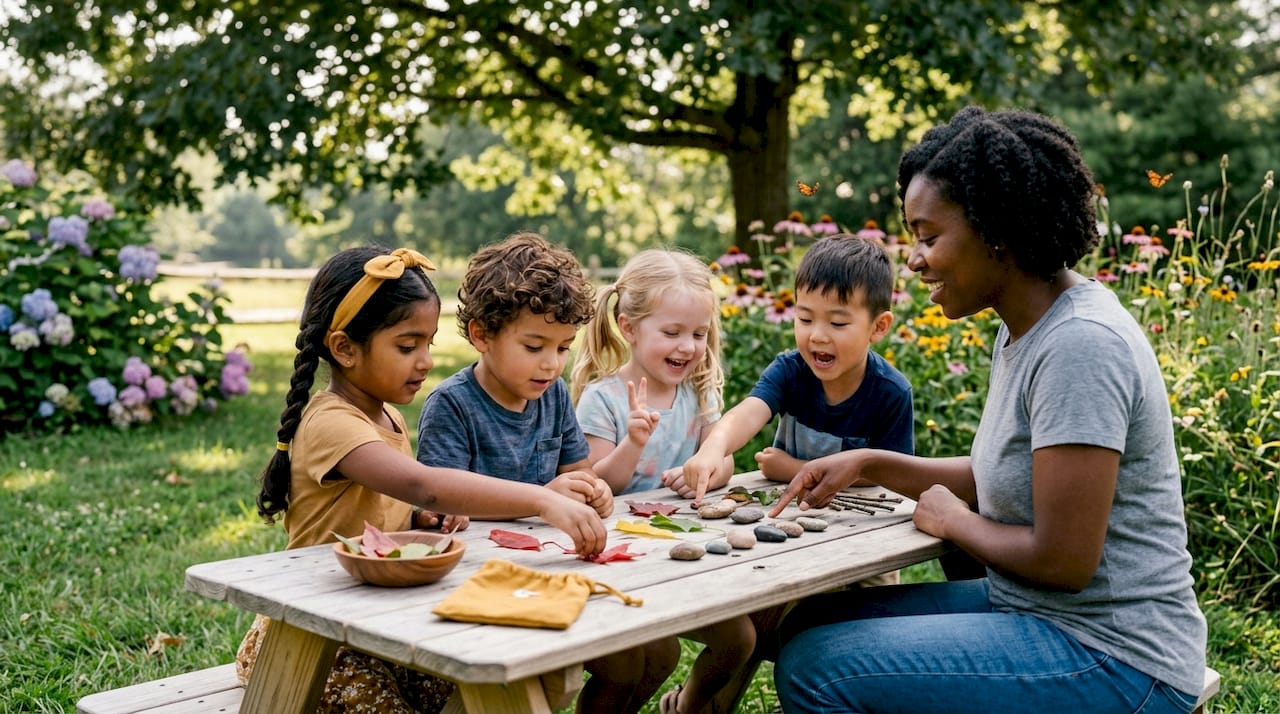
Pro Tip: Incorporate natural materials such as leaves, stones, and water into play. Sensory engagement with the natural world builds curiosity and observational skills that transfer directly to science and maths learning.
How does play-based learning compare with traditional teaching?
Traditional instruction relies on direct teaching, whole-group lessons, and passive reception of information. Play-based learning centres on active engagement, child agency, and learning through doing. The difference in cognitive response is significant. Active, hands-on learning triggers deeper processing than passive listening because children must construct meaning themselves rather than receive it pre-formed.
The risks of moving too quickly to rigid instruction are real. Experts at New America warn that shifting abruptly from play-based preschool to whole-group kindergarten instruction harms motivation and skill retention. Children who experience that sharp transition show lower engagement and reduced willingness to take learning risks. The solution is a gradual, sustained blend rather than a hard switch.
| Feature | Play-based learning | Traditional instruction |
|---|---|---|
| Child’s role | Active, self-directed | Passive, receptive |
| Adult’s role | Facilitator, observer | Instructor, director |
| Skill focus | Broad: cognitive, social, physical | Primarily academic content |
| Motivation | Intrinsic, sustained | Often extrinsic, variable |
| Retention | High, through repeated practice in context | Variable, dependent on repetition |
| Flexibility | Adapts to child’s pace and interest | Fixed pace and curriculum |
Play-based learning does not reject academic content. It delivers that content through a method that children’s brains are biologically primed to engage with. The benefits of experiential learning are most visible precisely where traditional methods struggle: sustaining curiosity, building resilience, and developing the social skills children need to thrive beyond the classroom.
Key takeaways
Play-based learning is the most effective method for building the cognitive, social, emotional, and physical foundations children need from birth through age eight.
| Point | Details |
|---|---|
| Research-backed effectiveness | A 2026 analysis of 102 studies confirms play-based approaches match or exceed conventional instruction outcomes. |
| Guided play outperforms free play | Guided play with clear learning aims and child agency produces the strongest educational results. |
| Adult facilitation is non-negotiable | Intentional observation, open questioning, and scaffolding turn play into structured learning. |
| Device-free play builds resilience | Unstructured, screen-free play develops self-regulation and emotional resilience that digital tools cannot replicate. |
| Sustain play into early primary years | Maintaining playful pedagogy beyond preschool prevents the motivation and skill loss caused by abrupt transitions to rigid instruction. |
Play is the real work of childhood
I have spent years watching children in play-based settings, and the thing that strikes me every time is how seriously children take play. They are not messing about. They are working through problems, testing social boundaries, and building mental models of how the world operates. Adults who dismiss play as the opposite of learning have it exactly backwards.
What concerns me most in current education culture is the pressure to formalise learning earlier and earlier. I see four-year-olds sitting at desks for whole-group instruction when their brains are wired for movement, exploration, and story. The research is unambiguous on this. Pushing rigid instruction too early does not accelerate development. It undermines it.
The screen-time question is one I feel strongly about. Digital tools have their place, but they cannot replicate what happens when a child builds a den, negotiates with a friend over who gets to be the explorer, or discovers that a stone sinks and a leaf floats. Those moments build the self-regulation and curiosity that formal schooling later depends on. Parents who protect time for device-free, outdoor play are making one of the highest-value investments in their child’s development.
My advice to educators is to resist the pressure to abandon play as children move into Year 1 and Year 2. The transition should be gradual and the playful spirit should remain. Small-group, hands-on learning keeps motivation alive and prevents the disengagement that rigid whole-class instruction so often produces. Play is not preparation for learning. Play is learning.
— ALAIN
Thezoofamily and play-based learning at home
Children learn best when play connects them to the world around them. Thezoofamily designs kids’ cameras, walkie-talkies, and binoculars with exactly that in mind: tools that send children outdoors, spark curiosity about nature, and turn exploration into a shared adventure.
Every product Thezoofamily creates is built to support the kind of active, imaginative, device-free play that research consistently endorses. For every camera sold, Thezoofamily plants one tree, so the natural world children are learning to love is protected for them to keep exploring. Visit Thezoofamily to find activity ideas and resources that bring play-based learning to life at home.
FAQ
What is play-based learning?
Play-based learning is an educational approach where children acquire skills through purposeful, enjoyable activities rather than passive instruction. It covers cognitive, social, emotional, and physical development simultaneously.
Why is play essential for learning in early childhood?
Play is the primary mechanism through which young children build executive function, language, and social-emotional skills. Research shows these foundations, formed through play, predict long-term academic and life outcomes more reliably than early formal instruction alone.
What is the difference between guided play and free play?
Guided play has a clear learning intention set by an adult but gives the child agency over how they engage. Free play is entirely child-directed with no adult-defined goal. Guided play consistently produces stronger educational outcomes than either free play or direct teaching alone.
At what age should play-based learning begin?
Play-based learning is beneficial from birth. The National Academies recommend sustaining playful pedagogy through age eight to build the collaboration, communication, and problem-solving skills that underpin all later learning.
How can parents support play-based learning at home?
Parents support play-based learning by preparing stimulating environments, asking open questions, and protecting time for device-free, outdoor play. Parent-child play also strengthens emotional bonds and builds a child’s curiosity and sense of security.