

Every parent faces the challenge of finding a gift that truly sparks curiosity in their child. For environmentally-conscious mothers in European cities, this search often centres on gifts that nurture creativity and bring children closer to nature. Touchscreen cameras stand out by offering an intuitive way to explore the outdoors, encouraging hands-on discovery and confident photo-taking. With their innovative touch-based controls, these devices invite young explorers to notice the finer details in their environment and make creative expression simple and rewarding.
Table of Contents
- What Sets Touchscreen Cameras Apart
- Popular Variations and Their Key Features
- Eco-Friendly and Child-Safe Design Aspects
- Boosting Children’s Creativity and Nature Interest
- Common Pitfalls and Smarter Choices
Key Takeaways
| Point | Details |
|---|---|
| User-Friendly Interface | Touchscreen cameras enable intuitive interaction, making photography accessible for children without complex controls. |
| Encourages Creativity | Immediate visual feedback fosters confidence and creativity in young photographers, enhancing their observation skills. |
| Consider Eco-Friendliness | Selecting cameras made from sustainable materials teaches children about environmental responsibility while exploring photography. |
| Prioritise Durability | Choose robust cameras that withstand outdoor use, ensuring longevity and reducing the environmental impact of replacements. |
What Sets Touchscreen Cameras Apart
Touchscreen cameras have completely transformed how children interact with photography. Rather than fumbling with tiny buttons or confusing dials, your child simply touches the screen to compose shots, adjust focus, and explore creative possibilities. This shift from traditional controls to intuitive touch interfaces makes photography accessible even for younger hands.
The core difference lies in how these cameras respond to user input. Touch sensors detect location and pressure, offering immediate feedback that feels natural and intuitive. When your child wants to focus on a bird perched on a branch, they tap the screen exactly where the bird sits. The camera focuses instantly. No menus. No confusion.
Speed and Spontaneity
Traditional cameras require navigating through multiple menu screens to adjust settings. Touchscreen models simplify this dramatically:
- Tap to focus on subjects instantly
- Swipe through captured images without pressing buttons
- Access settings with direct finger contact
- Change camera modes by tapping onscreen options
- Preview compositions in real time
This responsiveness encourages spontaneous creativity. Your child can photograph a butterfly one moment and switch to video the next without wrestling with controls.
Touchscreen responsiveness transforms hesitant photographers into confident explorers, turning technical frustration into creative flow.
Real-World Performance Advantages
The practical benefits extend beyond ease of use. Children actually use these cameras more consistently because the interaction feels rewarding. Touch feedback—that satisfying response when tapping the screen—creates a sense of control and immediate connection to the camera.
However, real-world usage reveals trade-offs worth considering. Battery consumption increases with screen usage, and bright sunlight can create glare that makes the display difficult to read. Modern designs address these limitations through improved screen technologies, but they remain factors during outdoor nature exploration.
The combination of intuitive touchscreen displays enabling rapid control means your child spends less time learning camera mechanics and more time actually observing nature. This matters. When children aren’t distracted by complicated controls, they notice details: the texture of tree bark, the iridescent wings of dragonflies, the way light filters through leaves.
Pro tip: During woodland walks, let your child preview images immediately after capturing them by swiping through the gallery—this reinforces observation skills and encourages them to notice details they might have missed.
Popular Variations and Their Key Features
Touchscreen cameras come in several distinct types, each designed for different needs and skill levels. Understanding these variations helps you choose the right camera for your child’s interests and your family’s lifestyle. From compact models perfect for pocket exploration to more advanced systems, there’s a touchscreen camera suited to nearly every young photographer.
Camera Types and Their Strengths
The main variations span three primary categories. Compact digital cameras prioritise portability and simplicity, making them ideal for children just beginning their nature photography journey. Mirrorless cameras offer advanced features and flexibility, appealing to older children or families wanting to grow into more serious photography. DSLRs with touchscreen interfaces blend traditional controls with modern touch technology, maintaining physical buttons alongside screen interactions.
Each type serves a distinct purpose:
Here’s a summary comparing the main touchscreen camera types for young photographers:
| Camera Type | Ideal Age & Skill Level | Standout Strength | Typical Drawback |
|---|---|---|---|
| Compact Digital | Young beginners | Lightweight & simple | Limited manual controls |
| Mirrorless | Older children/teens | Lens flexibility | Higher price point |
| DSLR with Touchscreen | Advanced/enthusiasts | Professional options | Bulkier, more complex |
- Compact models: lightweight, durable, intuitive for beginners
- Mirrorless systems: interchangeable lenses, advanced autofocus, articulating screens
- DSLR touchscreen variants: familiar button layouts, extensive lens options, professional potential
Essential Features Across All Types
Popular touchscreen camera variations share several core capabilities that enhance usability. Touch-to-focus functionality lets your child tap any part of the scene to focus instantly. Touch shutter release means they can capture images by tapping the screen rather than pressing physical buttons—useful when hands are cold or muddy.
Connectivity options matter too. Built-in Wi-Fi or Bluetooth allows quick image transfer to phones or tablets, encouraging immediate sharing and review. Quick menu access through the touchscreen reduces the time spent navigating settings, leaving more time for actual photography.
Screen Technology Differences
Screen quality varies significantly between models. Responsive touch sensitivity and display resolution determine how clearly your child sees their composition and how accurately the camera responds to their taps. Higher resolution screens reveal fine details in previews, whilst robust touch sensitivity ensures every tap registers reliably.
Screen articulation—how the display moves—creates practical advantages. Fixed screens work fine for standard eye-level shooting. Tilting or fully articulating screens allow shooting from unusual angles: low to the ground for insect photography, or overhead for capturing tree canopies. This flexibility sparks creative problem-solving in young photographers.
Build Quality for Real-World Use
Durable construction matters when cameras accompany children into muddy meadows and damp forests. Features like image stabilisation prevent blurry shots when hands shake or subjects move. Battery longevity ensures outdoor exploration isn’t cut short by low power warnings.
Choosing the right touchscreen camera type depends less on specifications and more on matching the camera’s strengths to how your child actually explores nature.
Pro tip: Start with a compact touchscreen model to build your child’s photography confidence, then upgrade to a mirrorless system with interchangeable lenses once they develop specific interests like macro insect photography or wildlife documentation.
Eco-Friendly and Child-Safe Design Aspects
When you choose a touchscreen camera for your child, you’re not just selecting a photography tool—you’re making a statement about the values you want to instil. Modern eco-conscious camera manufacturers design with two priorities in mind: protecting your child’s wellbeing and protecting the planet they’ll inherit.
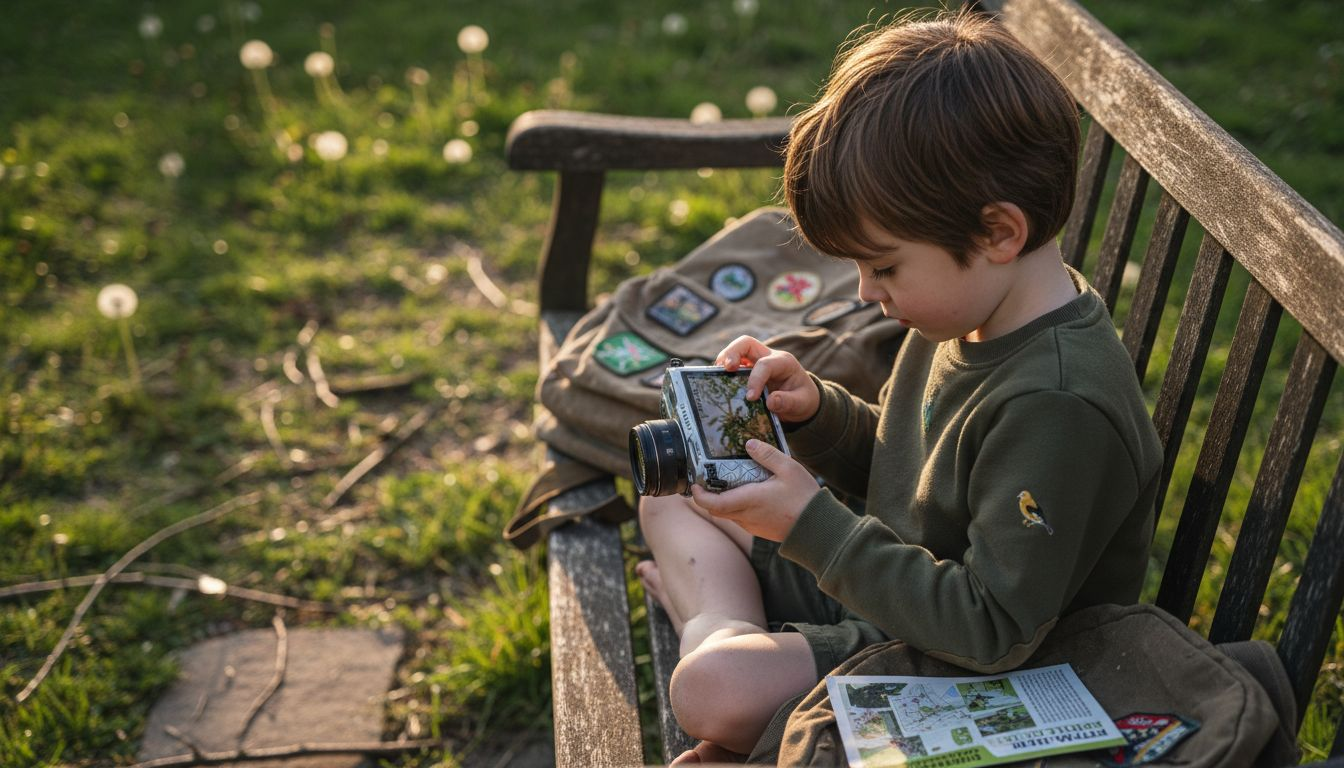
Material Choices That Matter
Quality touchscreen cameras increasingly use sustainable materials rather than virgin plastics. Recycled aluminium forms durable bodies that resist dents when dropped on stone paths. Biodegradable components break down naturally at end-of-life rather than persisting in landfills for decades. These choices aren’t marketing gestures—they reflect real environmental responsibility in production.
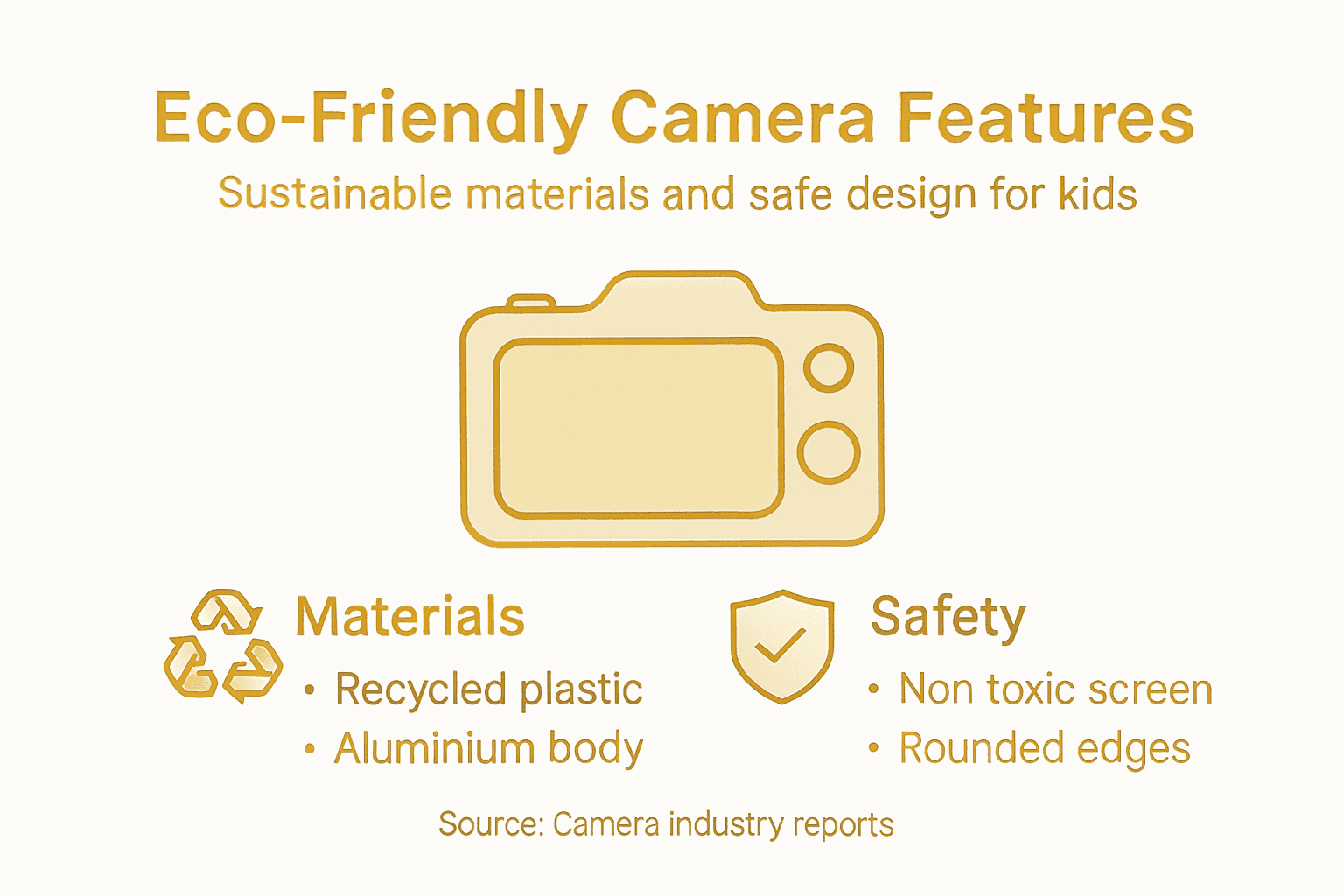
Eco-friendly camera design prioritises minimising environmental impact through thoughtful material selection and sustainable manufacturing practices. When you purchase a camera made with recycled materials, you’re supporting circular economy principles. Your child learns that quality products come from responsible sources.
Key material features to look for:
- Recycled aluminium bodies and frames
- Non-toxic plastics free from harmful chemicals
- Biodegradable internal components and packaging
- Sustainably sourced rubber grips
- Minimal plastic wrapping during shipping
Child Safety by Design
Children’s hands are smaller and more vulnerable than adult hands. Well-designed touchscreen cameras account for this. Ergonomic grips fit naturally in young palms without requiring awkward stretching. Rounded edges prevent accidental cuts during backpack packing or woodland tumbles.
The screen itself poses safety considerations. Cameras designed for children use non-toxic screen coatings that won’t harm skin if a child touches their face after using the camera. Durable glass withstands the inevitable bumps and drops that accompany childhood exploration.
To help you evaluate eco-friendly and child-safe camera designs, here’s a reference table of key considerations:
| Design Aspect | Why It Matters | Typical Feature |
|---|---|---|
| Sustainable Materials | Reduces environmental impact | Recycled aluminium, biodegradable parts |
| Ergonomic Grips | Comfort for small hands | Moulded, rounded surfaces |
| Safe Screen Coatings | Prevents exposure to toxins | Non-toxic, durable glass |
| Robust Construction | Longevity and sustainability | Shock-resistant, water-resistant |
Production and Sustainability
How cameras are manufactured matters as much as what they’re made from. Responsible manufacturers use renewable energy in their factories, reducing carbon emissions throughout production. Closed-loop recycling systems ensure that production waste becomes raw material for future cameras rather than environmental burden.
Building eco-friendly routines starts with understanding how the products your family uses align with broader environmental goals. When discussing photography with your child, you can explain that their camera was made in ways that protect forests and reduce pollution.
Choosing a camera designed with environmental responsibility teaches children that their purchases connect to planetary health.
Durability as Sustainability
The most eco-friendly camera is one that lasts for years rather than requiring replacement every season. Quality construction means your child’s camera survives childhood adventures without mechanical failure. A camera that works for five years causes far less environmental impact than purchasing three cheaper replacements.
Pro tip: When presenting a touchscreen camera to your child, explain that the recycled materials and sustainable manufacturing process mean the camera was made to honour the nature they’ll photograph—this frames environmental responsibility as integral to their creative journey.
Boosting Children’s Creativity and Nature Interest
A touchscreen camera in your child’s hands becomes more than a documentation tool—it transforms into an instrument for creative expression and environmental discovery. When designed thoughtfully, these cameras unlock curiosity about the natural world whilst nurturing artistic confidence.
How Touchscreen Technology Supports Creativity
Touchscreen technology positively influences children’s creativity when cameras feature interactive, thoughtfully designed functionalities. Your child taps to focus, adjusts composition with finger swipes, and immediately reviews their shots. This direct feedback loop builds confidence faster than traditional cameras with complex button sequences.
The immediacy matters. Your child captures a moss-covered stone, sees the image instantly, and understands exactly what the camera recorded. They experiment with angles, lighting, and subject selection without waiting for film development or computer uploads. This quick feedback encourages risk-taking and creative problem-solving.
Encouraging Environmental Observation
Photography naturally deepens observation skills. When children document nature through a camera lens, they notice details previously invisible: the spiral pattern of a fern frond, the texture of tree bark, the iridescent shimmer on a beetle’s wing.
Key ways cameras boost nature interest:
- Children pause to examine subjects closely before photographing
- Repeated visits to the same location reveal seasonal changes
- Photo collections become nature journals documenting growth and transformation
- Sharing images with friends amplifies pride in discoveries
- Comparing photographs encourages scientific thinking about environmental patterns
Creative Expression Beyond Documentation
Touchscreen cameras with filtering and editing features allow children to explore creative expression through visual manipulation. Your child might adjust colours to emphasise the autumn warmth of leaves or enhance contrast to highlight cloud formations. These tools support diverse thinking modes and experimentation.
Creativity flourishes when children feel agency over their creative choices. Rather than simply recording what they see, they interpret what they see. A photograph becomes a personal artistic statement rather than passive documentation.
Building Confidence Through Success
Touchscreen interfaces lower barriers to success. Children achieve clear, recognisable photographs quickly, building confidence rapidly. Early successes encourage continued exploration and risk-taking.
Immediate visual feedback from touchscreen cameras transforms hesitant observers into confident young photographers who actively seek nature’s beauty.
When your child photographs a butterfly and immediately sees a sharp, well-composed image, they experience genuine accomplishment. This positive reinforcement motivates continued engagement with nature.
Pro tip: Create a weekly photography challenge with nature themes—photograph something red, capture movement, document a weather change—to channel your child’s growing creative skills whilst deepening their attention to environmental details.
Common Pitfalls and Smarter Choices
Buying a touchscreen camera for your child deserves more thought than grabbing the first option that looks appealing. Parents often make decisions based on initial impressions rather than critical evaluation, leading to purchases that disappoint or fail to support their child’s genuine interests.
The Overconfidence Trap
You might assume that all touchscreen cameras offer similar performance because they look equivalent on the shelf. This assumption leads to overlooking critical differences in build quality, battery longevity, and creativity-supporting features. Consumers often overestimate their confidence when choosing touchscreen devices, resulting in less careful evaluation of actual specifications.
The touchscreen interface feels intuitive, so parents assume the camera itself will work well. But intuitive controls hide technical limitations. A camera with a responsive screen might have poor autofocus, limited battery life, or a fragile body that shatters on first woodland adventure.
Common Mistakes to Avoid
Most parents fall into predictable traps when selecting cameras:
- Prioritising aesthetics over durability and build quality
- Ignoring battery consumption caused by constant touchscreen use
- Assuming all user reviews reflect creativity-supportive features
- Selecting devices without considering repair accessibility
- Overlooking the importance of introductory training
- Overlooking environmental credentials and sustainability practices
The Battery Reality Check
Touchscreens consume significantly more power than traditional button-based cameras. A camera with stunning screen brightness drains batteries in hours, not days. Your child’s woodland exploration gets cut short by low-battery warnings.
Check manufacturer specifications for actual battery life during regular use, not optimistic laboratory conditions. Real-world touchscreen usage often delivers 30 to 40 percent less runtime than advertised.
Making Smarter Purchasing Decisions
Critical evaluation requires examining independent reviews and technical specifications beyond marketing claims. Seek reviews from photographers, educators, and parents who document actual usage patterns rather than initial impressions.
Smarter choices involve prioritising durable, eco-friendly builds alongside robust repair options. Select cameras designed for extended product life rather than planned obsolescence. Does the manufacturer offer replacement parts? Can local technicians repair common issues?
Balancing touchscreen convenience with traditional skill development matters too. A camera that encourages hands-on learning alongside intuitive controls teaches more than pure automation.
The best camera isn’t the one with the most features—it’s the one your child will actually use and that survives childhood adventures.
Training and Realistic Expectations
Introductory training prevents frustration. Before handing over the camera, spend time exploring its basic functions together. This investment prevents your child from abandoning the camera out of confusion.
Pro tip: Before purchasing, read reviews from educational contexts and parenting communities rather than technology enthusiasts, since they report real-world durability and whether cameras actually inspire sustained nature engagement.
Discover Eco-Friendly Touchscreen Cameras That Inspire Young Nature Explorers
The article highlights important challenges such as finding a touchscreen camera that balances intuitive creative expression, durable child-safe design, and sustainability. Many parents worry about overwhelming technical features, poor battery life, and environmental impact while wanting a camera that truly engages their child’s curiosity about nature. At The Zoofamily, we understand these concerns deeply and have designed kids’ cameras that are lightweight, easy to use, and made with eco-conscious materials that align perfectly with nurturing a love for the environment.
Experience the difference when responsibility meets creativity:
- Cameras with ergonomic grips designed for small hands to encourage exploration without frustration
- Sustainable manufacturing choices that teach children about caring for the planet
- Interactive features that transform hesitation into confidence during outdoor adventures
Bring home a camera that does more than capture moments. It connects children to the natural world while supporting a greener future. Every camera purchased plants a tree, giving back to the environment your child photographs. Begin your journey with The Zoofamily’s innovative kids’ cameras today. Explore our full range and see how we put nature and creativity first by visiting https://thezoofamily.com.
Start inspiring eco-friendly play and creative connections now with a camera made for your child’s adventures.
Frequently Asked Questions
What are the benefits of touchscreen cameras for children?
Touchscreen cameras simplify photography for children by allowing intuitive interaction. They can easily tap the screen to focus, adjust settings, and explore creativity without the frustration of complicated buttons and menus.
How do touchscreen cameras encourage environmental awareness in young photographers?
Touchscreen cameras designed with eco-friendly materials teach children about sustainability. By using products made from recycled materials and promoting mindful consumption, kids learn the importance of protecting the environment while they engage with nature through photography.
What types of touchscreen cameras are suitable for children?
There are three main types: compact digital cameras for young beginners, mirrorless cameras for older children, and DSLRs that blend traditional controls with touchscreen technology for those who are more experienced. Each type offers distinct advantages suited to different skill levels.
How can I teach my child to use a touchscreen camera effectively?
To ensure your child feels confident, spend time exploring the camera’s functions together. Introduce basic features and encourage practice in different environments. Set weekly photography challenges to reinforce their skills and observation of natural details.
Recommended
- Meilleurs gadgets plein air enfants – Comparatif 2025 – The Zoofamily
- Comparatif caméras créatives enfants – Expert Comparison 2025 – The Zoofamily
- 7 idées goûter nature enfants pour éveiller leur curiosité – The Zoofamily
- Understanding Eco Friendly Glass Cleaner for Smudge-Free Shine – The Zoofamily
- Eco Friendly Cleaning Solutions: For Safer Homes – naturessoulshop
- 8 Essential Camping Sustainability Tips for Nature Lovers – Hazli Collection
- Environmentally Friendly Yoga Mats: Key Factors for Facilities – Mats4U USA