

Every british family, from the countryside of France to vibrant cities in Germany, knows the struggle of keeping children connected with nature in a tech-driven world. Studies show that over 60 percent of families wish they spent more time outdoors together, yet busy schedules and city life often get in the way. Discover practical ways to build new traditions that make nature exploration meaningful and memorable for your family, nurturing a deeper bond with the world around you.
Table of Contents
- Defining Family Traditions And Their Power
- Nature-Inspired Traditions For Eco-Families
- Seasonal Rituals And Outdoor Activities
- Roles Of Parents In Shaping Traditions
- Common Pitfalls And Sustainable Solutions
Key Takeaways
| Point | Details |
|---|---|
| Importance of Family Traditions | Family traditions serve as vital tools for cultural transmission and emotional bonding, shaping identities across generations. |
| Impact of Nature-Inspired Traditions | Engaging children in nature-inspired activities fosters environmental awareness and deep emotional connections with the natural world. |
| Role of Parents | Parents are central to establishing and nurturing family traditions, ensuring these practices are meaningful and engage children’s participation. |
| Addressing Challenges | Families must adapt their nature traditions to overcome modern obstacles, maintaining a focus on creating engaging and consistent outdoor experiences. |
Defining Family Traditions And Their Power
Family traditions represent more than simple repeated activities; they are profound mechanisms of cultural transmission and emotional connection. Research reveals that these patterned behaviours serve as powerful vehicles for solidifying group identity and imparting critical cultural knowledge across generations.
At their core, family traditions are intricate systems of shared practices that communicate deeper meanings beyond their surface actions. Comprehensive psychological studies demonstrate that these rituals are not merely repetitive actions, but complex organisational structures that support family stability, shape individual and collective identities, and promote psychological well-being. They function as invisible threads connecting family members through shared experiences, memories, and emotional landscapes.
These traditions can manifest in countless ways - from annual holiday celebrations and weekend cooking rituals to unique greeting customs or storytelling practices. What transforms an ordinary activity into a meaningful tradition is the intentional repetition, emotional significance, and symbolic meaning attached to the experience. By consistently engaging in these shared moments, families create a sense of continuity, resilience, and belonging that transcends individual experiences.
Here is a summary of how family traditions impact emotional and psychological aspects:
| Aspect | Emotional Impact | Psychological Benefit | Social Influence |
|---|---|---|---|
| Ritual Repetition | Builds shared memories | Promotes stability | Strengthens group bonds |
| Symbolic Meaning | Fosters belonging | Supports identity | Transmits values |
| Collaborative Actions | Deepens connection | Encourages resilience | Creates unity |
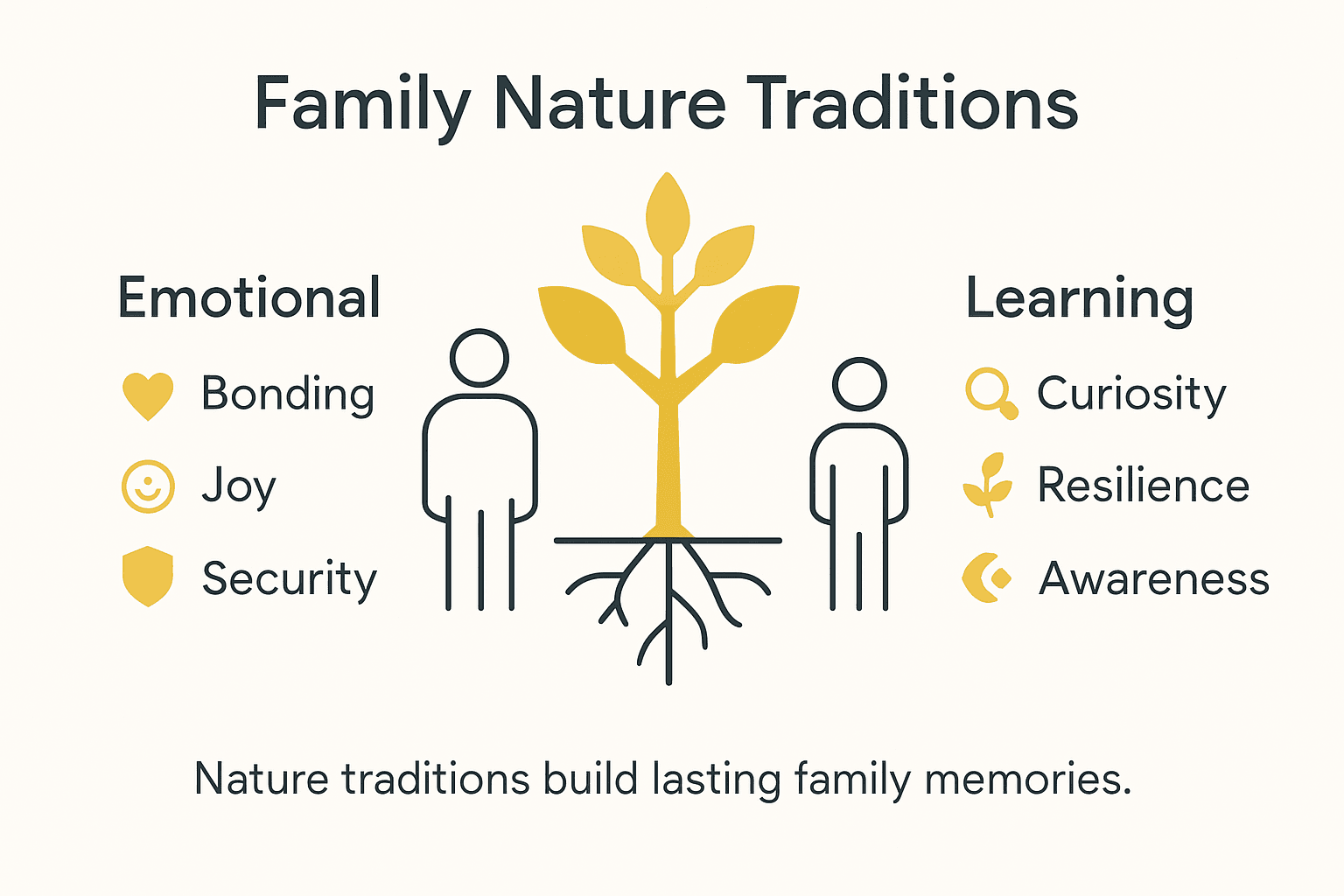
Pro Tip: Family Tradition Builder: Start small by identifying one meaningful activity your family already enjoys and intentionally frame it as a special tradition, adding personal significance and consistency to create lasting emotional connections.
Nature-Inspired Traditions For Eco-Families
Nature-inspired family traditions represent a powerful approach to connecting children with the natural world, transforming routine outdoor experiences into meaningful, educational opportunities. Global research on family nature engagement demonstrates that consistent, intentional interactions with the environment can profoundly impact children’s understanding and appreciation of ecological systems.

These traditions can take numerous forms, ranging from simple daily practices to more structured seasonal rituals. Ecological family activities might include weekly nature walks, seasonal plant tracking, wildlife observation challenges, or collaborative garden projects. By embedding these experiences into family life, parents create opportunities for sensory learning, environmental awareness, and deep emotional connections with the natural world. Children learn through direct experience, developing an intuitive understanding of ecological relationships that textbooks cannot replicate.
Successful nature-inspired traditions require creativity, consistency, and genuine enthusiasm. They are not about perfection, but about cultivating curiosity and respect for the environment. Families might establish traditions like annual tree planting, monthly beach or forest clean-ups, documenting local wildlife through photography, or creating seasonal nature journals that capture the changing landscape. These shared experiences become powerful memories that shape children’s environmental consciousness and foster a lifelong commitment to ecological stewardship.
Pro Tip: Family Nature Connection Starter: Choose one simple, repeatable outdoor activity your family can do together weekly, such as a neighbourhood nature walk or backyard wildlife observation, and approach it with genuine curiosity and excitement.
Seasonal Rituals And Outdoor Activities
Seasonal rituals provide a rhythmic framework for families to connect with nature’s cyclical patterns, transforming ordinary moments into meaningful experiences. Decades of psychological research demonstrate that recurring outdoor activities play a crucial role in supporting family cohesion, adaptive coping, and child development across different societies and cultural contexts.
Each season offers unique opportunities for distinctive family traditions. Spring might involve seed planting and garden preparation, where children learn about ecological growth cycles. Summer could feature weekly nature exploration trips, camping weekends, or beach clean-up activities. Autumn presents chances for leaf collecting, mushroom foraging, or creating nature-inspired artwork, while winter enables tracking animal trails, building wildlife shelters, or observing seasonal bird migrations. These activities are not merely recreational but serve as powerful educational experiences that build environmental literacy and emotional connection.
Successful seasonal rituals require flexibility, curiosity, and a spirit of shared discovery. They need not be elaborate or time-consuming but should spark genuine engagement and wonder. Families might document their seasonal journeys through photography, nature journals, or collaborative art projects that capture the essence of each environmental transition. The key is creating consistent, enjoyable experiences that children anticipate and actively participate in, transforming passive observation into active environmental stewardship.
Below is a comparison of seasonal nature-inspired family activities and their educational value:
| Season | Typical Activity | Educational Outcome | Family Benefit |
|---|---|---|---|
| Spring | Planting seeds | Learn about growth cycles | Active participation |
| Summer | Beach clean-ups | Ecological responsibility | Teamwork development |
| Autumn | Leaf collecting | Identify plant species | Sensory exploration |
| Winter | Wildlife observation | Understand adaptation | Encourages curiosity |
Pro Tip: Seasonal Nature Tracker: Create a simple family ritual of documenting one consistent natural feature throughout the year - such as photographing the same tree, tracking local wildlife, or measuring seasonal changes in a specific outdoor space.
Roles Of Parents In Shaping Traditions
Parents serve as the primary architects of family traditions, wielding profound influence through both intentional and unconscious mechanisms of cultural transmission. Comparative research across different cultural contexts reveals that parental engagement extends far beyond simple instruction, encompassing nuanced emotional modelling, narrative sharing, and experiential learning.
The parental transmission of traditions operates through multiple sophisticated channels. Verbal storytelling, demonstrative actions, emotional investment, and consistent repetition form the core mechanisms by which children internalise family values and practices. Parents who approach traditions with genuine enthusiasm create an environment where these rituals become meaningful experiences rather than perfunctory obligations. This approach transforms simple activities into profound moments of connection, learning, and shared understanding, helping children develop a sense of belonging and cultural identity.
Effective tradition-building requires deliberate yet flexible strategies. Parents must balance structure with spontaneity, creating frameworks that invite children’s curiosity and participation. This might involve establishing core family rituals while simultaneously remaining open to children’s contributions and interpretations. The most powerful traditions emerge not from rigid enforcement, but from collaborative exploration, where children feel respected, heard, and actively involved in shaping family narratives and experiences.
Pro Tip: Tradition Collaborator: Regularly invite your children to contribute ideas and modifications to family traditions, transforming them from passive recipients to active co-creators of meaningful family experiences.
Common Pitfalls And Sustainable Solutions
Connecting children with nature is not without challenges, as modern families navigate complex environmental and lifestyle obstacles. Global research on family sustainability highlights the critical need for adaptive strategies that address emerging barriers to meaningful nature engagement.
Common sustainability challenges include digital distractions, time constraints, and limited access to natural spaces. Families often struggle with competing priorities that push outdoor experiences to the margins of daily life. These obstacles can lead to disconnection from environmental rhythms, reducing children’s opportunities for sensory learning and ecological understanding. Sustainable solutions require intentional approaches: creating structured yet flexible nature routines, leveraging local green spaces, integrating technology as a supportive rather than competing tool, and reframing outdoor time as an essential family experience rather than an optional luxury.
Successful nature connection demands ongoing dialogue and creative adaptation. Families must remain open to evolving their approaches, recognising that traditions are living systems that require periodic reinvention. This might involve transforming traditional outdoor activities to suit changing lifestyles, incorporating digital documentation of natural experiences, or finding innovative ways to bring natural elements into urban environments. The key is maintaining enthusiasm, flexibility, and a genuine sense of wonder about the natural world, even when conventional approaches become challenging.
Pro Tip: Adaptive Nature Connector: Develop a monthly family review of your nature traditions, identifying what’s working, what needs adjustment, and inviting everyone’s creative suggestions for keeping outdoor experiences engaging and meaningful.
Ignite Lasting Family Traditions With Nature-Inspired Tools
The challenge of creating meaningful family traditions that connect children with nature is real in today’s busy world. As the article highlights, building consistent, emotionally significant rituals around outdoor experiences can be difficult amidst digital distractions and limited access to green spaces. Parents seek ways to spark their children’s curiosity, foster environmental stewardship, and transform simple activities into treasured memories.
The Zoofamily offers a unique solution with our specially designed kids’ cameras, walkie-talkies, and binoculars that encourage exploration and deep engagement with the natural world. Each product features animal references to trigger children’s interest, making nature connection both fun and educational. Plus, for every camera sold, we plant a tree, helping families contribute to restoring natural beauty for generations to come.
Bring your family’s nature traditions to life today by exploring innovative tools that motivate outdoor discovery and shared experiences. Visit The Zoofamily to find products crafted to support your journey and start turning ordinary outings into lasting family rituals. Dive deeper into creative nature engagement ideas and practical solutions at The Zoofamily. Start building your family’s special traditions now and make every moment with nature count.
Frequently Asked Questions
How can I start a family tradition that connects my children with nature?
To start a family tradition connecting your children with nature, choose a simple, repeatable outdoor activity such as a weekly nature walk or backyard wildlife observation. Approach this activity with genuine curiosity and excitement to make it enjoyable and meaningful for the family.
Why are nature-inspired family traditions important for children?
Nature-inspired family traditions are important because they help children develop an understanding and appreciation of the natural world. Engaging consistently with nature fosters sensory learning, environmental awareness, and emotional connections, which contribute to a child’s ecological consciousness and commitment to stewardship.
What seasonal activities can families engage in to connect with nature?
Families can engage in various seasonal activities such as planting seeds in spring, beach clean-ups in summer, leaf collecting in autumn, and wildlife observation in winter. These activities not only educate children about ecological cycles but also strengthen family bonds and create lasting memories.
How can parents effectively shape family traditions?
Parents can effectively shape family traditions by being intentional yet flexible. Encourage children’s participation by inviting them to contribute ideas and modifications to the traditions. This collaborative approach transforms passive observers into active co-creators, enhancing the meaning and significance of the family traditions.