

TL;DR:
- Child-led, nature-connected, open-ended outdoor play enhances creativity, confidence, and emotional growth.
- Regular outdoor rituals like walks and play reduce stress, improve sleep, and lower screen time.
- Urban families can create meaningful nature experiences through container gardening and balcony ecosystems.
Finding genuinely meaningful ways to connect with your child, away from screens and schedules, is one of the quiet struggles of modern parenting. You want something that sparks joy, builds real skills, and feels special rather than forced. The good news is that child development outdoors research consistently points toward the same kinds of experiences: nature-rich, creativity-led, and wonderfully low-tech. This guide walks you through evidence-backed criteria for choosing the best parent-child bonding activities, practical ideas you can try this weekend, and honest advice on making it work whether you live near a forest or on the fifth floor of a city block.
Table of Contents
- What makes the best parent-child bonding activities?
- Top creative outdoor bonding activities for families
- Nature walks and everyday outdoor rituals: Stress reduction, sleep, and screen-time evidence
- Maximising green space: Play areas and adapting for urban families
- Finding the right balance: Unstructured vs structured play
- Why creative bonding outdoors transforms families: Our insight
- Explore more activities and community inspiration
- Frequently asked questions
Key Takeaways
| Point | Details |
|---|---|
| Prioritise nature connection | Nature-based, child-led activities outperform indoor and digital options for family bonding and creativity. |
| Embrace unstructured play | Allow plenty of open-ended time outdoors to boost emotional, social, and creative development. |
| Adapt for any space | Even families in city flats can nurture bonding with container gardens or balcony nature crafts. |
| Build daily outdoor rituals | Short, repeated nature walks reduce stress and screen time, strengthening family routines. |
What makes the best parent-child bonding activities?
Not every outdoor activity is created equal. A structured craft session in the garden is lovely, but it is not the same as an afternoon where your child decides what to build, explore, or investigate. The distinction matters more than most parents realise.
The best bonding activities tend to share a handful of qualities:
- Child-led: Your child chooses the direction, and you follow their curiosity.
- Nature-connected: Even a pot of soil on a balcony counts. Direct contact with natural materials grounds children in a way that plastic toys simply cannot.
- Open-ended: There is no single right outcome. A pile of sticks can become a den, a fence, a kitchen, or a spaceship.
- Appropriately risky: Climbing, balancing, and getting muddy build confidence and physical literacy.
- All-weather suitable: Rain is not a reason to stay indoors. It is a reason to put on waterproofs.
- Minimal equipment: The fewer props needed, the more imagination fills the gap.
Forest School methodology, which originated in Scandinavia and is now widespread across Europe, is built entirely on child-led sessions in natural settings for holistic development. It is one of the most researched approaches to early learning, and its principles translate beautifully into family life. Research also shows that 60 to 70 percent unstructured nature play supports optimal creativity and emotional growth in children, which means the less you plan, the more they gain.
Pro Tip: Resist the urge to guide or correct during child-led play. Sit nearby, observe, and only step in when invited. Your presence without interference is often the most powerful thing you can offer.
Top creative outdoor bonding activities for families
With those criteria in mind, here are activities that genuinely deliver on creativity and connection. These are not Pinterest projects requiring specialist supplies. They are messy, flexible, and adaptable for ages two to twelve.
Nature-based activities like mud kitchens, den building, mini-beast hunts, seed bombs, and scavenger hunts consistently rank among the most engaging options for families. Here is how they work in practice:
- Den building (ages 3 to 12): Use sticks, blankets, or garden furniture. The bonding angle is problem-solving together and creating a shared private world.
- Mud kitchen (ages 2 to 8): An old pot, a patch of soil, and water. Children explore texture, measurement, and role play simultaneously.
- Mini-beast hunt (ages 3 to 10): Lift logs, check under stones, peer into bark. It builds observation skills and genuine scientific curiosity.
- Seed bombs (ages 4 to 12): Mix clay, compost, and wildflower seeds into balls and throw them into neglected patches. Children feel the immediate satisfaction of doing something real for nature.
- Nature scavenger hunts (all ages): Create a list of textures, colours, or sounds to find. Understanding the benefits of creative play helps you see why even simple hunts build language, attention, and emotional regulation.
“Open-ended play in natural environments is not a luxury. It is a developmental necessity. Children who regularly engage in unstructured outdoor exploration show stronger problem-solving, greater resilience, and richer social skills than those who do not.” — Forest School Association
Pro Tip: No garden? No problem. A balcony with two planters, a tray of sand, and a magnifying glass creates a surprisingly rich sensory play in nature experience for young children.
Nature walks and everyday outdoor rituals: Stress reduction, sleep, and screen-time evidence
Creative activities are brilliant for weekends, but the real magic happens when outdoor time becomes a daily ritual rather than an occasional treat. The science behind this is striking.
Outdoor walks with infant carrying reduce cortisol in both mothers and infants and improve infant sleep quality. That is not a minor finding. It means a twenty-minute walk with your baby or toddler is measurably reducing stress for both of you at the same time. And frequent outdoor visits cut preschoolers’ screen time during the week, suggesting that nature contact and screen dependency are genuinely in competition with each other.
| Outdoor ritual | Benefit for child | Benefit for parent |
|---|---|---|
| Morning garden walk | Improved focus and mood | Lower cortisol, calmer start |
| After-school nature wander | Better sleep onset | Shared decompression time |
| Weekend den or mud play | Creativity and resilience | Joyful, screen-free connection |
| Daily balcony plant check | Responsibility and routine | Mindful pause in busy day |
The compounding effect is the key insight here. One walk does something. Fifty walks over three months reshape the nervous system, the family rhythm, and the relationship between you and your child. Simple ways to build this in:
- Walk to school via a green route, even if it adds five minutes.
- Keep wellies and waterproofs by the door so weather is never a barrier.
- Explore outdoor play in urban areas to find local parks, nature reserves, and green corridors near you.
- Make one weekend morning non-negotiably outdoor, regardless of the forecast.
Maximising green space: Play areas and adapting for urban families
Not every family has a garden, and that is completely fine. The evidence on green space is encouraging for city families too.
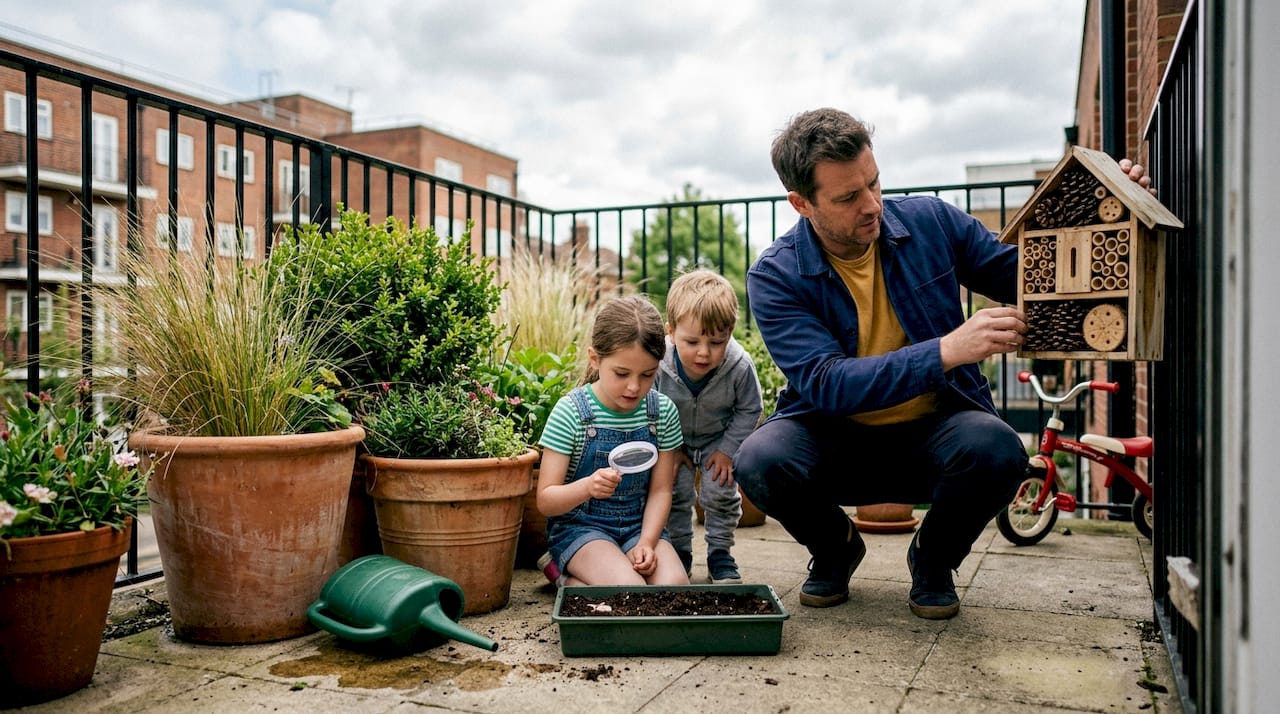
Green schoolyards and mid-height vegetation boost creative play and exploratory opportunities for children, which means the quality and design of green space matters as much as the quantity. A thoughtfully planted balcony can offer more imaginative potential than a flat, empty lawn.
| Setting | Strengths | Creative adaptations |
|---|---|---|
| Large garden | Space for dens, digging, running | Wildflower patch, log pile, mud kitchen |
| Small garden | Contained and manageable | Raised beds, sensory corner, bird feeder |
| Balcony | Always accessible | Container herbs, bug hotel, rain gauge |
| Urban park | Variety and social opportunity | Scavenger hunts, bark rubbings, cloud watching |
Urban families use container gardening and balcony ecosystems to maintain meaningful nature contact, and children who tend their own plants develop a sense of care and connection that transfers beautifully to wider environmental awareness. Creative ways to introduce green in limited spaces:
- Grow herbs in recycled tins on a windowsill and involve your child in watering and harvesting.
- Hang a bird feeder from a balcony rail and keep a simple identification notebook nearby.
- Build a mini bug hotel from bamboo canes and pinecones in a corner of any outdoor space.
- Visit innovative outdoor play areas for inspiration on transforming even the smallest patch into a place of wonder.
Pro Tip: Plant mid-height shrubs or tall grasses in large pots to create a sense of enclosure on a balcony. Children instinctively gravitate toward partially hidden spaces for imaginative play.
Finding the right balance: Unstructured vs structured play
Here is where many well-meaning parents tie themselves in knots. Should you plan activities or just let things unfold? The honest answer is: mostly the latter, with a light touch of the former.
Unstructured nature play is superior for sensory exploration and pro-social behaviour, but a balance avoids skill gaps that can emerge when children never experience guided learning. Think of it as 80 percent freedom, 20 percent gentle structure.
Why unstructured play wins:
- Children develop self-regulation and problem-solving without adult interference.
- Boredom, which parents often rush to fix, is actually the gateway to creativity.
- Outdoor play activities that are child-directed build intrinsic motivation.
When structure genuinely helps:
- Introducing a new skill, such as identifying bird calls or planting seeds.
- When a child is overwhelmed and needs a clear starting point.
- Group activities where turn-taking and collaboration need a gentle framework.
“The long-term value of open-ended play lies not in what children make, but in who they become through the making. Autonomy, persistence, and creative confidence are built one unscripted afternoon at a time.”
The practical approach is to set the scene and then step back. Lay out the materials, name the space, and let your child take it from there. You are the stage manager, not the director.
Why creative bonding outdoors transforms families: Our insight
After years of watching families interact with nature-based play, one thing stands out clearly: the parents who create the most meaningful bonds with their children are not the ones with the biggest gardens or the most elaborate activity plans. They are the ones who show up consistently, get their own hands muddy, and resist the pressure to make every outing Instagram-worthy.
The myth that meaningful bonding requires a special trip or a perfectly organised afternoon is genuinely holding families back. A ten-minute puddle jump after school, done every Tuesday, will do more for your relationship than a single perfectly planned forest adventure. Consistency beats occasion every time.
Messiness is also deeply underrated. When you let your child lead a mud kitchen session without worrying about the washing, you are communicating something profound: your ideas matter, and I trust you. That message, repeated across hundreds of small moments, shapes a child’s sense of self in ways no structured programme can replicate.
Forest School thinking, which is rooted in child development outdoors principles, encourages parents to start small, stay curious, and reflect together. You do not need to be an expert. You just need to be present.
Explore more activities and community inspiration
If these ideas have sparked something, there is a whole world of further inspiration waiting for you. At The Zoofamily, we share regular activity guides, real family stories, and practical resources designed specifically for parents who want to nurture creativity and a genuine love of nature in their children.
From nature photography with our animal-themed kids’ cameras to wide-horizon adventures with our junior binoculars, everything we create is designed to deepen the bond between children and the natural world. Browse our blog for seasonal activity ideas, join our growing community of nature-loving families, and find the tools that make outdoor exploration feel like the adventure it truly is. Every camera sold plants a tree. Your family’s play can help restore the planet.
Frequently asked questions
What are quick bonding activities for busy families?
Short outdoor rituals such as ten-minute scavenger hunts, mini seed bomb plantings, or a brisk walk around the block reduce stress and build connection even within the tightest schedules. Consistency matters far more than duration.
How can I do nature-based activities in a city flat?
Try container gardening on a windowsill, a leafy balcony corner with a bug hotel, or a simple rain-gauge project. Urban families successfully access meaningful nature play through creative use of small outdoor spaces.
What if my child isn’t interested in outdoor play?
Start with child-led exploration and sensory-rich activities, and make sure you join in yourself. Children are far more likely to engage when they see a parent genuinely curious and playful rather than supervising from a distance.
How does outdoor play help with emotional development?
Nature play reduces cortisol and improves mood in both children and parents, while unstructured outdoor play builds pro-social behaviour, empathy, and emotional resilience over time.