

Many toys labeled eco-friendly still expose infants to harmful chemicals through unverified claims and misleading marketing. Parents across Europe face confusing certifications, vague labeling, and greenwashing tactics that make choosing truly safe and sustainable toys overwhelming. This comprehensive guide cuts through the noise, providing clear criteria and actionable tips to help you confidently select infant toys that protect both your baby’s health and the planet for future generations.
Table of Contents
- Introduction to Eco-Friendly Infant Toys
- Material Types and Their Environmental Impact
- Health and Safety Considerations for Infants
- European Certification Standards for Eco Toys
- Common Misconceptions and Greenwashing in Toy Marketing
- Impact of Eco Toys on Child Awareness and Development
- Practical Tips for Parents Buying and Maintaining Eco-Friendly Toys
- Building a Sustainable Play Environment for Infants
- Discover Sustainable and Safe Toys with The Zoofamily
- Frequently Asked Questions About Eco-Friendly Infant Toys
Key Takeaways
| Point | Details |
|---|---|
| Sustainable materials and EU safety standards define truly eco-friendly infant toys | Look for FSC-certified wood, GOTS organic textiles, and mandatory CE marking compliance |
| Wooden toys reduce environmental impact dramatically | Wooden toys made from FSC-certified wood have 70% lower greenhouse gas emissions compared to plastic toys |
| Certifications protect against greenwashing | CE marking, FSC, and GOTS certifications verify safety and sustainability claims |
| Natural materials lower chemical exposure risks | Organic cotton and wool toys eliminate pesticide residues and synthetic toxins |
| Durability extends sustainability benefits | Repairable, long-lasting toys reduce waste and provide better value over time |
Introduction to Eco-Friendly Infant Toys
Eco-friendly infant toys are products made from sustainable, non-toxic materials that comply with strict European safety regulations. These toys minimize environmental footprint through responsible sourcing, reduced emissions, and biodegradable components. They also protect infant health by eliminating exposure to harmful chemicals commonly found in conventional plastic toys.
The importance extends beyond individual purchase decisions. Choosing sustainable toys reduces manufacturing pollution, conserves natural resources, and supports ethical production practices. For infants, who explore the world by mouthing objects, avoiding toxic materials becomes critical for healthy development.
European parents increasingly demand eco-friendly options, driving market growth across France, Germany, and Belgium. However, parents struggle to identify truly sustainable infant toys amid greenwashing and misleading marketing claims that exploit environmental concerns without delivering genuine benefits.
Common challenges include:
- Confusing certification labels that vary by country and material type
- Vague terms like natural or green without third-party verification
- Price concerns that make parents question value and durability
- Limited retail availability of certified eco-friendly options
To evaluate eco-friendly infant toys effectively, consider three pillars: Environmental Impact (materials, manufacturing, disposal), Infant Health and Safety (chemical testing, age appropriateness, mechanical hazards), and Consumer Awareness (certification literacy, greenwashing detection, informed purchasing).
Understanding these foundational concepts empowers you to make choices aligned with your values while ensuring your baby’s wellbeing.
Material Types and Their Environmental Impact
Material selection dramatically affects both environmental footprint and infant safety. FSC-certified wood, responsibly sourced plastic, and natural fibers each offer distinct advantages and limitations worth understanding before purchasing.
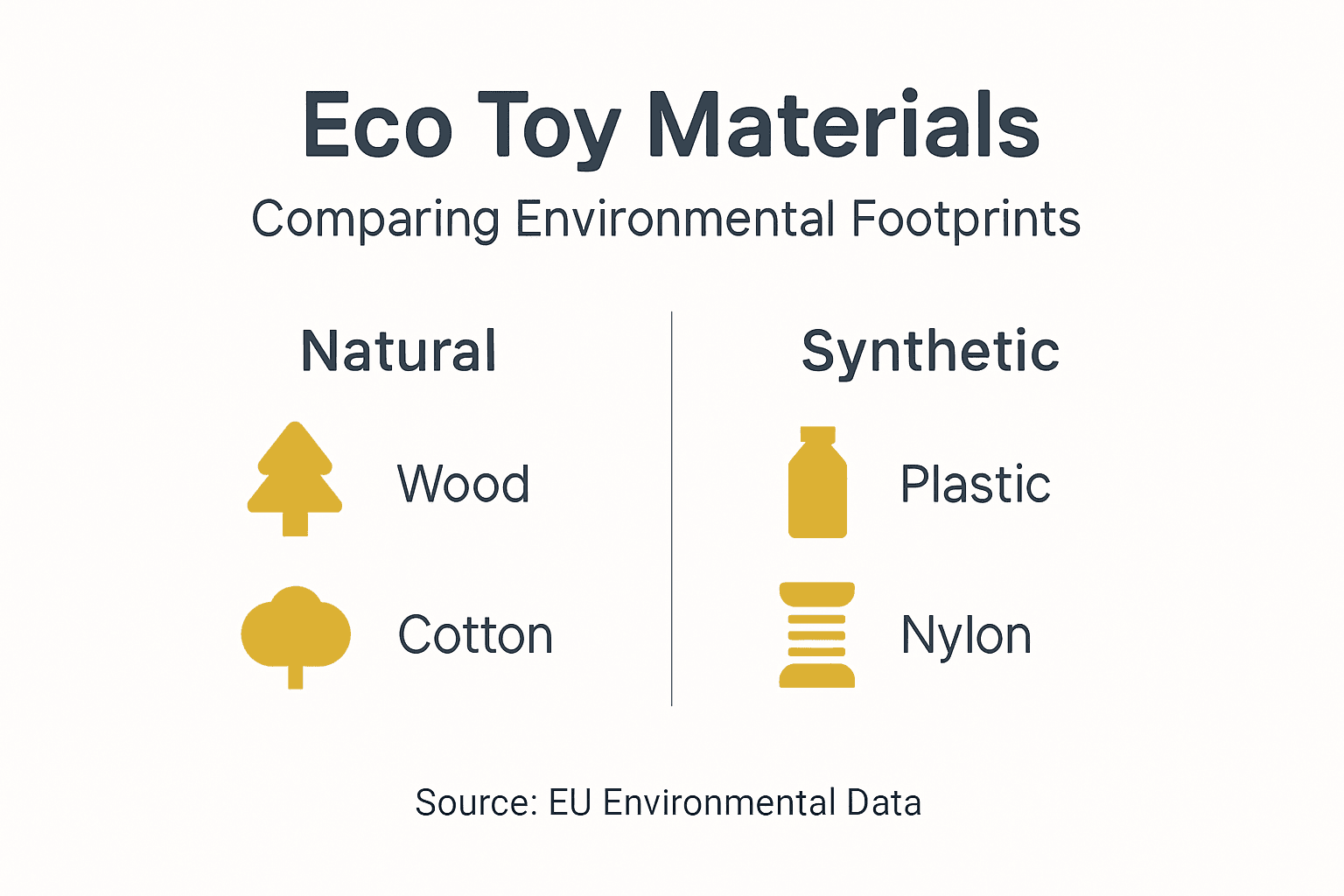
Wooden toys made from FSC-certified wood have 70% lower greenhouse gas emissions compared to plastic toys, making them the most environmentally advantageous option for parents prioritizing climate impact. The Forest Stewardship Council certification guarantees sustainable forest management, protecting biodiversity and preventing deforestation.
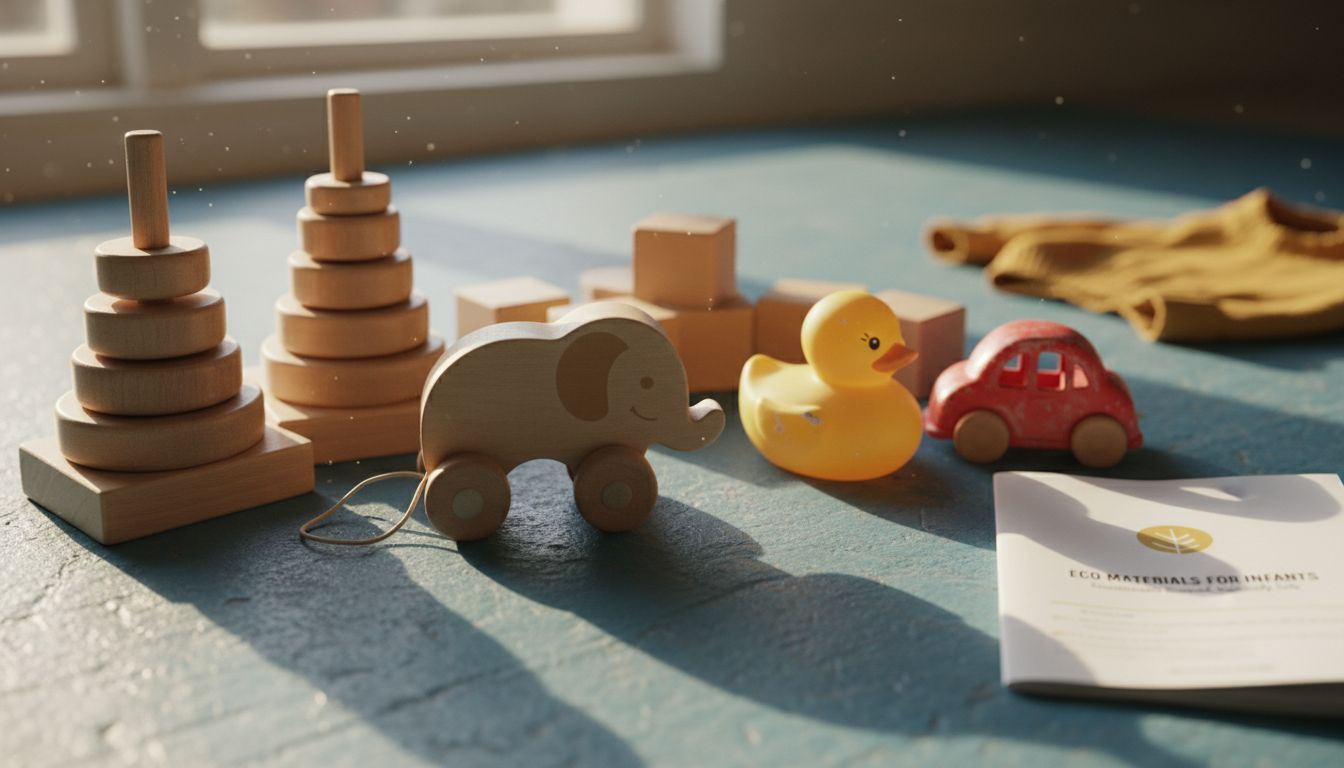
| Material | Carbon Footprint | Biodegradability | Durability | Recyclability |
|---|---|---|---|---|
| FSC Wood | Very Low | Yes (10-20 years) | Excellent | Limited |
| Recycled Plastic | Moderate | No (400+ years) | Good | Yes |
| Organic Cotton | Low | Yes (1-5 months) | Fair | No |
| Organic Wool | Low | Yes (1-5 years) | Good | No |
Natural fibers like organic cotton and wool provide exceptional biodegradability, breaking down without leaving microplastic residues. These materials also eliminate pesticide exposure, as organic certification prohibits synthetic chemicals during cultivation. Their soft textures make them ideal for infant sensory exploration.
Plastic toys, even when made from recycled content, contribute to microplastic pollution through wear and eventual disposal. However, durability remains a strength when products receive proper care and maintenance.
Durability and repairability matter enormously for overall sustainability. A wooden toy lasting 10 years across multiple children generates far less waste than disposable plastic alternatives requiring frequent replacement. Wood vs plastic comparisons consistently favor durable materials that withstand years of play.
Pro Tip: Prioritize FSC-certified wooden toys for infants to maximize environmental benefits while ensuring durability and safety through natural, non-toxic materials that support healthy mouthing behaviors.
Health and Safety Considerations for Infants
Conventional plastic toys frequently contain harmful chemicals that pose serious health risks to developing infants. Phthalates used as plasticizers can disrupt hormone function. BPA exposure links to developmental delays. Lead, cadmium, and other heavy metals cause neurological damage even at low concentrations.
Infants face elevated vulnerability because they mouth toys constantly as part of normal sensory exploration. Their developing systems absorb chemicals more readily than adults, and lower body weight means higher concentration exposure from the same dose. Young babies lack mature detoxification mechanisms, making chemical exposure particularly dangerous.
Eco-friendly toys manufactured from natural materials eliminate these toxic exposures by using safer alternatives. Organic cotton contains no pesticide residues. FSC wood avoids formaldehyde adhesives and chemical treatments. Natural rubber replaces synthetic plastics entirely. These materials provide safe mouthing options that support rather than hinder healthy development.
The EU’s CE marking combined with the EU Toy Safety Directive ensures toys meet stringent safety standards including chemical limits for infants. The directive restricts phthalates, heavy metals, and other hazardous substances to levels protecting even the most vulnerable children. Mechanical safety testing prevents choking hazards and sharp edges.
Key protections include:
- Maximum phthalate levels of 0.1% by weight in toys and childcare articles
- Lead limits of 13.5 mg/kg for scraped toy material and 3.4 mg/kg for liquid toy material
- Prohibition of carcinogenic, mutagenic, or toxic substances at levels exceeding strict thresholds
- Mandatory flammability testing to prevent fire hazards
These EU toy safety standards create baseline protections, but eco-friendly manufacturers often exceed minimum requirements. Additional organic and low-toxin certifications provide extra assurance for health-conscious parents.
Pro Tip: Always verify CE marking on packaging and look for additional certifications like Oeko-Tex Standard 100 for textiles or EN71 compliance to confirm toys meet and exceed EU chemical safety requirements for infant use.
European Certification Standards for Eco Toys
Navigating toy certifications becomes manageable once you understand which labels matter most for verifying genuine safety and sustainability claims. Mandatory and voluntary certifications work together to protect infants and environment.
The CE marking is mandatory for all toys sold in the European Union. It indicates manufacturer compliance with the Toy Safety Directive 2009/48/EC covering chemical composition, mechanical properties, flammability, and hygiene. 100% of CE-marked toys sold in EU comply with the Toy Safety Directive 2009/48/EC ensuring safety for infants. Without this mark, toys cannot legally enter the European market.
Beyond mandatory safety, eco-certifications verify environmental claims:
- FSC (Forest Stewardship Council) certification confirms wood comes from responsibly managed forests protecting biodiversity and preventing deforestation
- GOTS (Global Organic Textile Standard) guarantees organic fiber production without harmful pesticides and ensures ethical labor practices
- Oeko-Tex Standard 100 certifies textiles free from harmful substances, testing for thousands of regulated and unregulated chemicals
- Nordic Swan Ecolabel covers entire product lifecycle including sustainable materials, minimal chemical use, and reduced emissions
To verify eco toy certifications authenticity, follow these steps:
- Locate certification logos directly on product packaging or sewn into textile toys
- Check for license numbers accompanying logos and verify numbers on certifying body websites
- Review manufacturer websites for detailed certification documentation and sustainability reports
- Contact retailers or manufacturers directly if certification information appears unclear or incomplete
- Avoid products with vague claims like eco-friendly or natural without accompanying third-party verified logos
Uncertified toys carry significant risks. Without independent verification, claims about materials, safety testing, and environmental impact remain unverifiable marketing statements. Greenwashing exploits parental concerns through misleading language while delivering products indistinguishable from conventional alternatives.
Certification verification protects your investment and your baby. Certified products undergo rigorous testing by independent laboratories, providing confidence that toys deliver promised safety and sustainability benefits rather than empty marketing promises.
Common Misconceptions and Greenwashing in Toy Marketing
Misleading claims about eco-friendly infant toys create confusion that undermines informed decision making. Understanding common myths helps you spot deceptive marketing and focus on verified products.
The natural or eco-friendly label alone guarantees nothing about sustainability or safety. 40% of toys labeled as eco-friendly lack credible third-party certifications, contributing to market greenwashing. Manufacturers exploit consumer desire for sustainable products through vague terminology backed by no independent verification.
Plastic toys marked BPA-free or phthalate-free may still contain harmful alternatives like BPS or other endocrine disruptors. Chemical substitution often replaces regulated substances with similar compounds lacking sufficient safety testing. Only comprehensive third-party certification ensures broad chemical safety.
Another falsehood suggests eco-friendly toys always cost more and break easier than plastic alternatives. Quality wooden toys often outlast multiple plastic replacements, providing better long-term value. Initial price reflects durable construction and sustainable materials that justify investment through extended lifespan and multi-child use.
Spot greenwashing in infant toys through these warning signs:
- Green packaging imagery without specific certification logos or license numbers
- Vague environmental claims like earth-friendly or planet-safe lacking measurable standards
- Emphasis on single attributes like recycled packaging while ignoring product material toxicity
- Missing manufacturer transparency about sourcing, production locations, or testing procedures
- Prices significantly below certified alternatives suggesting cost-cutting on materials or safety testing
Reliable eco-friendly toys display recognized certification logos with verifiable license numbers. Manufacturers provide detailed information about materials, production methods, and third-party testing. Transparency signals confidence in product quality and commitment to genuine sustainability rather than superficial marketing.
Demand evidence beyond marketing language. Check certification databases directly. Read independent reviews from environmental organizations and consumer protection agencies. Your diligence protects your baby from harmful chemicals and supports businesses genuinely committed to environmental responsibility.
Impact of Eco Toys on Child Awareness and Development
Eco-friendly infant toys support healthy development through superior sensory experiences and reduced toxic exposures that optimize cognitive growth during critical early periods.
Natural textures of eco toys aid sensory integration and support early cognitive and nature connection development in infants. Wood grain variations, organic cotton weaves, and wool fibers provide tactile diversity that plastic cannot replicate. These varied textures stimulate neural pathways supporting fine motor skills and sensory processing abilities.
Absence of neurotoxic chemicals allows optimal brain development without interference from endocrine disruptors or heavy metals. While conventional toys may leach harmful substances during mouthing, certified eco toys provide safe exploration supporting the oral sensory phase essential for infant learning.
Sustainable toys foster early environmental awareness even before verbal communication develops. Animal-themed designs trigger curiosity about nature. Natural materials create authentic sensory experiences connecting children to the living world. These early exposures lay foundations for lifelong environmental stewardship and empathy toward other species.
Developmental benefits include:
- Enhanced tactile discrimination supporting fine motor skill development and hand-eye coordination
- Safe oral exploration enabling natural learning without toxic chemical exposure
- Authentic material properties teaching cause and effect through realistic weight and texture
- Open-ended play possibilities encouraging creativity and problem-solving skills
- Reduced overstimulation from natural colors and simple designs promoting focused attention
These benefits of eco-friendly toys align perfectly with eco-conscious parenting values. You provide optimal developmental support while modeling environmental responsibility through everyday choices.
Quality eco toys become teaching tools demonstrating that caring for people and planet creates better outcomes for everyone. Your infant absorbs these lessons through direct experience long before understanding abstract concepts, building character foundations supporting ethical decision making throughout life.
Practical Tips for Parents Buying and Maintaining Eco-Friendly Toys
Implementing your knowledge requires practical strategies for selecting, verifying, and maintaining eco-friendly infant toys that deliver maximum safety and sustainability benefits.
Follow this five-step selection process:
- Identify age-appropriate toys with relevant safety certifications including CE marking and compliance with EN71 European toy safety standards
- Verify material sustainability through FSC certification for wood products or GOTS certification for textile toys
- Examine product construction for durability indicators like solid wood joints, reinforced stitching, and quality hardware suggesting long lifespan
- Research manufacturer reputation through independent reviews, transparency about sourcing, and commitment to environmental responsibility
- Compare prices across certified options recognizing that quality materials and rigorous testing justify higher initial investment
Checking labels and avoiding greenwashing requires attention to detail:
- Photograph certification logos and verify license numbers on certifying organization websites before purchasing
- Read ingredient or material lists completely, noting vague terms like eco-resin or bio-plastic lacking specific composition details
- Contact manufacturers directly requesting documentation about chemical testing and material sourcing when information appears incomplete
- Prioritize toys displaying multiple recognized certifications rather than relying on single claims
Choose repairable toys extending lifespan and reducing waste. Wooden toys accept sanding and refinishing. Textile toys accommodate patching and restitching. Modular designs allow replacing worn components rather than discarding entire products. These features multiply sustainability benefits through extended use.
Eco-friendly toy maintenance preserves safety and appearance:
- Clean wooden toys with damp cloths and mild plant-based soap, avoiding soaking that damages wood or loosens joints
- Wash textile toys in cold water with fragrance-free detergent, air-drying to prevent shrinkage and preserve organic fiber integrity
- Disinfect naturally using white vinegar solution or steam cleaning rather than harsh chemical sanitizers
- Store toys in dry locations preventing mold growth on natural materials and preserving structural integrity
Parental education improves informed eco-friendly toy purchasing decisions by 65%, reducing exposure to harmful chemicals. Your investment in learning certification systems and material properties translates directly into better choices protecting your baby and environment.
Pro Tip: Create a reference document listing your preferred certifications with website links for license verification, then photograph this list on your phone for quick access while shopping in stores or browsing online retailers.
Building a Sustainable Play Environment for Infants
Creating a safe, sustainable play environment for your infant delivers immediate health benefits while contributing to long-term environmental protection that shapes a better future for coming generations.
Eco-friendly infant toys eliminate toxic chemical exposures during the critical developmental period when neural pathways form rapidly and sensory exploration drives learning. Natural materials provide authentic tactile experiences supporting optimal cognitive development. Certified products guarantee safety through rigorous independent testing rather than unverified manufacturer claims.
Environmental benefits extend beyond individual purchases. Choosing FSC-certified wood protects forests and biodiversity. Selecting organic textiles reduces agricultural pollution and pesticide contamination. Supporting ethical manufacturers encourages industry-wide improvements in sustainability practices and worker welfare.
Apply clear criteria and certification verification in every purchase decision. Demand transparency from manufacturers and retailers. Share knowledge with other parents building collective consumer power that drives market transformation toward genuinely sustainable products.
Your choices model environmental values your child will internalize through daily interactions with thoughtfully selected toys. These early lessons create foundations for lifelong ecological awareness and responsible consumption patterns benefiting society broadly.
Lead by example through mindful purchasing that prioritizes quality over quantity, durability over disposability, and verified sustainability over marketing claims. Your commitment to eco-friendly infant toys creates ripples extending far beyond your home, contributing to collective progress toward a healthier planet for your children and future generations.
Discover Sustainable and Safe Toys with The Zoofamily
Ready to transform your knowledge into action? The Zoofamily offers carefully curated eco-friendly infant toys that meet the highest European safety and sustainability standards, giving you confidence in every purchase.
Our collection features FSC-certified wooden toys, GOTS organic textiles, and products exceeding EU chemical safety requirements. Each item undergoes rigorous verification ensuring genuine environmental benefits without greenwashing or misleading claims.
Explore comprehensive guides including eco-friendly gifts for children and detailed resources on understanding eco-friendly bath toys that extend your learning with practical applications for every aspect of sustainable parenting.
Our animal-themed designs spark natural curiosity while supporting environmental restoration. For every camera sold, we plant one tree, creating tangible impact beyond individual products. Visit The Zoofamily to discover toys that nurture creative connections between children and our planet.
Pro Tip: Browse our expert guides and sign up for exclusive tips on eco-conscious parenting that help you make informed decisions protecting your child’s health and environmental future with confidence.
Frequently Asked Questions About Eco-Friendly Infant Toys
What certifications ensure an infant toy is truly eco-friendly and safe?
Look for mandatory CE marking confirming EU Toy Safety Directive compliance plus voluntary eco-certifications like FSC for wood or GOTS for organic textiles. These certifications guarantee independent testing for chemical safety and environmental standards. Always verify license numbers on certifying organization websites to confirm authenticity.
Are wooden toys always better than plastic for sustainability and safety?
FSC-certified wooden toys offer superior sustainability with 70% lower emissions than plastic alternatives. However, quality matters more than material alone. Choose certified wood avoiding formaldehyde treatments and verify proper finishing with food-safe, non-toxic coatings for infant mouthing safety.
How can I spot greenwashing when shopping for eco-friendly toys?
Watch for vague claims like natural or earth-friendly without third-party certification logos and verifiable license numbers. Check manufacturer transparency about materials, sourcing, and testing procedures. Review this eco-friendly bath toys guide for detailed greenwashing detection strategies and certification verification steps.
What are safe cleaning methods for eco-friendly infant toys?
Clean wooden toys with damp cloths and mild plant-based soap, avoiding prolonged water exposure that damages natural materials. Wash organic textiles in cold water with fragrance-free detergent and air-dry to preserve fiber integrity. Use white vinegar solutions or steam for natural disinfection without harsh chemicals.
Do eco-friendly toys really benefit my baby’s development?
Natural materials provide superior tactile diversity stimulating sensory integration and fine motor development. Absence of neurotoxic chemicals allows optimal cognitive growth without endocrine disruption. Authentic material properties teach cause and effect while open-ended designs encourage creativity and problem-solving skills essential for healthy development.