

By the end of age 4, most children can use safety scissors, manage large buttons, pour from a jug with two hands, and pick up small objects with a pincer grasp. The single best next step for parents and gift buyers is to offer short, playful activities and a few safe, nature-themed toys that put small hands to work every day.
Guidance from HealthyChildren.org and occupational therapy resources such as the NAPA Center confirm that regular, play-based practice is the most reliable way to build these skills at this age.
Three things to try this week:
- Set up a short playdough session and let your child roll, pinch, and poke freely.
- Offer a simple tweezers-and-tongs sorting tray using pebbles, leaves, or dried pasta.
- Hand your child a Thezoofamily kids’ camera or binoculars for a short outdoor mission.
Process matters more than the result. Scribbling, experimental cutting, and messy manipulation are exactly how 3–4 year olds build the brain-to-muscle connections they will need for writing and self-care. Shoulder and wrist stability underpin all of it — so whole-arm play counts just as much as finger exercises.
Table of Contents
- What fine motor milestones should you expect at 3 and 4?
- Why does shoulder and wrist stability affect finger control?
- Which activities build fine motor skills most effectively?
- Which nature-inspired toys support fine motor development?
- How do you run safe, low-pressure sessions?
- When should you seek extra support?
- Key takeaways
- Nature play and fine motor skills: what actually works
- Thezoofamily products for outdoor fine motor play
- Useful sources and further reading
What fine motor milestones should you expect at 3 and 4?
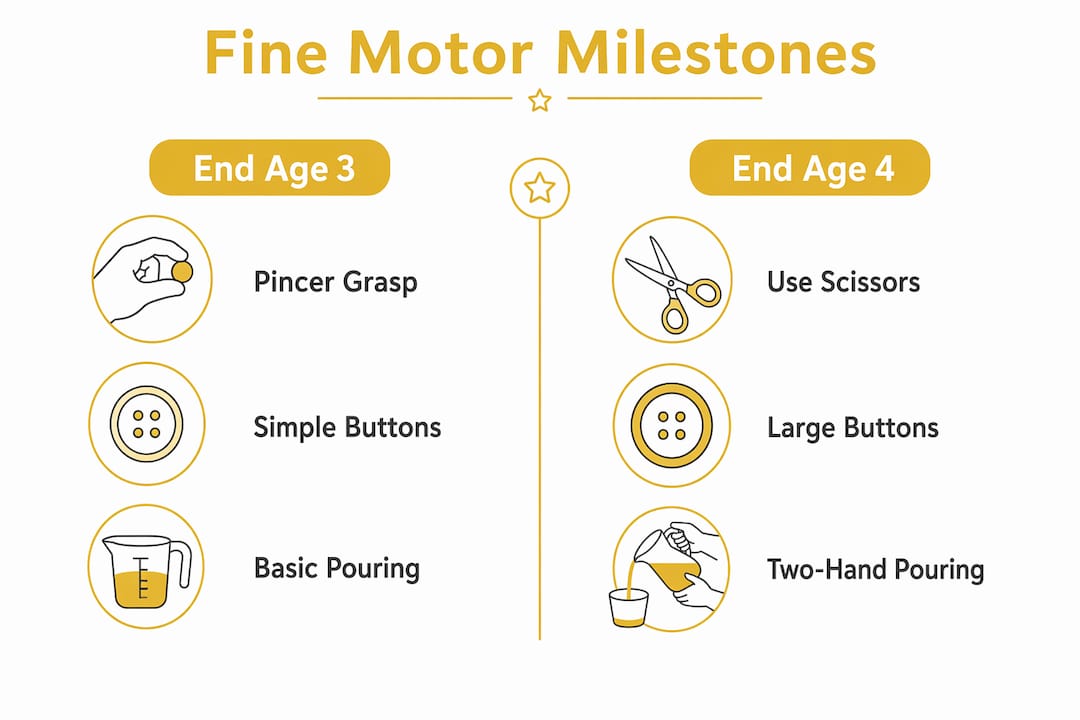
The table below shows what children can typically do by the end of each age. Individual children vary, and some skills arrive a little later without any cause for concern.
| Skill area | End of age 3 | End of age 4 |
|---|---|---|
| Pincer grasp | Picks up small objects with thumb and index finger | Picks up very small items with control |
| Scissors | Snips paper with help | Cuts along a thick line independently |
| Clothing fasteners | Pulls on/off loose clothing | Manages large buttons and zips |
| Pouring | Tips a cup with some spills | Pours from a jug using two hands |
| Drawing | Copies a circle | Draws a basic person and copies a cross |
| Self-feeding | Uses a spoon with occasional spills | Uses a fork; opens zip-lock bags |
| Stacking | Builds a small tower of blocks | Builds more complex structures |
Skills such as tying shoelaces, neat letter formation, and small button fastening often appear around school age or later. That is entirely typical. Gradual progression from early self-help skills to school-ready tasks is the normal pattern.
Why does shoulder and wrist stability affect finger control?
Finger precision depends on a stable base. Paediatric experts describe this as proximal stability: the shoulder, wrist, and core must hold steady before the fingers can make accurate, controlled movements. A child who struggles to button a coat may not lack finger strength — the barrier is often poor shoulder or wrist control, or difficulty with spatial targeting.
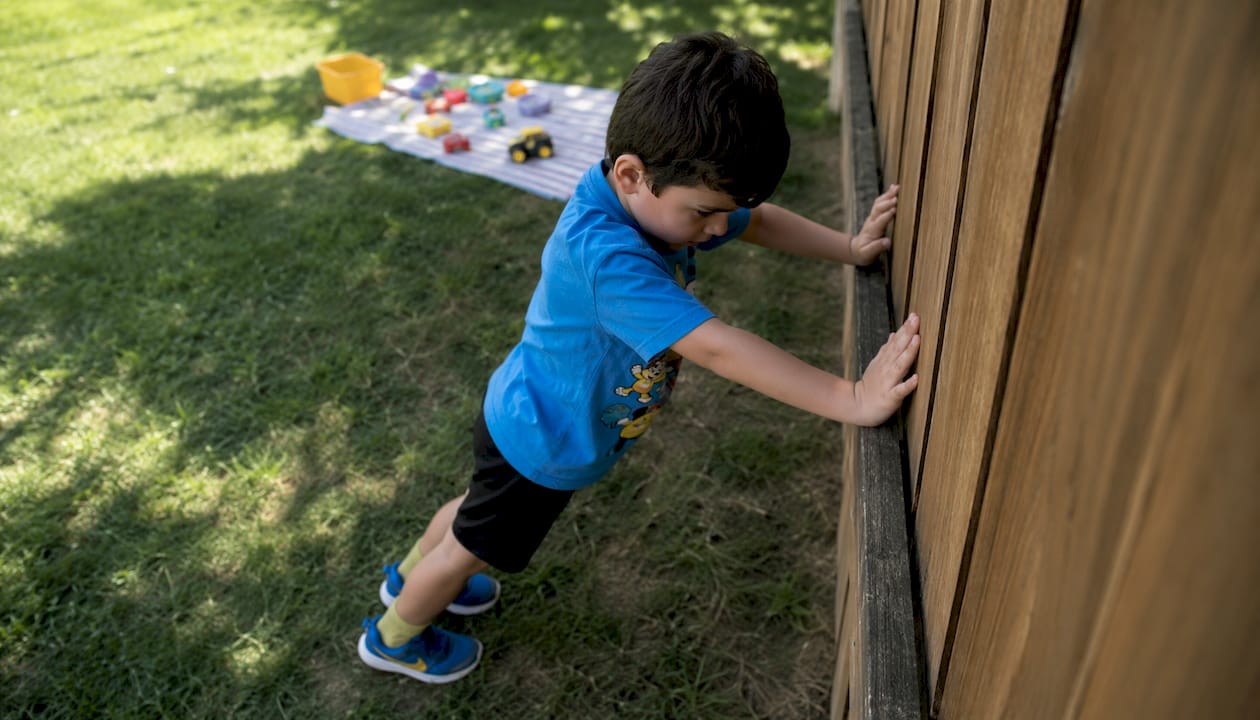
Occupational therapists look at whole-arm control and spatial awareness first when a child finds tasks like buttoning difficult. The palmar arches and intrinsic hand muscles that enable a precise grip develop alongside, not instead of, larger muscle groups.
Pro Tip: Before a fine motor activity, try one minute of whole-arm warm-up: wall push-ups, wheelbarrow walking, or rolling a large ball with both hands. This activates the shoulder and wrist stability that small-hand tasks rely on.
Which activities build fine motor skills most effectively?
The most efficient activities for this age group are playdough, bead-stringing, tongs or tweezers sorting, and cutting with child scissors. Each targets a specific skill:
- Playdough / clay — pincer grasp, hand strength, bilateral coordination
- Bead-stringing — pincer grasp, helper-hand use, eye-hand coordination
- Tongs and tweezers sorting — grip strength, bilateral coordination, tool control
- Child scissors — bilateral coordination, scissor control, visual tracking
OT guidance recommends starting with large objects and gradually moving to smaller ones — large beads first, then medium, then small; soft tongs before springy clothespins.
Nature-friendly variants to try outdoors
- Sort leaves, pebbles, or seed pods into groups using tweezers or tongs.
- Thread large pebbles with holes (or pasta shells) onto a piece of string.
- Roll and pinch mud or clay collected from the garden.
- Use tweezers for a “bug hunt” — picking up safe items like acorns, feathers, or bark chips.
You can find more outdoor play ideas for preschoolers that pair well with these activities.
How to run a session:
- Warm up with a whole-arm activity for 1–2 minutes.
- Set up the main activity with materials at the right difficulty level.
- Keep the focused task to 5–10 minutes.
- Let your child lead — narrate what you see rather than correcting the outcome.
- Finish with free play or a short cool-down.
Pro Tip: Watch how your child holds a tool, whether they use their helper hand to stabilise the tray or paper, and how long they stay focused. These process cues tell you far more about progress than the finished result.
Which nature-inspired toys support fine motor development?
Several toy types reliably support fine motor skills while encouraging outdoor play: kids’ cameras, binoculars, walkie-talkies, lacing sets, natural-material craft kits, and child-safe digging tools. Each puts hands to work in a different way.
Thezoofamily designs its products around animal themes to spark natural curiosity, and each item requires two-handed use — which is exactly what bilateral coordination practice looks like in real play.
Thezoofamily kids’ camera
Holding and stabilising a camera uses both hands together, trains the index finger for shutter control, and builds wrist stability. Set a short photo scavenger hunt: find three birds, two flowers, one insect. For every camera sold, Thezoofamily plants one tree.
Thezoofamily kids’ binoculars
Gripping and adjusting binoculars strengthens the whole hand and practises the focus wheel with a pincer-style movement. Use them on a nature walk to track moving objects — this also builds visual tracking alongside grip.
Thezoofamily walkie-talkies
Pressing the talk button repeatedly practises isolated index-finger control. Sequencing a message (press, speak, release) adds a planning element. Pair two children for a garden mission to add a social layer.
Pro Tip: Give your child a simple mission card with three picture targets to find. The combination of holding the toy, scanning the environment, and ticking off targets keeps sessions short and purposeful.
You can also pair outdoor sessions with free animal colouring pages for an easy indoor follow-up that keeps fine motor practice going on rainy days.
How do you run safe, low-pressure sessions?
Session structure:
- Warm up (1–2 minutes) — wall push-ups, rolling a ball, or clapping games.
- Focused activity (5–10 minutes) — one task at the right difficulty level.
- Cool-down — free play or a short story.
Safety checklist:
- Use scissors labelled for ages 3+ with rounded tips and a spring-return mechanism.
- Supervise bead-stringing closely; beads smaller than a 50p coin are a choking risk for children under 4.
- Stay nearby during any water-play or outdoor digging.
- Apply sun cream and check for sharp edges on natural materials (sticks, bark).
- Store tweezers and small craft tools out of reach between sessions.
Adapting for different levels:
- Make it easier: use larger beads, softer clay, or pre-cut shapes.
- Make it harder: move to smaller beads, springy tongs, or thinner lines to cut.
Integrate practice into daily routines: let your child pour their own drink at mealtimes, fasten one button before nursery, or dig in the garden for ten minutes. Consistency matters more than session length. A practical guide to motor skills development covers how to weave these moments into everyday life.
When should you seek extra support?
Act on these signs if your child is approaching age 4:
- Very limited or absent pincer grasp — cannot pick up a small object with thumb and index finger.
- Cannot stabilise an object with the non-dominant (helper) hand while the other works.
- Strongly avoids all age-appropriate hand tasks (drawing, dressing, feeding) and shows distress rather than disinterest.
Next steps in the UK:
- Speak to your GP or health visitor and ask for a developmental review.
- Request a referral to a paediatric occupational therapist if concerns persist after the review.
- NHS waiting times for paediatric OT vary by area; ask your GP about local timelines and any community children’s therapy services that accept self-referrals.
HealthyChildren.org and occupational therapy guidance both note that early support produces better outcomes, so raising a concern sooner is always the right call.
Key takeaways
Short, regular play-based practice is the most reliable way to build fine motor skills in 3–4 year olds — process matters more than the finished result.
| Point | Details |
|---|---|
| Core milestones by age 4 | Most children can use safety scissors, manage large buttons, and pour from a jug with two hands. |
| Proximal stability first | Shoulder and wrist control underpin finger precision; include whole-arm warm-ups before fine motor tasks. |
| Best activities | Playdough, bead-stringing, and tongs sorting target pincer grasp and bilateral coordination most directly. |
| Seek help early | If pincer grasp is very limited or helper-hand use is absent by age 4, speak to your GP or health visitor. |
| Thezoofamily products | The kids’ camera, binoculars, and walkie-talkies each require two-handed use and work well as short outdoor fine motor missions. |
Nature play and fine motor skills: what actually works
Most advice on fine motor development focuses on the activity itself. The part that gets less attention is motivation. A child who is genuinely curious about what they are doing will hold a tool longer, try harder, and tolerate more difficulty than one who is simply completing a task.
That is why nature-based play works so well at this age. Picking up a real acorn with tweezers is more compelling than sorting plastic counters. Pressing the shutter on a camera to photograph a real bird is more motivating than a worksheet. The skill being practised is identical; the engagement is not.
The conventional wisdom says “keep it short and fun.” That is correct, but incomplete. The more useful principle is: connect the task to something your child already finds interesting. If that interest is animals, cameras, and the outdoors, the fine motor practice follows naturally. Thezoofamily’s design approach — animal references, two-handed toys, outdoor use — is a practical application of this principle, not just a marketing angle.
Thezoofamily products for outdoor fine motor play
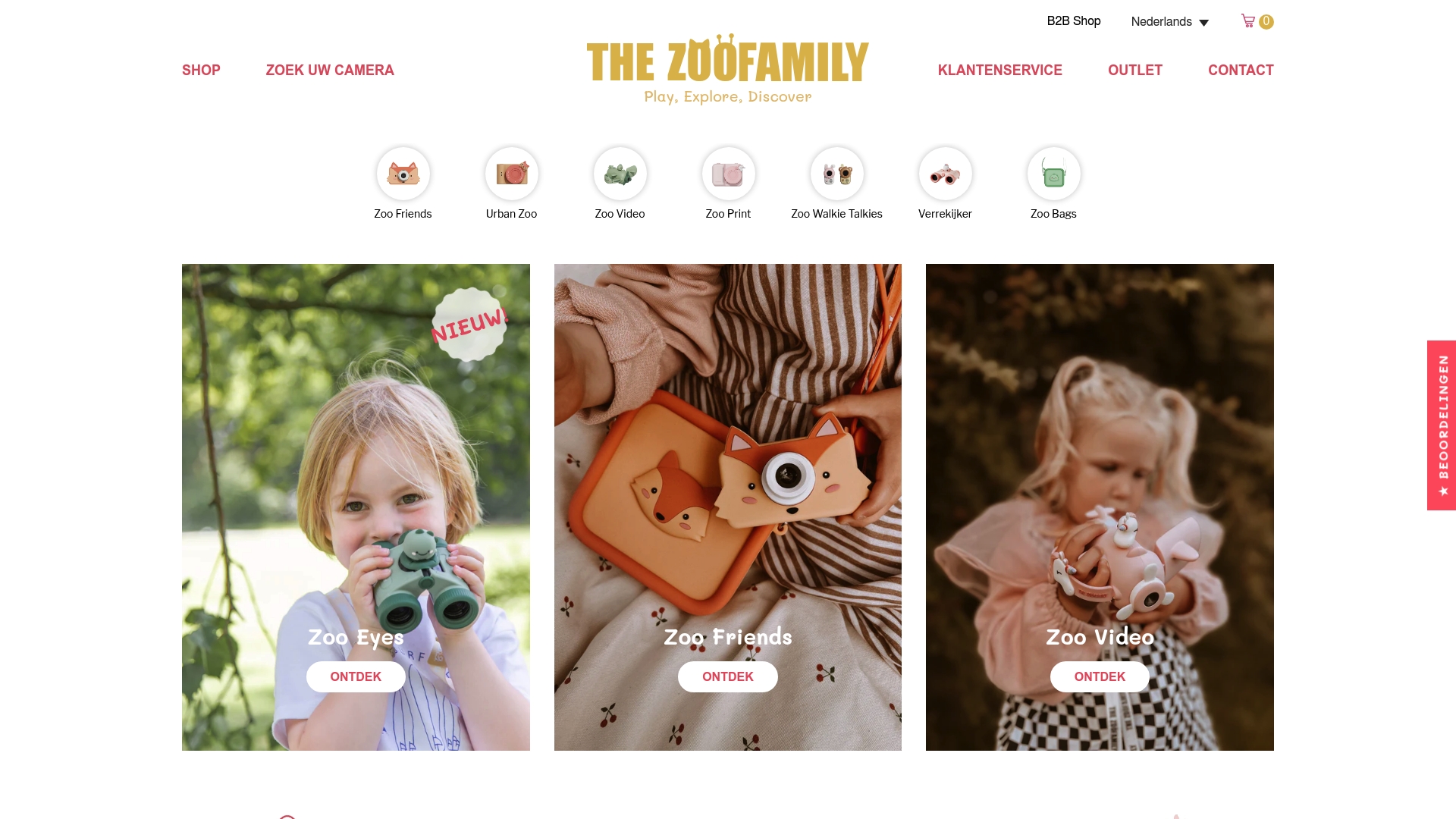
Thezoofamily makes kids’ cameras, binoculars, and walkie-talkies designed to connect children with nature while putting their hands to work. Each product requires two-handed use, making them a practical fit for the bilateral coordination and grip-strength practice that occupational therapists recommend for this age group.
How to use them for fine motor practice:
- Kids’ camera: photo scavenger hunt — find and photograph five named animals or plants. Practises shutter control, wrist stability, and two-handed grip.
- Binoculars: focus-wheel adjustment and sustained grip on a nature walk. Practises pincer movement and hand strength.
- Walkie-talkies: press-and-release button sequences during a garden mission. Practises isolated finger control and task sequencing.
For every camera sold, Thezoofamily plants one tree. Browse the full range and find age-appropriate options at thezoofamily.com.
Useful sources and further reading
- HealthyChildren.org — Hand and finger skills of your preschooler: milestones, helper-hand guidance, and proximal stability explained for parents.
- NAPA Center — Fine motor skills examples: activity lists with skill targets; useful for planning sessions at home.
- John McGivney Children’s Centre — OT tip sheet, 3–4 years: a concise screening checklist covering dressing, drawing, cutting, and eating skills.
- Expressable — Fine motor skills in children: practitioner-level guidance on progression, whole-arm control, and when to involve an OT.
- Healthline — Fine motor skills for toddlers and preschoolers: accessible explanation of palmar arches, intrinsic muscles, and play-based strengthening.
For professional support in the UK: speak to your GP or health visitor to request a developmental review or a referral to a paediatric occupational therapist. Some NHS community children’s therapy services accept direct referrals — ask your GP surgery what is available locally.