

An eco friendly multi purpose cleaner is a plant and mineral based cleaning product that removes dirt, grease, and grime from household surfaces while keeping harmful chemicals away from your family. These products replace the cocktail of synthetic solvents and artificial fragrances found in conventional sprays with ingredients like decyl glucoside, sodium citrate, and other biodegradable compounds. For parents with young children crawling on floors and pressing hands to countertops, that distinction is not a luxury. The EPA’s Safer Choice and Design for the Environment labels exist precisely to help you tell the genuinely safe products from the ones that simply look the part.
What makes an eco friendly multi purpose cleaner actually work?
The cleaning power in a plant-based formula comes from surfactants. A surfactant molecule has one end that attracts water and one end that attracts grease. That structure lets it lift dirt from a surface and carry it away when you wipe. Plant-based surfactants like decyl glucoside, derived from coconut and corn, do this job without the fumes or residue left by petroleum-based alternatives.
Mineral-based ingredients like sodium citrate act as water softeners. Hard water reduces cleaning performance by leaving mineral deposits behind. Sodium citrate binds to those minerals, so the surfactants can focus on the actual dirt. The result is a streak-free finish on glass and stone without any harsh acid.
What these formulas leave out matters as much as what they include. Conventional cleaners often contain sulfates, parabens, synthetic fragrances, and volatile organic compounds. Modern eco formulas are engineered to match or exceed traditional cleaner performance without any of those ingredients. One analysed product shows a 99.51% natural formula with no sulfates, parabens, or synthetic fragrances.
- Plant-based surfactants (decyl glucoside, coco glucoside): lift grease and dirt without fumes
- Sodium citrate: softens water and prevents mineral streaking
- No sulfates or parabens: reduces skin irritation risk for sensitive family members
- No synthetic fragrances or VOCs: protects indoor air quality
- Biodegradable formula: breaks down safely without harming aquatic ecosystems
Pro Tip: Check the ingredient list for the word “fragrance” without further detail. That single word can legally mask dozens of undisclosed synthetic chemicals. Choose products that list every scent source by name.
How do you spot greenwashing in green cleaning products?
The word “natural” on a cleaning product label carries no legal definition and no regulatory requirement. Any brand can print it. The same applies to “eco safe,” “gentle,” and “plant powered” without certification to back the claim. Vague marketing phrases like these are the clearest signal of greenwashing.
The EPA’s Safer Choice label and the Design for the Environment label are the two most reliable markers for genuinely safe green cleaning products in 2026. Both require products to meet stringent health and environmental standards verified by independent assessment. A product bearing either label has had every ingredient reviewed for human health and aquatic toxicity.
Packaging tells part of the story too. Refillable bottles, reduced plastic, and concentrate formats all reduce waste in measurable ways. A brand that publishes its full ingredient list online, names every component, and holds a recognised ecolabel is demonstrating transparency. One that hides behind “proprietary blend” language is not.
“Avoid vague marketing phrases like ‘eco safe’ or ‘natural’ without certifications, as these often indicate greenwashing. Look for recognised third-party ecolabels to ensure product trustworthiness.” — US EPA guidance on greener cleaning products
- Look for: EPA Safer Choice label, Design for the Environment label
- Avoid: “natural,” “eco safe,” “gentle” with no certification
- Check: full ingredient list published on the brand’s website
- Prefer: refillable or concentrate packaging over single-use plastic
- Reject: “proprietary blend” or “fragrance” without named components
Pro Tip: Search the EPA’s Safer Choice product database directly at epa.gov before you buy. It lists every certified product by category, so you can verify a claim in under a minute.
What are the health and environmental benefits for your family?
Conventional chemical cleaners emit VOCs during and after use. The EPA links these compounds to eye, skin, and respiratory irritation, which is a serious concern in homes where children spend most of their time. Switching to a non-toxic household cleaner reduces that exposure directly. Parents who make the switch often notice fewer unexplained coughs and skin flare-ups in children and pets within weeks.

The environmental case is equally strong. Concentrate refill models prevent millions of single-use plastic bottles from reaching landfill. They also cut CO2 emissions by shipping less water weight per delivery. The environmental impact of concentrates compounds over time. That means the longer you use a refill model, the greater the saving.
Biodegradable formulas break down in wastewater without releasing persistent chemicals into rivers and coastal ecosystems. That matters if you care about the world your children will inherit. Thezoofamily shares that concern directly: for every camera sold, one tree is planted, reflecting the same logic that drives the shift to eco friendly cleaning supplies.
- Reduced indoor VOC levels protect children’s developing respiratory systems
- Lower risk of allergic skin reactions for sensitive family members
- Biodegradable ingredients protect aquatic ecosystems after rinsing
- Concentrate formats reduce plastic waste and lower shipping emissions
- Refill and reuse models deliver long-term cost savings alongside environmental gains
How to use a natural all purpose cleaner effectively
The concentrate-and-dilute model is the most cost-effective way to use an environmentally safe cleaner. You buy a small bottle of concentrated formula and dilute it into a reusable spray bottle at home. The cost per use over 6–12 months is lower than buying ready-made sprays repeatedly, and you eliminate the plastic bottle with every refill.
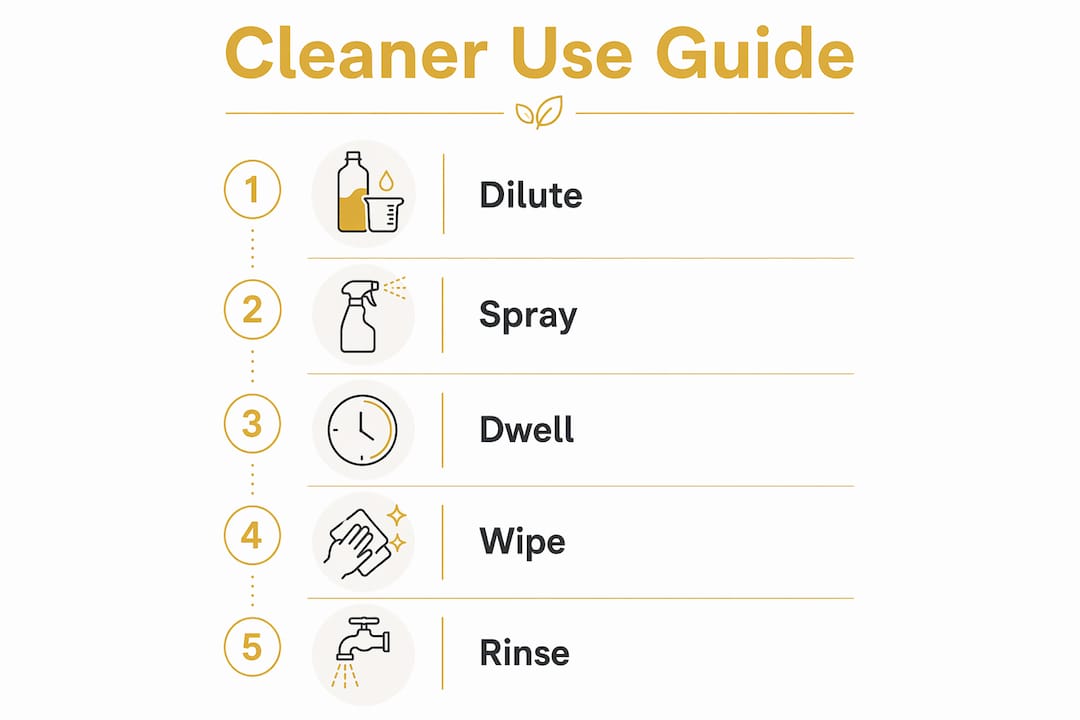
Dilution ratios vary by task. A light dilution works for daily countertop and glass cleaning. A stronger mix handles bathroom grout, stovetop grease, and floor scrubbing. Always follow the manufacturer’s ratio. Using too much concentrate does not clean better. It leaves residue and wastes product.
Dwell time is the most overlooked factor in cleaning performance. Allowing 30–60 seconds after spraying lets the surfactants break down grease and grime before you wipe. Parents who wipe immediately often conclude the product is weak, when the formula simply has not had time to work. That misunderstanding is the most common reason people return to conventional cleaners unnecessarily.
- Prepare your dilution — fill a reusable spray bottle with water first, then add concentrate to the manufacturer’s ratio. Adding concentrate first causes excess foaming.
- Spray the surface — apply evenly to countertops, glass, floors, or bathroom tiles.
- Wait 30–60 seconds — let the formula lift dirt before touching it.
- Wipe with a microfibre cloth — microfibre picks up more particles than paper towel and can be washed and reused hundreds of times.
- Rinse if needed — food preparation surfaces benefit from a quick water rinse after cleaning.
- Adjust for stubborn stains — apply a second spray, wait a full minute, then scrub gently with a soft brush.
A non-toxic floor cleaner formulated for family homes follows the same dwell-time principle. The same applies to eco friendly glass cleaner on windows and mirrors.
Pro Tip: Label your diluted spray bottles with the ratio and date. Concentrates diluted in water have a shorter shelf life than the undiluted product. Most last 2–4 weeks once mixed.
Key takeaways
A plant and mineral based formula with an EPA Safer Choice or Design for the Environment label is the most reliable choice for parents who want effective, safe, and genuinely sustainable cleaning at home.
| Point | Details |
|---|---|
| Certifications matter most | Look for EPA Safer Choice or Design for the Environment labels to verify genuine safety and environmental standards. |
| Dwell time drives results | Allow 30–60 seconds after spraying before wiping to let plant-based surfactants break down grime fully. |
| Concentrates save money and plastic | Refill models cost less per use over 6–12 months and eliminate single-use plastic bottles. |
| Ingredient transparency is non-negotiable | Reject any product that lists “fragrance” or “proprietary blend” without naming every component. |
| Biodegradable formulas protect ecosystems | Ingredients that break down in wastewater reduce harm to rivers and aquatic life after every clean. |
What I have learned from switching our home to eco cleaners
I made the switch when my youngest started pulling herself up on kitchen cupboard doors and pressing her face against the glass. The thought of her absorbing residue from a conventional spray stopped me mid-clean. I spent a weekend reading labels and quickly realised how little most of them disclosed.
The performance concern turned out to be unfounded. Plant-powered formulas genuinely clean as well as the products I had used for years, provided you respect the dwell time. That was the one adjustment that took a few weeks to internalise. Wiping immediately is a habit built from years of using fast-acting chemical sprays. Slowing down by 45 seconds felt strange at first.
The cost argument surprised me most. I expected eco cleaning supplies to be more expensive. The concentrate model flipped that assumption within three months. One bottle replaced what would have been six or seven ready-made sprays. The upfront cost looked higher on the receipt. The annual spend was lower.
What I did not expect was how much calmer I felt about the children being in the kitchen while I cleaned. No fumes, no need to ventilate aggressively, no warning labels telling me to keep children away. That peace of mind has a value that does not show up in a cost comparison. Prioritise ingredient transparency and a recognised certification. Everything else follows from those two decisions.
— ALAIN
Thezoofamily and the cleaner home your family deserves
Thezoofamily was built on the belief that protecting children and protecting the planet are the same goal. That belief shapes every product and every recommendation the brand makes.
If you are ready to move away from conventional sprays and build a genuinely non-toxic home, Thezoofamily’s eco friendly cleaning guides give you the practical detail to do it confidently. From bathroom surfaces to floors and glass, the advice is grounded in the same ingredient transparency and certification standards covered in this article. Visit thezoofamily.com to find products and resources that match how your family actually lives.
FAQ
What does “eco friendly multi purpose cleaner” mean?
An eco friendly multi purpose cleaner is a biodegradable, plant and mineral based product designed to clean multiple household surfaces safely. It avoids synthetic fragrances, VOCs, sulfates, and parabens that conventional cleaners typically contain.
Which certifications confirm a cleaner is genuinely eco friendly?
The EPA’s Safer Choice label and the Design for the Environment label are the most reliable certifications. Both require every ingredient to meet verified human health and environmental standards before approval.
Are plant-based cleaners as effective as conventional ones?
Plant-based formulas match conventional cleaner performance when used correctly. Allowing a dwell time of 30–60 seconds after spraying is the key step that most parents skip, which leads to the mistaken belief that eco cleaners are weaker.
Is a concentrate model worth the higher upfront cost?
The cost per use over 6–12 months is lower with a concentrate than with repeated ready-made spray purchases. The environmental saving, fewer plastic bottles and lower shipping emissions, adds further value beyond the financial calculation.
How do I avoid greenwashing when buying green cleaning products?
Ignore terms like “natural,” “eco safe,” or “gentle” unless they are backed by a recognised third-party ecolabel. Check the EPA’s Safer Choice database directly to verify any product before purchase.