

Packing your picnic basket as your children race to the door, you may be searching for more than a simple escape from the city. Family adventures redefine holidays by creating shared memories and deeper connections, as families in France and Germany transform everyday outings into purposeful journeys. Engaging with nature together nurtures curiosity, teamwork, and emotional bonds that last far beyond the trip itself. Discover how nature-based experiences can reconnect your family and inspire lifelong learning in ways no screen ever could.
Table of Contents
- Defining Family Adventures And Their Purpose
- Types Of Nature-Based Family Experiences
- Benefits For Children’s Growth And Learning
- Safety, Comfort, And Environmental Considerations
- Planning Inclusive And Engaging Activities
Key Takeaways
| Point | Details |
|---|---|
| Purpose of Family Adventures | Family adventures foster emotional bonds and collective experiences that enhance relationships and create lasting memories. |
| Benefits of Nature Engagement | Nature exposure significantly boosts children’s cognitive abilities, reduces stress, and fosters environmental stewardship. |
| Inclusion in Planning | Engaging families in the planning process ensures activities are accessible and meaningful, accommodating diverse needs and backgrounds. |
| Safety and Comfort | Balancing healthy risk-taking with safety precautions is essential for promoting confidence and ensuring enjoyable experiences in nature. |
Defining Family Adventures and Their Purpose
When you pack your family into a car, strap on backpacks, or board a train headed towards forests, mountains, or coastlines, you are doing far more than simply taking a holiday. You are creating something purposeful. Family adventures represent deliberate journeys where parents and children step outside their everyday routines to explore, challenge themselves, and reconnect with one another and the natural world. Unlike passive tourism, these experiences require active participation from everyone involved, transforming how families interact with each other and their environment.
The core purpose of family adventures lies in their ability to strengthen bonds through shared challenge and discovery. Research on family adventure experiences reveals that the multidimensional nature of these journeys creates lasting memories and emotional connections that withstand the test of time. Your child observing a bird of prey through binoculars, or discovering a hidden waterfall as a team, creates moments of collective awe that no screen can replicate. These experiences work because they demand attention from all family members simultaneously. When your eight-year-old navigates a forest path or your teenager helps identify local wildlife, they are not performing tasks for individual achievement. They are contributing to a shared mission, which fundamentally shifts family dynamics from the transactional (who did the dishes?) to the collaborative (how do we solve this together?).
Beyond emotional connection, family adventures serve a protective function for your family’s overall wellbeing. Nature-based experiences reduce stress levels for both parents and children whilst fostering a sense of wonder about the world. This is particularly valuable for urban families in France and Germany, where daily life often involves traffic, schedules, and screens. When children develop an early connection to natural environments through hands-on exploration, they develop environmental awareness that persists into adulthood. They begin to understand that protecting forests, rivers, and wildlife is not an abstract concept but a personal responsibility rooted in genuine affection for places they have visited and creatures they have observed.
Family adventures also address a fundamental human need that traditional parenting often neglects: the opportunity for parents and children to see one another differently. Outside the usual hierarchies of homework completion and bedtime enforcement, you and your children become teammates. Your teenager’s strength becomes visible when they help carry equipment through difficult terrain. Your younger child’s courage becomes apparent when they approach a stream they initially feared. These shifting perspectives create mutual respect that transforms family relationships long after the adventure ends.
Pro tip: _Start with adventures that match your family’s current capabilities rather than what you think you “should” be doing. A two-hour woodland exploration with proper identification guides achieves more for your family’s connection than an exhausting multi-day trek that leaves everyone frustrated.
Types of Nature-Based Family Experiences
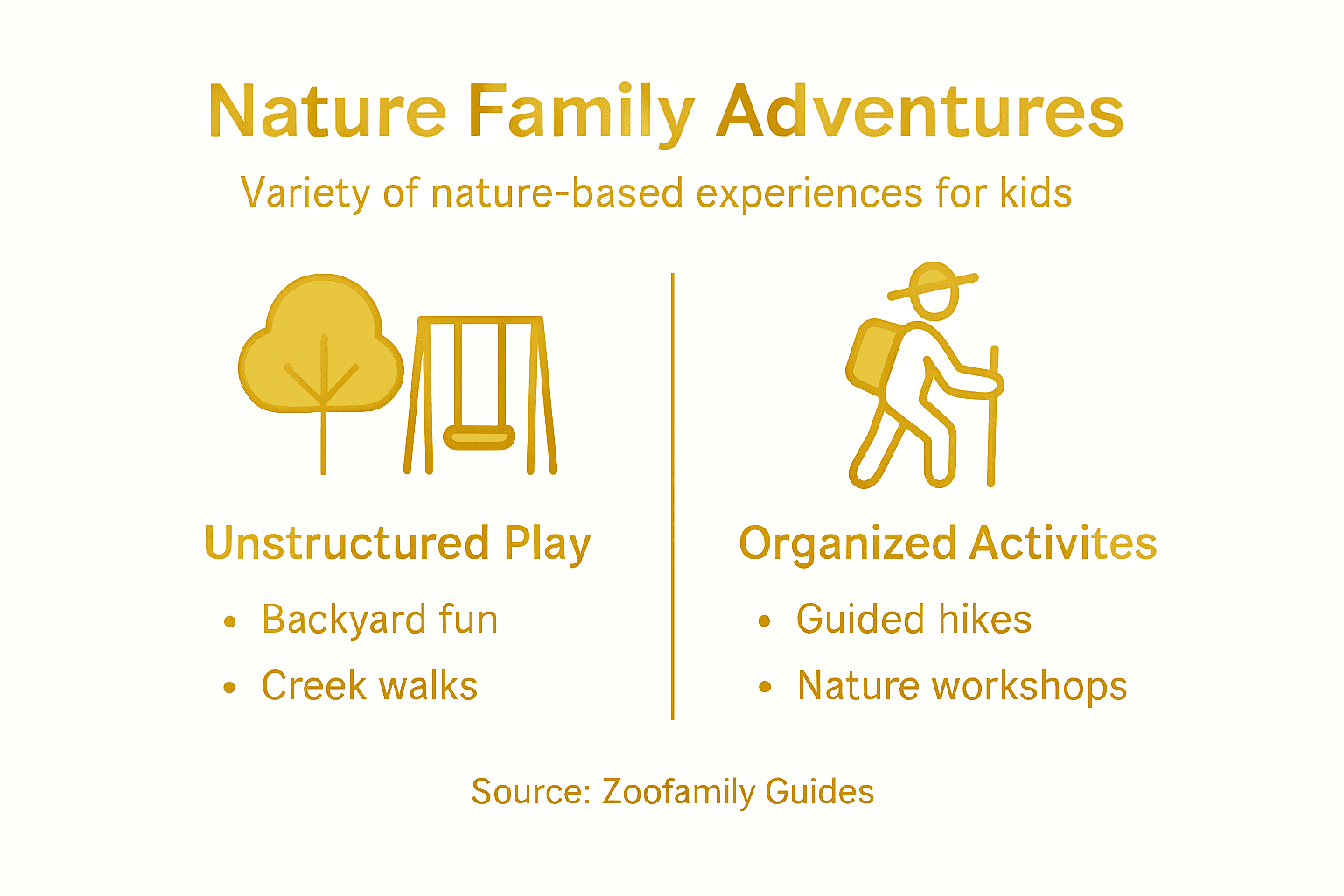
Nature-based family experiences span a wide spectrum, from spontaneous backyard discoveries to planned weekend expeditions. The key distinction lies not in scale or cost, but in intentionality and engagement. You might think that meaningful nature connection requires expensive holidays or lengthy treks, yet research shows that unstructured nature play delivers profound benefits for both children and parents. These unstructured moments are where your daughter learns to build a dam in a stream, where your son discovers insects under logs, where everyone experiences the raw sensations of wind, mud, and sunlight without an itinerary dictating their actions.
Unstructured exploration forms the foundation, but organised family experiences serve a different purpose. Family nature walks with a specific focus such as bird watching or plant identification transform casual strolls into learning journeys. Community-based environmental activities such as stream cleanups, seasonal nature clubs, or local conservation projects add another layer. These structured experiences work particularly well for urban families in France and Germany, where they provide community connection alongside nature exposure. When your family joins others to plant trees or monitor wildlife populations, you shift from passive observers to active stewards. This agency matters enormously. Children who participate in actions benefiting nature develop a sense of responsibility that casual observation simply cannot create.
Within these broader categories sit countless specific experiences. Sensory exploration encourages children to engage directly with natural elements: running barefoot through grass, touching tree bark, listening to bird calls, observing insects. Water-based activities such as paddling, stream exploration, or pond investigation engage curiosity whilst teaching respect for aquatic ecosystems. Seasonal experiences like autumn foraging, winter tracking, or spring flower identification anchor children’s understanding of natural cycles. Observation work using simple tools such as binoculars or magnifying glasses transforms children into naturalists, noticing details they would otherwise miss.
The research identifying these significant life experiences emphasises something crucial: children thrive when they encounter influential role models who demonstrate genuine appreciation for nature. Your enthusiasm matters more than your expertise. When your children see you kneeling to examine mushrooms, pausing to watch clouds, or expressing wonder at a spider’s web, you teach them that nature is worthy of attention and respect. This modelling proves more powerful than any instruction manual. You become the gateway through which your children learn to value the natural world not because they must, but because you do.
Pro tip: Rotate between structured and unstructured experiences: plan one nature outing monthly with a specific focus, but leave room for impromptu exploration when weather and mood permit. This balance prevents nature connection from becoming another scheduled obligation whilst maintaining regular engagement with the outdoors.
Here is a comparison of structured and unstructured nature-based family experiences:
| Experience Type | Typical Activities | Advantages | Challenges |
|---|---|---|---|
| Structured | Guided walks, bird watching sessions, community clean-ups | Provides direction and learning objectives | May limit spontaneity and personal discovery |
| Unstructured | Free play, exploring woods, pond dipping | Fosters curiosity and independence | Might require closer supervision and adaptable planning |
Benefits for Children’s Growth and Learning
When your child spends time in nature, something shifts in their brain. Not metaphorically. Literally. Nature experiences trigger measurable changes in how children learn, think, and develop emotionally. The benefits extend far beyond the obvious physical exercise or fresh air. Research demonstrates that nature significantly enhances children’s academic learning and personal development in ways that traditional classroom environments struggle to replicate. Your eight-year-old spotting a bird species through binoculars is not simply having a pleasant moment. They are developing focus, memory, observation skills, and intrinsic motivation simultaneously. Nature acts as a cognitive catalyst, creating conditions where learning happens almost incidentally because your child is genuinely engaged.
The cognitive and emotional benefits form the foundation. Nature reduces stress and anxiety in both children and adults, which matters enormously for urban families juggling school pressures, extracurricular activities, and screen exposure. When your teenager sits by a forest stream, their cortisol levels actually decrease. Their nervous system shifts into a calmer state. This biological reset allows for better emotional regulation, improved self-discipline, and enhanced ability to handle challenges. Beyond stress reduction, nature fosters attention restoration. Children who spend regular time outdoors develop stronger concentration skills, greater perseverance when facing difficult problems, and more creative thinking. These are not soft skills that might be nice to have. These are foundational capacities that determine academic success and long-term resilience.
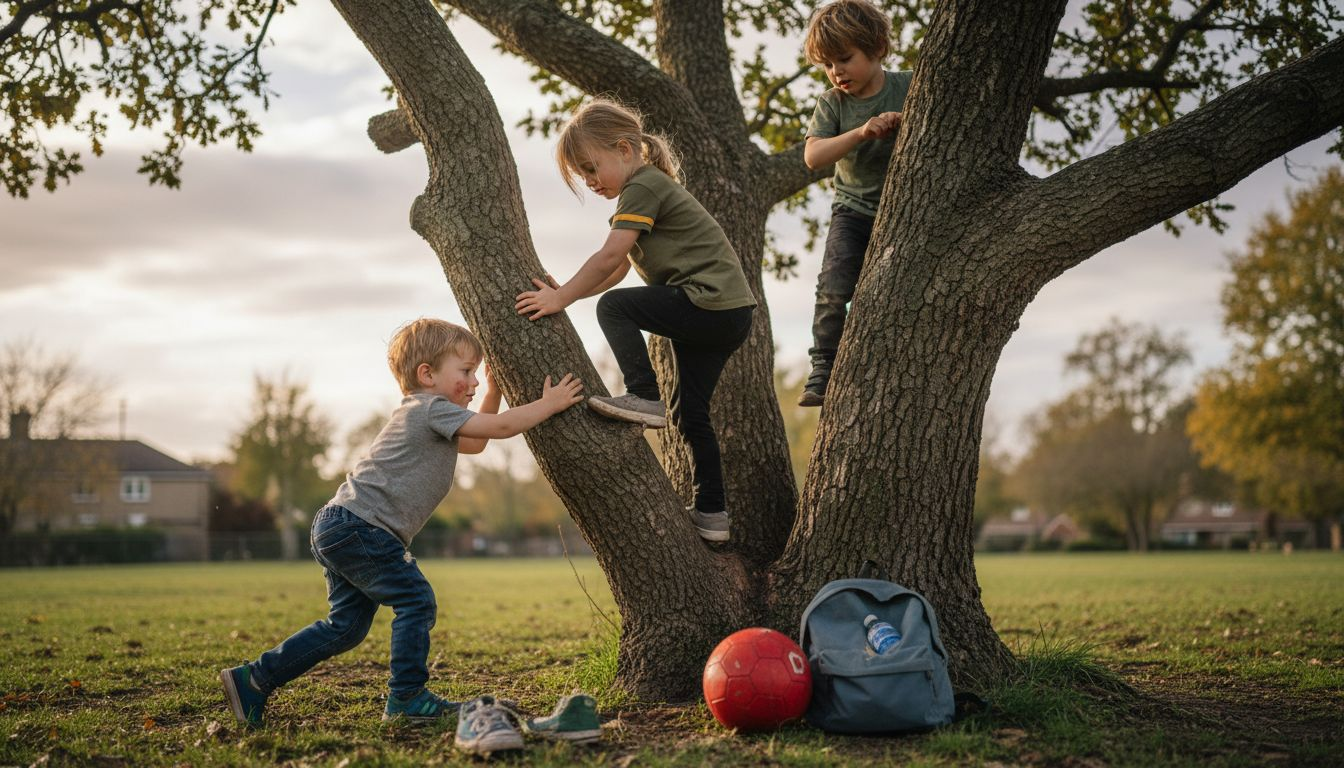
Motor development and physical competence represent another critical benefit often overlooked in urban parenting. Climbing trees, navigating uneven terrain, balancing on rocks, and climbing slopes builds actual physical capability that gym classes alone cannot achieve. Your younger child develops confidence through these physical accomplishments. They learn their body’s capabilities, test boundaries safely, and develop genuine self-assurance that transfers to other domains. Additionally, nature engagement stimulates motor skills and self-confidence whilst building positive environmental attitudes that persist into adulthood. Children who develop early connections with nature become adults who protect it. This is not theoretical. Environmental stewardship begins with wonder, continues through hands-on engagement, and solidifies into lifelong values and choices.
Perhaps most importantly, nature-based experiences increase motivation and engagement in ways that worksheets and lecture-based learning simply cannot. Your child is naturally curious about living systems, natural cycles, and how ecosystems function. Nature-based learning harnesses this intrinsic motivation rather than fighting against it. When you use binoculars to observe wildlife or follow a stream to understand water movement, you are teaching physics, biology, and environmental science through direct experience. Your child remembers this learning because they discovered it themselves, not because an adult told them to memorise it.
Pro tip: Document your family’s nature observations over time using simple sketches, photos, or field notes. This transforms casual outings into purposeful exploration and helps children develop the observation skills that deepen their learning exponentially.
Safety, Comfort, and Environmental Considerations
Planning a family nature adventure requires balancing two seemingly opposing forces: allowing your children to grow through healthy risk-taking whilst keeping them genuinely safe. Many parents swing between extremes, either overprotecting children so completely that they never develop confidence in natural environments, or under-supervising and hoping everything works out. The truth lies in the middle. Risk-taking in natural environments proves essential for children’s physical development and emotional resilience, but only when managed through appropriate supervision and thoughtful planning. Your ten-year-old learning to navigate a rocky stream develops balance, problem-solving, and self-assurance. They need the opportunity to occasionally slip, catch themselves, and realise their body is capable. However, you also need to scout the location beforehand, establish clear boundaries, and remain actively present and attentive. This intentional approach transforms risk from recklessness into calculated challenge.
Comfort considerations often get overlooked by well-meaning parents eager to “toughen up” their children. When your youngest complains about blisters or cold hands, that is not weakness. That is useful feedback about genuine discomfort that undermines the entire purpose of the outing. Implementing intentional program design supporting family well-being means preparing practical solutions before problems arise. Pack extra socks and a lightweight blanket. Choose routes that include rest spots and water access. Bring snacks your children actually enjoy, not grudging “healthy” options that everyone resents. Time your outings to avoid peak heat or excessive cold. When your family is physically comfortable, they remain engaged, positive, and genuinely present rather than mentally counting down the minutes until return.
Environmental responsibility forms the third pillar of thoughtful family adventures. You are teaching your children not just to enjoy nature, but to protect it. This means leaving no trace of your visit. Pack out everything you bring in, including packaging from snacks. Stay on established paths to avoid damaging undergrowth and disturbing wildlife habitats. Observe animals from a respectful distance rather than chasing or touching them. Teach your children that picking wildflowers damages the ecosystem, but observing and photographing plants preserves them for others. When families model genuine environmental stewardship, children develop an ethic of care rather than entitlement. They learn that loving nature means respecting boundaries and limitations, not simply taking what appeals to them.
Weather presents another consideration often underestimated by urban families accustomed to climate-controlled environments. Rain, wind, and temperature fluctuations are not obstacles to cancel plans around. They are teaching moments about resilience and adaptation. However, extreme weather such as thunderstorms or temperatures below freezing require genuine caution and adjusted plans. Teach your children to read weather signs, dress in layers, and understand when conditions genuinely warrant postponement. This develops practical wisdom and respect for natural forces rather than fear of them. Additionally, different seasons offer different advantages. Autumn exploration differs from spring wildflower walks, which differ fundamentally from winter tracking. Planning adventures across seasons gives your family deeper understanding of ecological cycles and variations throughout the year.
Pro tip: Create a simple “family adventure checklist” covering safety essentials, comfort items, and environmental practices. Having this checklist prevents you from forgetting critical items and makes future outings progressively more efficient without compromising the spontaneous joy that makes nature adventures memorable.
Planning Inclusive and Engaging Activities
Inclusive family nature activities begin with a fundamental shift in perspective. Stop thinking about designing experiences that work for an imaginary “average” family and start thinking about what would invite your neighbour’s single-parent family, your colleague’s family with a child using a wheelchair, or your friend’s family new to Germany who speaks limited English. Real inclusion means removing barriers before they prevent participation. This requires addressing structural and cultural barriers that often go unexamined by well-intentioned organisers. Cost represents one obvious barrier. If you plan a nature outing requiring expensive equipment, specialised clothing, or paid entry to a location, you have already excluded families operating on tight budgets. Instead, seek free or low-cost locations. Teach children to use basic tools like magnifying glasses or simple binoculars rather than expensive gear. Partner with community organisations that provide transport assistance for families without reliable access to vehicles.
Accessibility extends far beyond physical mobility, though that matters too. Choose routes that accommodate various physical abilities rather than assuming everyone can hike steep terrain for hours. Provide shaded rest areas and water stations. Offer activities with multiple participation levels so quieter children feel welcome alongside outgoing ones. If your family includes children with sensory sensitivities, plan quieter times away from peak crowds and provide advance notice about potential sensory experiences. Cultural inclusivity matters equally. If your nature outing includes learning about local ecosystems, ensure you represent multiple cultural relationships with nature rather than imposing one perspective. Invite families to share their own nature traditions and knowledge. When your German neighbour brings their family’s tradition of forest foraging and your French friend’s family shares knowledge about local medicinal plants, everyone learns authentically.
Effective family engagement practices emphasise inviting families into decision-making rather than presenting pre-designed activities for passive consumption. Before planning your family adventure, ask yourself: What does this family actually want to explore? What prior knowledge do they possess? What would make this experience meaningful rather than obligatory? When families contribute their own interests and expertise, engagement deepens fundamentally. Your teenage daughter interested in photography might lead nature observation with a focus on documenting wildlife. Your son fascinated by geology might choose a stream exploration focused on rock formation. Your younger child obsessed with insects might guide everyone towards observation of invertebrates. Activities designed collaboratively rather than imposed from above create genuine motivation.
Timing, communication style, and flexibility amplify inclusivity further. Provide clear advance information about what to expect, what to bring, and what the experience will demand physically and emotionally. Use multiple communication channels since different families access information differently. Some families respond to written guides, others prefer videos or conversations. Offer flexible participation options. Perhaps some family members prefer a guided exploration while others explore independently. Maybe your youngest needs more frequent breaks whilst older siblings prefer longer stretches. Building adaptability into your plans prevents anyone from feeling excluded or forced to participate in ways that diminish their enjoyment.
This table summarises inclusive planning principles for family adventures:
| Principle | Practical Example | Expected Outcome |
|---|---|---|
| Cost awareness | Choose free local parks | More families able to join |
| Physical accessibility | Select flat, paved pathways | Increases participation for all |
| Cultural inclusion | Invite sharing of traditions | Enriched group experience |
| Flexible engagement | Offer different activity levels | Everyone finds a suitable role |
Pro tip: Involve families from your planning stage by asking what barriers they face accessing nature experiences and what would make family adventures feel genuinely welcoming. This simple step transforms assumptions into evidence-based design and ensures your activities genuinely serve the families you hope to reach.
Ignite Your Family’s Connection with Nature Today
The article beautifully highlights the challenge many families face: transforming routine outings into meaningful family adventures that deepen bonds and foster a genuine love for our planet. If you aim to move beyond passive tourism and want your children to engage actively and joyfully with the natural world, you understand the importance of having the right tools that spark curiosity and collaboration. Imagine your children exploring the outdoors with purpose using equipment designed to inspire observation and discovery, like kid-friendly binoculars and cameras that encourage them to see nature through a new lens.
Discover how The Zoofamily supports your family’s journey towards intentional nature experiences. Our products come with animal references that enhance learning and motivate children to connect creatively with wildlife. Each purchase contributes to restoring natural beauty by planting a tree, ensuring a greener future for generations. Start your family’s adventure now by exploring our range of gear designed to suit all skill levels and encourage both structured and unstructured exploration. Don’t wait—turn those nature moments into lasting memories by visiting The Zoofamily and equipping your children with tools that bring science and wonder to life.
Frequently Asked Questions
What are family adventures, and how do they benefit children?
Family adventures are intentional journeys where families explore nature together, fostering stronger bonds through shared experiences and challenges. They benefit children by enhancing their emotional well-being, reducing stress, and promoting cognitive and physical development.
How can we balance structured and unstructured nature activities for our family?
Rotating between structured activities, like guided nature walks, and unstructured play, such as free exploration, allows your family to enjoy both learning and spontaneous discovery. Plan one structured outing per month while leaving room for impromptu adventures.
What should we consider when planning a family nature adventure?
When planning a family nature adventure, consider safety, comfort, and environmental responsibility. Prepare for weather changes, maintain a checklist for essentials, and teach children to respect nature by leaving no trace.
How can we ensure our nature experiences are inclusive for all family members?
To ensure inclusivity, plan activities that accommodate different physical abilities, offer varying participation levels, and invite families to share their cultural connections to nature. Communicate clearly about expectations and allow flexibility in participation.
Recommended
- Intérêt des voyages en famille : Un éveil à la nature – The Zoofamily
- 7 top livres enfants nature pour éveiller l’écologie – The Zoofamily
- 7 idées goûter nature enfants pour éveiller leur curiosité – The Zoofamily
- 7 activités automne dehors enfant pour découvrir la nature – The Zoofamily
- Best Hiking Trails to Bring Your Dog in the US!