

Empathy improves relationships, protects mental health and drives stronger teams and better clinical care. Research from the NIH and programmes like Roots of Empathy show measurable gains in trust, patient outcomes and cooperation. At Thezoofamily, we see the same logic play out with children: understanding follows practice. The sections below set out the evidence and the steps that build it.
TL;DR:
- Empathy has distinct components: affective, cognitive, and empathic concern, each functioning differently under pressure and influencing behavior in unique ways.
- Building empathy skills through repeated, deliberate practice such as active listening and perspective journaling is more effective than occasional efforts.
- Empathy training in healthcare improves patient trust and outcomes, but requires institutional support and ongoing reinforcement to be sustainable.
- Excessive empathy can lead to burnout, bias, or manipulation, so self-awareness and boundary-setting are essential for healthy engagement.
- Using tangible, nature-based activities like animal observation tools helps children develop perspective-taking skills in a low-pressure, engaging way.
Table of Contents
- The importance of empathy starts with understanding what it actually is
- What empathy actually does for wellbeing, relationships and work
- Why empathy in healthcare changes outcomes, not just experience
- The limits of empathy: fatigue, bias and manipulation
- How to build empathy skills: exercises that actually work
- Teaching empathy to children: what works at different ages
- What the empathy research actually shows, and where it’s thin
- Why Thezoofamily builds empathy into everything we make
- Give empathy practice a tactile, nature-led starting point
- Sources
The importance of empathy starts with understanding what it actually is
Empathy is not one skill. It is the ability to sense what someone else feels and to grasp what they might be thinking, and researchers split it into distinct components that behave differently under pressure, according to the Greater Good Science Center.
Affective empathy is the visceral part: you feel a flicker of someone else’s distress or joy almost as your own. Cognitive empathy, sometimes called perspective taking, is the mental exercise of working out what another person is thinking without necessarily feeling it yourself. Empathic concern (or compassionate empathy) adds a third layer: the motivation to actually help once you understand and feel what’s happening for someone.
The distinction matters more than it sounds. Sympathy is feeling sorry for someone from the outside; empathy is closer to standing where they stand. Compassion goes a step further, turning that understanding into action.
- Affective empathy can tip into overwhelm if left unmanaged, which is part of why carers and clinicians burn out.
- Cognitive empathy can be used well or badly. It’s what lets a teacher understand a struggling pupil, but it’s also what lets a manipulator read someone’s weaknesses.
- Empathic concern tends to predict the behaviours people actually associate with “being empathetic”: kindness, patience, follow-through.
Knowing which type is doing the work in a given moment helps you use it deliberately rather than being swept along by it.
What empathy actually does for wellbeing, relationships and work
Empathy pays off in three overlapping areas: how you feel day to day, how your relationships hold together, and how well you function at work.
On a personal level, empathy is closely tied to prosocial behaviours such as volunteering, forgiving others and giving generously, and it’s linked to lower aggression, according to research summarised on PMC. A 2021 study of 301 full-time employees found that volunteering mediated the link between empathy and improved mental health. People who scored higher on empathy were more likely to volunteer, and that volunteering itself was associated with better psychological outcomes, not just a side effect of being a caring person.
In relationships, empathy is the mechanism behind feeling truly understood. Couples who read each other’s emotional states accurately report:
- Greater intimacy and trust over time
- Faster, less bitter conflict resolution
- Lower rates of reactive aggression during disagreements
At work, the gains are just as concrete. Managers who show empathy tend to have employees reporting greater wellbeing and notably less sickness absence, based on findings from the Greater Good Science Center.
Statistic callout: Volunteering driven by empathy showed a measurable mediating effect on mental health outcomes in a sample of 301 employees, one of the clearer demonstrations that empathy’s benefits aren’t just anecdotal.
None of this means empathetic people are simply “nicer”. It means empathy functions as a practical skill with knock-on effects: fewer conflicts to manage, fewer sick days to cover, and more people who stick around because they feel understood.
Why empathy in healthcare changes outcomes, not just experience
Patients trust clinicians who listen, and that trust changes behaviour. Physician empathy is linked to higher patient satisfaction and better adherence to treatment plans, according to research from Helen Riess, MD, published on PMC. When patients feel understood, they’re more likely to report symptoms honestly, follow through on prescribed treatment, and return for follow-up care instead of disengaging.
Clinical empathy is not a soft add-on to medicine. It functions as a measurable input into patient satisfaction, treatment adherence, and reported health outcomes, and its absence correlates with lower trust and poorer results.
Training clinicians to recognise and respond to emotional cues, rather than treating empathy as an innate trait some doctors happen to have, produces better outcomes across the board. That distinction, between empathy as a fixed personality trait and empathy as a trainable clinical skill, is one of the more useful reframes in modern medical education, as detailed in StatPearls.
Statistic callout: Medical education research consistently finds that structured empathy training changes clinician behaviour in ways patients notice, reinforcing that empathy is a skill set, not a fixed personality trait.
Institutional support matters as much as individual skill. A clinician who has ten minutes per appointment and a stack of unfinished notes will struggle to sustain empathic communication no matter how well trained they are. Hospitals and clinics that build in time, supervision and peer support see the training stick. Those that treat empathy training as a one-off workshop generally don’t.
The limits of empathy: fatigue, bias and manipulation
Empathy has a cost, and pretending otherwise sets people up to burn out. Over-identifying with someone else’s suffering can trigger genuine physiological stress responses, not just emotional discomfort, and this is where compassion fatigue comes from.
- Empathy fatigue shows up as irritability, numbness, or a creeping reluctance to engage with people you’d normally care about. Carers, teachers and healthcare workers are especially exposed.
- In-group bias means empathy is rarely distributed evenly. People tend to empathise more readily with those who look, sound or think like them, which can quietly reinforce unfairness.
- Manipulative cognitive empathy is real. Understanding what someone thinks and fears doesn’t require caring about them, and that gap is exploited in everything from scams to coercive relationships.
Pro Tip: Build a habit of checking in with your own emotional state before you try to absorb someone else’s. A brief pause, even thirty seconds, to name what you’re feeling helps you offer support without losing yourself in it, and it’s worth seeking professional supervision or counselling if fatigue becomes a regular pattern rather than an occasional dip.
None of this is an argument against empathy. It’s an argument for treating it the way you’d treat any demanding skill: with boundaries, rest and honest self-monitoring.
How to build empathy skills: exercises that actually work
Empathy responds to practice the way most skills do: small, repeated, deliberate effort beats occasional big gestures.
- Practise active listening daily. Resist the urge to plan your response while someone else is talking. Reflect back what you heard before adding your own view.
- Ask curiosity questions instead of assuming. “What was that like for you?” gets further than “I know how you feel.”
- Try perspective-taking journalling. Write a short paragraph from another person’s point of view about a recent disagreement or situation. It forces cognitive empathy into a concrete exercise.
- Use narrative exposure. Reading fiction or watching stories centred on unfamiliar lives can have a measurable effect on perspective-taking ability, particularly when the narrative is character-driven rather than plot-driven.
- Role-play difficult conversations. Swapping roles with a colleague or partner before a hard conversation surfaces blind spots you wouldn’t otherwise notice.
- Model the behaviour you want to see, especially in groups. Empathy spreads socially. Environments where empathic behaviour is the norm produce more of it than skills training alone, according to Scientific American.
- Build feedback loops. Ask people directly whether they feel heard. Self-assessment of your own empathy is notoriously unreliable.
Pro Tip: Track behaviour change, not just how empathetic you feel. Feeling more empathetic is easy to imagine; whether you actually listen longer, interrupt less, or check in with people more often is the real signal, and it’s the one worth measuring.
Organisations that want this to stick need more than a training day. Feedback systems, visible modelling from leadership, and a workplace culture where empathic responses are rewarded rather than seen as soft all matter more than the content of any single workshop.
Teaching empathy to children: what works at different ages
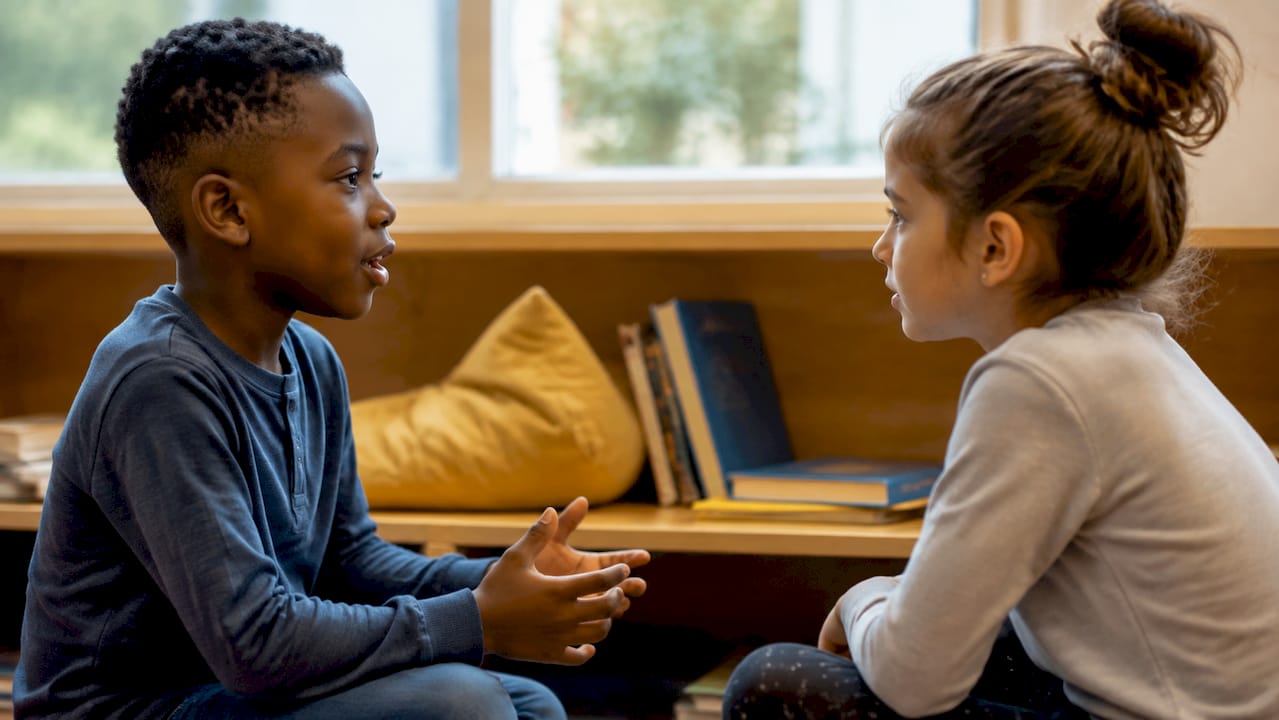
Cognitive empathy, the ability to understand another child’s perspective, typically starts developing around age four, while affective empathy (feeling for another person) emerges earlier, often before age two. Both continue maturing well into adolescence, which is why school-based programmes tend to work best when they start early and repeat over years rather than running as a single session.
Programmes like Roots of Empathy have shown reductions in child aggression and improvements in classroom inclusivity, based on evaluations referenced in StatPearls. The strongest programme evidence involves role play and direct caregiving interactions, such as classroom visits with an infant, rather than lecture-style lessons about kindness.
Parents and teachers can borrow the same logic at home:
- Shared story exercises, pausing during a book to ask “how do you think that character feels?”
- Caregiving simulation, letting a child care for a pet, plant or younger sibling under supervision
- Nature-based empathy prompts, connecting a child’s curiosity about animals to questions about how those animals experience their world, an approach explored further in understanding caring for our planet
Measuring actual behaviour, not just what a child says in a survey, gives a far more honest picture of whether any of this is landing.
What the empathy research actually shows, and where it’s thin
The strongest evidence connects empathy to prosocial behaviour and, more tentatively, to physical and mental health outcomes. But not all studies carry the same weight, and it helps to know which kind of evidence you’re looking at.
Brain imaging research shows that perspective taking recruits different neural networks from those involved in processing your own pain, which helps explain why cognitive empathy is mentally tiring in a way that simply feeling sympathy is not, according to findings on PMC. That cognitive cost is part of why empathy training needs repetition rather than a single insight to stick.
| Study type | What it typically shows | Key limitation |
|---|---|---|
| Randomised controlled trial | Whether a specific empathy training causes a measurable change | Often short follow-up; effects may fade |
| Observational/cohort study | Correlations between empathy and outcomes like volunteering or wellbeing | Cannot prove causation |
| Programme evaluation (e.g. Roots of Empathy) | Real-world reductions in bullying or aggression over a school term or year | Harder to isolate empathy training from other classroom factors |
Programme evaluations are particularly useful because they track actual behaviour, such as playground incidents, rather than relying only on self-reported feelings. That behavioural focus is one reason school-based empathy programmes carry more weight than a single lab study with self-report questionnaires.
Why Thezoofamily builds empathy into everything we make
We built Thezoofamily around a simple belief: children learn to care about others by first learning to care about the world around them. The animal designs on the cameras, walkie-talkies and binoculars aren’t decoration. They’re an invitation for a child to wonder what a fox sees, or what a bird hears, and that small act of imagining another creature’s experience is cognitive empathy in its earliest form.
For every camera sold, a tree is planted, a proof point that caring can be built into a product, not bolted on afterwards. Our blog carries further activities for parents who want to extend that thinking at home, including ideas for making learning fun for kids.
— ALAIN
Give empathy practice a tactile, nature-led starting point
Reading about empathy is one thing. Giving a child something to actually do with it, a camera to capture how another creature moves, a walkie-talkie to check in on a friend, is where the idea starts to stick.
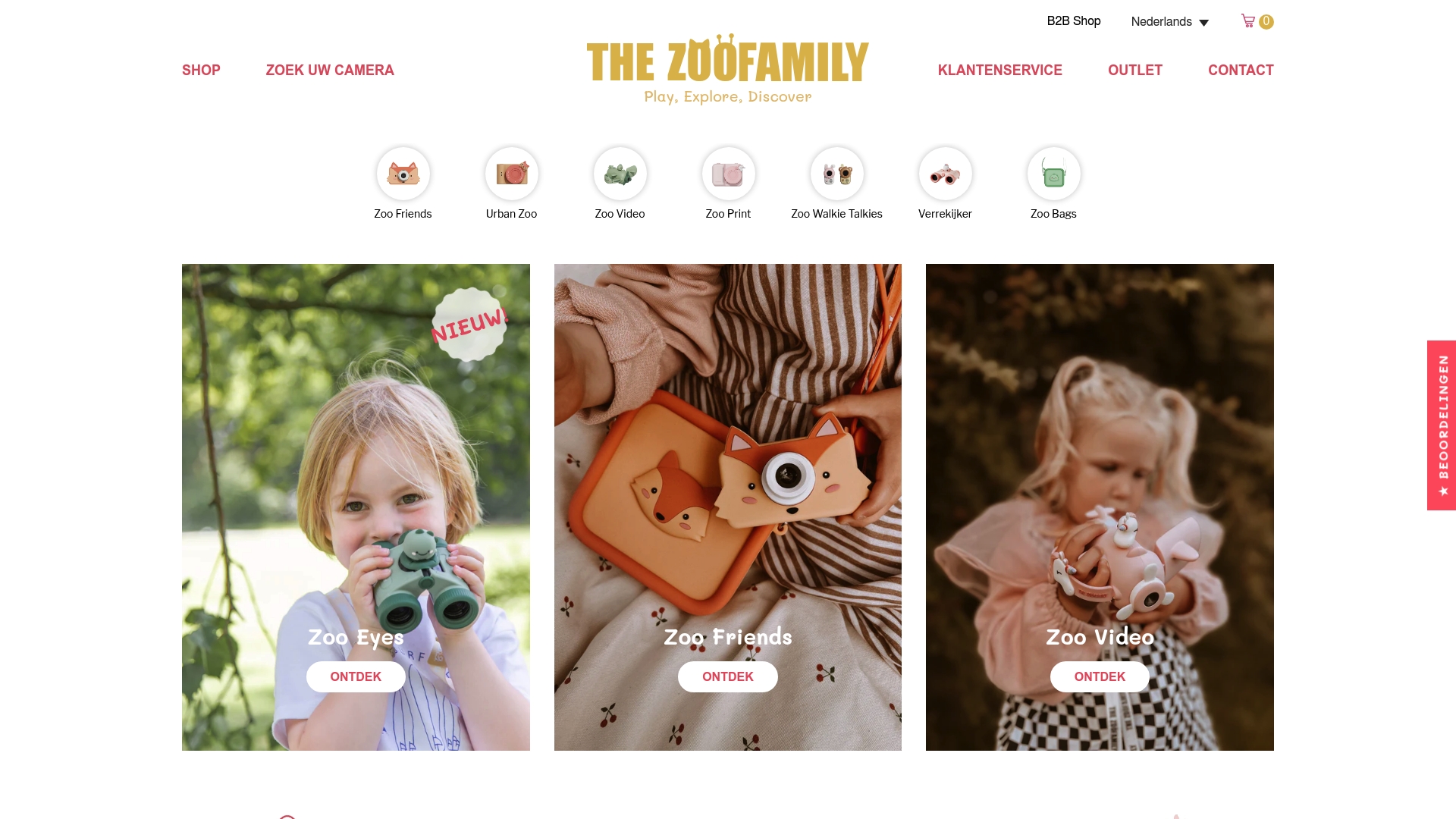
Animal-themed cameras, binoculars and walkie-talkies give children a concrete reason to look closely at another living thing and ask what its world might feel like, which is exactly the kind of low-pressure, repeated practice that builds perspective-taking over time. These tools work alongside the exercises covered above, storytelling, role play, nature-based prompts, as a hands-on complement rather than a replacement for them. For animal-focused examples of recognising emotion and responding with care, the observations in this piece on emotional eating in pets make a useful companion read for families already drawn to animal behaviour. Pair a camera with an afternoon outdoors, perhaps inspired by these Earth Day activity ideas, and see what your child notices first. Browse the current range at Thezoofamily to find a starting point suited to your child’s age and interests.
Sources
- Empathy definition | Greater Good Science Center
- The science of empathy (Helen Riess, MD) - PMC
- Empathy - StatPearls (NCBI Bookshelf)
- Being empathetic is easier when everyone’s doing it | Scientific American