

Every mum knows how quickly empty cereal boxes and worn magazines pile up in a European city household. Turning these everyday leftovers into safe and creative recycled materials lets your child explore nature themes while learning about sustainability. Discover practical ways to gather and organise supplies, set up an inspiring workspace, and spark imagination through animal and landscape collage projects that deepen both creativity and environmental awareness.
Table of Contents
- Step 1: Gather Safe Recycled Materials For Crafting
- Step 2: Organise A Creative Workspace For Collage Making
- Step 3: Select Animal And Nature-Inspired Collage Shapes
- Step 4: Arrange And Glue Recycled Pieces For Your Design
- Step 5: Review The Finished Collage For Durability And Display
Quick Summary
| Key Insight | Explanation |
|---|---|
| 1. Safely Gather Recycled Materials | Collect clean, non-toxic materials like cardboard and fabric scraps for crafting. Ensure they are free from sharp edges and dangerous substances. |
| 2. Organise a Child-Friendly Workspace | Set up a dedicated crafting area with accessible supplies at child-height to encourage independent creativity and ensure safety during collage-making. |
| 3. Use Natural and Animal Shapes | Transform materials into geometric and organic shapes that represent nature and animals, inspiring creative expression through unique interpretations. |
| 4. Experiment with Composition | Encourage children to arrange materials freely before gluing, allowing them to explore different configurations for a dynamic and engaging collage. |
| 5. Ensure Durability in Display | Check that all pieces are securely glued and consider mounting the artwork on a sturdy backing to preserve and protect the finished collage. |
Step 1: Gather safe recycled materials for crafting
Let’s explore how to collect safe and creative recycled materials for your nature-inspired children’s collage project. The key is selecting items that are clean, non-toxic, and spark imagination while promoting environmental awareness.
Begin by gathering materials from around your home. Recyclable crafting supplies can include a variety of engaging objects:
- Magazines and newspapers
- Clean cardboard packaging
- Soft drink cans (with edges carefully smoothed)
- Old greeting cards
- Fabric scraps
- Used wrapping paper
- Packaging paper
Ensure all materials are thoroughly cleaned and dried before use. Remove any sharp edges from metal or plastic items, and supervise children closely during material selection. Focus on lightweight, easily manipulated objects that won’t pose handling challenges for young crafters.
Here is a summary of common recycled materials and their creative uses in children’s collage projects:
| Material Type | Best Creative Use | Safety Consideration |
|---|---|---|
| Cardboard Packaging | Backgrounds, animal shapes | Check for sharp corners |
| Magazine Cuttings | Animal features, textures | Avoid glossy, sharp edges |
| Fabric Scraps | Fur, leaves, textured layers | Ensure fabric is clean |
| Soft Drink Cans | Shiny effects, small accents | Smooth any sharp edges |
| Packaging Paper | Sky, landscapes, layering | Use lightweight paper only |
Safety first: Always inspect recycled materials carefully to prevent potential injuries or exposure to harmful substances.
Pro tip: Keep a dedicated craft collection box where family members can deposit interesting recyclable items throughout the week, turning material gathering into a fun, collaborative activity.
Step 2: Organise a creative workspace for collage making
Creating an organised and inspiring workspace is essential for successful children’s collage art. Montessori-inspired workspace design helps children explore their creativity safely and independently.
Start by setting up a dedicated crafting area with clear organisation principles. Prepare your workspace with the following key elements:
- Large, sturdy table covered with washable craft paper
- Good lighting with natural daylight if possible
- Separate containers for different material types
- Child-friendly scissors with rounded edges
- Accessible glue sticks and child-safe adhesives
- Clean cloths or paper towels for quick cleanups
Ensure all recycled materials are sorted into clearly labelled bins or trays. Arrange supplies at child-height to encourage independent exploration and creativity. Keep surfaces clean and uncluttered to help children focus on their artistic process.
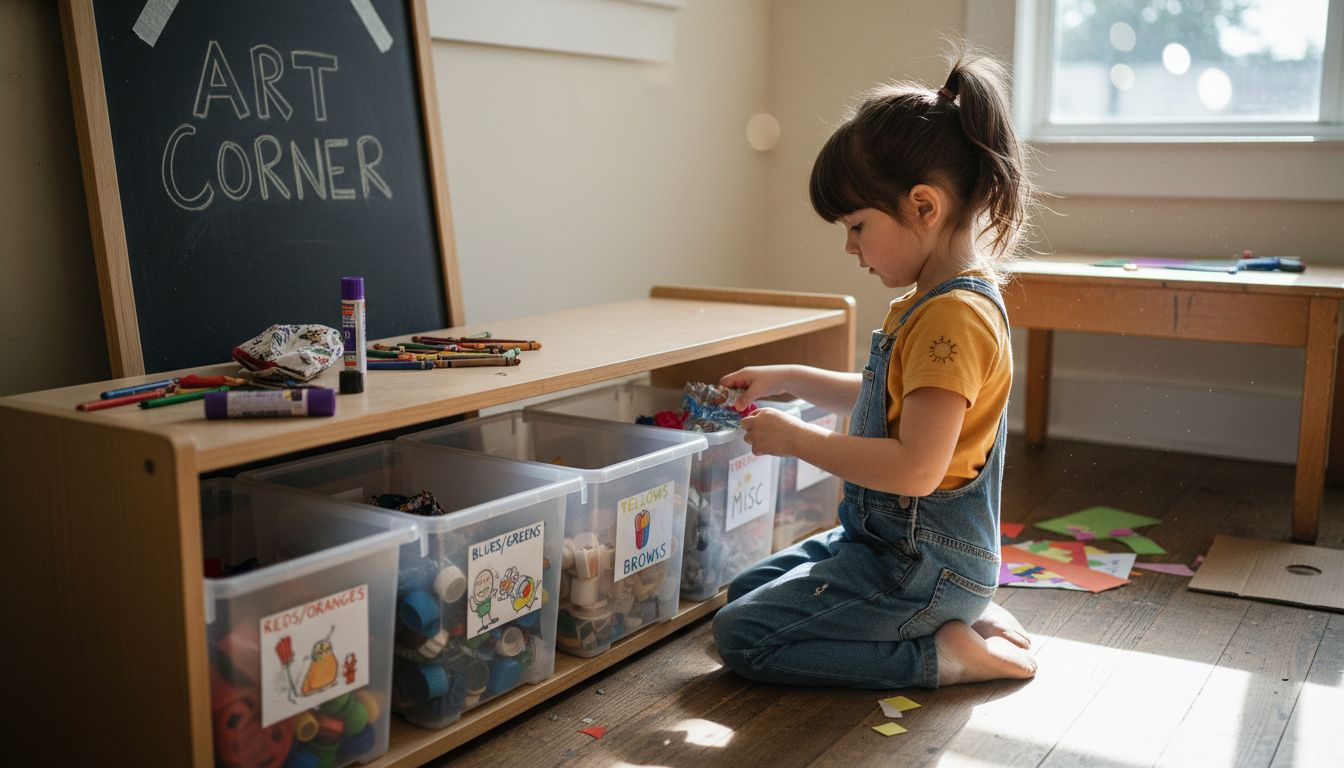
The following table highlights how workspace organisation supports both safety and creativity:
| Workspace Feature | Creative Benefit | Safety Benefit |
|---|---|---|
| Child-height Storage | Promotes independence | Prevents unsafe climbing |
| Washable Craft Surfaces | Stress-free experimentation | Easy cleaning after spills |
| Organised Supply Bins | Inspires material exploration | Reduces clutter and tripping |
| Good Natural Lighting | Enhances colour choices | Reduces eye strain |
Create a workspace that invites imagination while maintaining safety and order.
Pro tip: Use transparent storage containers with colour-coded labels to help children learn organisation skills while making their collage art.
Step 3: Select animal and nature-inspired collage shapes
Transform recycled materials into delightful animal and nature-themed collage shapes that will spark your child’s imagination and environmental creativity. Recycled nature art projects offer wonderful opportunities to explore wildlife through artistic expression.
Begin by identifying simple geometric and organic shapes that can represent different animals and natural elements. Collect materials that lend themselves to creative transformation:
- Curved egg carton sections for turtle shells
- Triangular newspaper edges for bird wings
- Circular plastic bottle bottoms for flower petals
- Rectangular cardboard pieces for animal body outlines
- Rounded magazine cut-outs for animal faces
Encourage children to look closely at animal shapes and interpret them creatively. Soft edges, rounded corners, and asymmetrical designs can help capture the essence of woodland creatures like squirrels, birds, and woodland mammals.
Nature’s shapes are wonderfully imperfect - embrace the unique character of each collage creation.
Pro tip: Trace animal silhouettes onto recycled cardboard first to create easy shape templates for young artists.
Step 4: Arrange and glue recycled pieces for your design
Prepare to transform your collected materials into a vibrant nature-inspired masterpiece. Montessori collage techniques offer fantastic guidance for children’s creative expression through careful arrangement and thoughtful design.
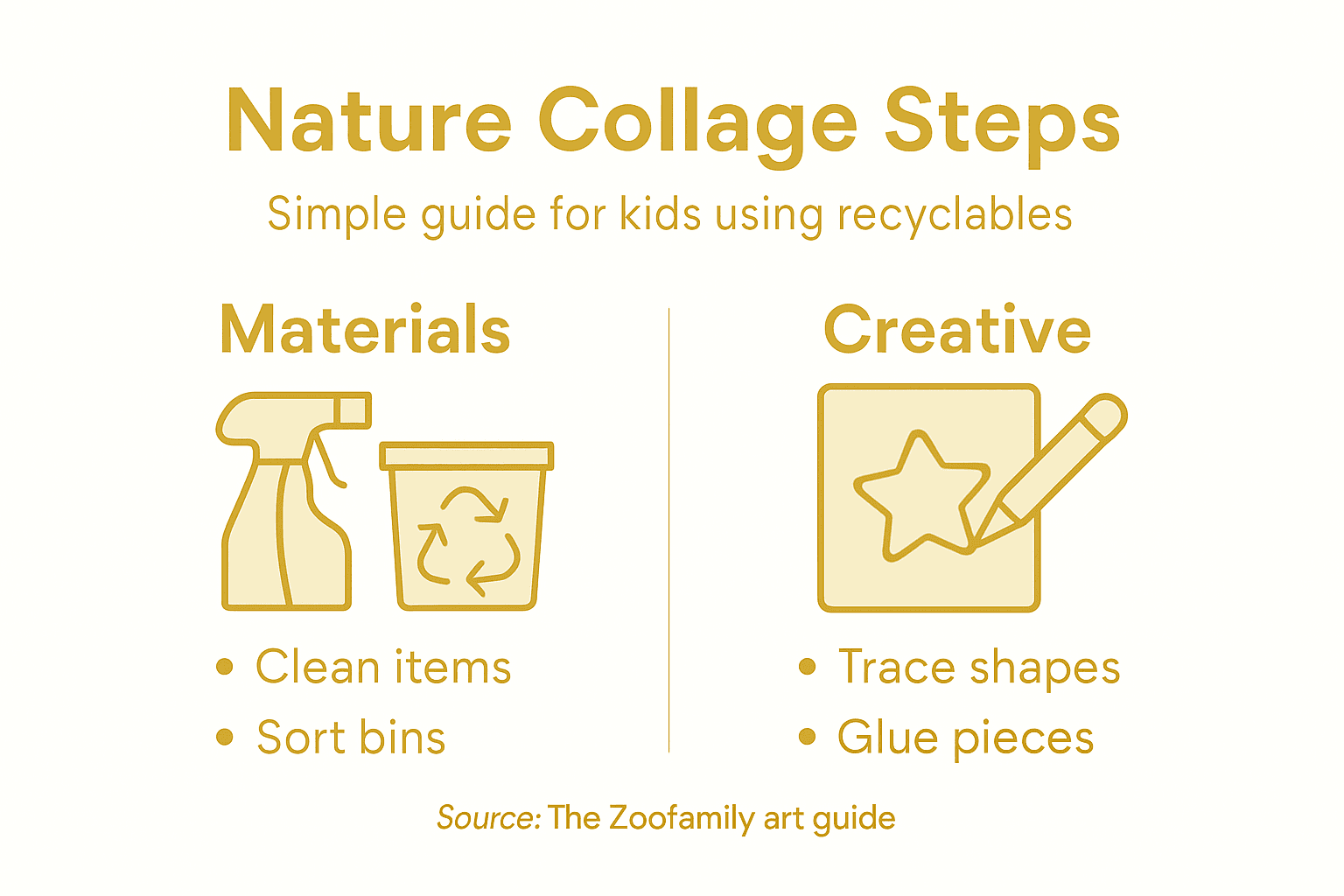
Begin by laying out your chosen materials and experimenting with different compositions before committing to gluing. Follow these key steps for successful collage creation:
- Start with a background piece of sturdy cardboard
- Arrange shapes loosely before applying adhesive
- Overlap pieces to create depth and interest
- Use child-safe glue sticks for easy application
- Allow space between elements to highlight individual shapes
Experiment with layering and strategic placement to bring your animal or nature scene to life. Encourage children to play with different arrangements, turning pieces upside down or sideways to discover unexpected artistic possibilities.
Creativity flourishes when children feel free to explore without strict rules.
Pro tip: Keep a damp cloth nearby to quickly clean up any glue spills and prevent messy accidents during the creative process.
Step 5: Review the finished collage for durability and display
Congratulations on completing your nature-inspired recycled art project! Montessori artwork preservation techniques will help ensure your child’s creative masterpiece remains intact and proudly displayable.
Take time to carefully examine the collage, checking for these key elements of durability and presentation:
- Ensure all pieces are securely glued
- Press down edges and corners firmly
- Check for any loose or lifting sections
- Remove any excess glue residue
- Trim uneven edges if necessary
Reinforce the artwork by mounting it on a sturdy backing board or considering light lamination to protect the delicate recycled materials. Choose a display location that showcases your child’s creativity while protecting the collage from direct sunlight and moisture.
Every artwork tells a story of creativity, imagination, and environmental awareness.
Pro tip: Take a photograph of the collage before displaying, creating a digital memory of your child’s artistic journey and preserving the moment even if the physical artwork changes over time.
Inspire Creativity and Nature Connection with The Zoofamily
Creating collage art using recycled materials presents the challenge of finding safe, engaging supplies and organising a workspace that encourages independent exploration. The article highlights key steps like gathering clean recycled items, selecting nature-inspired animal shapes, and arranging designs with care to foster environmental awareness and imaginative play. Many parents and educators strive to nurture this connection between children and the natural world while addressing their need for creative tools that are both inspiring and educational.
At The Zoofamily, we understand that nurturing kids’ curiosity about wildlife and nature is fundamental. Our specially designed kids’ cameras, binoculars, and walkie-talkies come with animal references crafted to spark interest in the environment and enhance creative connections outdoors. With every purchase, we plant a tree to support a greener future. This is more than a product it is a commitment to restoring natural beauty for generations to come. Explore how our nature-inspired tools complement your child’s recycled collage projects by encouraging hands-on discovery. Imagine combining the creativity of collage art with exploring real wildlife using The Zoofamily collection.
Bring art and nature together today with The Zoofamily. Visit The Zoofamily main site to discover products that inspire creative learning and offer meaningful outdoor experiences. Make your child’s next nature project unforgettable while contributing to a healthier planet. Start your journey now for a world where creativity and conservation grow hand in hand.
Frequently Asked Questions
What materials can I use for collage art using recycled materials?
You can use a variety of clean and non-toxic recycled materials, such as magazines, newspapers, cardboard packaging, fabric scraps, and used wrapping paper. Start by gathering items you already have around the home to spark creativity in your child’s collage project.
How can I ensure the safety of recycled materials for children’s collage projects?
Inspect all recycled materials to ensure they are clean and free from sharp edges. Smooth any sharp edges on metal or plastic items and supervise children closely during the selection process.
What steps should I follow to create a workspace for kids’ nature collage art?
Set up a dedicated crafting area with a large, sturdy table, good lighting, and child-friendly supplies. Organise recycled materials in labelled bins and ensure everything is accessible at child height to foster independence while they create.
How can I help my child select animal and nature shapes for their collage?
Encourage your child to identify simple geometric and organic shapes in the materials they have gathered. Use items like egg carton sections for turtle shells or triangular newspaper edges for bird wings to inspire their creativity in depicting animals and nature.
What should I do after finishing the collage to ensure it remains intact?
Review the collage to make sure all pieces are firmly glued and trim any uneven edges if necessary. Consider mounting the artwork on a sturdy backing board to reinforce it and protect it from damage.
How can I document and preserve my child’s collage art project?
Take a photograph of the completed collage to create a digital memory of your child’s artistic journey. This way, you preserve the moment even if the physical artwork changes due to time or exposure.
Recommended
- 7 activités automne dehors enfant pour découvrir la nature – The Zoofamily
- 7 activités automne dehors enfant pour découvrir la nature – The Zoofamily
- 7 idées goûter nature enfants pour éveiller leur curiosité – The Zoofamily
- 7 top livres enfants nature pour éveiller l’écologie – The Zoofamily
- Manieren om vloeipapier te gebruiken – Kadopapier.net