

Play-based activities and everyday routines build fine motor skills when you practise them often and match them to your child’s stage. Short sessions with threading, playdough, scissors or simple kitchen tasks gradually strengthen hands and sharpen precision over time. These activities use materials already at home and can start today, with research backing the link between regular, play-led practice and better motor outcomes.
TL;DR:
- For toddlers, thread beads at least 2 cm wide on a stiff pipe cleaner; preschoolers can advance from straight scissor cuts to curves.
- Keep small parts and cutting tools supervised around children under three, and introduce scissors with blunt tips for early practice.
- Start with large beads, then switch to smaller ones as grip improves; demonstrate first, guide the movement, and step back as the skill becomes familiar.
- A 2020 analysis of 19 studies found moderate positive effects from motor skill programs for children from birth to six.
- Children who thread beads for five minutes most days progress faster than those given an elaborate activity once every two weeks.
Table of Contents
- Age-by-age activity ideas from baby to school years
- Six activity types worth repeating all year round
- How to grade difficulty so the activity stays challenging
- What the research says about play-based practice
- A routine that pairs small hands with the outdoors
- What actually moves the needle for busy parents
- Where outdoor props can add to the practice
- FAQ
- Sources
Age-by-age activity ideas from baby to school years
Fine motor skills follow a rough sequence, so matching the activity to the stage keeps things achievable and fun. Here is what works at each point.
0 to 12 months
Babies build the groundwork for grasp and release long before they can hold a crayon. Tummy time with a soft toy just out of reach encourages reaching and batting, which strengthens shoulders and arms before fingers take over. A textured cloth or rattle placed in one hand and then passed to the other practises transfer between hands, an early building block for bilateral coordination.
- Grasp practice: offer soft toys or rattles sized for a small fist.
- Transfer practice: place an object in one hand and wait for your baby to move it to the other.
- Progression: once grasp is steady, add textured cloths to build sensory tolerance alongside grip.
1 to 3 years
This is when the pincer grasp, the pinch between thumb and forefinger, really starts to develop. Threading large wooden beads onto a shoelace or pipe cleaner gives toddlers repeated pincer practice with an obvious goal. Scooping dried pasta between bowls with a spoon or small tongs builds wrist control, and peeling stickers off a sheet is a simple, low-mess way to work the same pinch grip.
- Threading: start with beads at least 2cm wide, strung on a stiff pipe cleaner.
- Scooping and sorting: use child-safe tongs to move pom-poms between containers.
- Sticker play: peeling and placing stickers on paper strengthens the exact pinch needed for later pencil grip.
3 to 6 years
By this age, children are ready for tools. Child-safe scissors snipping along a straight line, then a curve, build the open-close hand strength needed for writing. Pegboards and small Perler beads demand a steady pincer grip and patience, while playdough rolled, pinched and cut with a plastic knife works the whole hand. Early mark-making with chunky crayons on large paper rounds out the set, linking hand strength to the pre-writing skills covered in the fine motor milestone checklist.

Our own guide on understanding developing fine motor skills in children covers how these stages connect if you want a fuller picture before choosing activities.
Six activity types worth repeating all year round
A handful of activity types cover most of what hands need to practise, and they are easy to repeat with small variations so children do not get bored.
- Playdough: pinching, rolling and cutting with a plastic knife works the whole hand; hide small beads inside for a retrieval challenge that adds a pincer step.
- Threading and lacing: move from large beads to smaller ones, or swap a pipe cleaner for a shoelace once the pincer grip is steady.
- Tongs, tweezers and sorting: moving pom-poms or cotton balls into an ice-cube tray builds the precision needed for later pencil control.
- Scissors and cutting practice: progress from single snips to straight lines, then curved shapes, as confidence grows.
- Cooking and daily tasks: stirring batter, pouring water and opening containers turn kitchen time into functional practice.
- Creative crafts: peeling stickers, filling pegboards and arranging Perler beads reward precision and patience in equal measure.
Our post on natural sensory play has texture-based variations on several of these, including ice play and sensory bins, if you want to mix things up.
Pro Tip: Keep three or four materials in a labelled box so you can start an activity in under a minute, which matters more for consistency than any single session’s length.
How to grade difficulty so the activity stays challenging
The goal is what occupational therapists call the “just-right challenge”: hard enough to stretch a skill, easy enough that your child wants to keep going rather than give up.
- Adjust size: start with large beads, pom-poms or pieces, then shrink them as the pincer grip improves.
- Adjust weight and time: heavier tools build strength, lighter or timed tasks build speed and control.
- Try standing instead of sitting: some tasks benefit from the shoulder stability a standing position gives, worth testing if a child fidgets while seated.
- Scaffold support: demonstrate first, then guide hand-over-hand, then step back once the movement is familiar.
- Mix up the materials: swapping beads for buttons or pasta adds the variability that helps a skill transfer beyond one specific toy.
Keep small parts and scissors supervised at all times with children under three, and choose blunt-tipped, child-safe scissors for early cutting practice. A 2020 meta-analysis of 19 studies found moderate positive effects from motor-skill programmes for children from birth to six, which is the kind of measurable gain this grading approach is built to produce.
What the research says about play-based practice
The case for play-based, home-led practice is not just intuition. A systematic review of occupational therapy interventions found that goal-directed, functional home programmes are among the approaches most consistently linked to better fine motor and visual-motor outcomes.
- Development runs proximal to distal: core and shoulder stability come first, finger precision follows.
- Home programmes with repeated, playful tasks give the variability needed for motor learning.
- A milestone checklist helps you track whether grasp, pincer and scissor skills are progressing as expected.
A routine that pairs small hands with the outdoors
We like pairing a short nature walk with a sorting task when we think about everyday fine motor practice. Ten to fifteen minutes is enough: collect a handful of leaves, pebbles or twigs, then sort them by size into a tray at home.
A child steadying binoculars with both hands, then placing each collected pebble carefully into its own compartment, is practising the same two-handed control that threading or scissors work on indoors, just with better scenery.
— ALAIN
What actually moves the needle for busy parents
Most advice on fine motor skills focuses on buying the right toy, but the stronger lever is frequency, not novelty. A child who threads beads for five minutes most days will progress faster than one who gets an elaborate activity once a fortnight.
The conventional wisdom also tends to treat these skills as a seated, tabletop matter, when standing tasks, outdoor collection and kitchen routines often give just as much practice with less resistance from a reluctant toddler. Dressing, unscrewing a water bottle or helping carry shopping all count, and they cost nothing extra in time or planning.

If we had to prioritise one thing, it would be this: pick two or three activities that fit your week without extra effort, repeat them often, and let the difficulty creep up gradually rather than switching activities every time one feels easy.
Where outdoor props can add to the practice
Fine motor skills do not need special equipment, but the right prop can make outdoor practice feel like an adventure rather than a chore. A kid-sized camera that needs two hands to hold steady, a pair of binoculars focused with small adjusting wheels, or a walkie-talkie button pressed with a deliberate finger movement all add careful, repeatable handling to a nature walk.
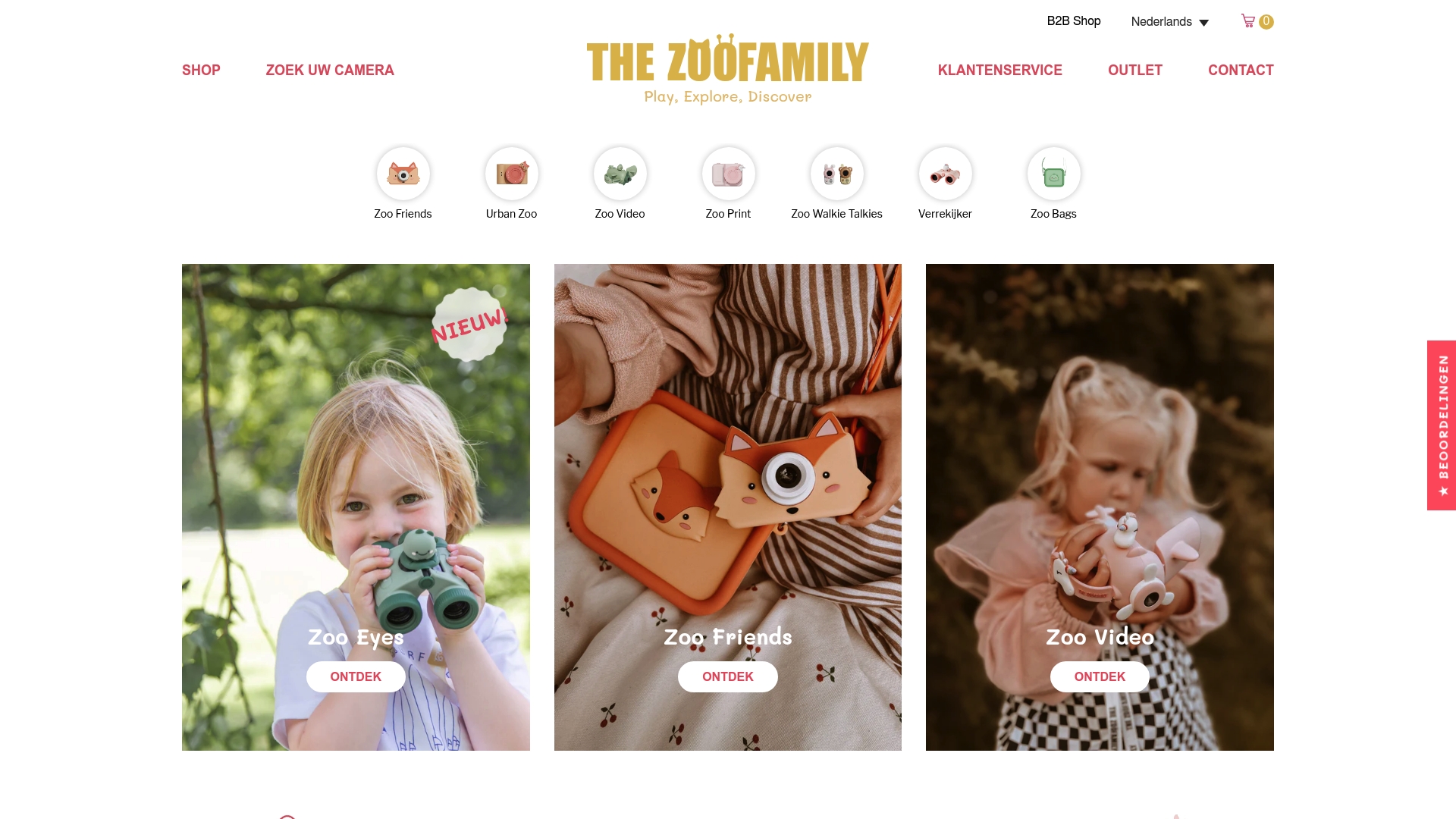
We designed our kids camera collection and binoculars with this kind of two-handed, observational play in mind, and for every camera sold we plant a tree. None of this is required for skill development, but it is a pleasant way to extend practice outdoors, and our full range is worth a browse if you are curious.
FAQ
What are good fine motor activities for a one-year-old?
At one, focus on grasp and transfer: offer soft toys, textured cloths and large rattles that fit a small fist, and let your child pass objects between hands. Simple cause-and-effect toys with buttons or flaps also build the finger strength needed for later pincer tasks.
What do occupational therapists recommend for fine motor practice?
Occupational-therapy reviews favour goal-directed, playful tasks over repetitive drills, including home programmes built around everyday routines like dressing and cooking. A systematic review of these interventions found this functional, play-based approach among the most consistently effective.
How can I improve my child’s fine motor strength?
Build strength through resistance: squeezing playdough, using child-safe tongs, and carrying small weighted objects all work the hand muscles needed for grip. Standing activities can add shoulder stability, which supports hand control for many tabletop tasks too.
What fine motor skills should a six-year-old have?
By six, most children can use scissors to cut along curved lines, manage buttons and zips, and hold a pencil with a steady tripod grip. A milestone checklist sets out the expected sequence if you want to check progress against typical stages.
How often should we practise fine motor activities at home?
Short, frequent sessions work better than occasional long ones, since repetition is what drives the moderate gains seen in motor-skill programmes for children from birth to six. Aiming for a few minutes most days, folded into dressing, cooking or play, is realistic for most families.