

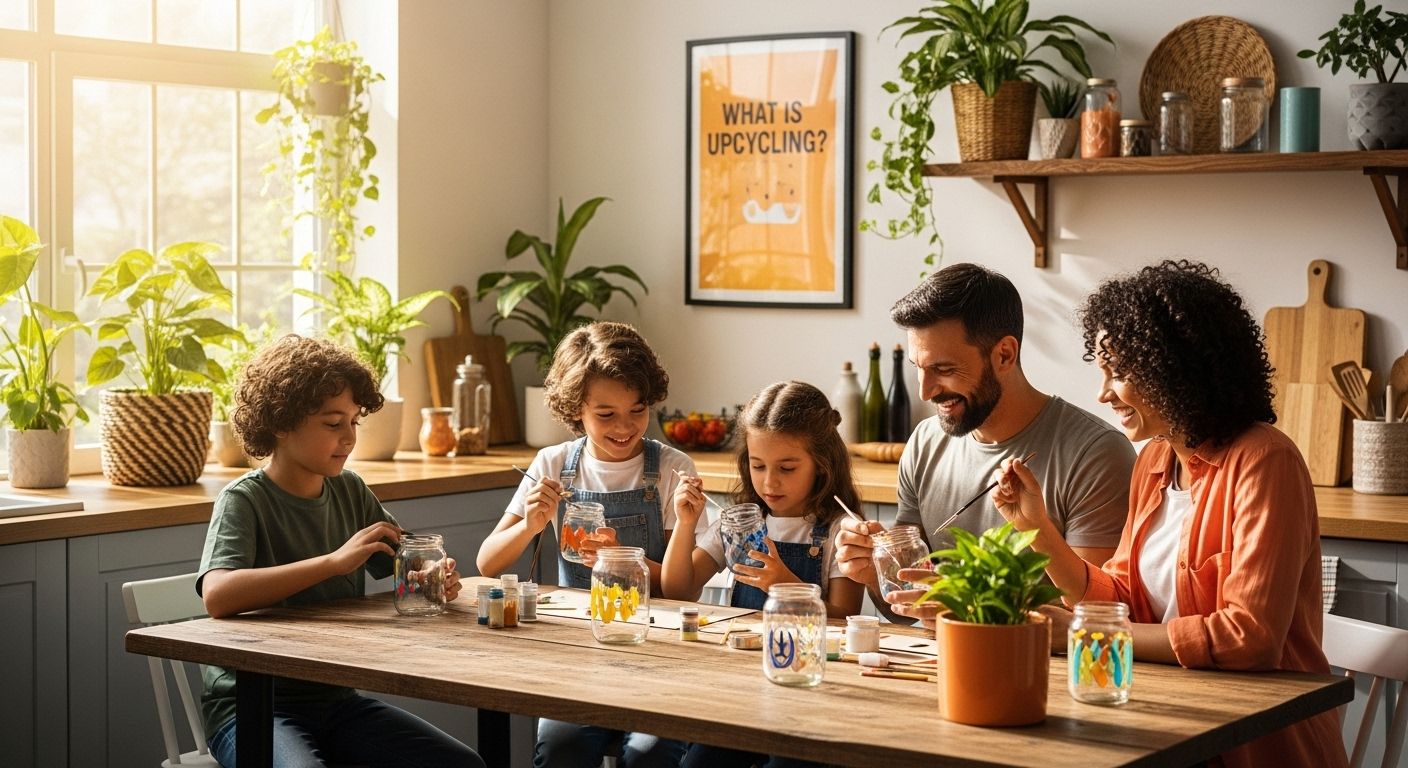
Upcycling is turning heads as more people rethink what happens to their waste. People often assume recycling is the gold standard for saving the environment, but upcycling skips the energy-heavy breakdown process and often adds far more value. In fact, upcycling projects save up to 90 percent of the energy needed to make new goods from scratch. This flips how we see waste on its head and proves unwanted objects can have a second life that’s more exciting and creative than the first.
Table of Contents
- Understanding Upcycling: Definition And Concept
- The Importance Of Upcycling: Environmental And Social Benefits
- How Upcycling Works: Transforming Waste Into New Products
- Key Concepts In Upcycling: Creativity, Innovation, And Sustainability
- Real-World Examples Of Upcycling: Inspiring Ideas For Families
Quick Summary
| Takeaway | Explanation |
|---|---|
| Upcycling transforms waste into valuable products | Upcycling repurposes discarded items, creating new uses while maintaining their original form and integrity. |
| Upcycling reduces environmental impact significantly | This practice conserves resources, lowers emissions, and diminishes landfill waste by reusing existing materials. |
| Engaging in upcycling fosters creativity in families | Involvement in upcycling activities cultivates innovative thinking and resourcefulness among children, making environmental lessons engaging. |
| Upcycling supports local communities economically | By providing alternative income through the sale of upcycled goods, it enhances community resilience and encourages the circular economy. |
| Upcycling can be easily integrated into everyday life | Families can adopt simple projects, such as transforming old shirts into quilts, to promote sustainability and creativity at home. |
Understanding Upcycling: Definition and Concept
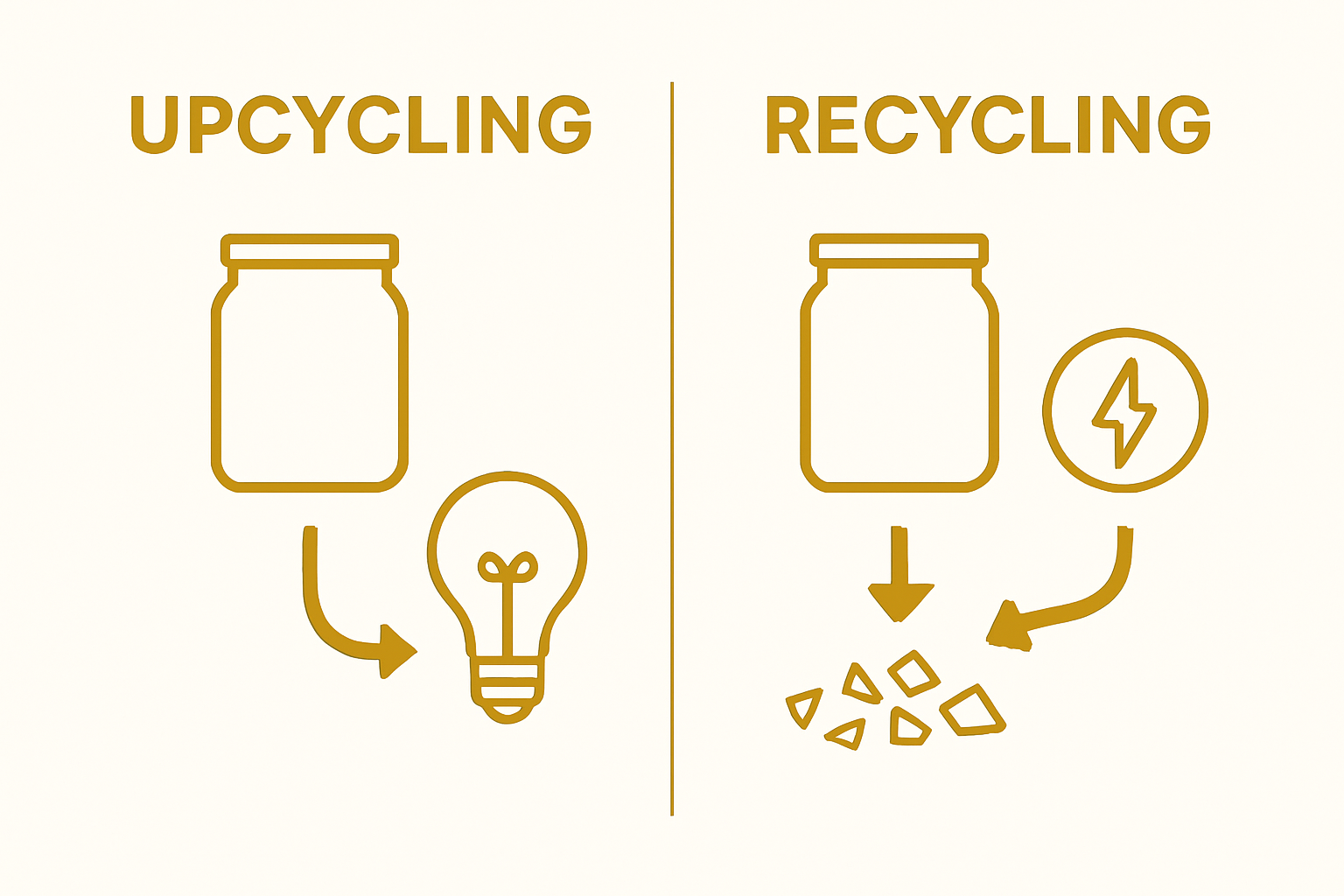
Upcycling represents an innovative approach to waste reduction and creative material reuse that transforms discarded items into valuable new products. Unlike traditional recycling, which breaks down materials into raw components, upcycling preserves the original form while reimagining its potential and purpose.
The Core Philosophy of Upcycling
At its heart, upcycling is about seeing potential where others see waste. According to Textile Exchange, upcycling involves modifying discarded products to create new, quality items that can re-enter the supply chain with enhanced value. This process goes beyond simple repurposing by elevating the original material’s utility and aesthetic appeal.
Key characteristics of upcycling include:
- Creative transformation of existing materials
- Preservation of original material integrity
- Adding value to seemingly worthless objects
- Reducing environmental waste
Environmental and Creative Benefits
Upcycling offers significant environmental advantages by extending product lifecycles and reducing the demand for new raw materials. As University of Florida researchers explain, upcycling eliminates substantial energy costs associated with manufacturing new goods.
When someone upcycles a worn jacket into a stylish tote bag or transforms old wooden pallets into elegant furniture, they are not just creating something new – they are challenging traditional consumption patterns and demonstrating that waste can be a resource for innovation.
To help clarify the differences between upcycling and recycling, the following table compares their core concepts and impacts as described in the article.
| Concept | Upcycling | Recycling |
|---|---|---|
| Process | Repurposes discarded items without breaking them down | Breaks materials down into raw form |
| Value Addition | Adds value and utility to original objects | Restores value but often results in lower-grade output |
| Energy Usage | Uses up to 90% less energy than creating new goods | Requires significant energy for reprocessing |
| Material Integrity | Preserves the structure of original material | Destroys original structure |
| Environmental Impact | Significantly reduces landfill and need for raw resources | Reduces landfill but still demands raw resources |
| Creative Outlet | Highly creative and design-driven | Typically a mechanical process |
The Importance of Upcycling: Environmental and Social Benefits
Upcycling represents far more than a creative hobby – it is a powerful strategy for addressing global environmental challenges and promoting sustainable living practices. By transforming waste materials into new, functional products, upcycling offers multifaceted benefits that extend well beyond individual creativity.
Environmental Impact and Resource Conservation
According to the U.S. Environmental Protection Agency, upcycling plays a critical role in waste reduction and resource management. By repurposing existing materials, we can significantly decrease the demand for new raw resources, reduce energy consumption, and minimise greenhouse gas emissions.
Key environmental advantages include:
- Reducing landfill waste
- Conserving natural resources
- Lowering carbon emissions
- Minimising manufacturing energy requirements
Social and Economic Implications
Beyond environmental benefits, upcycling generates substantial social and economic opportunities. It empowers communities by creating alternative income streams, supporting local artisans, and promoting a more circular economic model. Learn more about sustainable family practices that can integrate upcycling into daily life.
Upcycling also serves as an educational tool, teaching younger generations about resourcefulness, creativity, and environmental responsibility. When children witness adults transforming seemingly useless items into valuable objects, they develop a more nuanced understanding of consumption, waste, and sustainable living.
Moreover, the upcycling movement challenges traditional consumer culture by encouraging people to view materials not as disposable, but as valuable resources with ongoing potential. This shift in perspective can lead to more mindful purchasing decisions, reduced waste generation, and a more sustainable approach to personal and community resource management.
The following table outlines the core environmental and social benefits of upcycling, emphasising why it is a vital practice for sustainable living.
| Benefit Type | Description |
|---|---|
| Reduces Waste | Limits the amount of material sent to landfill |
| Conserves Resources | Reduces demand for new raw materials and preserves natural assets |
| Lowers Emissions | Minimises greenhouse gas emissions by avoiding new manufacturing |
| Saves Energy | Requires significantly less energy than producing new products |
| Empowers Communities | Provides alternative income streams and supports local artisans |
| Educational Value | Teaches resourcefulness, creativity, and responsibility |
How Upcycling Works: Transforming Waste into New Products
Upcycling transforms discarded materials into products of enhanced value through creative reimagination and strategic design. Unlike traditional recycling, this process preserves the fundamental structure of original materials while elevating their utility and aesthetic appeal.
Material Selection and Assessment
The upcycling process begins with careful material selection. Creators evaluate potential items based on their structural integrity, material quality, and creative potential. According to the U.S. Environmental Protection Agency, successful upcycling requires understanding the inherent properties of different materials and their potential for transformation.
Key considerations during material selection include:
- Structural durability
- Material composition
- Potential for creative modification
- Original item’s condition
Creative Transformation Techniques
Upcycling encompasses diverse transformation strategies that go beyond simple repurposing. Artists and designers employ techniques like deconstruction, reconstruction, painting, weaving, and structural modification to breathe new life into seemingly obsolete objects. Explore sustainable family practices that demonstrate creative reuse principles.
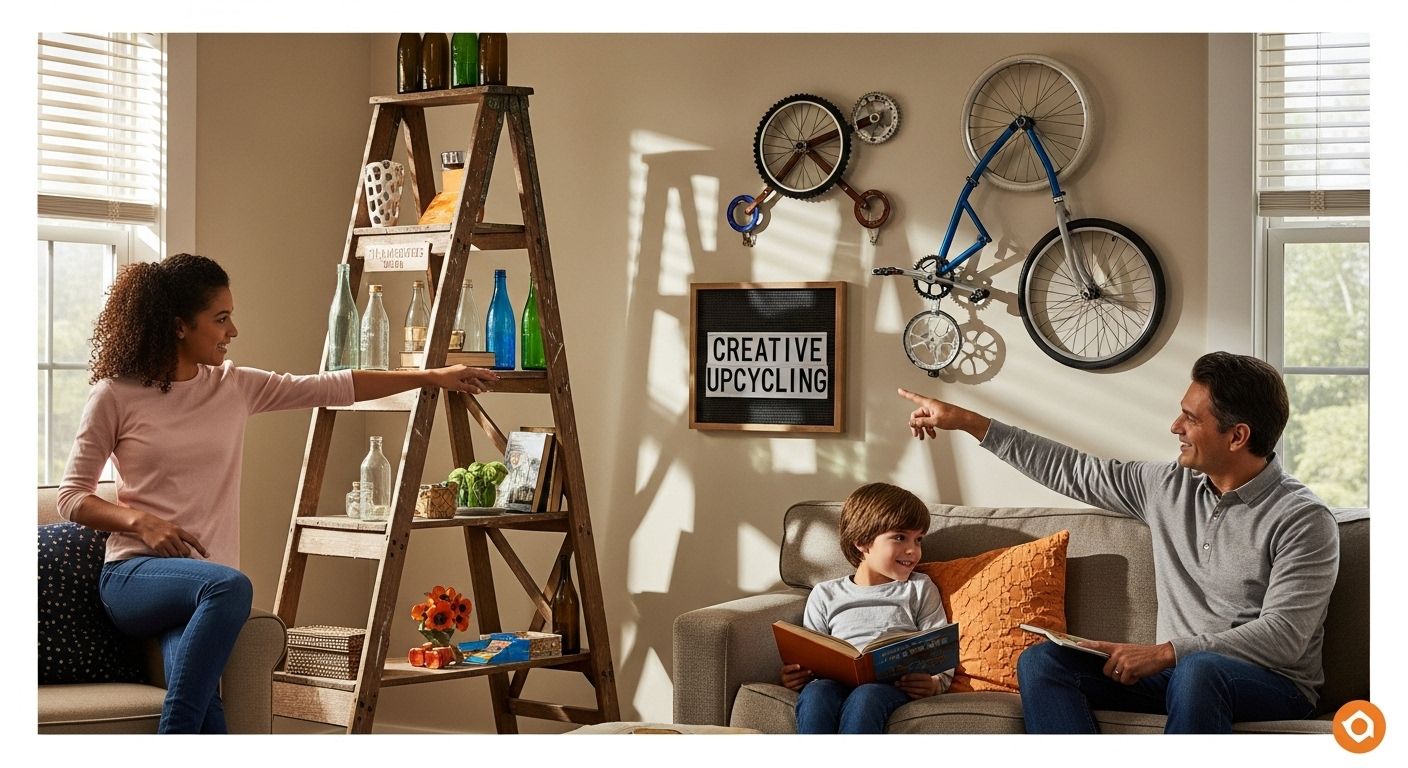
For instance, an old wooden ladder might become a unique bookshelf, discarded bicycle parts could transform into decorative wall art, and worn denim could be reimagined as stylish tote bags. Each transformation requires innovative thinking, technical skill, and a vision that sees potential beyond an item’s original purpose.
The magic of upcycling lies in its ability to challenge conventional waste management approaches. By viewing discarded materials as resources rather than rubbish, upcyclers create products that are not just environmentally responsible but also aesthetically compelling and functionally innovative.
Key Concepts in Upcycling: Creativity, Innovation, and Sustainability
Upcycling represents a sophisticated intersection of creative design, environmental consciousness, and innovative problem solving. By reimagining discarded materials as valuable resources, this approach challenges traditional linear consumption models and promotes a more holistic understanding of material potential.
The Creative Design Perspective
Creativity lies at the heart of successful upcycling. According to academic research, upcycling transcends mere recycling by introducing imaginative transformation techniques that elevate materials beyond their original purpose. This creative process requires a unique blend of artistic vision, technical skill, and strategic thinking.
Key creative principles include:
- Seeing potential in the overlooked
- Challenging conventional design assumptions
- Reimagining material functionality
- Developing innovative aesthetic solutions
Sustainability and Circular Economy Principles
Upcycling embodies critical sustainability principles by extending product lifecycles and reducing waste generation. Learn more about eco-friendly family practices that demonstrate practical sustainability approaches. By transforming discarded materials into new, valuable products, upcycling contributes to a circular economic model that minimises resource extraction and environmental impact.
The process goes beyond traditional recycling by preserving material integrity and energy, requiring significantly less processing compared to breaking down and reconstructing materials. This approach represents a more holistic and resource-efficient strategy for managing consumer waste, encouraging individuals and communities to view materials as continuous resources rather than disposable commodities.
Real-World Examples of Upcycling: Inspiring Ideas for Families
Upcycling offers families an engaging and meaningful approach to sustainability, transforming everyday items into creative, functional objects while teaching valuable environmental lessons. By integrating upcycling into family activities, parents can inspire children to think innovatively about resource management and waste reduction.
Home and Craft Upcycling Projects
According to research in Fashion and Textiles, families find significant value in creating unique, personalized items through upcycling. Simple household projects can become exciting family activities that promote creativity and environmental consciousness.
Inspiring upcycling project ideas include:
- Converting glass jars into decorative storage containers
- Transforming old t-shirts into colourful quilts
- Creating garden planters from wooden pallets
- Designing jewellery from bicycle chains and electronic components
Educational and Practical Family Upcycling
Explore practical strategies for eco-friendly family routines that incorporate upcycling. By involving children in these projects, families can teach critical thinking, problem solving, and environmental stewardship.
Children learn valuable skills through hands-on upcycling experiences. Transforming an old wooden ladder into a bookshelf or repurposing worn-out jeans into shopping bags demonstrates that creativity can breathe new life into seemingly useless items. These activities not only reduce waste but also nurture children’s imagination and environmental awareness, showing them that sustainability can be both fun and impactful.
Spark Creative Upcycling in Your Family Today
Are you searching for meaningful ways to teach your children about sustainability, creativity, and the value of reimagining everyday items? The article highlighted how upcycling empowers families to combat waste and cultivate innovative thinking, but it can be difficult to find hands-on tools that truly engage young minds. At The Zoofamily, we believe practical creativity should start early. Our unique kids’ cameras, walkie-talkies and binoculars inspire children to see the world differently, promoting both play and a connection with nature—exactly the spirit of upcycling.
Make the next family project unforgettable by giving your children the tools to capture and celebrate moments of transformation. With every camera sold, we plant one tree, so your purchase also directly supports a healthier planet. Explore our range and discover more ways to nurture eco-conscious, imaginative habits at The Zoofamily. Start inspiring creativity and real environmental impact in your home—visit us now.
Frequently Asked Questions
What is upcycling?
Upcycling is the creative reuse of discarded materials to create new products of higher value, preserving their original form while enhancing their utility and aesthetic appeal.
What are the environmental benefits of upcycling?
Upcycling helps reduce landfill waste, conserves natural resources, lowers carbon emissions, and minimises the energy required for manufacturing new goods.
How can families participate in upcycling?
Families can engage in upcycling by transforming everyday items into creative projects, such as turning old t-shirts into quilts or glass jars into decorative storage, promoting creativity and sustainability.
What techniques are commonly used in upcycling?
Common techniques in upcycling include deconstruction, reconstruction, painting, weaving, and structural modification, allowing artists and designers to reinterpret old materials into new, functional products.