

Nearly every british household has a box of family photos tucked away, yet few realise that these cherished images hold surprising power as learning tools. Studies show that exploring personal photographs can boost critical thinking and spark meaningful conversations between generations. Parents and children find new ways to discuss family history, personal identity, and social change. This guide reveals how family photos can light up learning, nurture emotional intelligence, and strengthen connections across every stage of family life.
Table of Contents
- Defining Learning With Family Photos
- Types Of Learning Through Family Photos
- Creative Activities For Family Photo Learning
- Age-Appropriate Use And Safety Considerations
- Privacy, Sharing, And Digital Security
Key Takeaways
| Point | Details |
|---|---|
| Utilisation of Family Photos | Family photographs serve as powerful educational tools that facilitate emotional, historical, and cognitive learning experiences for individuals of all ages. |
| Creative Engagement Strategies | Parents can enhance learning through storytelling, mapping activities, and digital storytelling, transforming images into rich educational experiences. |
| Age-Appropriate Guidance | Different age groups require tailored approaches for photo sharing, balancing educational engagement with necessary privacy protections. |
| Digital Security Awareness | Families must adopt proactive digital security measures and foster discussions about responsible sharing to protect personal memories while enjoying the benefits of photo sharing. |
Defining Learning With Family Photos
Family photographs are more than just visual memories; they are powerful educational tools that connect generations and facilitate deep learning experiences. In an increasingly digital world, these personal snapshots offer unique opportunities for understanding family history, exploring personal narratives, and developing critical cognitive skills.
Researchers have discovered that examining family photos can be an interactive method of learning that transcends traditional educational approaches. By engaging with photographs as dynamic learning resources, children and adults alike can uncover rich contextual insights about their personal and cultural backgrounds. These visual artefacts become dynamic windows into past experiences, helping individuals understand familial connections, social dynamics, and historical contexts.
The learning potential of family photographs extends far beyond simple reminiscence. When approached thoughtfully, these images can spark conversations about geography, fashion, technology evolution, social changes, and personal migrations. Parents can transform seemingly ordinary photographs into immersive learning opportunities by asking probing questions, encouraging storytelling, and helping children make connections between visual details and broader historical narratives. Engaging activities with family photos can develop critical thinking skills, enhance emotional intelligence, and create meaningful intergenerational dialogues that bridge generational gaps.
Understanding family photos as educational resources requires a nuanced approach that balances privacy considerations with learning potential. While sharing these memories can be enriching, parents must also be mindful of digital privacy implications. Thoughtful curation and selective sharing can help families leverage the educational power of photographs while protecting personal boundaries in our interconnected digital landscape.
Types of Learning Through Family Photos
Family photographs offer a multifaceted approach to learning that goes far beyond simple visual documentation. Each image represents a unique educational opportunity, enabling children and adults to explore different dimensions of knowledge through personal visual narratives.
Emotional Learning emerges as a primary type of learning through family photographs. Young adults’ perspectives on family photo sharing reveal that these visual memories help individuals develop emotional intelligence by understanding family dynamics, recognising facial expressions, and interpreting non-verbal communication. Children learn empathy, emotional recognition, and interpersonal skills by examining how family members interact across different moments and generations.
Historical and Contextual Learning represents another significant dimension of family photo exploration. Photographs serve as tangible historical documents, allowing families to trace genealogical histories, understand cultural transformations, and explore socio-economic changes through visual evidence. By discussing clothing styles, technological artefacts, architectural backgrounds, and geographical settings, families can create immersive learning experiences that connect personal histories with broader societal narratives.
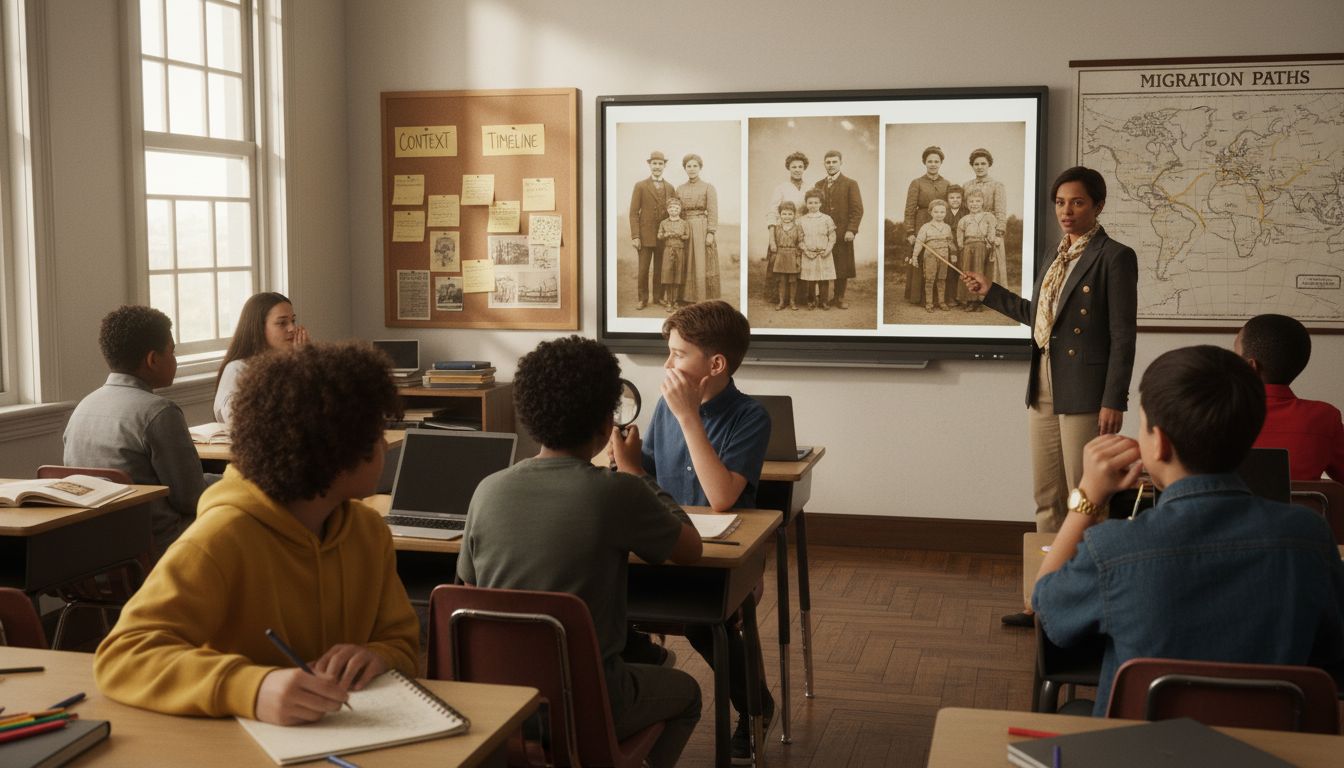
Cognitive skill development represents a nuanced learning type facilitated by family photographs. Parental online sharing practices demonstrate how interactive discussions around these images can enhance critical thinking, memory recall, and analytical skills. Children develop observational capabilities by identifying subtle details, understanding chronological sequences, and making connections between different visual narratives. Through guided exploration, family photos become powerful educational tools that stimulate intellectual curiosity and promote intergenerational knowledge transfer.
Creative Activities for Family Photo Learning
Family photographs transform into dynamic educational resources when approached with creativity and intentionality. By designing engaging activities, parents can turn these visual memories into powerful learning experiences that captivate children’s imagination and curiosity.
Storytelling and Narrative Creation represent powerful learning approaches. Web-based technologies can help families manage interactive learning experiences through photographs. Children can be encouraged to construct elaborate stories around family images, developing language skills, imaginative thinking, and narrative comprehension. By prompting questions like “What might have happened just before this photo?” or “How do you think the people in this picture were feeling?”, parents can stimulate complex verbal and cognitive development.
Geographical and Chronological Mapping activities offer another creative approach to family photo learning. Parents can create visual timelines or geographical journeys using photographs, helping children understand family history, migration patterns, and personal genealogy. This might involve creating a large wall chart where photos are arranged chronologically or geographically, allowing children to visually trace family movements and historical changes. Creative activities involving family photographs can simultaneously explore privacy considerations while providing rich educational experiences.
Multimedia and Digital Storytelling activities represent a modern approach to family photo learning. Families can collaborate on creating digital presentations, podcasts, or short videos that incorporate old and new photographs, encouraging technological literacy, editing skills, and intergenerational storytelling. These projects not only preserve family memories but also teach children valuable digital communication skills, helping them understand how personal narratives can be crafted and shared responsibly in the digital age.
Age-Appropriate Use and Safety Considerations
Navigating the digital landscape of family photo sharing requires a nuanced approach that balances educational opportunities with privacy protection. Each age group presents unique considerations for responsibly engaging with family photographs, demanding thoughtful parental guidance and strategic decision-making.
Parental attitudes towards digital technology reveal critical insights into age-specific photo interaction strategies. For young children aged 3-7, supervised and controlled photo exploration is paramount. Parents should actively participate in photo discussions, creating safe environments where children learn to understand context, recognise family members, and develop narrative skills without risking personal information exposure. During these early years, physical photo albums or carefully curated digital collections offer controlled learning experiences.
Teenage years introduce more complex privacy dynamics. Online privacy management becomes increasingly sophisticated as children develop digital literacy and personal agency. Parents must transition from complete control to collaborative privacy management, teaching teenagers about digital footprints, consent, and the long-term implications of sharing personal imagery. Establishing family guidelines about photo sharing, discussing potential risks, and respecting individual comfort levels become crucial educational moments.
Technology and privacy education represent interconnected learning opportunities. Families should develop collaborative strategies that treat photo sharing as a teachable experience, emphasising digital citizenship, personal boundaries, and mutual respect. By approaching family photo interactions as dynamic learning conversations, parents can help children develop critical thinking skills about digital privacy, personal representation, and responsible media consumption.
Privacy, Sharing, and Digital Security
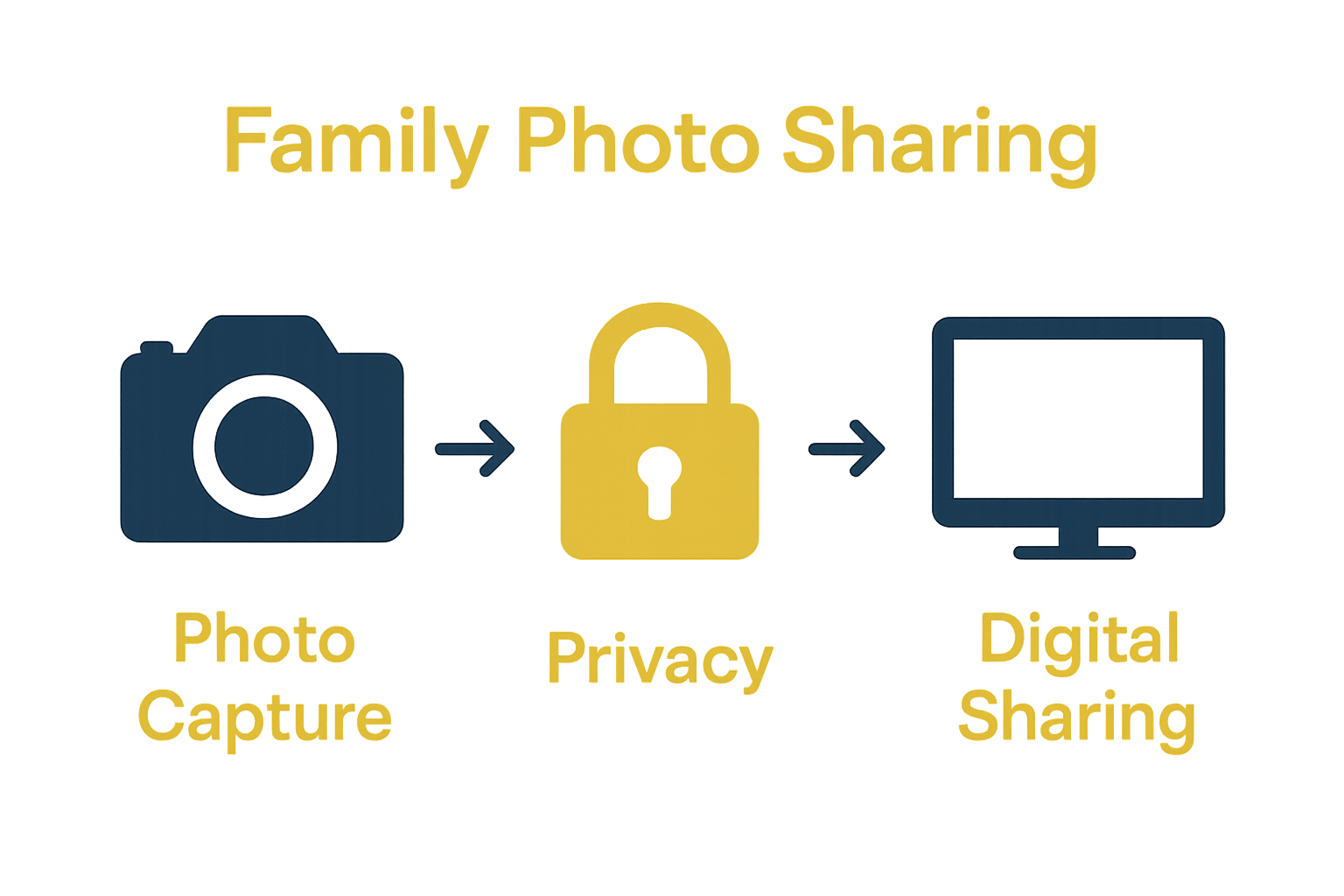
In the digital age, family photographs represent more than memories; they are potential vectors for personal data exposure that demand sophisticated privacy strategies. Families must develop comprehensive approaches that balance the joy of sharing with robust digital security practices.
Digital Image Protection has become increasingly complex with advanced technological capabilities. Privacy-preserving techniques for social images offer innovative methods to safeguard personal information embedded within family photographs. Techniques such as selective blurring, metadata scrubbing, and strategic image editing can help families share memories while minimising potential privacy risks. Parents can learn to strip geolocation data, anonymise background details, and carefully curate which visual elements remain visible.
Security considerations surrounding digital image sharing reveal multifaceted challenges beyond simple visual protection. Families must consider platform-specific privacy settings, understand network sharing implications, and develop critical digital literacy skills. This involves teaching children about consent, understanding digital footprints, and recognising potential long-term consequences of online image distribution. Implementing robust authentication protocols, using secure sharing platforms, and maintaining regular privacy audits become essential strategies for protecting family memories.
Technology offers both risks and opportunities for family photo sharing. By adopting a proactive, educational approach to digital security, families can transform potential vulnerabilities into powerful learning experiences about responsible digital citizenship. The key lies in open communication, continuous learning, and developing shared strategies that respect individual privacy while maintaining the joy of preserving and sharing family memories.
Bring Learning With Family Photos to Life With The Zoofamily
The article highlights that family photographs are rich educational tools that build emotional intelligence and critical thinking while connecting generations. Many parents struggle balancing meaningful photo interactions with digital privacy and creating engaging learning moments. The Zoofamily understands this challenge and offers innovative kids’ cameras that promote creative storytelling and interactive learning through imagery. These tools encourage children to explore family narratives and nature alike with a focus on safety and imagination.
Discover how our specially designed cameras, walkie-talkies, and binoculars can transform ordinary photo moments into unforgettable learning experiences while planting a tree for every camera sold. Visit The Zoofamily today and give your child the chance to build lasting connections with family stories and the natural world. Start fostering creativity and safe digital exploration now at The Zoofamily and reimagine what learning with family photos can be.
Frequently Asked Questions
How can family photos enhance emotional learning for children?
Family photos help children develop emotional intelligence by allowing them to understand family dynamics, recognise facial expressions, and interpret non-verbal communication. By examining interactions between family members, children learn empathy and interpersonal skills.
What types of learning can be derived from historical family photographs?
Historical family photographs serve as tangible records that allow families to trace genealogical histories and explore cultural transformations. Discussions around clothing styles, technological artefacts, and architectural backgrounds provide immersive learning experiences connected to societal narratives.
What creative activities can parents use to engage children with family photographs?
Parents can encourage storytelling, create visual timelines, or engage in multimedia projects using family photographs. These activities promote narrative skills, geographical understanding, and digital literacy, making learning interactive and fun.
How can families ensure privacy when sharing family photographs online?
Families can implement digital image protection strategies, including selective blurring, metadata scrubbing, and careful curation of visible elements. Educating children about consent, digital footprints, and secure sharing practices also helps maintain privacy while sharing memories.