

Outdoor maths activities turn the simplest spaces into exciting learning grounds for children. Imagine children discovering that honeycombs in a garden have precise hexagonal patterns found in nature. Most parents expect maths to happen indoors with pencils and paper, but the real surprises hide outdoors among leaves and clouds. When children start measuring tree trunks or counting clouds, they realise maths is more than just numbers it is a hands-on adventure waiting just beyond the back door.
Table of Contents
- Measure Nature: Using A Tape Measure For Geometry
- Counting Clouds: An Activity For Estimation Skills
- Nature Math Hunt: Finding Shapes And Patterns
- Outdoor Baking: Measuring Ingredients In The Garden
- DIY Compass: Exploring Angles With A Simple Tool
- Picnic Math: Practising Addition And Subtraction With Food
- Building Forts: Applying Measurement And Space Concepts
Quick Summary
| Takeaway | Explanation |
|---|---|
| Use a tape measure for outdoor geometry | Measuring natural elements helps children grasp mathematical concepts through hands-on exploration. |
| Estimation enhances analytical skills | Cloud counting encourages children to guess and verify, fostering critical thinking and problem-solving abilities. |
| Engage in nature math hunts | Searching for shapes and patterns in nature transforms abstract mathematics into interactive learning experiences. |
| Combine baking with measurements | Cooking outdoors makes learning fractions and volume enjoyable and relevant, providing a practical mathematical environment. |
| Build forts to learn spatial concepts | Fort construction teaches measurement and geometric principles, promoting creativity and critical thinking in real-world contexts. |
1: Measure Nature: Using a Tape Measure for Geometry
Transforming an ordinary outdoor space into a vibrant mathematical playground requires nothing more than a simple tape measure and a curious child’s imagination. Outdoor math activities that involve measuring natural elements can turn a routine walk or backyard exploration into an engaging learning experience that makes geometry tangible and exciting.
Geometry exists all around us in nature, waiting to be discovered and measured. By encouraging children to use tape measures, parents can help them understand mathematical concepts through direct, hands-on exploration. This approach transforms abstract numerical ideas into concrete, measurable experiences that children can touch, see, and comprehend.
When selecting a tape measure for children’s outdoor mathematical adventures, consider these key features:
- Durability for outdoor use
- Clear numeric markings easily readable by children
- Lightweight design for easy handling
- Safety features like retractable mechanisms
Encouraging children to measure natural objects provides multiple learning opportunities. They can calculate the circumference of tree trunks, determine the height of shrubs, measure leaf lengths, or compare the dimensions of rocks and branches. These activities not only develop mathematical skills but also foster a deeper connection with the natural environment.
According to National Geographic Education, geometric patterns are fundamental to understanding natural structures. By measuring and observing these patterns, children develop spatial reasoning skills that are crucial for mathematical comprehension.
To make measuring more engaging, transform it into a game. Challenge children to find the longest leaf, the widest tree trunk, or create a mathematical scavenger hunt where they must measure specific natural objects within a set time frame. This approach turns learning into an exciting adventure that stimulates curiosity and analytical thinking.
Remember that precision matters, but so does enjoyment. Encourage children to record their measurements in a nature journal, creating a visual record of their mathematical discoveries. This documentation helps reinforce learning and provides a tangible reminder of their outdoor mathematical explorations.
2: Counting Clouds: An Activity for Estimation Skills
Estimation skills are fundamental mathematical abilities that help children develop analytical thinking and approximate problem-solving techniques. Outdoor math activities like cloud counting transform an ordinary sky-watching moment into a dynamic learning experience that challenges children to observe, count, and analyse.
Cloud watching becomes an extraordinary mathematical adventure when turned into a structured estimation exercise. By encouraging children to guess and verify cloud numbers, parents can help develop critical mathematical thinking skills that extend far beyond simple counting.
When approaching cloud counting as a mathematical activity, consider these strategic approaches:
- Use a specific time frame (5-10 minutes)
- Select a clear viewing area
- Encourage initial estimation before actual counting
- Discuss differences between estimated and actual numbers
The beauty of this outdoor math activity lies in its simplicity and adaptability. Children can practice different estimation techniques, learning that mathematical thinking involves more than precise calculations. They develop an understanding that approximation is a valuable skill in many real-world scenarios.
According to Scientific American, estimation skills are crucial for developing mathematical intuition. Children who practice estimating learn to make intelligent guesses and understand numerical relationships more intuitively.
To enhance the learning experience, introduce variations in the cloud-counting game. Challenge children to categorise clouds by type (cumulus, stratus, cirrus), estimate their sizes, or compare cloud formations across different days. This approach transforms a simple counting exercise into a comprehensive observational and mathematical experience.
Technical precision is less important than engaging curiosity. The goal is to make mathematical thinking fun, interactive, and connected to the natural world. By turning cloud watching into a mathematical exploration, parents can help children develop analytical skills while enjoying the beauty of the sky.
Remember that mistakes are learning opportunities. Encourage children to discuss why their initial estimates might differ from actual counts, fostering a growth mindset towards mathematical thinking. Each cloud-counting session becomes a lesson in observation, estimation, and scientific reasoning.
3: Nature Math Hunt: Finding Shapes and Patterns
Transforming an ordinary outdoor walk into a mathematical exploration transforms learning from abstract concepts to tangible experiences. Outdoor math activities like a nature math hunt engage children in discovering geometric shapes and mathematical patterns hidden within the natural world, making mathematics an exciting adventure of discovery.
Every landscape becomes a potential classroom where mathematical principles spring to life. From the hexagonal structures of honeycombs to the spiralling patterns of pinecones, nature offers an extraordinary textbook of geometric wonders waiting to be explored and understood.
When embarking on a nature math hunt, prepare children with some strategic guidelines:
- Bring a small notebook for recording observations
- Use a camera or smartphone to document interesting patterns
- Discuss and classify shapes and patterns discovered
- Compare and contrast different natural mathematical structures
Children can search for specific geometric elements like triangles in leaf veins, circles in flower petals, or symmetrical patterns in tree bark. This approach transforms mathematical learning from rote memorization into an interactive, sensory experience that connects abstract concepts with real-world observations.
According to National Center for Biotechnology Information, mathematical pattern recognition in nature helps develop crucial cognitive skills. By actively searching and identifying geometric structures, children enhance their spatial reasoning and analytical thinking capabilities.
To make the hunt more engaging, create a mathematical scavenger list with specific shapes or patterns to discover. Challenge children to find different types of symmetry, count repeated elements, or measure the angles of natural structures. This turns mathematical exploration into an exciting game that stimulates curiosity and observational skills.
The beauty of a nature math hunt lies in its flexibility. Whether in a local park, garden, or woodland trail, mathematical wonders exist everywhere. Encourage children to look closely, ask questions, and marvel at the intricate mathematical designs that surround us in the natural world.
Remember that exploration matters more than perfection. Each discovery is a learning opportunity, helping children understand that mathematics is not just about numbers, but about recognising patterns, relationships, and the incredible complexity of our environment.
4: Outdoor Baking: Measuring Ingredients in the Garden
Outdoor math activities that combine culinary skills with mathematical learning create an engaging, delicious approach to education. Baking in the garden transforms measuring from a mundane task into an exciting exploration of quantities, ratios, and precision that children find genuinely enjoyable.
Utilising an outdoor space for baking introduces children to practical mathematics through a hands-on, sensory experience. The garden becomes a dynamic classroom where ingredients become mathematical tools, and recipes transform into numerical challenges that stimulate logical thinking.
When preparing for an outdoor baking mathematics adventure, consider these essential guidelines:
- Select simple recipes with clear measuring requirements
- Use child-friendly measuring tools
- Explain each measurement step clearly
- Encourage hands-on ingredient handling
Children learn fractions, volume measurement, and proportional reasoning while mixing ingredients surrounded by natural beauty. By understanding how different quantities interact, they develop intuitive mathematical skills that extend far beyond traditional classroom learning.
According to Journal of Educational Psychology, practical cooking activities significantly enhance children’s mathematical comprehension and spatial reasoning skills. The tactile and interactive nature of baking makes abstract mathematical concepts concrete and memorable.
To elevate the learning experience, introduce additional mathematical challenges. Ask children to double or halve recipe quantities, calculate ingredient ratios, or estimate baking times. These activities transform a simple baking session into a comprehensive mathematical exploration.
Interestingly, you might also want to learn about composting to complete the garden learning experience, connecting mathematical skills with sustainable gardening practices.
Remember that precision matters, but enjoyment matters more. Encourage children to experiment, make mistakes, and understand that mathematical learning is a journey of discovery. Outdoor baking becomes more than just a cooking activity it is a mathematical adventure that nourishes both mind and body.
5: DIY Compass: Exploring Angles with a Simple Tool
Outdoor math activities that transform learning into an interactive experience can spark children’s curiosity about geometric principles. Creating a homemade compass provides an extraordinary opportunity to explore angles, directions, and spatial relationships while engaging directly with the natural environment.
A DIY compass becomes more than a simple tool it is a gateway to understanding mathematical concepts through hands-on exploration. By constructing their own navigational instrument, children learn about measurement, orientation, and the intricate relationships between mathematical principles and real-world applications.
When preparing to create a DIY compass, consider these essential materials and steps:
- A cork or lightweight circular base
- Sewing needle or metal pin
- Magnet for magnetisation
- Small bowl of water
- Compass for reference
The process of creating a compass teaches children about magnetic fields, cardinal directions, and the practical application of scientific principles. Each step becomes a mathematical and scientific learning experience that goes beyond traditional classroom instruction.
According to National Geographic Education, understanding directional tools is crucial for developing spatial awareness and mathematical reasoning. By constructing their own compass, children gain insights into navigation techniques used throughout human history.
Encourage children to experiment with their DIY compass by creating angle measurement challenges. Ask them to identify different degrees, track shadow movements, or create simple mapping exercises in the garden or local park. These activities transform mathematical learning from abstract concepts to tangible, interactive experiences.
The beauty of this outdoor math activity lies in its simplicity and adaptability. Children can modify their compass, test its accuracy, and understand the principles of magnetic attraction while developing critical thinking and problem-solving skills.
Remember that curiosity drives learning. Each attempt, whether successful or not, provides valuable insights into mathematical and scientific principles. The DIY compass becomes a symbol of exploration, teaching children that mathematics is not just about numbers, but about understanding the world around us.
6: Picnic Math: Practising Addition and Subtraction with Food
Outdoor math activities that transform mathematical learning into a delightful culinary adventure can turn ordinary meal times into extraordinary educational experiences. A picnic becomes more than just a social gathering it becomes a dynamic classroom where food serves as an engaging tool for practising fundamental mathematical skills.
Using snacks and treats as mathematical manipulatives makes learning feel like play. Children can explore addition, subtraction, and grouping concepts while enjoying delicious rewards for their mathematical thinking. The tactile and tasty nature of this approach ensures that mathematical learning remains fun and memorable.
When preparing for a mathematical picnic, consider these strategic guidelines:
- Choose bite-sized, countable foods
- Create simple mathematical challenges
- Use different coloured foods for visual sorting
- Encourage collaborative problem-solving
Children can solve problems like calculating how many strawberries each person receives, determining the total number of crackers after sharing, or figuring out remaining food quantities after distribution. These activities transform abstract numerical concepts into concrete, enjoyable experiences that make mathematics tangible.
According to Journal of Experimental Child Psychology, hands-on learning experiences significantly enhance mathematical comprehension and retention. By integrating food into mathematical exercises, children develop intuitive understanding of numerical relationships.
To elevate the learning experience, introduce progressively complex challenges. Ask children to calculate percentage shares, perform multiplication through food distribution, or create story problems using picnic items. These activities ensure that mathematical learning remains dynamic and engaging.
The picnic setting provides a relaxed environment where mistakes become learning opportunities. Encourage children to explain their mathematical reasoning, discuss different solution approaches, and celebrate mathematical discoveries. Each calculation becomes a step towards building confident, creative mathematical thinkers.
Remember that enjoyment drives learning. A mathematical picnic is not about perfection but about exploring numerical concepts through a playful, interactive approach that nourishes both mind and body.
7: Building Forts: Applying Measurement and Space Concepts
Outdoor math activities transform fort building from a simple play activity into a sophisticated mathematical learning experience. By encouraging children to construct complex structures, parents can help them develop spatial reasoning, measurement skills, and geometric understanding through hands-on exploration.
Fort construction becomes an intricate mathematical challenge that requires strategic thinking, precise calculations, and creative problem-solving. Children learn to estimate distances, calculate required materials, understand structural stability, and apply geometric principles in a tangible, exciting environment.
When embarking on a fort-building mathematical adventure, consider these essential guidelines:
- Select appropriate building materials
- Encourage pre-planning and sketching
- Discuss structural integrity
- Measure and compare different design approaches
Children develop critical mathematical skills by determining the length of supports, calculating angles for stability, estimating material quantities, and understanding spatial relationships. Each measurement becomes a lesson in practical mathematics that extends far beyond traditional classroom learning.
According to American Psychological Association, constructive play activities like fort building significantly enhance cognitive development and mathematical reasoning skills. The process of designing and building teaches children about three-dimensional thinking and practical geometry.
To make fort building more mathematically engaging, introduce specific challenges. Ask children to create forts with specific dimensional requirements, calculate the surface area of their structure, or determine the most efficient material usage. These tasks transform a simple play activity into a comprehensive mathematical exploration.
The beauty of fort building lies in its flexibility and creativity. Different materials like branches, blankets, cardboard, or natural elements can be used, each presenting unique mathematical challenges. Children learn that mathematical thinking is adaptable and can be applied to various real-world scenarios.
Remember that process matters more than perfection. Each fort-building attempt provides valuable learning opportunities, teaching children that mathematics is not just about numbers, but about understanding spatial relationships, problem-solving, and creative thinking.
Below is a comprehensive table summarising the seven outdoor maths activities for children, highlighting their purpose, key steps, and the main learning outcomes for each.
| Activity | Key Focus & Approach | Main Learning Outcomes |
|---|---|---|
| Measure Nature with a Tape Measure | Using tape measure to explore geometry in natural objects | Hands-on geometry, spatial reasoning, practical measuring skills |
| Counting Clouds for Estimation Skills | Estimating and verifying cloud numbers during sky-watching | Estimation, critical thinking, analytical problem-solving |
| Nature Math Hunt for Shapes & Patterns | Finding geometric patterns and shapes in nature | Pattern recognition, spatial reasoning, observation skills |
| Outdoor Baking with Ingredient Measuring | Measuring and calculating ingredients for simple outdoor recipes | Fractions, volume, proportional reasoning, practical maths |
| DIY Compass to Explore Angles | Constructing and using a homemade compass | Understanding direction, angles, hands-on geometry, curiosity |
| Picnic Math: Addition & Subtraction with Food | Using edible items for counting and sharing exercises | Addition, subtraction, visual grouping, collaborative problem-solving |
| Building Forts for Measurement and Space | Designing and building forts, measuring and planning structures | Spatial reasoning, measurement, three-dimensional thinking |
Turn Outdoor Math Adventures into Lasting Nature Memories
Have you ever noticed how children become most excited about learning when they can see, touch and interact with the world around them? “7 Fun Outdoor Math Activities for Kids’ Learning” highlights how real-world exploration—from measuring tree trunks to identifying patterns in nature—helps unlock mathematical thinking and deepens curiosity. Yet, parents often find it difficult to keep kids engaged and motivated or to capture their discoveries as lasting experiences.
If your child loves to measure the heights of garden shrubs or dreams of spotting shapes on a nature walk, why not empower their outdoor learning even further? Let them examine the marvels of nature close up and create their own records with the perfect tools. At The Zoofamily, we’ve developed imaginative kids’ cameras, durable binoculars and walkie-talkies designed to make every outdoor math adventure unforgettable. Each animal-inspired device sparks curiosity, promotes creativity and for every camera purchased we plant a tree, helping to restore the natural beauty your family explores. Discover the added value of using a kids’ camera to document your next nature math hunt or bring the whole family together with walkie-talkies on an estimation challenge in the park.
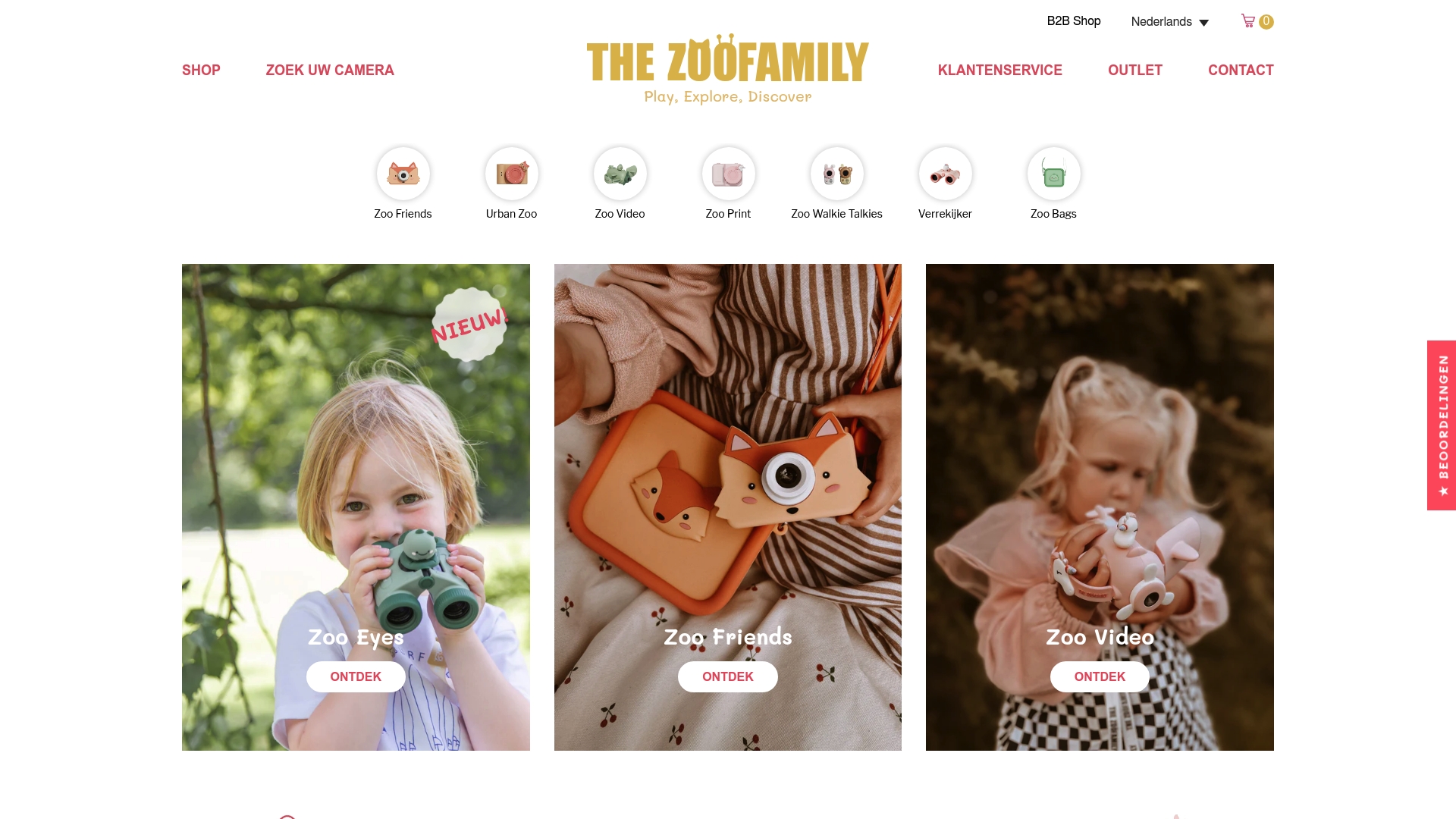
Ready to turn mathematical activities into treasured family memories? Visit The Zoofamily now to choose educational gifts that nurture your children’s curiosity about both numbers and nature. Shop today to inspire your next outdoor learning adventure and help restore our planet at the same time.
Frequently Asked Questions
What are some engaging outdoor math activities for children?
Some fun activities include measuring nature with a tape measure, cloud counting for estimation skills, a nature math hunt to find shapes and patterns, outdoor baking to learn about measurements, creating a DIY compass, practicing maths during a picnic, and building forts to apply measurement and space concepts.
How can I help my child develop estimation skills outdoors?
You can enhance estimation skills by encouraging cloud counting where children guess the number of clouds before counting them. Discussing the differences between estimated and actual numbers helps them understand approximation better.
What materials do I need for outdoor baking with children?
For outdoor baking, select simple recipes with clear measuring requirements, and use child-friendly measuring tools. Ensure ingredients are accessible and suitable for children to handle.
How does building a fort contribute to a child’s mathematical learning?
Building a fort helps children develop spatial reasoning, measurement skills, and geometric understanding. They learn to estimate distances, calculate materials needed, and understand structural stability, integrating practical maths into play.
Recommended
- Making Learning Fun: Engaging Activities for Your Kids – The Zoofamily
- Making Learning Fun: Engaging Activities for Your Kids – The Zoofamily
- 7 Astuces pour explorer la nature et decouvertes montessori – The Zoofamily
- Bricolages avec coquillages : Créez des cadeaux uniques pour enfants – The Zoofamily