

Did you know that a single insect hotel can attract over 20 different species to your garden? These tiny homes play a big role in helping pollinators and beneficial bugs flourish right in your backyard. Building your own insect hotel is a creative way to bring your family closer to nature while supporting local biodiversity. This guide will show you how to create a safe and welcoming space for countless small garden residents using simple, natural materials.
Quick Summary
| Key Point | Explanation |
|---|---|
| 1. Gather non-toxic natural materials | Collect safe items from nature, like sticks and pinecones, to create a bug hotel. |
| 2. Use child-friendly tools safely | Involve children using safe tools like screwdrivers and gloves under adult supervision. |
| 3. Create diverse insect habitats | Fill compartments with varied materials to attract different insect species. |
| 4. Install hotel in a strategic location | Position the insect hotel north-east, 1 meter off the ground, ensuring protection from elements. |
| 5. Regularly check and maintain | Conduct annual cleanings and inspections to create a healthy habitat for insects. |
Table of Contents
- Step 1: Gather Natural Materials And Safe Tools
- Step 2: Build A Sturdy Insect Hotel Structure
- Step 3: Fill Compartments With Insect-Friendly Items
- Step 4: Install The Hotel In Your Garden Or Balcony
- Step 5: Check And Maintain Your Insect Hotel Regularly
Step 1: Gather natural materials and safe tools
Ready to transform your outdoor space into a cosy sanctuary for tiny garden inhabitants? Gathering materials for your insect hotel is like embarking on a mini adventure with your children where nature becomes your craft shop. This step is all about collecting interesting natural elements and preparing safe tools that will help you construct an amazing bug home.
Start by planning a nature walk with your kids. According to research from healthy habitat resources, you can collect fascinating materials right from your local environment. Look for hollow sticks that look like miniature tunnels, pinecones with intricate textures, bits of bark, dry leaves, interesting twigs and small pebbles. Make this a fun exploration game where each family member competes to find the most unique material.
When it comes to tools, safety is paramount. You will want to select child friendly equipment that allows supervised participation. As recommended by climate conservation experts, consider using basic tools like:
- A child safe screwdriver
- Twine for binding materials
- Protective gloves
- Safety glasses
- A small drill (with adult supervision)
Pro Tip: Transform an old wooden crate or sturdy shoebox into your hotel’s base. This makes your project sustainable and prevents unnecessary purchases.
Choose natural materials that are non toxic and dry. Bamboo segments work brilliantly as insect corridors while wood offcuts can create fascinating architectural spaces for different bug species. Matchstick blind remnants can also add interesting textures to your bug hotel.
Remember that supervision is key. Let your children help but ensure an adult manages tool handling and complex assembly tasks.
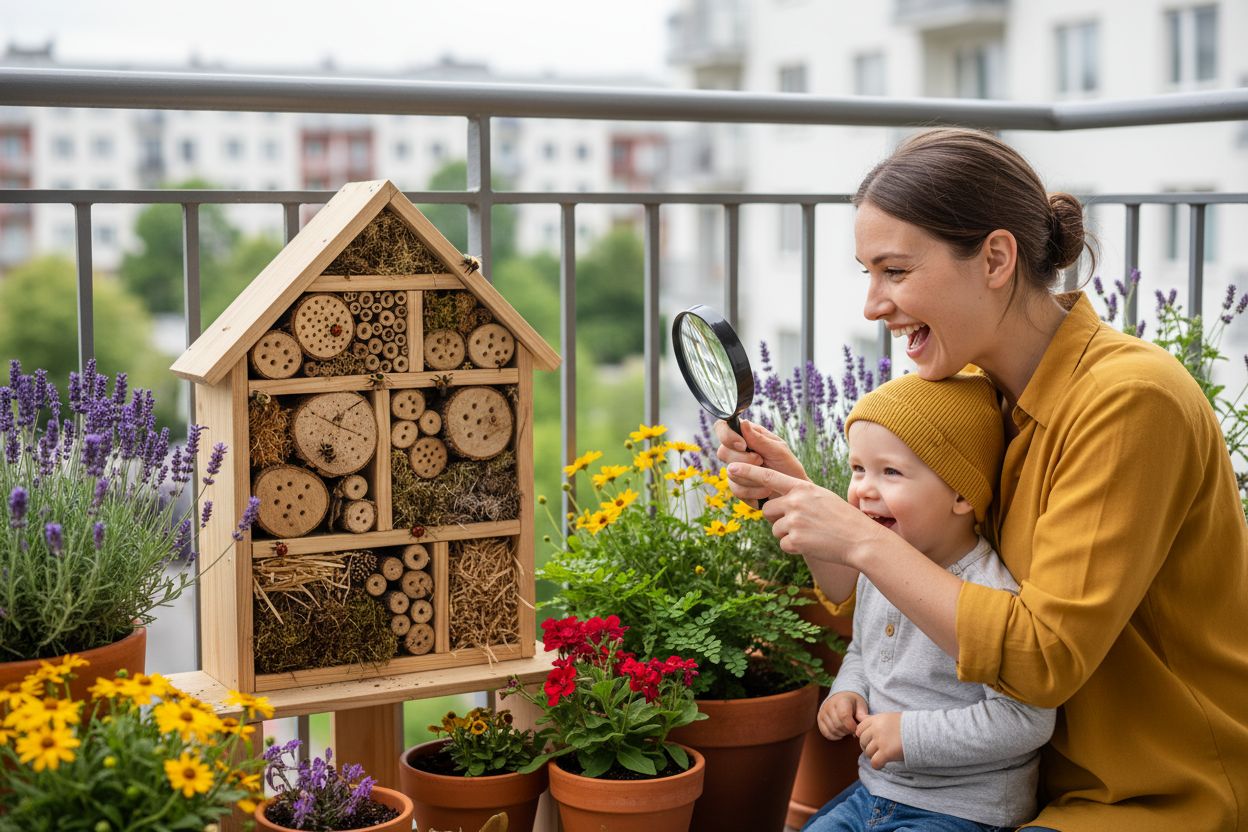 This project is about learning teamwork cooperation and respect for tiny garden residents.
With materials gathered and tools prepared you are now ready to move on to designing the actual structure of your insect sanctuary. Get ready for some creative building in the next step!
Step 2: Build a sturdy insect hotel structure
Now that you have gathered your materials like an adventurous bug hotel architect its time to transform those collected treasures into a welcoming sanctuary for garden insects. Building a stable structure is crucial for creating a safe habitat that will attract and protect tiny residents.
According to Stiga garden experts, the foundation of your insect hotel should be constructed using untreated wood at least 8 mm thick. Think of this like creating a cosy apartment complex for your garden friends. You will want to create a frame that is roughly 12 cm deep but no wider than 20 cm to ensure stability.
Start by selecting a wooden box or cupboard as your base. Climate conservation research suggests positioning your hotel about 1 2 metres off the ground in a location sheltered from direct sunlight and heavy rain. The ideal spot would face north east ensuring a balanced environment for your insect inhabitants.
When assembling your hotel, work on a flat surface and create multiple compartments using your collected materials. Each section can house different types of insects wood boring beetles might prefer hollow sticks while solitary bees love bamboo segments. Think of it like designing different rooms with unique characteristics.
Pro Tip: Add a waterproof roof to protect your insect residents from unexpected rain showers. This simple addition can make a huge difference in creating a stable microhabitat.
Ensure that your structure does not swing or move in the breeze. A firmly anchored hotel provides safety and comfort for its tiny guests. Secure your construction carefully using screws or strong twine so it remains steady through wind and weather.
With your sturdy insect hotel taking shape you are now ready to fill it with the natural materials you collected earlier. Get ready to transform your wooden frame into a bustling bug metropolis in the next exciting step!
Step 3: Fill compartments with insect-friendly items
With your sturdy wooden frame ready it is time to transform your insect hotel into a buzzing paradise that will welcome a diverse range of tiny garden residents. This step is all about creating inviting spaces that mimic different natural habitats your local insects will love.
According to the Royal Horticultural Society, your goal is to create a variety of spaces with different textures and moisture levels. Think of yourself as an interior designer for insects preparing unique accommodation zones.
Start by gathering your collected materials and sorting them into different compartments. Wikipedia bee hotel research suggests using horizontal tubes like bamboo canes and reeds that are 12 20 cm long. For solitary bees the most attractive tubes have diameters between 2 and 5 mm.
Create diverse zones within your hotel:
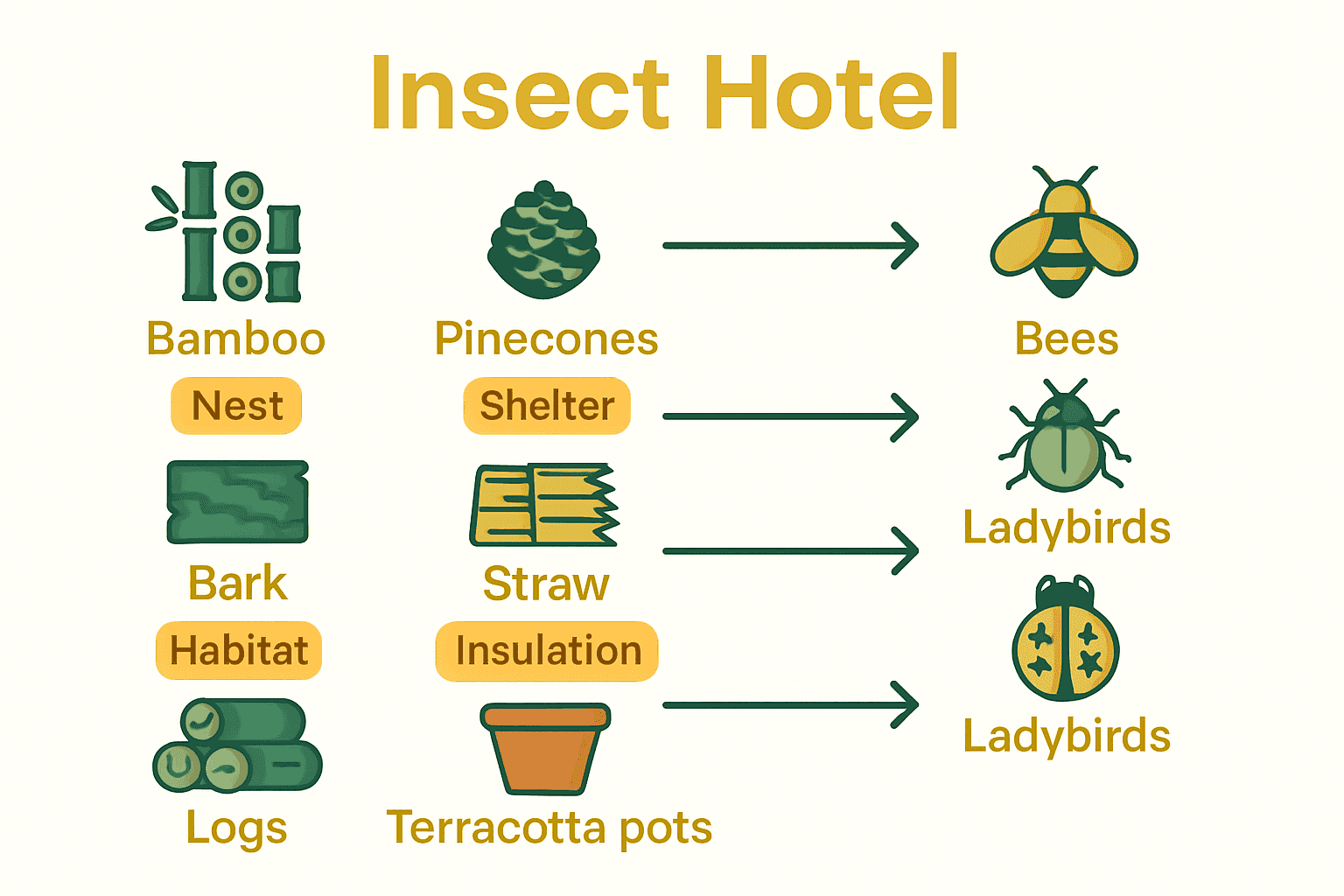
Here’s a comparison of commonly used natural materials and their benefits for insect hotel compartments:
| Material | Attracts | Key Benefits |
|---|---|---|
| Bamboo canes | Solitary bees | Ideal tube size Dry habitat |
| Pinecones | Beetles | Good ventilation Texture |
| Straw | Ladybirds | Insulation Hiding spaces |
| Bark | Beetles Spiders |
Moist areas Natural crevices |
| Logs (drilled) | Wood boring insects | Nesting holes Durability |
| Terracotta pots | Spiders Woodlice |
Retains moisture Shelter |
| Hollow twigs | Bees Small insects |
Accessible Lightweight |
- Dry areas with pinecones and bark for beetles
- Straw sections for ladybirds
- Bamboo canes for solitary bees
- Logs with small drilled holes for wood boring insects
- Terracotta pot fragments for spiders and woodlice
Pro Tip: Pack materials loosely to allow insects to move freely and create air pockets. Avoid using treated wood or materials that might have been exposed to chemicals.
Ensure each compartment offers a slightly different environment. Some areas should remain slightly damp while others stay dry. This variation will attract a wider range of invertebrate guests.
Remember to keep your insect hotel clean. According to bee experts you should plan to replace or clean materials annually to prevent disease transmission and maintain a healthy habitat for your tiny residents.
With your compartments carefully filled you have now created a welcoming microhabitat that will support local biodiversity. Your next step is to find the perfect location to install this amazing insect sanctuary!
Step 4: Install the hotel in your garden or balcony
You have crafted a spectacular home for garden insects and now comes the exciting moment of finding its perfect spot. Choosing the right location is like selecting prime real estate for your tiny new neighbours who will transform your garden into a thriving ecosystem.
According to Stiga garden experts, your insect hotel should be positioned at least 1 metre above ground. Look for creative mounting options like sturdy brick walls, tree branches or dedicated garden stands that provide a stable foundation.
Climate conservation research recommends finding a location with strategic sun exposure. Aim for a spot that receives gentle morning sunlight preferably facing north east. This orientation provides warmth without scorching your delicate insect residents.
Consider these key placement factors:
- Sheltered from strong winds
- Protected from heavy rainfall
- Close to flowering plants
- Away from direct afternoon sunlight
- Near natural vegetation
Pro Tip: Ensure your hotel is firmly anchored. A wobbly structure will discourage insects from making it their home.
If you live in an apartment do not worry. Balconies with potted plants can also make excellent locations for smaller insect hotels. The key is creating a microclimate that feels safe and inviting for your tiny garden allies.
Make installation a family activity. Let your children help position the hotel and observe the excitement of watching potential insect residents explore their new home. Talk about how each tiny creature plays a crucial role in maintaining garden health.
With your insect hotel now perfectly positioned you have completed an amazing project that supports local biodiversity. Get ready to become a keen observer of the small wonders that will soon call your creation home!
Step 5: Check and maintain your insect hotel regularly
Congratulations on creating a magnificent sanctuary for garden insects. Just like any home your insect hotel needs regular care and attention to remain a healthy habitat for its tiny residents. Think of yourself as a property manager for the smallest tenants in your garden ecosystem.
Climate conservation research suggests monitoring your hotel for signs of life. Look for buzzing sounds and observe whether tube entrances are plugged with clay or resin which indicates active inhabitants. These small details tell fascinating stories about your garden community.
According to Wikipedia bee hotel experts, annual cleaning is crucial. Plan a yearly maintenance routine where you carefully remove old brood cells and inspect for potential parasites. This helps maintain a healthy environment for future generations of insects.
Here are some maintenance tips to keep your insect hotel thriving:
- Brush away accumulated spider webs
- Check for moisture damage
- Remove degraded materials
- Inspect for signs of pest invasion
- Ensure the structure remains stable
Pro Tip: Wear gloves during maintenance and avoid disturbing active nesting areas. Insects are sensitive to sudden changes in their environment.
Make maintenance a fun family activity. Teach your children about the importance of these tiny creatures and how small acts of care can support local biodiversity. Use a magnifying glass to explore the intricate world living within your hotel.
Choose wood materials that naturally resist splitting and fungal growth. This reduces the frequency of replacements and provides a more stable long term habitat for your insect residents.
Remember that your insect hotel is more than just a project. It is a living ecosystem that connects your family to the incredible world of garden wildlife. Enjoy watching your tiny tenants thrive and contribute to the natural balance of your outdoor space!
Boost Outdoor Creativity and Bond with Nature Using The Zoofamily
Are you searching for ways to make your family’s bug hotel adventures even more memorable while nurturing a genuine love for the environment? Building insect hotels lets you and your children explore nature’s wonders up close, but finding tools that deepen these connections can be a challenge. The article highlighted how vital it is to foster teamwork and curiosity about the natural world, especially when children discover tiny details and habitats during hands-on activities.
With The Zoofamily, you can make every outdoor experience magical. Our specially designed kids’ cameras, walkie-talkies and binoculars are not just gadgets. They are gateways to a closer bond with nature and with each other. Imagine your children using a camera with animal references to document every discovery, or binoculars to spot insects fluttering around their homemade hotel. Every purchase directly helps restore natural beauty for future generations, as for every camera sold we plant a tree.
Ready to level up your next nature project and inspire a lifelong passion for the environment? Visit The Zoofamily’s official site to find interactive tools that match your budding explorer’s spirit. Act today to turn your garden adventures into lasting memories and be part of a growing movement to protect our planet.
Frequently Asked Questions
How can I make an insect hotel at home with my kids?
Start by gathering natural materials like bamboo canes, pinecones, and hollow sticks. Involve your kids in a fun nature walk to collect these items and ensure you have safe tools like gloves and a child-safe screwdriver for assembly.
What materials should I use to fill the compartments of the insect hotel?
Use a variety of natural materials such as dry leaves, bark, and small logs with drilled holes. Create different zones within your hotel to attract various insects, ensuring each section offers a different moisture level and texture.
How often should I maintain the insect hotel?
Plan to check and clean your insect hotel at least once a year. During maintenance, remove old materials and inspect for signs of infestation or moisture damage to ensure a healthy environment for the insects.
Where is the best location to install the insect hotel in my garden?
Install your insect hotel at least 1 meter above ground in a sheltered area that receives gentle morning sunlight. Aim to place it close to flowering plants and away from direct afternoon sun to create a welcoming environment for tiny residents.
What safety precautions should I take when building an insect hotel with children?
Ensure adult supervision when using tools and provide child-friendly equipment. Always wear gloves and safety glasses to protect everyone involved, especially during assembly and maintenance tasks.
What types of insects will be attracted to my insect hotel?
Your insect hotel can attract a range of beneficial insects like solitary bees, ladybugs, and beetles, depending on the materials you use. By creating diverse compartments with varying textures and moisture levels, you can invite different species into your garden habitat.
Recommended
- Bricolages avec coquillages : Créez des cadeaux uniques pour enfants – The Zoofamily
- Fabriquer un abri à hérisson : abri écologique pour vos enfants – The Zoofamily
- Eco Friendly Cleaning Tips For Busy European Mums – The Zoofamily
- Making Learning Fun: Engaging Activities for Your Kids – The Zoofamily