

More than 60% of adults report experiencing at least one adverse childhood experience, yet many parents remain unaware of how profoundly trauma shapes developing brains. Childhood trauma doesn’t just create emotional wounds; it triggers measurable physical changes in brain structure and function that can persist into adulthood. Understanding these biological impacts empowers parents to create nurturing environments that support healing and resilience in their children.
Table of Contents
- Understanding The Impact Of Childhood Trauma On Brain Development
- The Biological Embedding Of Trauma: Epigenetics And Brain Chemistry
- Brain Regions Most Affected By Childhood Trauma
- Supporting Children’s Resilience And Brain Recovery After Trauma
- How We Can Help Your Family Thrive
Key takeaways
| Point | Details |
|---|---|
| Trauma changes brain structure | Adverse childhood experiences cause measurable reductions in grey matter and alter key regions including the amygdala and prefrontal cortex. |
| Biological embedding occurs | Trauma affects gene expression through epigenetic mechanisms, influencing stress hormone regulation and inflammatory responses. |
| Mental health risks increase | Early adversity significantly raises vulnerability to depression, anxiety, and other psychiatric conditions later in life. |
| Recovery is possible | The brain’s neuroplasticity allows substantial healing when children receive early intervention and supportive care. |
Understanding the impact of childhood trauma on brain development
Adverse childhood experiences (ACEs) encompass a range of harmful events during development, including physical or emotional abuse, neglect, household dysfunction, and witnessing violence. These experiences don’t simply fade with time; they fundamentally reshape how the brain develops and functions.
Research reveals that adverse childhood experiences significantly increase lifelong vulnerability to depression and reduce how well individuals respond to treatment later in life. The consequences extend far beyond temporary distress, as early adversity alters brain architecture in ways that heighten susceptibility to mental health disorders.
The brain changes associated with childhood trauma manifest in several critical ways:
- Structural alterations including reduced volume in key regions
- Functional disruptions affecting emotional processing and regulation
- Connectivity changes between brain networks
- Chemical imbalances in neurotransmitter systems
- Heightened stress response activation
These modifications particularly affect systems responsible for emotional regulation, threat detection, and stress management. The developing brain adapts to threatening environments by becoming hypervigilant and reactive, changes that may persist even after the danger has passed.
Understanding childhood trauma brain development 2026 research helps parents recognise that behavioural challenges often stem from biological adaptations rather than wilful disobedience. This knowledge transforms how we approach supporting affected children.
The biological embedding of trauma: epigenetics and brain chemistry
Trauma doesn’t just affect the brain through experience alone; it becomes biologically embedded through molecular mechanisms that alter how genes function. Epigenetics refers to changes in gene expression that occur without modifying the DNA sequence itself, like volume controls that turn genes up or down.
Two primary epigenetic mechanisms mediate trauma’s effects. DNA methylation adds chemical tags to genes that typically silence or reduce their activity. MicroRNAs (miRNAs) are tiny molecules that regulate which genes get translated into proteins. Epigenetic mechanisms such as DNA methylation and altered miRNAs create lasting links between early adversity and changes in brain development and function.
Childhood trauma particularly affects genes controlling the stress response system. The hypothalamic-pituitary-adrenal (HPA) axis regulates cortisol, our primary stress hormone. Research shows hypermethylation of the NR3C1 gene disrupts cortisol balance after adverse childhood experiences, leading to either excessive or blunted stress responses.
These biological changes have cascading effects:
- Altered inflammatory responses in the brain
- Disrupted synaptic plasticity affecting learning and memory
- Changed expression of growth factors supporting neuron health
- Modified neurotransmitter receptor sensitivity
Pro Tip: Understanding that trauma creates biological changes helps parents approach their child’s struggles with compassion rather than frustration, recognising that healing requires patience and support.
The relationship between childhood brain development guide resources and epigenetic understanding highlights why early intervention matters so profoundly. These molecular changes are most malleable during childhood when the brain retains maximum plasticity.
Brain regions most affected by childhood trauma
Specific brain structures show particularly pronounced alterations following childhood trauma. Understanding which regions change and how they normally function illuminates why certain difficulties emerge.

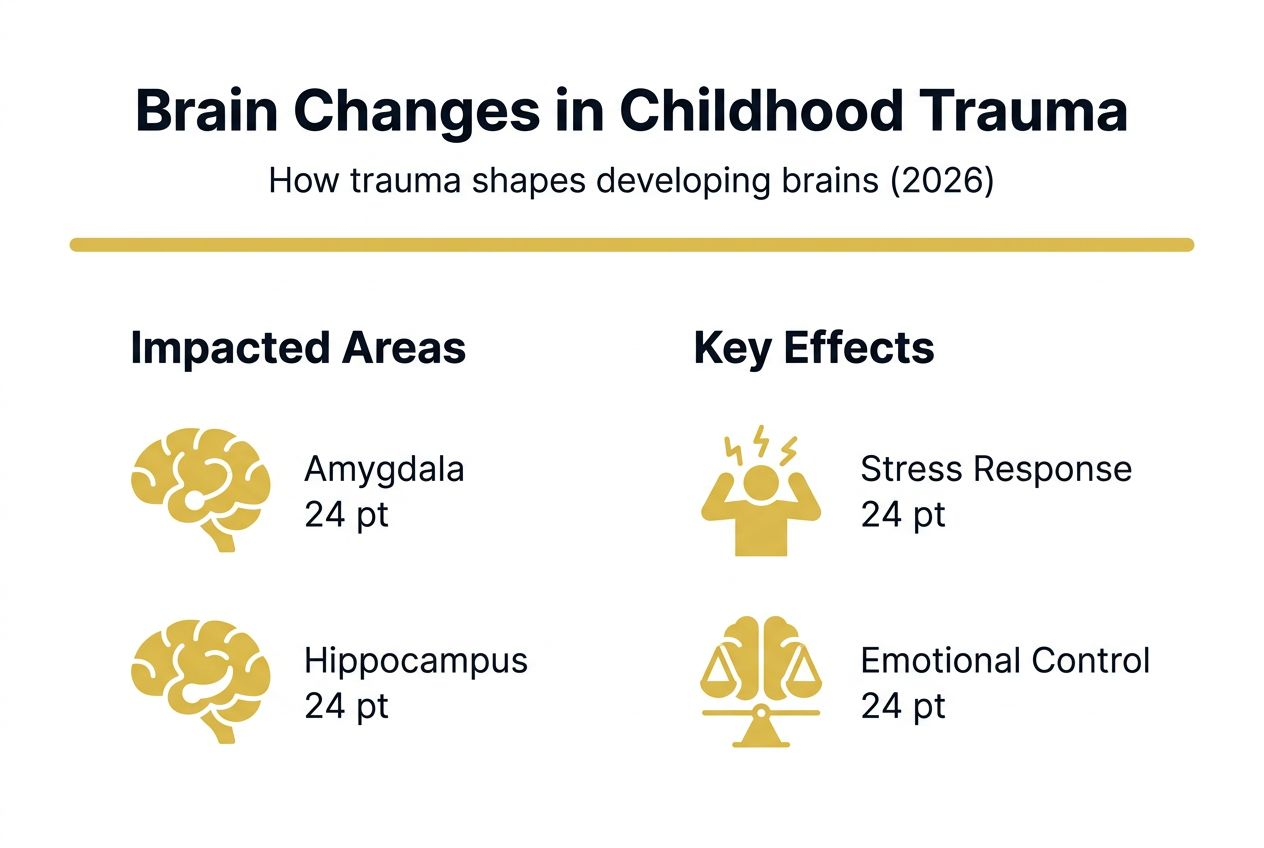
| Brain Region | Primary Function | Trauma-Related Changes |
|---|---|---|
| Amygdala | Threat detection and fear processing | Increased activity and altered volume leading to heightened anxiety |
| Prefrontal Cortex | Executive function and emotional regulation | Reduced volume and connectivity affecting impulse control |
| Hippocampus | Memory formation and stress regulation | Volume reductions impairing memory and context discrimination |
| Parahippocampal Gyrus | Spatial memory and emotional context | Structural changes affecting emotional memory processing |
The amygdala, our brain’s alarm system, becomes hyperactive after trauma exposure. This heightened sensitivity means children may perceive threats where none exist, responding with fear or aggression to benign situations. Simultaneously, the prefrontal cortex, which normally helps regulate emotional responses, shows weakened connections to the amygdala.
Research demonstrates that individuals with 3+ ACEs show grey matter reductions in limbic and frontal regions, with severity correlating to ACE count. These structural changes aren’t merely correlational; they predict difficulties with:
- Emotional regulation and impulse control
- Memory consolidation and retrieval
- Discriminating between past trauma and present safety
- Managing stress responses appropriately
Neurotransmitter systems also undergo modification. Serotonin, dopamine, and norepinephrine networks show altered function, contributing to mood disturbances, motivation problems, and attention difficulties. Understanding neurological development early years emphasises how critical this developmental window is for establishing healthy brain architecture.
Supporting children’s resilience and brain recovery after trauma
Whilst childhood trauma creates significant brain changes, the story doesn’t end with damage. The brain’s remarkable neuroplasticity means recovery remains possible, particularly when children receive appropriate support during critical developmental periods.
Supportive environments can enhance neuroplasticity and help recover brain function after trauma, particularly when intervention occurs early. The developing brain retains extraordinary capacity for reorganisation and healing when provided with safety, stability, and nurturing care.
Parents can take specific evidence-based steps to support their child’s recovery:
- Establish safety and predictability. Create consistent routines and a physically and emotionally safe home environment where children know what to expect.
- Provide responsive emotional support. Validate feelings, offer comfort during distress, and help children develop language for their emotions.
- Seek professional intervention early. Early intervention is critical to reduce long-term mental health risks, so consult trauma-informed therapists when needed.
- Promote healthy lifestyle habits. Ensure adequate sleep, nutritious food, and regular physical activity, all supporting brain health and stress regulation.
- Practice patience and understanding. Recognise that challenging behaviours often represent trauma responses rather than defiance, responding with compassion.
- Foster secure attachment. Consistent, loving caregiving helps rewire stress response systems and builds resilience.
Pro Tip: Children’s brains are most plastic during early and middle childhood, making these years optimal windows for intervention and recovery support.
Understanding brain development in middle childhood helps parents recognise ongoing opportunities for positive influence. Recovery isn’t instantaneous, but consistent nurturing care creates cumulative healing over time.
The goal isn’t to erase trauma’s impact entirely but to build new, healthier neural pathways that allow children to regulate emotions, form secure relationships, and develop resilience. With appropriate support, many children show remarkable recovery and go on to thrive.
How we can help your family thrive
At The Zoofamily, we understand that supporting children’s healthy development requires more than awareness; it requires creating enriching environments that foster connection, creativity, and joy. Our mission centres on helping families build nurturing experiences that support children’s emotional and cognitive growth.

Whilst professional intervention remains essential for trauma recovery, everyday moments of connection and exploration contribute to healing. Our thoughtfully designed cameras, walkie-talkies, and binoculars encourage children to engage with nature and each other, creating positive experiences that support healthy brain development. Explore resources and tools at The Zoofamily to discover how we support families in creating environments where children flourish.
FAQ
How does childhood trauma affect brain development long-term?
Childhood trauma creates lasting structural and functional brain changes that increase vulnerability to mental health conditions including depression, anxiety, and post-traumatic stress disorder. However, these changes don’t guarantee poor outcomes; recovery is possible with appropriate support. The severity and duration of trauma, alongside protective factors like supportive caregiving, determine long-term impacts. Early intervention significantly improves outcomes by capitalising on childhood neuroplasticity.
Can a child’s brain fully recover after trauma?
The brain’s remarkable plasticity allows significant recovery, especially during childhood when neural reorganisation capacity peaks. Supportive caregiving, trauma-informed therapy, and stable environments help rebuild affected brain functions and establish healthier neural pathways. Recovery varies based on trauma severity, timing, duration, and the quality of post-trauma support. Whilst some changes may persist, most children show substantial improvement with appropriate intervention and nurturing care.
What can parents do to help if their child has experienced trauma?
Create a safe, stable, and loving environment with consistent routines that help children feel secure and predict what comes next. Seek professional help early from trauma-informed therapists who specialise in childhood trauma recovery. Be patient and understand that challenging behaviours often represent trauma responses rather than wilful misbehaviour. Promote healthy routines including adequate sleep, nutritious meals, regular physical activity, and stress management techniques. Most importantly, provide consistent emotional support and validation whilst building secure attachment through responsive caregiving.
What are the most common signs that trauma has affected my child’s brain?
Common indicators include heightened emotional reactivity, difficulty regulating emotions, persistent anxiety or fearfulness, problems with attention and concentration, and memory difficulties. Children may show hypervigilance, scanning environments for threats even when safe. Sleep disturbances, regression to earlier developmental stages, and difficulty forming trusting relationships also suggest trauma impact. Physical symptoms like headaches or stomach aches without medical cause may appear. If you observe these signs, consult healthcare professionals for proper assessment and support.
At what age is the brain most vulnerable to trauma’s effects?
The brain shows particular vulnerability during periods of rapid development, especially from birth through age five when foundational neural architecture forms. However, middle childhood and adolescence also represent sensitive periods when trauma can significantly impact developing systems. Earlier trauma often creates more pervasive effects because it occurs whilst basic brain structures are forming. That said, trauma at any age can affect development, and the brain retains plasticity throughout childhood, meaning intervention at any stage offers recovery potential.