

Did you know that children who engage in independent play show better problem-solving and emotional self-regulation skills than those who rely on constant adult guidance? When kids learn to play on their own, they build confidence, creativity, and decision-making abilities. This approach lays the groundwork for lifelong learning and resilience. Understanding how independent play benefits your child can make all the difference in shaping their growth, offering practical ways to support their journey to self-reliance.
Table of Contents
- What Is Independent Play for Children?
- Key Benefits of Nurturing Independent Play
- Methods to Encourage Independent Play Daily
- Choosing Age-Appropriate Toys and Spaces
- Common Challenges and Practical Solutions
Key Takeaways
| Point | Details |
|---|---|
| Independent Play is Essential for Development | It fosters creativity, personal autonomy, and critical life skills like problem-solving and emotional self-regulation. |
| Create a Supportive Environment | Provide safe spaces and open-ended toys to enhance children’s exploratory play without constant adult intervention. |
| Gradual Introduction is Key | Start with short independent play sessions to build confidence and slowly increase duration as children become comfortable. |
| Expect Challenges and Adapt | Address issues like child resistance through structured freedom and positive reinforcement to normalize and encourage solo play. |
What Is Independent Play for Children?
Independent play represents a powerful developmental stage where children explore, create, and learn entirely on their own terms. Solitary play allows young minds to engage in self-directed activities without structured adult guidance, fostering crucial developmental skills and personal autonomy.
According to research from UNICEF, independent play enables children to choose their own materials and direct their play experience, which substantially supports creativity and personal decision-making abilities. Children essentially become directors of their own imaginative worlds, selecting toys, designing scenarios, and problem-solving independently.
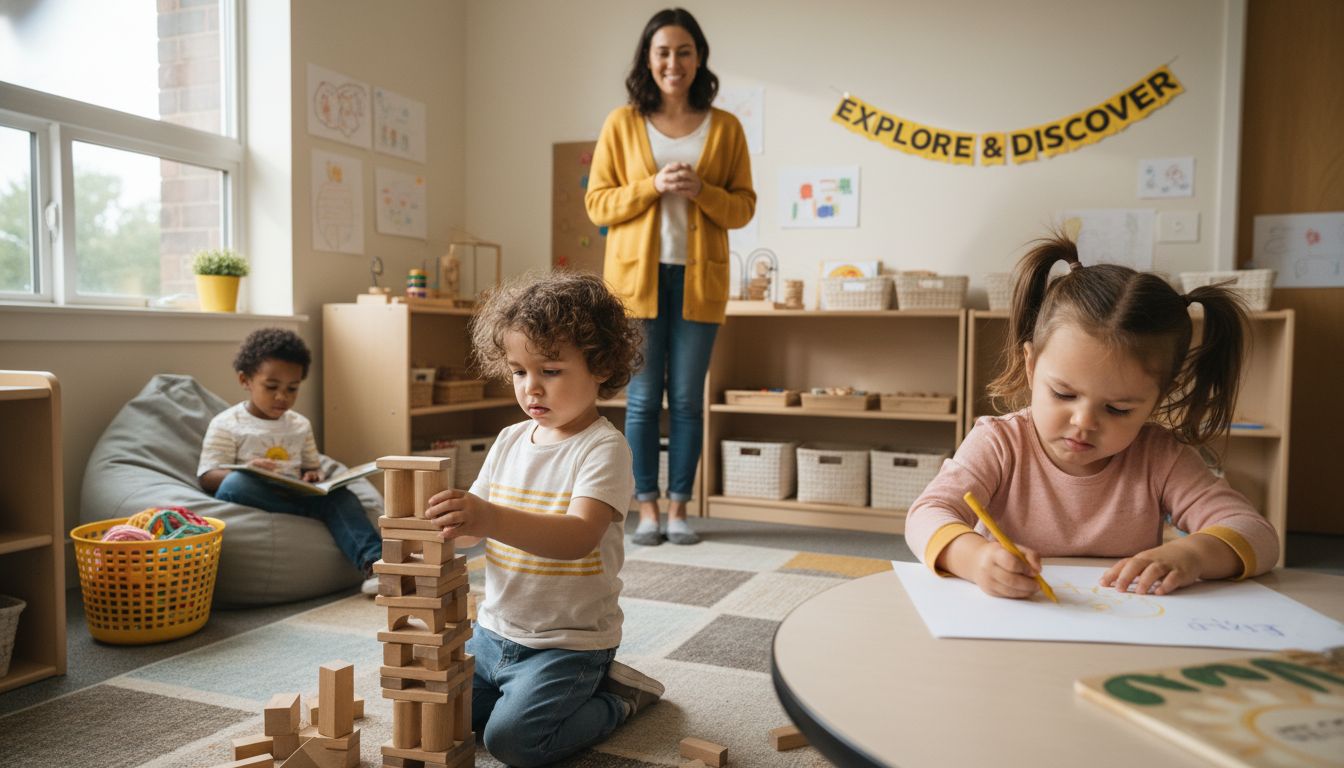
The developmental benefits are profound. As studies from Healthline indicate, independent play helps children learn critical life skills such as:
- Self-entertainment strategies
- Personal creativity
- Problem-solving capabilities
- Emotional self-regulation
- Intrinsic motivation
Understanding independent play requires recognizing it as more than just playing alone - it’s a sophisticated learning process where children develop fundamental cognitive and emotional competencies. For parents interested in supporting this crucial developmental stage, exploring engaging activities for kids can provide additional insights into nurturing independent play experiences.
Key Benefits of Nurturing Independent Play
Nurturing independent play transforms childhood development, providing children with extraordinary opportunities to build fundamental life skills through self-directed exploration. Cognitive development receives a significant boost when children are allowed to play autonomously, creating a foundation for future learning and personal growth.
According to research from Pathways.org, independent play profoundly enhances multiple developmental domains. Children develop critical skills such as creativity, problem-solving, self-confidence, and emotional self-regulation by exploring their interests without constant adult intervention. These experiences help children learn to trust their own judgment and develop intrinsic motivation.
The comprehensive benefits of independent play extend across several key developmental areas:
Here’s a summary of key developmental benefits fostered by independent play:
| Developmental Area | Skills Developed | How Independent Play Helps |
|---|---|---|
| Cognitive | Problem-solving Decision-making |
Encourages creative thinking and exploration |
| Emotional | Self-regulation Emotional understanding |
Builds resilience and emotional control |
| Social | Cooperation Negotiation |
Fosters imagination-led social skills through solitary scenarios |
| Physical | Coordination Spatial awareness |
Promotes movement and sensory discovery |
| Creative | Imaginative thinking | Enables free-form, inventive play experiences |
- Cognitive Skills: Enhanced problem-solving capabilities
- Emotional Intelligence: Improved self-regulation and emotional understanding
- Social Development: Learning cooperation and negotiation through personal exploration
- Physical Coordination: Spontaneous movement and spatial awareness
- Creative Thinking: Unrestricted imaginative exploration
Building on insights from NIF Play Research, independent play supports holistic child development by providing a natural, unstructured environment where children can experiment, make mistakes, and learn at their own pace. For parents seeking deeper insights into childhood development, exploring our guide on childhood brain development can offer additional context and understanding.
Methods to Encourage Independent Play Daily
Nurturing independent play requires intentional strategies that help children develop confidence and autonomy in their playtime experiences. Creating a supportive environment is the first crucial step in encouraging children to explore and learn independently, without constant parental intervention.
According to research from Prevea Health, encouraging independent play involves carefully crafting a safe, stimulating space where children can freely explore. This means providing open-ended toys that spark imagination, designing play areas that feel secure, and gradually increasing playtime duration to build a child’s self-assurance.
Key methods to foster daily independent play include:
- Set Up Safe Exploration Zones: Designate child-friendly areas with age-appropriate toys
- Offer Open-Ended Toys: Choose items that encourage creative problem-solving
- Start Small: Begin with short, supervised independent play sessions
- Avoid Constant Interruption: Resist the urge to direct or correct play constantly
- Show Subtle Interest: Occasionally glance and smile, but don’t actively engage
Drawing from insights by Cornell Community Education, parents can further support independent play by allowing children to make their own choices and supporting their interests without direct involvement.
For parents looking to enhance their understanding of child development, our guide on imaginative play offers additional perspectives on nurturing creative exploration.
Choosing Age-Appropriate Toys and Spaces
Designing an environment that supports independent play requires thoughtful selection of toys and spaces that match a child’s developmental stage and cognitive abilities. The right environment transforms play from a supervised activity into a rich, self-directed learning experience that nurtures creativity and autonomy.
According to UNICEF Parenting Research, creating safe play spaces enables children to explore and learn at their own pace. This means carefully curating an environment that offers age-appropriate challenges while maintaining physical safety and emotional security.
Key considerations for selecting toys and creating play spaces include:
- Developmental Alignment: Choose toys that match current cognitive and motor skills
- Safety First: Ensure play areas are free from potential hazards
- Variety of Textures: Provide toys with different materials and sensory experiences
- Open-Ended Options: Select items that can be used in multiple ways
- Rotate Toy Selection: Keep play interesting by periodically changing available toys
Research from Prevea Health emphasizes that toys matching a child’s developmental stage directly support skill development and independent exploration. For parents seeking additional inspiration for creating engaging play environments, our guide on nature and Montessori discoveries offers valuable insights into child-centered learning approaches.
Common Challenges and Practical Solutions
Parents often encounter roadblocks when introducing independent play, with child resistance and short attention spans presenting significant hurdles. Understanding these challenges is the first step towards creating a supportive environment that encourages autonomous exploration and self-directed learning.
According to research from Prevea Health, addressing independent play challenges requires setting clear expectations and gradually increasing playtime duration. This approach helps children build confidence and develop the skills necessary for sustained solo play, transforming initial reluctance into genuine engagement.
Practical strategies to overcome common independent play challenges include:
- Start Small: Begin with short 5-10 minute independent play sessions
- Create Structured Freedom: Provide clear play boundaries while allowing creativity
- Use Engaging Materials: Select toys that naturally spark curiosity
- Normalize Solo Play: Demonstrate that playing alone can be enjoyable
- Maintain Positive Reinforcement: Offer gentle encouragement without interruption
Drawing insights from Cornell Community Education, parents can help children overcome dependency by creating opportunities for independent decision-making and exploration. For additional strategies on nurturing children’s creativity, our guide on imaginative play offers comprehensive insights into supporting children’s natural learning processes.
Inspire Independent Play and Discover Nature Together
Fostering independent play can sometimes be challenging when children need just the right spark to ignite creativity and confidence. This article highlights how important it is to provide safe, open-ended toys and environments that encourage problem-solving and imaginative thinking. At The Zoofamily, we understand these key needs and have crafted kids’ cameras, walkie-talkies, and binoculars designed specifically to engage young explorers in meaningful, nature-inspired play. Each product encourages children to direct their own adventures and develop crucial skills while connecting with the world around them.
Boost your child’s creativity today with tools that promote self-directed play and curiosity. Visit The Zoofamily to discover how our nature-inspired products can nurture independent play and inspire lifelong learning. Explore our thoughtful collection and learn more about making learning fun with engaging activities for kids or deepen your understanding through our childhood brain development guide for European mums. Embrace the chance to empower your child’s growth and protect our planet today.
Frequently Asked Questions
What is independent play for children?
Independent play is a developmental stage where children engage in self-directed activities without adult guidance, fostering creativity, problem-solving skills, and personal autonomy.
How can I encourage my child to engage in independent play?
To encourage independent play, create a safe exploration zone with age-appropriate toys, offer open-ended materials, start with short supervised sessions, and gradually extend playtime.
What are the developmental benefits of independent play?
Independent play enhances cognitive skills, emotional intelligence, social development, physical coordination, and creative thinking, allowing children to learn and grow at their own pace.
What types of toys support independent play?
Select open-ended toys that match a child’s developmental stage, provide a variety of textures, and allow for multiple uses, promoting creativity and exploration.
Recommended
- Making Learning Fun: Engaging Activities for Your Kids – The Zoofamily
- Understanding the Benefits of Imaginative Play – The Zoofamily
- Making Learning Fun: Engaging Activities for Your Kids – The Zoofamily
- 7 Astuces pour explorer la nature et decouvertes montessori – The Zoofamily
- Disability-Friendly Baby Gates: Renter-Safe & Sensory-Smart | Baby Safety Gates