

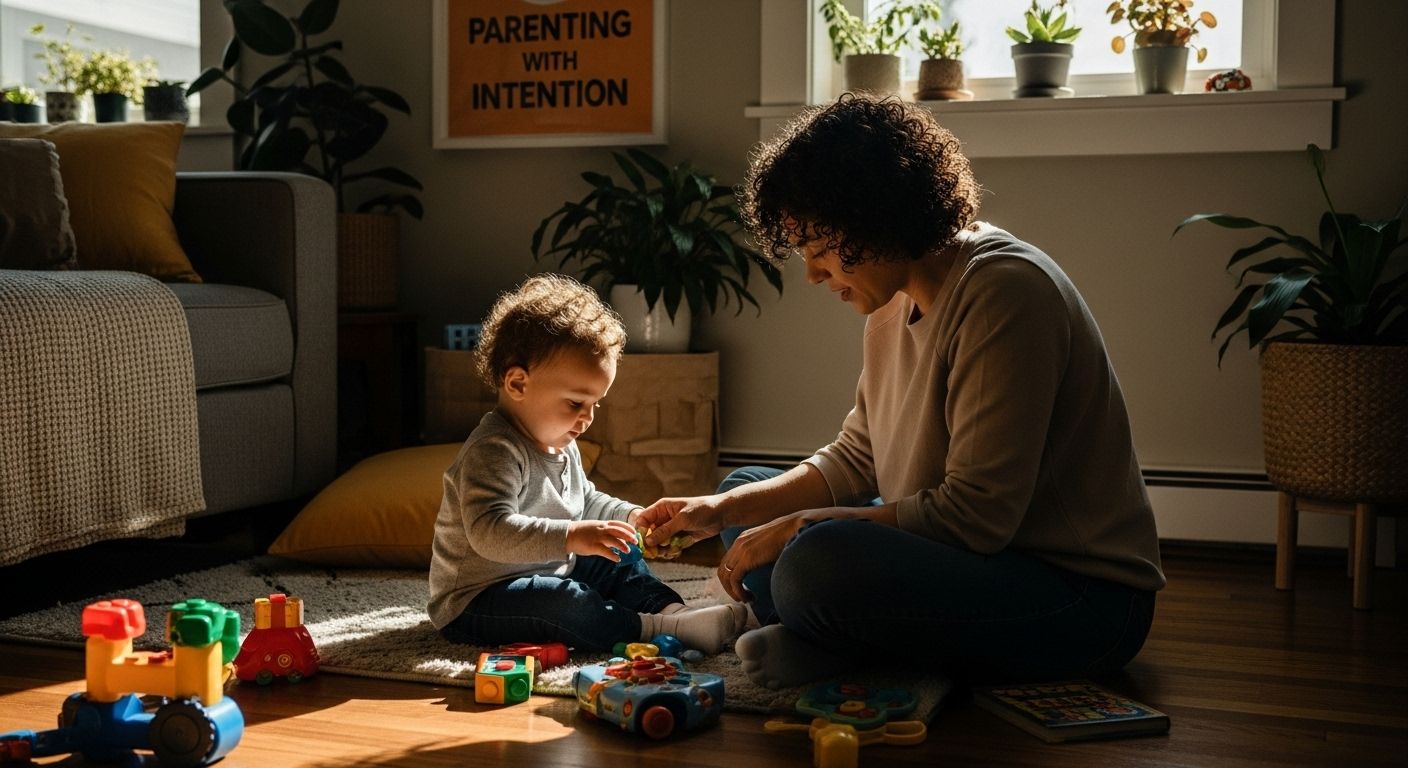
Parenting styles have a powerful impact on children and their futures. Research shows that intentional parenting can improve a child’s resilience and emotional skills by up to 40 percent compared to more reactive methods. Many believe that great parenting relies mainly on instincts or tradition. The real difference comes from proactive choices and mindful involvement that shape far more than just a daily routine.
Table of Contents
- What Is Parenting With Intention And Its Core Principles?
- Why Does Parenting With Intention Matter For Modern Families?
- How Parenting With Intention Affects Child Development And Well-Being?
- Key Concepts And Theories Behind Intentional Parenting Practices
Quick Summary
| Takeaway | Explanation |
|---|---|
| Engage mindfully with children | Intentional parenting involves conscious engagement, enhancing emotional and cognitive development through focused interactions. |
| Create predictable routines | Establishing routines helps provide emotional security, enabling children to thrive in a stable environment and feel safe. |
| Model emotional intelligence | Parents should exemplify healthy emotional behaviours, as children learn to navigate emotions by observing their parents. |
| Encourage open communication | Maintaining open and honest dialogues fosters trust and helps children express their feelings and thoughts confidently. |
| Emphasise individual needs | Recognising and adapting to each child’s unique personality ensures tailored support for their growth and development. |
What is Parenting with Intention and Its Core Principles?
Parenting with intention transforms traditional childcare approaches by emphasising deliberate, mindful engagement with children. Unlike reactive parenting, this method focuses on proactive decision making that considers long-term child development and emotional well-being.
Understanding Intentional Parenting
Intentional parenting represents a conscious approach to raising children where parents actively shape their interactions and environments to support holistic growth. According to research from the National Center for Biotechnology Information, this approach encompasses five critical dimensions:
- Listening with complete attention
- Accepting children without judgment
- Recognising emotional states in both parent and child
- Practicing self-regulation during challenging interactions
- Demonstrating compassion consistently
Parents who adopt this philosophy understand that every interaction is an opportunity for learning and connection. They move beyond basic caregiving to create meaningful developmental experiences that nurture children’s cognitive, emotional, and social capabilities.
Core Principles of Intentional Parenting
The foundation of intentional parenting rests on several fundamental principles. Parents commit to understanding their children’s unique personalities, creating supportive environments, and developing strategies that respect individual developmental stages.
Key principles include:
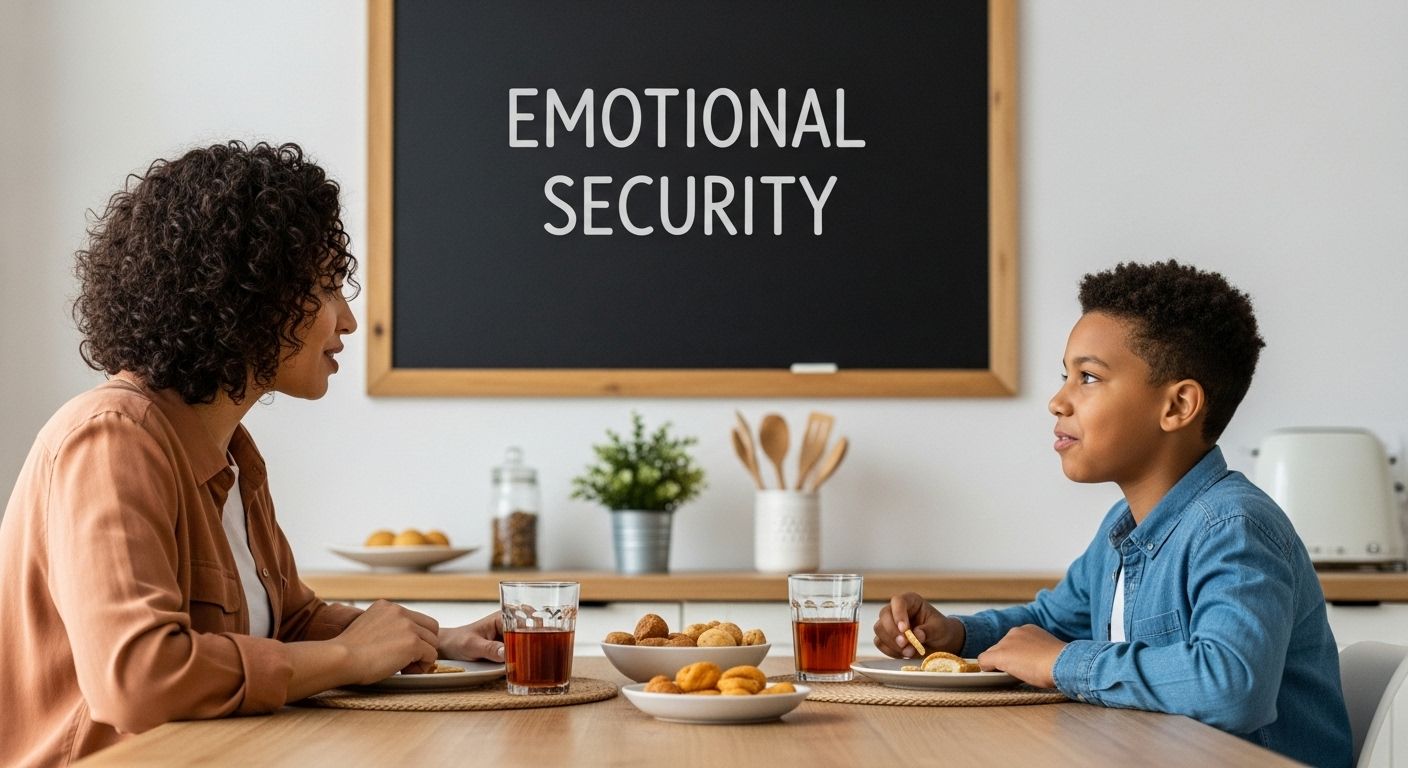
- Establishing predictable routines that provide children with emotional security
- Communicating openly and honestly
- Setting clear boundaries with empathy
- Modelling desired behaviours and emotional intelligence
- Prioritising relationship building over strict control
By integrating these principles, parents create a nurturing framework that supports children’s growth while maintaining strong, trusting relationships.
The following table compares the core principles of intentional parenting with those of traditional (often reactive) parenting, helping clarify their distinctions and benefits.
| Principle | Intentional Parenting | Traditional/Reactive Parenting |
|---|---|---|
| Approach | Proactive, mindful, deliberate | Instinctual, often habitual or reactive |
| Communication | Open, honest, prioritises dialogue | May be one-sided or inconsistent |
| Boundaries | Clear, enforced with empathy | Often rigid or inconsistent |
| Emotional Modelling | Models emotional intelligence and self-regulation | Emotional responses often unexamined |
| Relationship Focus | Prioritises trust and connection | Focuses more on compliance and control |
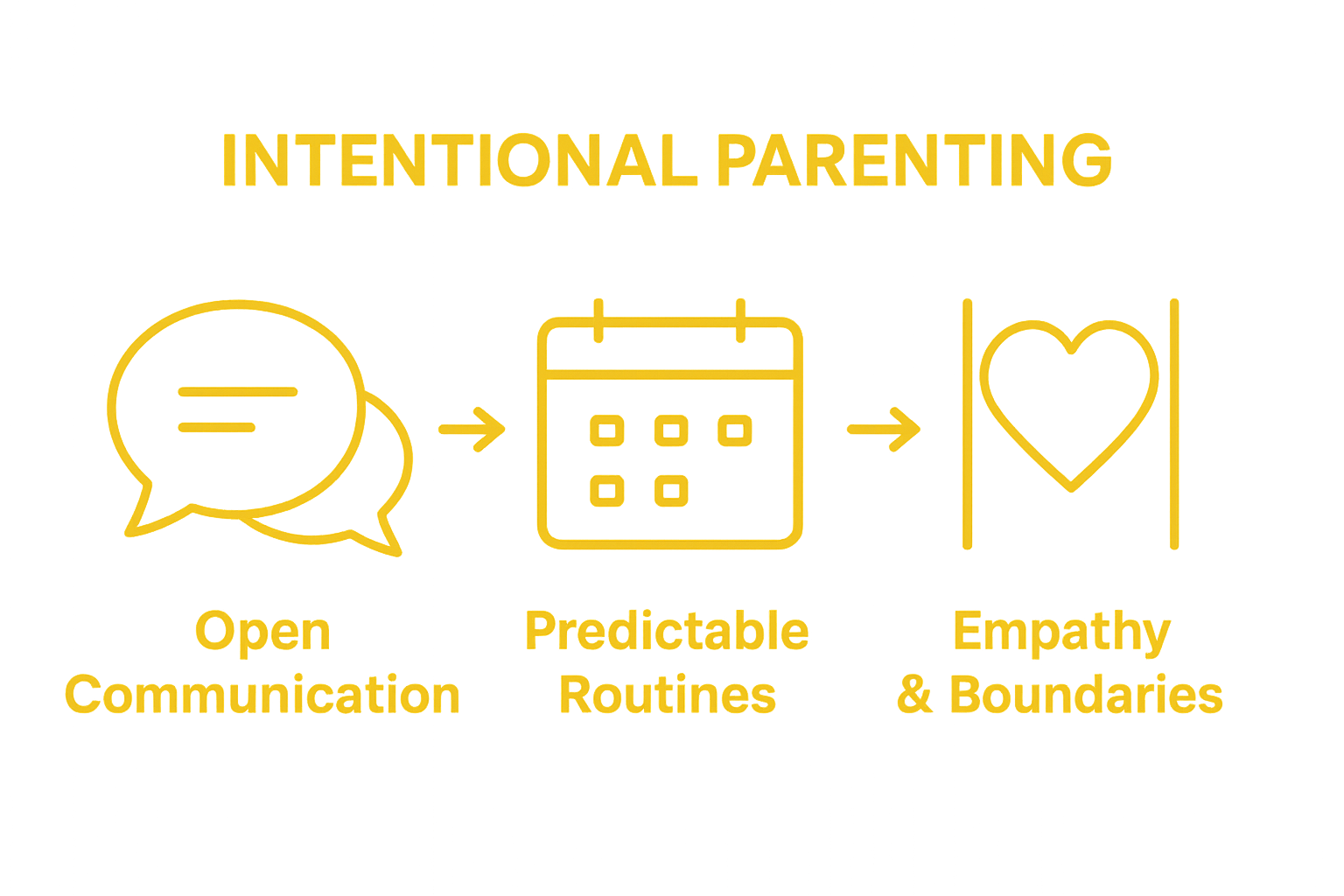
The goal is not perfection but consistent, thoughtful engagement that helps children develop resilience, self-awareness, and emotional competence.
Intentional parenting recognises that children are individuals with unique needs, emotions, and potential. It requires patience, self reflection, and a commitment to continuous learning and adaptation.
Why Does Parenting with Intention Matter for Modern Families?
In today’s rapidly changing world, parenting requires more than traditional approaches. Modern families face unprecedented challenges, making intentional parenting not just beneficial but essential for healthy child development and family dynamics.
Navigating Complex Family Environments
Modern families encounter unique pressures that demand thoughtful, proactive parenting strategies. According to research in the Journal of Developmental and Behavioral Pediatrics, specific parenting practices directly influence children’s social and emotional adaptation. These practices include:
- Demonstrating consistent parental warmth
- Minimising hostile interactions
- Encouraging developmental progression
- Creating emotionally supportive environments
- Maintaining open communication channels
The complexity of contemporary family life requires parents to be more engaged and strategic. Digital distractions, academic pressures, and rapidly evolving social landscapes demand a more nuanced approach to child-rearing. Explore our guide on nurturing creative connections to understand how intentional parenting can help children thrive.
Long-Term Impact on Child Development
Intentional parenting goes beyond immediate interactions. It represents an investment in a child’s future emotional intelligence, resilience, and psychological well-being. By consciously creating supportive frameworks, parents help children develop critical life skills.
Key developmental benefits include:
- Enhanced emotional regulation
- Improved self-awareness
- Stronger interpersonal relationships
- Greater adaptability to change
- More robust mental health foundations
Moreover, intentional parenting acknowledges that each child is a unique individual with distinct needs, talents, and potential. This approach moves away from one-size-fits-all parenting models, recognising that successful child-rearing requires personalised, flexible strategies.
Ultimately, parenting with intention is about creating meaningful connections, understanding individual family dynamics, and proactively supporting children’s holistic growth in an increasingly complex world.
How Parenting with Intention Affects Child Development and Well-being?
Parenting with intention profoundly influences a child’s developmental trajectory, extending far beyond basic care into comprehensive psychological and neurological growth. The deliberate approach shapes children’s emotional intelligence, cognitive capabilities, and long-term psychological resilience.
Neurological and Emotional Foundations
Research examining global parenting interventions demonstrates that intentional parenting significantly impacts early childhood development across multiple domains. Children raised with purposeful, attentive parenting experience enhanced:
- Cognitive skill development
- Language acquisition capabilities
- Motor skill progression
- Socioemotional understanding
- Attachment security
These developmental advantages emerge through consistent, mindful interactions that stimulate neural pathways and emotional learning. Learn more about childhood brain development strategies to understand how intentional parenting supports neurological growth.
Psychological and Social Skill Cultivation
Intentional parenting acts as a critical mechanism for developing robust psychological frameworks. By creating supportive, responsive environments, parents help children build essential life skills that extend well beyond childhood.
Key psychological benefits include:
- Developing emotional regulation techniques
- Building resilience against stress
- Enhancing self-awareness and confidence
- Creating healthy relationship patterns
- Establishing strong internal emotional boundaries
Children who experience intentional parenting learn to understand and manage their emotions more effectively. They develop a deeper sense of self-worth and acquire sophisticated interpersonal skills that will serve them throughout their lives.
Ultimately, parenting with intention represents a holistic approach to child-rearing. It recognises that every interaction is an opportunity for learning, growth, and connection. By prioritising mindful engagement, parents can profoundly shape their children’s developmental journey, creating a strong foundation for future success and well-being.
Key Concepts and Theories Behind Intentional Parenting Practices
Intentional parenting draws from multiple psychological and developmental theories, providing a comprehensive framework for understanding child-rearing beyond traditional approaches. These theoretical foundations offer profound insights into how deliberate parenting strategies shape children’s growth and development.
Foundational Psychological Theories
According to Michigan State University Extension, intentional parenting involves deliberate actions designed to support children’s holistic development. The theoretical landscape encompasses several critical perspectives:
- Social Learning Theory highlighting the importance of modelling behaviour
- Attachment Theory emphasising emotional connection
- Developmental Systems Theory exploring interconnected growth processes
- Sociocultural Theory examining environmental influences
- Cognitive Development Theory understanding intellectual progression
Each theoretical approach contributes unique insights into understanding children’s developmental mechanisms. Explore engaging learning activities that incorporate these developmental principles.
This table summarises the key psychological and developmental theories underlying the practice of intentional parenting, clarifying their focus and contributions.
| Theory | Main Focus | Key Contribution to Intentional Parenting |
|---|---|---|
| Social Learning Theory | Behavioural modelling | Teaches through example and observation |
| Attachment Theory | Emotional connection and security | Emphasises building strong, secure relationships |
| Developmental Systems Theory | Interconnected growth processes | Considers all aspects of a child’s development |
| Sociocultural Theory | Environmental and cultural influences | Recognises context and home environment |
| Cognitive Development Theory | Intellectual and cognitive progression | Focuses on supporting learning and problem-solving |
Mindful Parenting Conceptual Framework
Mindful parenting represents a sophisticated approach integrating psychological understanding with present-moment awareness. This concept transcends traditional parenting methods by emphasising:
- Moment-to-moment conscious engagement
- Nonjudgmental emotional acceptance
- Compassionate interaction patterns
- Responsive communication strategies
- Emotional self-regulation techniques
The mindful parenting framework transforms parent-child interactions from reactive responses to intentional, thoughtful exchanges. By cultivating awareness and emotional intelligence, parents create nurturing environments that support children’s psychological and emotional development.
Understanding these theoretical foundations enables parents to move beyond prescriptive parenting techniques. Instead, they can develop nuanced, adaptive strategies that respect each child’s unique developmental journey, fostering resilience, emotional intelligence, and healthy psychological growth.
Transform Family Moments Into Lifelong Growth With The Zoofamily
Modern parents often struggle to create meaningful interactions in a world full of distractions. The article you just read highlighted how intentional parenting is the key to nurturing emotional intelligence, building resilience, and forming deep connections with your child. Yet even with the best intentions, finding the right tools to spark curiosity and engagement can be challenging.
At The Zoofamily we believe in turning everyday moments into powerful learning experiences. Our thoughtfully designed kids’ cameras, walkie-talkies, and binoculars are crafted to encourage proactive discovery and mindful connection—the very principles discussed in intentional parenting. Each purchase supports creativity and a deeper bond with nature, helping you create purposeful routines while restoring natural beauty for future generations. See how our products nurture creative connections or discover more tips on boosting childhood brain development. Visit The Zoofamily today and take the next step towards intentional parenting. Let every family adventure become an opportunity for growth.
Frequently Asked Questions
What is intentional parenting?
Intentional parenting is a deliberate approach to raising children, focusing on mindful engagement that directly supports their holistic growth and emotional well-being.
How can intentional parenting benefit child development?
Intentional parenting positively impacts child development by enhancing emotional regulation, building resilience, improving self-awareness, and fostering strong interpersonal relationships.
What are the core principles of intentional parenting?
Core principles include establishing predictable routines, open and honest communication, clear boundaries, modelling desired behaviours, and prioritising relationship building over strict control.
How does intentional parenting differ from traditional parenting methods?
Unlike traditional methods that may be more reactive, intentional parenting focuses on proactive decision-making and thoughtful engagement, recognising the unique needs of each child to support their individual development.