

Every eco-conscious mum knows the challenge of finding meaningful gifts that nurture curiosity and make a real difference. With climate change driving rising temperatures and unpredictable weather across continents, teaching children about environmental responsibility has never felt more urgent. This guide shares ways for parents to inspire a genuine love of nature, support emotional well-being, and choose educational presents that turn concern into everyday climate action for children growing up in urban Europe.
Table of Contents
- Defining Climate Change and Its Impact
- Types of Climate Conversations with Children
- Understanding Eco-Anxiety and Emotional Support
- Age-Appropriate Climate Change Discussions
- Turning Concerns into Positive Family Action
Key Takeaways
| Point | Details |
|---|---|
| Understanding Climate Change | Climate change is driven by human industrial activities, leading to rising temperatures and extreme weather events, significantly impacting ecosystems and societies. |
| Age-Appropriate Communication | Tailoring climate conversations to children’s developmental stages fosters ecological awareness while preventing overwhelming feelings of anxiety. |
| Supporting Eco-Anxiety | Emotional support, including validation and problem-solving engagement, helps children manage eco-anxiety and empowers them to take meaningful action. |
| Family Action Strategies | Families can transform climate anxiety into positive outcomes by engaging in sustainability practices and ensuring collective involvement in environmental initiatives. |
Defining Climate Change and Its Impact
Climate change represents a profound global challenge that fundamentally reshapes our understanding of environmental systems. It is not simply about temperature fluctuations, but a comprehensive transformation of Earth’s intricate ecological balance. Long-term shifts in global weather patterns demonstrate how human activities are dramatically altering our planet’s fundamental mechanisms.
At its core, climate change involves systematic modifications to global temperature and weather conditions predominantly driven by human industrial activities. These changes manifest through several critical environmental transformations:
- Rising global temperatures
- Increased frequency of extreme weather events
- Accelerated ice cap and glacier melting
- Significant sea level rises
- Disruption of established ecological habitats
The science is unequivocal: human-generated greenhouse gas emissions are the primary catalyst for these environmental shifts. Unprecedented warming trends indicate that current global temperature increases are occurring at rates not seen in thousands of years, creating urgent challenges for ecosystems and human societies worldwide.
Comprehending climate change requires understanding its multifaceted nature. It differs significantly from short-term weather variations, representing persistent alterations occurring over decades or even centuries. The consequences extend far beyond temperature, impacting biodiversity, agricultural systems, human health, and global economic structures.
Here’s a summary of climate change impacts and the affected systems:
| Impact Type | Ecological Effects | Societal Consequences |
|---|---|---|
| Rising global temperatures | Species migration, habitat loss | Increased heat stress on people |
| Extreme weather events | Disrupted food chains | Damaged infrastructure |
| Melting ice caps/glaciers | Sea level rise | Coastal community risk |
| Changed habitats | Reduced biodiversity | Food security concerns |
Pro tip: Start tracking your personal carbon footprint using accessible online calculators to understand your individual environmental impact.
Types of Climate Conversations with Children
Navigating climate conversations with children requires nuanced, age-appropriate approaches that balance honesty with hope. Climate communication strategies reveal that effective dialogue can empower children to understand environmental challenges without overwhelming them. The key is creating supportive, constructive conversations that nurture ecological awareness and resilience.
Different developmental stages demand distinct communication strategies:
-
For preschoolers (ages 3-5):
- Focus on nature appreciation
- Use storytelling and simple observations
- Introduce basic conservation concepts
-
For primary school children (ages 6-11):
- Explain climate change mechanisms
- Discuss practical sustainability actions
- Encourage questions and critical thinking
-
For teenagers (ages 12-16):
- Explore complex environmental systems
- Discuss global impact and systemic solutions
- Validate emotional responses
Emotional intelligence plays a crucial role in these conversations. Age-appropriate climate dialogues must create safe spaces where children can express concerns, ask questions, and feel empowered rather than frightened.
Successful climate conversations transform potential anxiety into constructive engagement. By presenting environmental challenges as opportunities for creative problem-solving, parents and educators can help children develop resilience, hope, and a sense of personal agency in addressing global ecological issues.
Pro tip: Create a family climate action journal to document and celebrate small, positive environmental choices together.
Understanding Eco-Anxiety and Emotional Support
Eco-anxiety represents a complex emotional landscape that children increasingly experience in response to global environmental challenges. Emotional responses to climate change encompass a nuanced spectrum of feelings ranging from profound concern to actionable hope, reflecting the deep psychological impact of environmental awareness.
The manifestations of eco-anxiety vary significantly across different age groups:
-
Young children (ages 3-6):
- General environmental worry
- Emotional sensitivity to nature discussions
- Need for reassurance and positive framing
-
Primary school children (ages 7-11):
- More detailed environmental concerns
- Questions about planetary health
- Emerging sense of personal responsibility
-
Teenagers (ages 12-16):
- Complex emotional responses
- Potential feelings of grief and anger
- Strong desire for systemic change
Youth mental health interventions emphasise the critical importance of creating supportive environments where children can process their ecological emotions constructively. Emotional validation becomes a powerful tool in helping young people transform anxiety into meaningful engagement and personal agency.
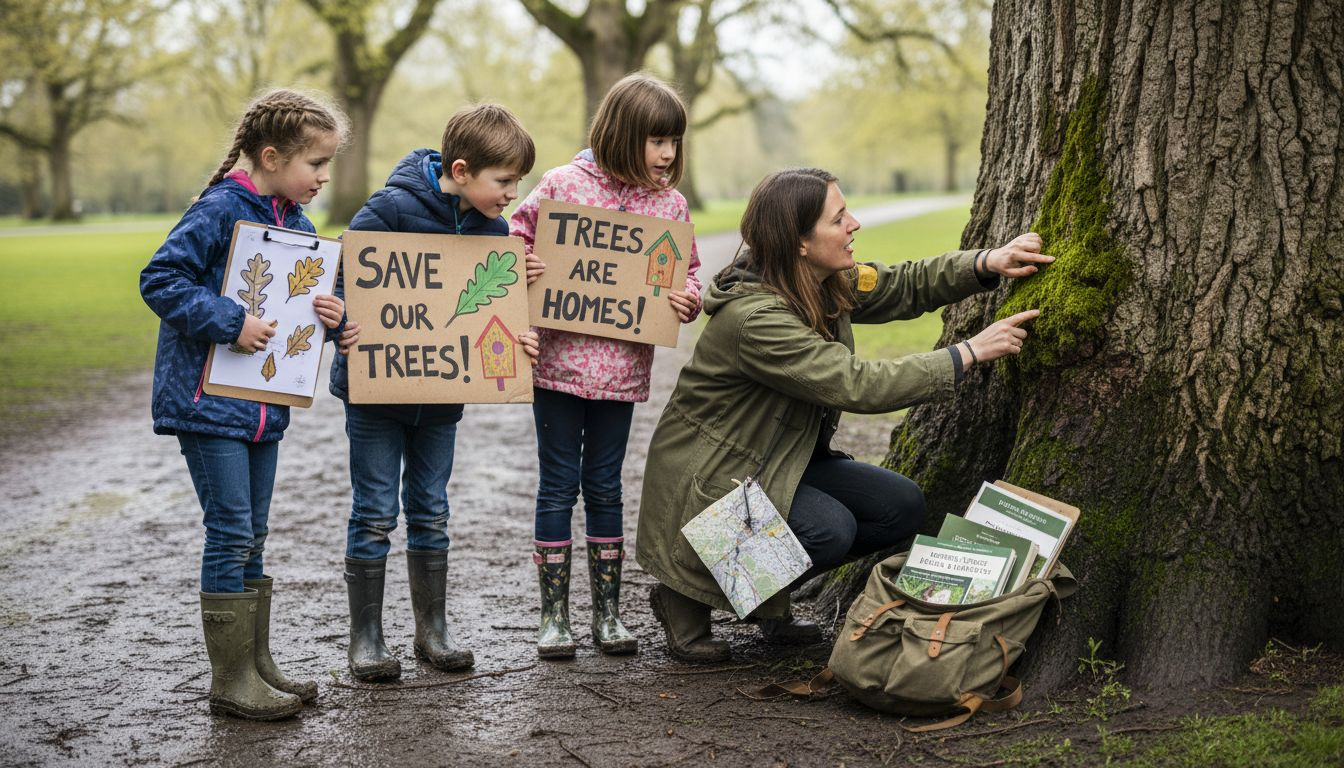
Parents and educators play a crucial role in navigating these emotional landscapes. By acknowledging feelings, providing factual information, and demonstrating practical actions, adults can help children develop emotional resilience and a sense of empowerment in addressing environmental challenges.
This table compares supportive strategies for managing children’s eco-anxiety:
| Emotional Support Approach | Benefits for Children | Example Activity |
|---|---|---|
| Emotional validation | Builds trust, reduces fear | Listen and affirm feelings |
| Problem-solving engagement | Fosters resilience | Family action plan |
| Positive environmental focus | Creates hope, motivation | Celebrate green choices |
Pro tip: Create a safe, judgment-free space for children to express their environmental emotions and explore collective solutions together.
Age-Appropriate Climate Change Discussions
Communicating about climate change requires a delicate, nuanced approach that respects children’s cognitive and emotional development. Climate conversations with children must be carefully calibrated to their age, understanding, and emotional capacity, ensuring that information is both honest and hopeful.
Climate discussion strategies vary significantly across developmental stages:
-
Toddlers and Preschoolers (0-5 years):
- Focus on nature connection
- Use simple, positive language
- Introduce basic environmental care concepts
-
Early Primary Children (5-8 years):
- Explain simple ecological relationships
- Discuss gentle environmental actions
- Encourage curiosity about natural world
-
Late Primary Children (9-11 years):
- Introduce more complex climate mechanisms
- Discuss human impact on environment
- Explore collaborative solution thinking
-
Teenagers (12-16 years):
- Provide detailed scientific information
- Encourage critical systems thinking
- Support emotional processing of global challenges
Effective communication strategies emphasise creating safe, supportive environments where children can explore environmental topics without feeling overwhelmed. The goal is to transform potential anxiety into constructive engagement and hope.
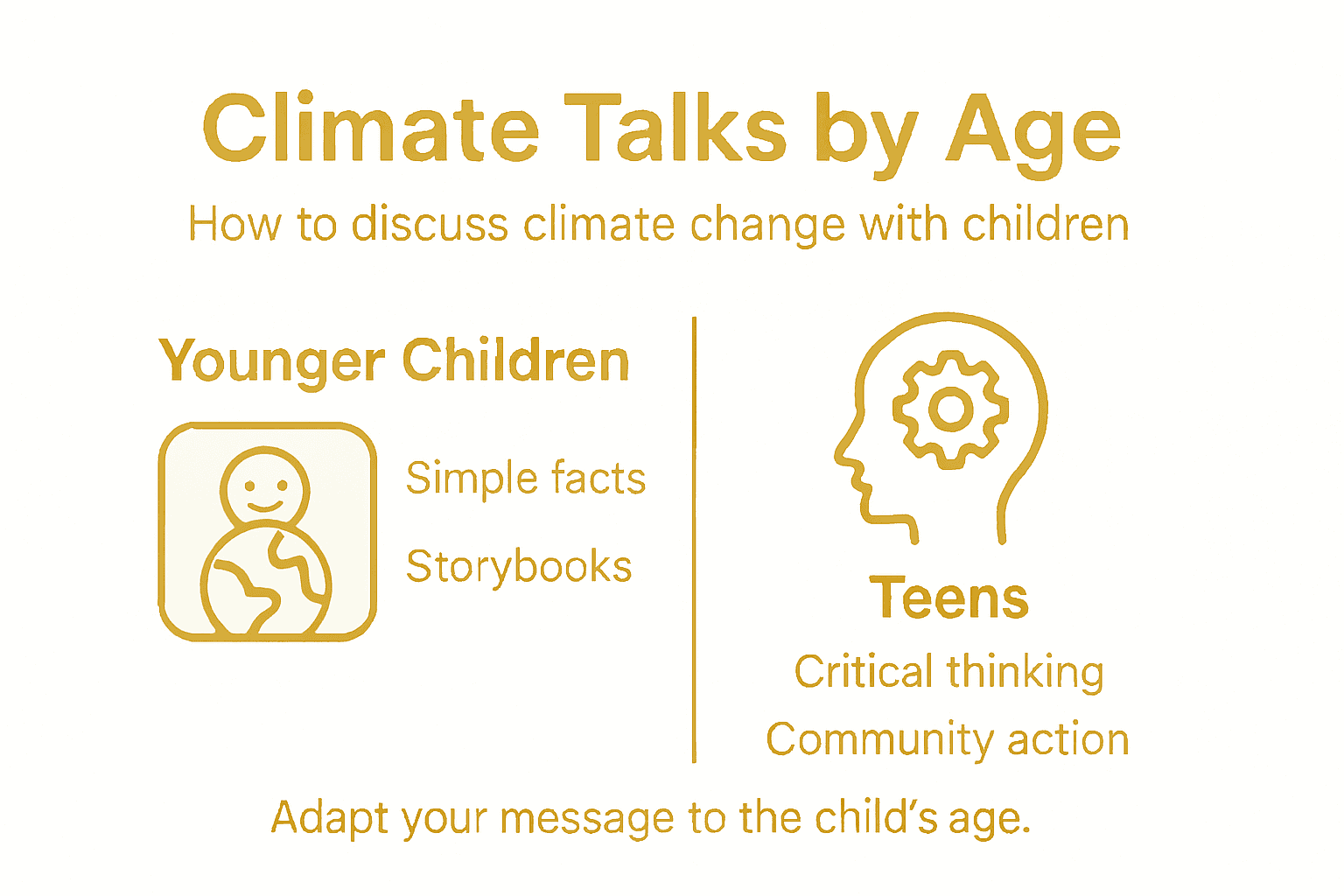
Parents and educators must balance factual information with emotional support, helping children develop resilience and a sense of personal agency in addressing environmental challenges. By using age-appropriate language and maintaining a positive, solution-oriented approach, adults can help children understand climate change without inducing fear.
Pro tip: Create a family climate dialogue routine where everyone shares one positive environmental action they’ve taken or learned about this week.
Turning Concerns into Positive Family Action
Transforming climate anxiety into meaningful family action requires a strategic and compassionate approach. Family-oriented climate strategies empower families to shift from feeling overwhelmed to becoming active agents of positive environmental change, creating a sense of collective purpose and hope.
Practical family climate action strategies include:
-
Everyday Household Sustainability:
- Implement robust recycling systems
- Reduce single-use plastic consumption
- Choose energy-efficient appliances
-
Nature Connection Activities:
- Plant family vegetable gardens
- Create wildlife-friendly garden spaces
- Participate in local conservation projects
-
Collaborative Learning Approaches:
- Watch environmental documentaries together
- Discuss global ecological challenges
- Research and share sustainable solutions
Climate policy frameworks recognise families as crucial change agents in broader sustainability efforts. By nurturing environmentally responsible behaviours and maintaining open, constructive dialogues, families can simultaneously address personal concerns and contribute to wider systemic transformations.
Encouraging children’s active participation transforms potential climate anxiety into empowerment. When families approach environmental challenges as collaborative problem-solvers, they cultivate resilience, hope, and a genuine commitment to sustainable living.
Pro tip: Create a monthly family ‘green challenge’ where each member proposes and implements an innovative sustainability action.
Inspire Young Minds to Embrace Nature and Hope
The challenge of discussing climate change with children often comes down to balancing honesty with hope. The article highlights how eco-anxiety can affect kids of all ages and how crucial emotional support and constructive conversations are in fostering resilience. Parents and educators want tools that spark curiosity about our planet while empowering children to become active stewards rather than overwhelmed by environmental worries.
At The Zoofamily, we understand these goals deeply. Our thoughtfully designed kids’ cameras, walkie-talkies, and binoculars include animal motifs to naturally draw children closer to nature’s beauty. With every camera sold, we plant a tree, helping restore the planet for future generations. This unique connection encourages children to observe wildlife and develop personal environmental awareness in a joyful way.
Discover how your family can transform climate concerns into positive action and hope. Explore The Zoofamily’s collection today and make nature an inspiring part of your child’s learning journey.
Start building meaningful experiences that nurture both ecological curiosity and emotional resilience. Visit The Zoofamily now and begin your adventure towards a greener future.
Frequently Asked Questions
How can I discuss climate change with young children?
Engage young children by focusing on nature appreciation, using storytelling, and introducing basic conservation concepts. It’s important to frame discussions positively to nurture their interest and understanding.
What strategies can I use to manage my child’s eco-anxiety?
Validate your child’s feelings and provide emotional support. Encourage problem-solving engagement and create a positive environmental focus by celebrating small actions together. Developing a safe space for discussion is also crucial.
How do I tailor climate change conversations for teenagers?
For teenagers, introduce complex environmental systems and encourage critical thinking about systemic solutions. Allow them to express their emotions regarding environmental issues and support their desire for meaningful change.
What activities can families do together to promote sustainability?
Families can participate in various activities, such as implementing recycling systems at home, planting vegetable gardens, and engaging in local conservation projects. Collaborative learning, like watching documentaries and discussing sustainability, can further foster a collective sense of purpose.
Recommended
- 7 top livres enfants nature pour éveiller l’écologie – The Zoofamily
- 7 top livres enfants nature pour éveiller l’écologie – The Zoofamily
- Comprendre comment prendre soin de la terre pour nos enfants – The Zoofamily
- Making Learning Fun: Engaging Activities for Your Kids – The Zoofamily
- Bologna Book Fair: Key Insights on the future of Children’s Publishing