

Reusing for outdoor play is the practice of transforming everyday household and recycled materials into safe, imaginative play equipment for children. Done well, it cuts costs by over 50% compared to new retail play equipment, and that saving is real money back in your pocket. Projects range from a quick milk jug toss game assembled in an afternoon to a full repurposed playhouse village built over a weekend. The approach also teaches children that waste has value, which is one of the most useful lessons any parent can pass on.
What are the best materials to reuse for outdoor play?
The right material makes the difference between a project that lasts one season and one that lasts five years. Knowing what to choose before you start saves time, money, and frustration.
Recycled plastic, tyres, and wood pallets
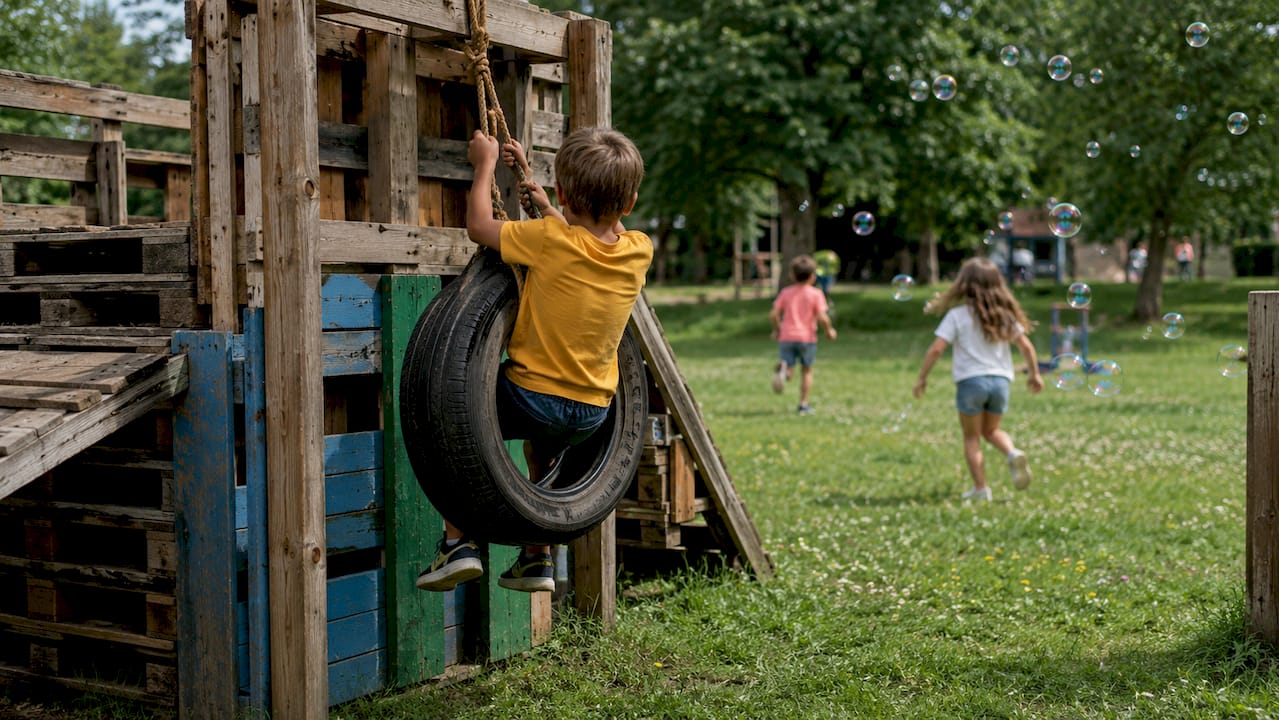
Recycled plastic play equipment outperforms timber by resisting cracks, splits, and rot. That means less sanding, less painting, and fewer splinter checks every spring. Old tyres are one of the most versatile materials available. You can stack them as climbing blocks, half-bury them as stepping stones, or fill them with sand for a simple digging pit. Wood pallets work well for raised platforms and garden forts, though they do need a coat of outdoor wood preservative before children use them.
Milk jugs, scrap wood, and fabric scraps
Milk jugs are the unsung hero of upcycled outdoor games. Cut the bottom off two jugs, add a ball, and you have a toss-and-catch set that costs nothing. Scrap wood offcuts from local timber yards are often free or very cheap, and they work well for balance beams and target boards. Fabric scraps from old bedsheets make excellent bunting, den curtains, and outdoor hammocks for dolls or soft toys.
Where to source recycled materials
Facebook Marketplace, Freecycle, and local recycling centres are the three most reliable sources for large items like playhouses, tyres, and pallets. Smaller items such as milk jugs and scrap wood are usually available at home. When collecting large structures, be prepared for transport and repair challenges. You will likely need a van, a basic toolkit, and a free Saturday morning.
Pro Tip: Before you collect any large item, measure your garden gate. Many parents arrive home with a playhouse that will not fit through the side passage.
| Material | Durability | Maintenance | Best Use |
|---|---|---|---|
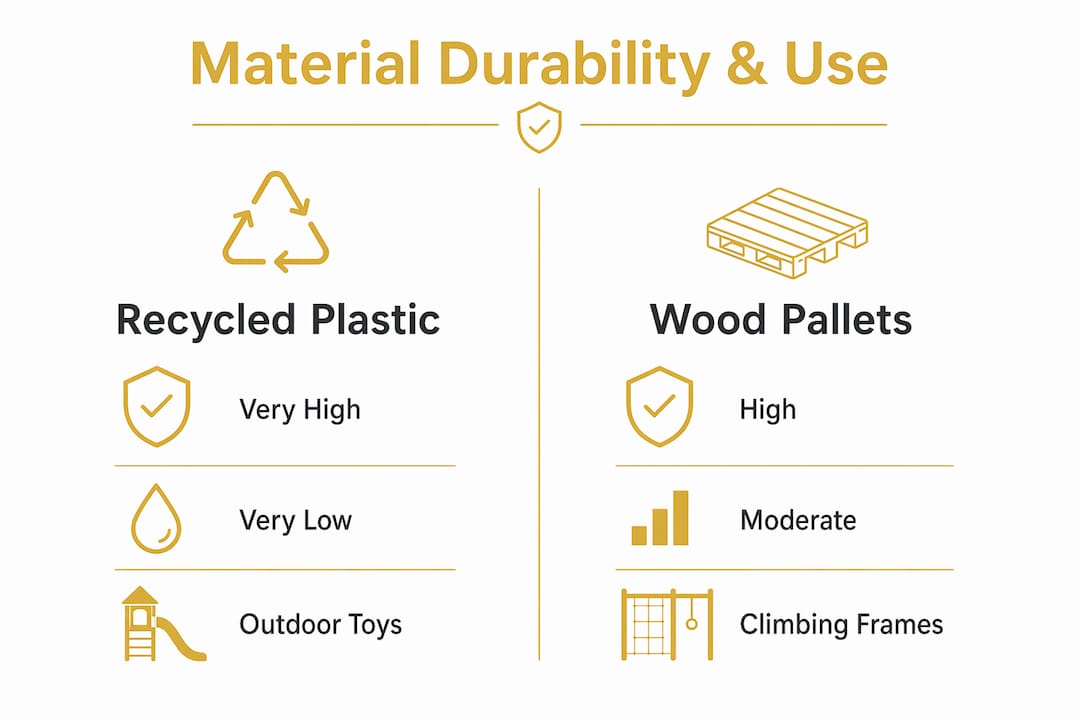
| Recycled plastic | Very high | Very low | Climbing frames, panels |
| Old tyres | High | Low | Swings, stepping stones, sandpits |
| Wood pallets | Medium | Medium (needs preservative) | Platforms, forts, raised beds |
| Milk jugs | Low to medium | None | Toss games, scoops, planters |
| Scrap wood | Medium | Low to medium | Balance beams, target boards |
How do you build easy DIY outdoor games from reused materials?
Most families can complete their first upcycled outdoor game in a single afternoon. The projects below are ordered from simplest to most involved, so you can match the build to the time you have available.
Milk jug toss game
This is the ideal starting project. You need two large plastic milk jugs, a pair of scissors, and a small ball. Cut the base off each jug cleanly, leaving the handle intact. Players catch and toss the ball using the open jugs as scoops. Assembly takes under one hour, and the game works on grass, paving, or decking. It suits children aged four and upwards, and the rules can grow in complexity as children get older.
DIY tetherball set from a reused tyre
A tetherball set is a more ambitious build, but the result is a piece of play equipment that will last for years. Here is how to do it:
- Dig a hole roughly 30 centimetres deep in a flat area of your garden.
- Place a length of sturdy wooden post or metal pipe in the hole.
- Mix concrete according to the packet instructions and pour it around the base of the post.
- Attach a rope to the top of the post, then tie a ball securely to the rope’s end.
- Leave the concrete to cure for at least 24 hours before children use the set.
The concrete base is the most important step. A poorly set base will tip, which is a safety risk. Plan the build for a dry weekend so the curing time is not interrupted by rain.
Repurposed playhouse restoration
Sourcing an old playhouse from Facebook Marketplace and restoring it is the most involved project on this list, but also the most rewarding. Sand down any rough edges, treat the wood with an outdoor preservative, and apply a coat of child-safe exterior paint. One parent documented turning three abandoned playhouses into a backyard village for under £60 total. That figure would be impossible to match buying new.
Pro Tip: When painting a restored playhouse, use a primer coat first. It doubles the lifespan of the topcoat and prevents the wood from absorbing moisture through the paint.
| Project | Time to Build | Curing or Drying Time | Complexity |
|---|---|---|---|
| Milk jug toss game | Under 1 hour | None | Beginner |
| Tyre stepping stones | 1–3 hours | None | Beginner |
| DIY tetherball set | 2–3 hours | 24 hours | Intermediate |
| Playhouse restoration | 1–2 days | 24–48 hours | Intermediate |
What safety checks should parents do before children play?
Safety is not an afterthought in reuse projects. It is the first thing you plan for, not the last.
“The goal is not a perfect play structure. The goal is a safe one. A wobbly post or a splintered edge undoes every hour of creative effort you put in.” — Thezoofamily
The benefits of outdoor play for children are well documented, and reused equipment can deliver all of them safely when parents follow a clear checklist before handing over the space.
- Surface choice: Play surfaces should be grass, packed dirt, or rugs rather than slick pavement. Slick surfaces increase fall risk for running games.
- Anchoring: Any freestanding structure, from a tyre swing to a tetherball post, must be anchored securely. Test it by pushing firmly from multiple angles before children approach it.
- Sharp edges and splinters: Run your hand over every surface a child might touch. Sand down any rough patches on wood. Check plastic cuts for sharp burrs and file them smooth.
- Weatherproofing: Untreated wood absorbs moisture and develops mould within one season. Apply an outdoor wood preservative to all timber components before use.
- Supervision: Younger children, particularly those under five, need adult supervision on any climbing or balancing structure regardless of how well it is built.
Checking these five points before each new season takes about twenty minutes. That twenty minutes protects months of play.
How do you keep reused play equipment in good condition?
Maintenance is what separates a play area that thrives for five years from one that deteriorates by autumn. Routine cleaning, stability checks, and seasonal repairs are the core of any upkeep plan.
Follow this seasonal maintenance routine to keep everything safe and engaging:
- Spring check: Inspect every structure for winter damage. Look for loose bolts, cracked wood, faded paint, and mould growth. Tighten, sand, repaint, or replace as needed.
- Monthly wipe-down: Clean plastic and painted surfaces with warm soapy water. This removes grime that accelerates surface degradation and keeps equipment looking appealing to children.
- Mid-summer inspection: Check anchors and bases after heavy rain. Water loosens soil around concrete bases over time, so press firmly on posts to test stability.
- Autumn preparation: Store lightweight items like milk jug games and fabric dens indoors. Apply a fresh coat of wood preservative to timber structures before the wet season begins.
- Involve your children: Give children a small role in upkeep, such as wiping down surfaces or checking that bolts are tight with a spanner. This builds responsibility and keeps them invested in the space.
An effective outdoor tinkerspace includes a flat, weatherproof work surface where children can build and experiment. Adding a simple workbench made from a pallet gives children a dedicated space for their own repair and creation projects, which extends engagement well beyond the original build.
Pro Tip: Keep a small maintenance kit in a weatherproof box near the play area. Include sandpaper, a spanner, outdoor paint, and a brush. When you spot a problem, you can fix it in five minutes rather than adding it to a list that never gets done.
Key takeaways
Reusing materials for outdoor play is the most cost-effective and creatively rich way to build a lasting play environment for your children.
| Point | Details |
|---|---|
| Cost savings are significant | Upcycled projects save over 50% compared to buying new play equipment at retail prices. |
| Material choice determines longevity | Recycled plastic lasts longest with least maintenance; wood pallets need preservative treatment before use. |
| Safety checks are non-negotiable | Inspect anchoring, surfaces, sharp edges, and weatherproofing before every new season of play. |
| Maintenance extends play life | A seasonal routine of cleaning, tightening, and repainting keeps reused equipment safe for years. |
| Children learn through the process | Involving kids in building and upkeep builds responsibility and deepens their connection to the play space. |
Why i think reused play equipment is worth every bit of effort
The first time I helped a family build a tetherball set from a salvaged post and a bag of concrete, the children were more excited about watching the concrete set than they were about the game itself. That told me something. The process of making is as valuable as the thing made.
Parents often worry that reused materials will look shabby or signal a lack of effort. The opposite is true. A restored playhouse with a fresh coat of paint and a hand-painted name above the door is more personal than anything you can buy flat-packed. Children know the difference between something chosen for them and something made for them.
The sustainability angle matters too, though I would not lead with it when talking to children. Let them discover that their swing used to be a tyre, that their toss game was a milk jug. The conversation about reuse and the planet follows naturally. Thezoofamily’s approach of connecting children to nature through the objects they use every day reflects exactly this thinking. You do not need to lecture. You just need to build something together.
My honest advice is to start small. One milk jug game on a Tuesday afternoon is enough to show you and your child what is possible. The creative outdoor play ideas grow from there, project by project, season by season.
— ALAIN
How Thezoofamily can help you build a better outdoor play space
Thezoofamily is built around the idea that children connect more deeply with the world when play is purposeful and nature-led. If you are ready to take your reuse projects further, the Thezoofamily blog is packed with practical guides on safe DIY play structures and nature-connected outdoor spaces.
From building a wildlife-friendly garden that doubles as a play space to choosing the right materials for a safe outdoor area, Thezoofamily covers the full picture. Every camera sold plants one tree, so the connection between play and planet runs through everything the brand does. Explore the full range of ideas and products at Thezoofamily and find the next project that fits your garden, your budget, and your child.
FAQ
How much does reusing outdoor play equipment actually save?
Upcycled play projects save over 50% compared to buying new. A restored playhouse can cost under £60, while a new equivalent retails for several hundred pounds.
What recycled materials are safest for children’s outdoor play?
Recycled plastic is the safest and most durable option as it does not rot, crack, or splinter. Wood pallets are safe once sanded smooth and treated with an outdoor preservative.
How long do DIY outdoor play projects take to complete?
Most small projects take 1–3 hours to assemble. Concrete-based structures like tetherball sets require an additional 24 hours of curing time before children can use them.
Where can parents find free or cheap materials for outdoor play?
Facebook Marketplace, Freecycle, and local recycling centres are the best sources for tyres, pallets, and playhouses. Milk jugs and scrap wood are usually available at home or from local timber yards at little or no cost.
How often should reused play equipment be inspected for safety?
Inspect all structures at the start of each season and after heavy rain. Check anchoring, surfaces, and painted or treated areas monthly to catch wear before it becomes a hazard.