

Every parent knows the joy of watching a child ask endless questions about the world. Curiosity is not just a phase, but the core of how children learn and grow, shaping everything from problem-solving to happiness. Studies show that curiosity is a universal trait guiding young minds as they explore, question, and make sense of their surroundings. Discover innovative ways to nurture this intrinsic drive, combining natural play and technology for meaningful family learning in urban European life.
Table of Contents
- Curiosity In Children: What It Means
- Types Of Curiosity And Key Drivers
- Nature, Technology, And Play-Based Learning
- Practical Strategies For Urban Families
- Common Barriers And Sustainable Solutions
Key Takeaways
| Point | Details |
|---|---|
| Importance of Curiosity | Curiosity drives cognitive development in children, promoting active learning through exploration and questioning. |
| Role of Parents | Responsive parenting enhances children’s curiosity by fostering an environment that encourages questions and exploration. |
| Types of Curiosity | Recognising the difference between interest-curiosity and deprivation-curiosity helps tailor educational approaches to enhance learning experiences. |
| Urban Nature Engagement | Families can overcome urban barriers to nature exploration by reimagining everyday spaces and creating micro-nature experiences for children. |
Curiosity in Children: What It Means
Curiosity represents the intrinsic human drive to explore, understand, and learn about the world around us. For children, this fundamental trait serves as a critical mechanism for cognitive development and knowledge acquisition. Trait epistemic curiosity emerges as a powerful motivational state that guides children’s learning experiences across diverse contexts.
Researchers have identified curiosity as more than just casual interest - it’s a sophisticated cognitive process. Specific neurological studies demonstrate that curiosity operates as an information-seeking behaviour motivated by recognising knowledge gaps. Children actively seek to resolve uncertainties through targeted exploration and questioning.
Key characteristics of childhood curiosity include:
- Spontaneous information seeking
- Intrinsic motivation to understand
- Desire to reduce uncertainty
- Engagement across multiple learning domains
Parental interactions play a crucial role in nurturing curiosity. Responsive parenting strategies significantly influence children’s epistemic curiosity, creating environments that encourage questioning and discovery. When parents respond positively to children’s inquiries and support their exploratory behaviours, they effectively enhance cognitive development.
Pro tip: Create a home environment that celebrates questions by responding with genuine interest and encouraging further exploration, rather than providing immediate answers.
Types of Curiosity and Key Drivers
Curiosity is a multifaceted psychological phenomenon with distinct variations that drive human learning and exploration. Psychological research reveals two primary types of curiosity that fundamentally shape how children and adults engage with information and their environment.
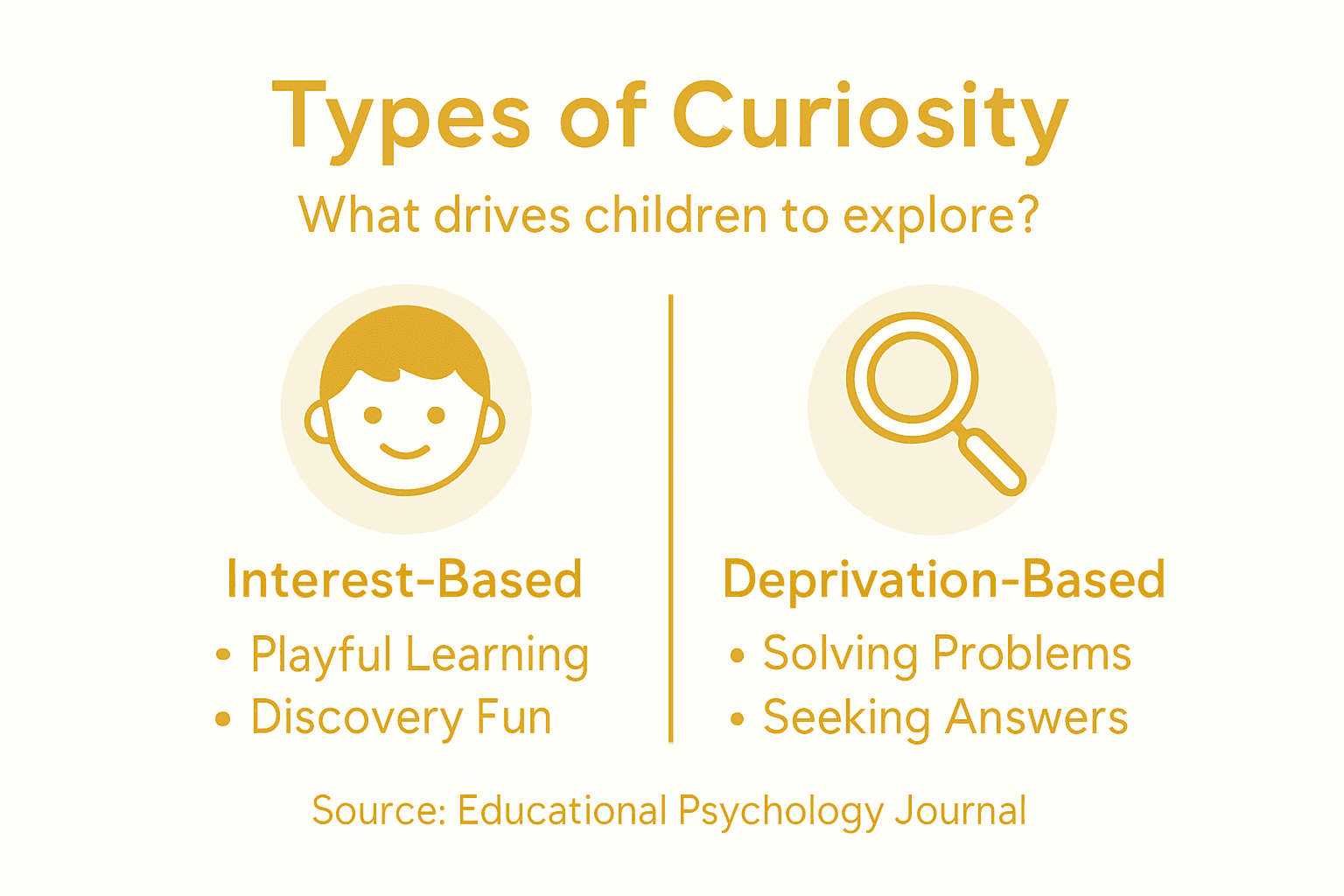
The first category is interest-curiosity, characterised by a joyful, intrinsic desire to discover and understand. This type of curiosity emerges from pure enjoyment of learning, where individuals seek knowledge for the pleasure of exploration rather than addressing a specific knowledge gap. Neuroscience of curiosity highlights how this curiosity type activates pleasure centres in the brain, making learning an inherently rewarding experience.
Key types of curiosity include:
- Interest-curiosity: Driven by joy and discovery
- Deprivation-curiosity: Motivated by uncertainty reduction
- Perceptual curiosity: Triggered by novel sensory experiences
- Epistemic curiosity: Focused on systematic knowledge acquisition
The second category, deprivation-curiosity, operates differently. It emerges from a cognitive need to resolve uncertainty and fill knowledge gaps. This type of curiosity is more problem-oriented, pushing individuals to seek specific information to address perceived deficiencies in understanding. While less intrinsically pleasurable, it remains a critical mechanism for targeted learning and problem-solving.
Pro tip: Encourage both types of curiosity by creating learning environments that balance playful exploration with structured problem-solving opportunities.
The following table summarises the differences between primary curiosity types in childhood learning:
| Curiosity Type | Motivational Focus | Typical Behaviour | Educational Benefit |
|---|---|---|---|
| Interest-curiosity | Enjoyment of learning | Playful exploration | Fosters lifelong love of learning |
| Deprivation-curiosity | Resolving uncertainty | Persistent questioning | Develops problem-solving skills |
| Perceptual curiosity | Engagement with new stimuli | Investigating novel sensations | Enhances sensory development |
| Epistemic curiosity | Systematic knowledge seeking | Pursuing deep understanding | Builds foundational knowledge |
Nature, Technology, and Play-Based Learning
Play-based learning represents a holistic approach to childhood education that integrates natural environments with strategic technological engagement. Research in early childhood pedagogy reveals that spontaneous exploration in outdoor settings can significantly enhance children’s cognitive, social, and physical development.
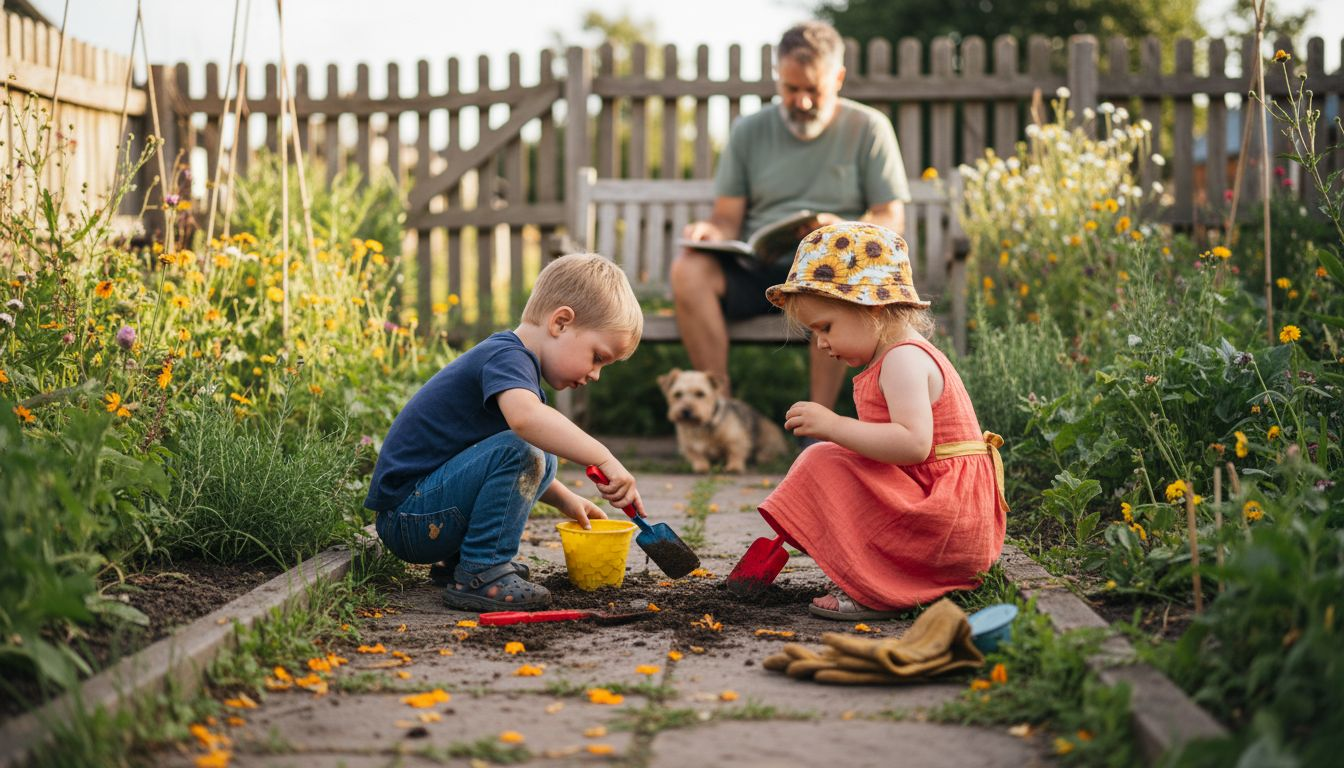
Natural playspaces offer unique opportunities for experiential learning. Children instinctively interact with their environment, developing critical skills through unstructured play. Integrating technology thoughtfully can complement these natural learning experiences, creating a rich, multisensory educational landscape that stimulates curiosity and problem-solving abilities.
Key components of integrated play-based learning include:
- Hands-on exploration of natural environments
- Age-appropriate technological interactions
- Child-led discovery processes
- Balanced digital and physical engagement
- Guided but unstructured learning experiences
Technology integration challenges highlight the importance of creating meaningful digital interactions that enhance rather than replace natural play. Modern educational approaches seek to create synergies between technological tools and outdoor experiences, ensuring children develop comprehensive learning skills.
Pro tip: Create technology-enhanced nature exploration experiences by using digital tools like cameras or binoculars that encourage closer observation and interaction with the natural world.
Practical Strategies for Urban Families
Urban environments present unique challenges for families seeking meaningful nature connections. Nature immersion activities offer innovative solutions that transform city landscapes into rich learning environments, helping children develop deep ecological awareness despite limited green spaces.
Creating nature-based experiences requires creativity and intentional planning. Urban families can transform balconies, windowsills, and local parks into dynamic learning laboratories. Small spaces become opportunities for botanical exploration, insect observation, and sensory discovery, enabling children to develop profound connections with the natural world even in concrete-dominated landscapes.
Practical urban nature connection strategies include:
- Creating miniature butterfly gardens on balconies
- Organising neighbourhood nature scavenger hunts
- Developing container gardens with edible plants
- Collecting and identifying local urban wildlife
- Participating in community environmental programmes
- Using digital tools to document natural discoveries
Successful urban nature engagement depends on parents’ willingness to reimagine everyday spaces as potential learning environments. By viewing cities as complex ecosystems rather than sterile landscapes, families can unlock countless opportunities for ecological education and environmental curiosity.
Pro tip: Transform your urban space into a nature discovery zone by dedicating a small area for plant growth and wildlife observation, making environmental learning a daily family activity.
Common Barriers and Sustainable Solutions
Systematic barriers to children’s nature engagement encompass complex physical, social, and economic challenges that disproportionately impact urban families. These obstacles extend beyond simple access limitations, creating multifaceted challenges for meaningful environmental connections.
Urban families encounter numerous constraints that inhibit nature exploration. Physical barriers like limited green spaces, safety concerns, and unpredictable weather conditions create significant hurdles. Additionally, socio-economic factors such as restricted free time, cultural norms, and economic pressures further complicate families’ abilities to prioritise nature experiences.
Key barriers to nature engagement include:
- Limited accessible green spaces
- Safety concerns in urban environments
- Economic constraints on outdoor activities
- Cultural perceptions about outdoor play
- Reduced free time for family explorations
- Technology-driven indoor entertainment
Structural inequities in nature access reveal deeper systemic challenges, particularly affecting disadvantaged communities. Overcoming these barriers requires collaborative approaches involving urban planners, community organisations, and educational institutions to create inclusive, safe, and culturally sensitive outdoor experiences.
Pro tip: Transform barriers into opportunities by identifying micro-nature experiences within your immediate environment, such as window box gardening or neighbourhood park exploration.
This table provides a quick overview of common barriers urban families face and potential sustainable solutions:
| Barrier | Impact on Children | Suggested Solution |
|---|---|---|
| Limited green spaces | Restricted outdoor play | Maximise use of micro-nature areas |
| Safety concerns | Parental hesitancy | Organised group activities in safe spaces |
| Economic constraints | Fewer nature opportunities | Free community environmental programmes |
| Cultural perceptions | Reduced outdoor interest | Promote diverse outdoor role models |
| Competing technology | Increased indoor time | Combine digital tools with outdoor learning |
Inspire Your Child’s Curiosity with Nature-Inspired Tools
Raising curious children means overcoming challenges like limited green spaces and competing indoor distractions while nurturing their natural drive for exploration and learning. This article highlights the importance of epistemic curiosity and play-based learning to create engaging experiences that balance discovery with structured problem-solving. The Zoofamily offers innovative solutions to spark this kind of childhood curiosity by blending technology with nature in meaningful ways. Our kid-friendly cameras, walkie-talkies, and binoculars not only encourage hands-on exploration but are also designed with animal references that ignite a deeper interest in the environment.
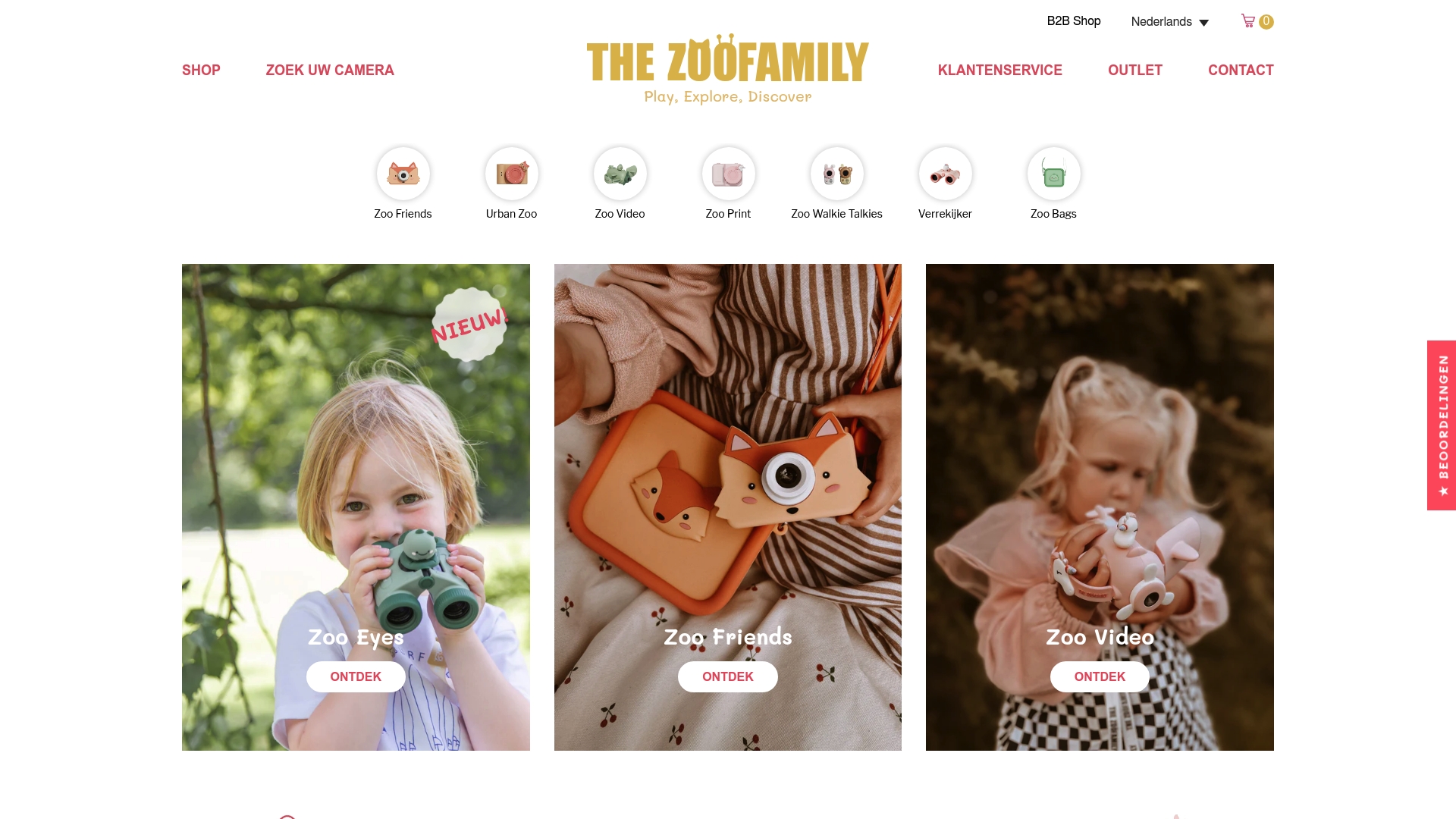
Empower your children to connect with the outdoors, even in urban settings, by equipping them with tools that transform everyday adventures into immersive learning moments. Each product sold contributes directly to reforesting our planet, turning curiosity into real-world impact. Discover how you can support your child’s growth and nurture their love of nature today by visiting The Zoofamily. Start your journey to raising a curious child now with The Zoofamily’s engaging nature discovery gear. Explore our full range and make meaningful connections possible.
Frequently Asked Questions
How can I encourage curiosity in my child?
Creating a home environment that celebrates questions and exploration is key. Respond positively to your child’s inquiries and encourage further discovery rather than providing immediate answers.
What types of curiosity should I nurture in my children?
Focus on encouraging both interest-curiosity, which is driven by enjoyment of learning, and deprivation-curiosity, which is motivated by resolving uncertainties. Provide opportunities for playful exploration and structured problem-solving activities.
How can urban families connect with nature despite limited green spaces?
Urban families can transform balconies, windowsills, and local parks into dynamic learning experiences. Engage in activities like creating container gardens or organising neighbourhood scavenger hunts to foster a connection with nature.
What are some common barriers to children’s nature engagement in urban areas?
Common barriers include limited accessible green spaces, safety concerns, and economic constraints. Address these challenges by maximizing micro-nature experiences and participating in community environmental programmes.
Recommended
- Making Learning Fun: Engaging Activities for Your Kids – The Zoofamily
- 7 top livres enfants nature pour éveiller l’écologie – The Zoofamily
- 7 idées goûter nature enfants pour éveiller leur curiosité – The Zoofamily
- 7 activités automne dehors enfant pour découvrir la nature – The Zoofamily
- Creating a Safe Haven: Nontoxic Plants for Children’s Rooms