

Over 80 percent of british parents say that nurturing curiosity is one of their top priorities for children. In our fast–moving world, finding hands–on ways to inspire lifelong wonder can feel challenging. Cameras offer a simple but powerful tool for turning everyday moments into opportunities for creative exploration. This guide explains how cameras spark curiosity for british families, helping children grow as confident, thoughtful learners through playful discovery.
Table of Contents
- How Cameras Encourage Lifelong Curiosity
- Types Of Kids’ Cameras And Their Features
- Creative Benefits For Children’s Development
- Encouraging Safe And Responsible Use
- Choosing The Right Camera For Your Child
Key Takeaways
| Point | Details |
|---|---|
| Cameras Foster Curiosity | Using cameras encourages children to observe their environment actively, enhancing critical thinking and curiosity-driven exploration. |
| Benefits to Development | Photography aids creative expression and cognitive development, improving visual storytelling and emotional intelligence through engaged observation. |
| Safety and Responsibility | Teaching children about responsible camera use includes lessons on privacy, consent, and respectful photography practices. |
| Choosing the Right Camera | Selecting a camera should be based on a child’s age and interests, focusing on durability, ease of use, and educational potential. |
How Cameras Encourage Lifelong Curiosity
Cameras are extraordinary tools that transform ordinary experiences into extraordinary moments of discovery. By capturing fragments of our world, they invite children and adults alike to look closer, observe more deeply, and explore the intricate details often overlooked in daily life. When a child picks up a camera, they are not just taking a picture - they are engaging in a powerful form of learning that stimulates curiosity-driven exploration.
The act of photographing encourages active observation and prompts questions about the surrounding environment. Children learn to frame scenes, understand perspectives, and develop critical thinking skills through visual storytelling. Research suggests that collaborative learning dynamics can significantly enhance curiosity, with cameras serving as perfect tools to spark imaginative interactions and shared experiences.
Moreover, cameras offer a unique pathway to understanding the world through visual literacy. By documenting their surroundings, children develop skills in composition, light, and storytelling. These skills transcend mere technical proficiency - they become powerful tools for self-expression, communication, and understanding. Whether capturing wildlife, family moments, or exploring nature, cameras transform passive observation into active engagement, nurturing a lifelong passion for discovery and learning. Photography scavenger hunts can further amplify this curiosity, turning exploration into an exciting, interactive adventure.
Types Of Kids’ Cameras And Their Features
Selecting the right camera for children involves understanding the unique features that make photography both accessible and engaging. Kids’ cameras are specifically designed to be durable, user-friendly, and tailored to young explorers’ needs. These specialised devices come in various types, each offering distinct advantages for budding photographers aged between 4 and 12 years.
The primary categories of children’s cameras include compact point-and-shoot models, rugged action cameras, digital cameras with simplified interfaces, and instant print cameras. Some key features to consider are robust construction, drop-resistance, waterproofing, and intuitive controls. Comparing different kids’ camera options helps parents select the most appropriate device for their child’s age and interests.
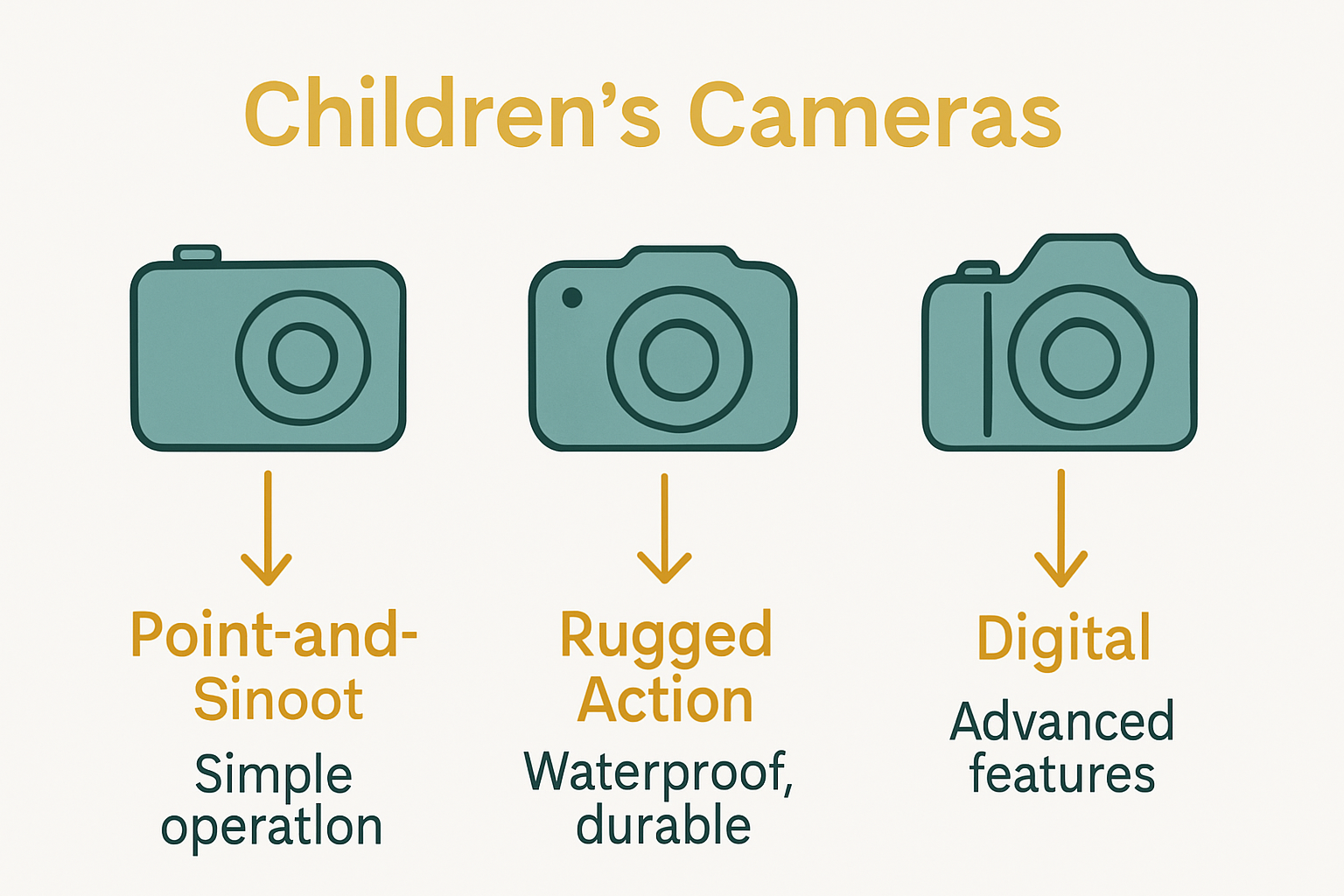
Modern kids’ cameras often incorporate additional educational elements like built-in games, photo filters, and basic editing tools. These features transform photography from a simple recording activity into an interactive learning experience. Advanced models might include educational modes that teach composition, encourage creativity, and help children understand visual storytelling. Some cameras even offer protective features like wrist straps, rubber bumpers, and shock-resistant casings to withstand the inevitable drops and bumps of childhood exploration. The goal is to create a camera that not only captures memories but also nurtures a child’s curiosity and creative potential.
Creative Benefits For Children’s Development
Cameras represent far more than simple recording devices for children - they are powerful tools for cognitive and creative development. Visual storytelling emerges as a critical skill, allowing young minds to communicate experiences, emotions, and perspectives through images. By framing scenes and capturing moments, children learn to observe their world with heightened awareness and intentionality.
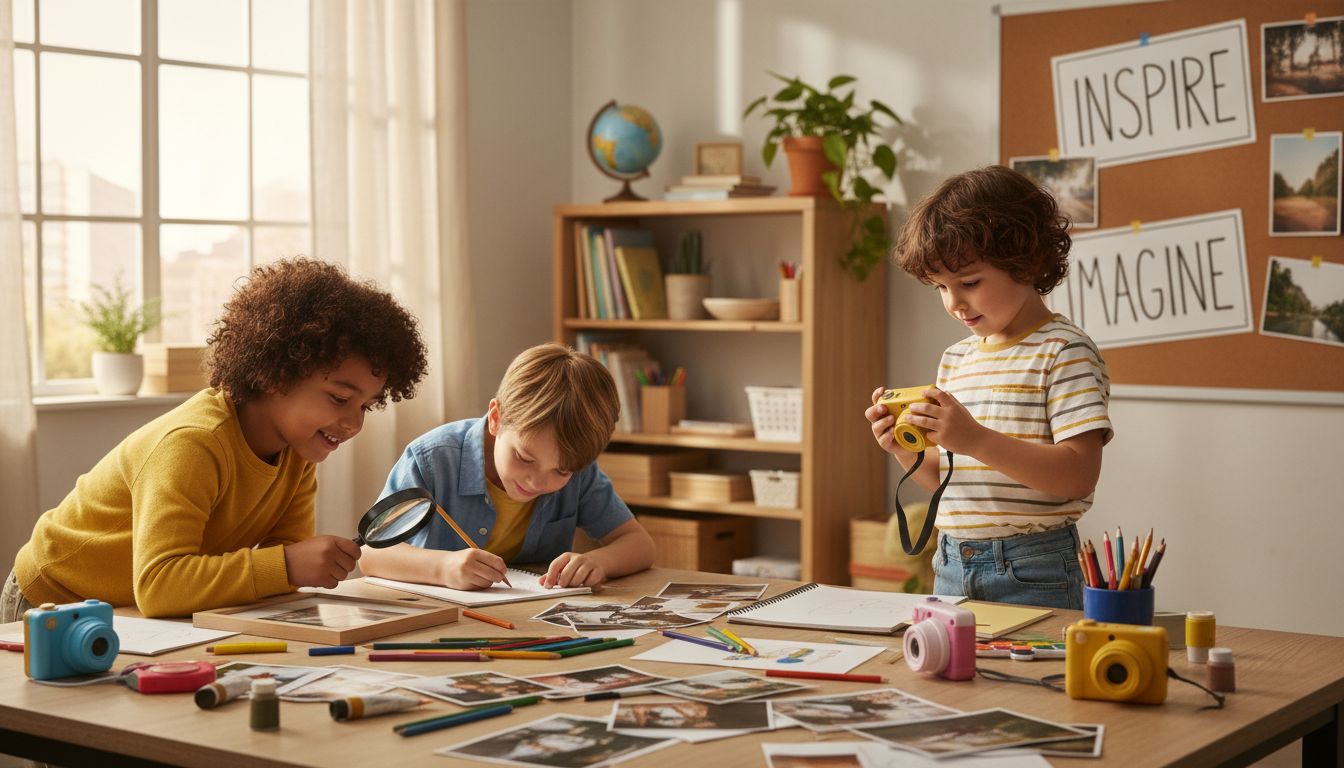
Creative expression through photography supports multiple developmental domains. Exploring imaginative play becomes more sophisticated when children use cameras as instruments of personal narrative. They develop critical thinking skills by selecting what to photograph, understanding composition, and making deliberate artistic choices. These processes enhance spatial reasoning, decision-making abilities, and emotional intelligence in ways traditional learning methods cannot replicate.
Moreover, photography encourages children to engage with their environment more deeply and purposefully. Documenting family moments, natural landscapes, or personal interests helps build confidence, self-reflection, and communication skills. Through learning activities designed to be fun and engaging, cameras become bridges between creative expression and cognitive development. Children learn to see the world not just as passive observers, but as active interpreters and storytellers, transforming simple snapshots into windows of personal understanding and growth.
Encouraging Safe And Responsible Use
Teaching children about camera safety involves more than just protecting the device - it’s about nurturing responsible digital citizenship. Parents play a crucial role in establishing clear boundaries and guidelines that transform photography into a positive, educational experience. Understanding privacy, consent, and respect become fundamental lessons that extend far beyond simply taking pictures.
One innovative approach to teaching responsible camera use involves hands-on learning experiences. Build-it-yourself cameras like the Bigshot demonstrate how technological understanding can foster responsible interaction. By engaging children in understanding camera mechanics, parents can simultaneously teach technical skills and ethical considerations. This approach encourages children to view cameras as tools for learning and exploration rather than mere entertainment devices.
Establishing practical guidelines is essential for safe camera use. These might include teaching children about obtaining consent before photographing others, understanding appropriate subjects, and learning about digital privacy. Practical rules such as never sharing personal information, avoiding photographs of strangers, and discussing the importance of respectful image-taking can help children develop a mature, responsible approach to photography. The goal is to transform cameras from potential risks into powerful instruments of creativity, learning, and personal growth.
Choosing The Right Camera For Your Child
Selecting the perfect camera for a child involves careful consideration of their age, interests, and developmental stage. Child-friendly cameras must strike a delicate balance between durability, ease of use, and educational potential. Parents should look beyond simply purchasing a device and focus on finding a camera that will spark curiosity and encourage creative exploration.
Toy cameras demonstrate that simplicity can be a powerful learning tool. Younger children benefit from robust, straightforward devices with minimal complex features, while older children might appreciate cameras with more advanced capabilities. Key considerations include physical durability, intuitive controls, battery life, and age-appropriate functionality that matches the child’s motor skills and technological understanding.
The ideal camera should offer more than just picture-taking ability. Comparing different kids’ camera options helps parents identify devices that provide additional learning opportunities. Look for features like basic editing tools, educational modes, protective casings, and water resistance. Some cameras come with built-in games or learning activities that transform photography from a simple recording process into an engaging educational experience, encouraging children to explore their creativity, understand visual storytelling, and develop a lifelong passion for capturing memories.
Inspire Curiosity and Creativity with The Zoofamily
The article highlights how cameras foster lifelong curiosity by encouraging children to explore, observe and tell stories through images. Yet choosing a child-friendly camera that is both fun and educational can be challenging for parents who want to nurture creativity while ensuring durability and safety. At The Zoofamily, we understand these needs deeply. Our cameras not only offer rugged, easy-to-use designs tailored for young adventurers but also connect kids with nature through animal-themed references. This unique approach sparks imagination and responsibility towards our planet.
Discover how our thoughtfully designed kids’ cameras and nature-inspired products can turn moments of exploration into joyful learning experiences. Join us at The Zoofamily where every camera sold plants a tree, inspiring kids to care for the world they document. Ready to ignite your child’s curiosity and creativity today Take the next step by exploring our full range at The Zoofamily and find the perfect tool to start unforgettable journeys of discovery.
Frequently Asked Questions
How do cameras encourage curiosity in children?
Cameras encourage curiosity by transforming everyday experiences into moments of discovery. They invite children to observe their surroundings more closely, ask questions, and engage in active exploration.
What types of cameras are suitable for kids?
Suitable cameras for kids include compact point-and-shoot models, rugged action cameras, digital cameras with simplified interfaces, and instant print cameras, all tailored to be robust and user-friendly.
How can photography support a child’s cognitive and creative development?
Photography supports cognitive and creative development by promoting visual storytelling, enhancing critical thinking skills, and encouraging children to engage with their environment more deeply, fostering self-expression and confidence.
What should parents consider when choosing a camera for their child?
Parents should consider factors such as the child’s age, interests, physical durability of the camera, ease of use, and features that promote learning, such as basic editing tools or educational modes.