

TL;DR:
- Walkie-talkies were developed during WWII by team efforts of inventors and military engineers.
- Early models were heavy, up to 17 kilograms, but today’s are lightweight and easy to carry.
- They promote outdoor play, teach communication codes, and foster independence and confidence in children.
Imagine your child crouched behind a garden bush, whispering “Over and out” into a bright plastic radio while their best friend scouts the far corner of the park. That single moment holds more learning than it might seem. Walkie-talkies have been sparking exactly this kind of outdoor adventure for over 80 years, and the story behind them is packed with surprising history, clever engineering, and brilliant opportunities for play. Whether your little one already owns a set or you are considering buying one, these ten fun facts will give you plenty to share, giggle about, and turn into your next family adventure.
Table of Contents
- Who invented the walkie-talkie?
- How heavy were the first walkie-talkies?
- Did you know walkie-talkies have their own special language?
- Walkie-talkies inspire real-world adventures
- Why fun matters in learning about walkie-talkies
- Discover more playful learning moments
- Frequently asked questions
Key Takeaways
| Point | Details |
|---|---|
| Invented in wartime | Walkie-talkies have a fascinating history linked to World War II inventors. |
| Big and bulky origins | The first walkie-talkies were much heavier and less portable than today’s devices. |
| Unique walkie-talkie lingo | Kids can learn special phrases and etiquette that make communication more fun. |
| Boosts outdoor play | Walkie-talkies encourage creative games, teamwork, and active exploration outdoors. |
| Fosters learning | Sharing fun facts nurtures curiosity and builds confidence in young adventurers. |
Who invented the walkie-talkie?
Every great adventure has an origin story, and the walkie-talkie’s is genuinely fascinating. Most people assume one brilliant inventor sat down and created the device in a single moment of inspiration. The truth is far more interesting. The walkie-talkie was actually the result of several inventors working separately, often in secret, during one of the most dramatic periods in history.
The late 1930s and early 1940s were a time when reliable, portable communication was desperately needed. Soldiers on the front lines of the Second World War could not carry telephone wires into battle. Military commanders needed a way for troops to speak to each other while moving. That urgent need drove a wave of innovation that changed communication forever.
Three names stand out in the story. Alfred J. Gross, a Canadian-American inventor, developed early radio communication technology in the late 1930s. Donald L. Hings, another Canadian engineer, created a portable radio signalling device around the same time, which was later adapted for military use. Motorola’s engineering team also played a key role, producing models that soldiers actually carried into combat. As noted on Kiddle’s walkie-talkie page, the device was invented across the late 1930s and 1940s by Alfred J. Gross, Donald L. Hings, and Motorola engineers, making it a true team effort across borders and organisations.
Here are some brilliant highlights from this era of invention:
- The Motorola SCR-536 was nicknamed the “Handie-Talkie” because soldiers could operate it with one hand.
- The larger backpack model was called the SCR-300, later nicknamed the “Walkie-Talkie” because operators literally walked while using it.
- Early prototypes were classified as secret military technology.
- Alfred Gross later invented technology that contributed to the pager and cordless phone.
To really understand how these clever devices pass voices through the air, it helps to know how walkie-talkies work using radio waves, which makes the whole invention even more impressive.
Thinking about inventors like Hings and Gross is a wonderful conversation starter with curious children. These were ordinary people who solved real problems, and your child holding a walkie-talkie today is holding a tiny piece of that legacy.
How heavy were the first walkie-talkies?
Knowing who invented walkie-talkies, families might be surprised by what those first gadgets were actually like to carry. Your child’s colourful set probably weighs somewhere around 200 grams. Now imagine strapping nearly 17 kilograms of radio equipment to your back before heading out.
That was the reality for soldiers using the SCR-300, the backpack walkie-talkie used during the Second World War. According to the history of walkie-talkie invention, the SCR-300 weighed up to 38 pounds (approximately 17 kg), while the smaller handheld SCR-536 still came in at 5 pounds (around 2.3 kg). These were not toys. They were serious pieces of military hardware.
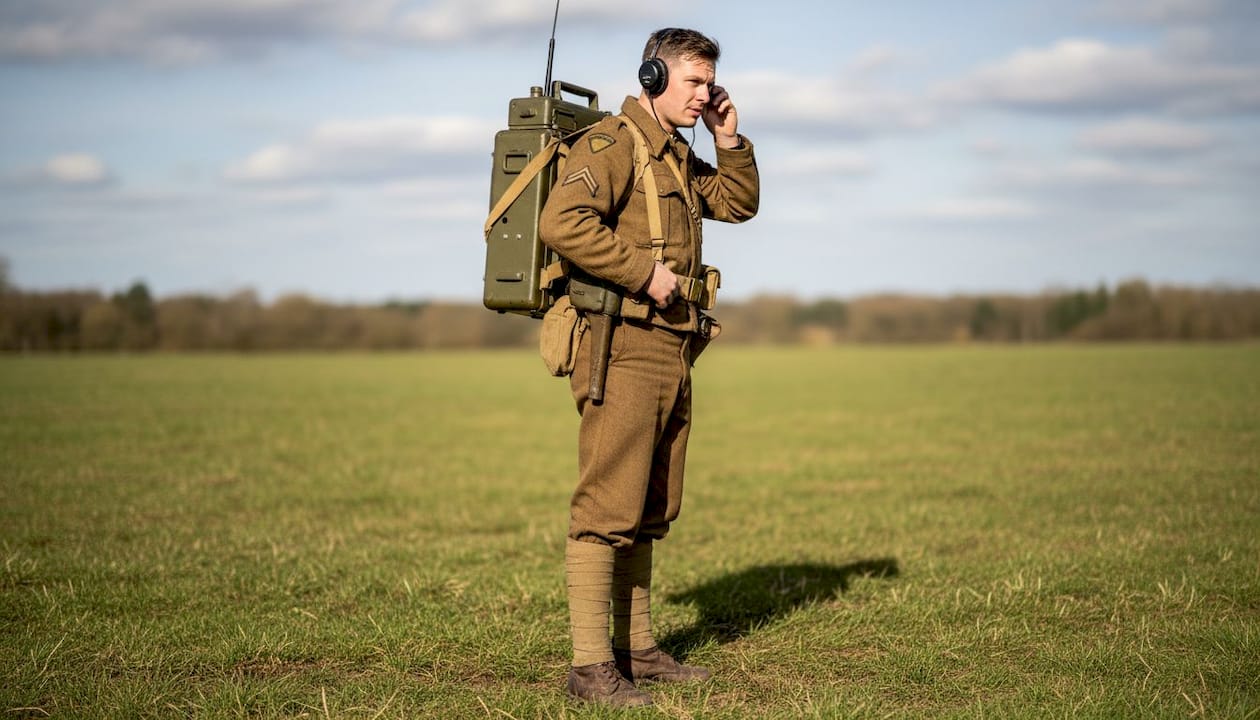
| Model | Weight | How it was carried | Used by |
|---|---|---|---|
| SCR-300 | Up to 38 lbs (17 kg) | Backpack | Infantry units |
| SCR-536 (Handie-Talkie) | 5 lbs (2.3 kg) | One hand | Frontline soldiers |
| Modern children’s set | Under 300 g | One hand (easily) | Young adventurers |
This comparison is genuinely brilliant for getting children to appreciate what they have. A modern kids’ walkie-talkie weighs less than most mobile phones, and certainly less than a full water bottle. Technology has made something extraordinary feel effortless.
The sheer bulk of early models also explains why operators needed to be physically strong and highly trained. Carrying 17 kilograms of electronics through muddy fields while maintaining clear communication was a remarkable feat. Children who find it amusing that soldiers once “walked” while using a “Walkie-Talkie” will delight even more when they realise just how heavy that walk must have been.
Pro Tip: Show your child a 2-litre bottle of water and explain that even the smaller Handie-Talkie weighed more than that. Then let them hold their own lightweight set and ask them which explorer they would rather be. It makes history feel real and immediate.
Modern versions also benefit from improved understanding of how walkie-talkies work for kids, with simpler controls and safer designs built specifically around small hands.
Did you know walkie-talkies have their own special language?
From their surprising size, let’s explore another reason children absolutely love walkie-talkies: they come with their very own secret language. This is not just fun. It is genuinely useful and teaches brilliant communication skills.
Walkie-talkies use what is called PTT (Push To Talk) technology. Because only one person can speak at a time, users developed a clear set of spoken codewords to keep conversations orderly. As highlighted in walkie-talkie etiquette for kids, this PTT etiquette teaches children turn-taking and clear speech, with terms like “Over”, “Roger”, and “Mayday” playing a central role.
Here are the most important codes your child can learn:
- “Over” means “I have finished speaking, your turn to reply.”
- “Roger” means “I have understood your message.”
- “Mayday” is an emergency call used when someone needs urgent help.
- “Copy” means “I received that information clearly.”
- “Stand by” means “Wait a moment, I will be right back.”
“Learning to say ‘Over’ and wait for a response teaches children something that many adults still struggle with: the art of truly listening before speaking.”
For family games, creating your own household codes adds an extra layer of excitement. You might choose a nature theme, where “Eagle spotted” means “I can see the target” during a treasure hunt, or “Fox den” means “I am hiding and safe.” The possibilities are wide open.
Pro Tip: Before heading outdoors, spend five minutes practising walkie-talkie language with your child at home. Use one radio each and role-play a mini mission. Children who practise the language indoors gain confidence before using it for real adventures outside.
The etiquette around walkie-talkies also teaches something deeper. Children learn that good communication is about clarity, patience, and respect for the other person’s turn to speak. Those are skills worth nurturing at any age.
Walkie-talkies inspire real-world adventures
Having learned the basics of walkie-talkie speak, let’s see how these gadgets unlock imagination and learning outdoors. This is where the real magic happens.
Walkie-talkies encourage outdoor play in a way that screens simply cannot match, supporting activities like treasure hunts and hiking whilst teaching turn-taking and teamwork in the process. The key is giving children a sense of purpose. When a child has a mission, they stop looking at the ground and start engaging with the world around them.
Here are five brilliant walkie-talkie games to try with your family:
- Nature scouts: Split into two groups and take turns describing what you see. The other team guesses the location from the description alone.
- Treasure hunt relay: One parent hides clues while children radio in each discovery before moving to the next.
- Wildlife watch: Each child monitors a different section of a park or garden and reports any creatures spotted.
- Base camp check-in: On a hiking trail, one adult walks ahead to “base camp” and children radio updates as they spot landmarks.
- Secret mission: Give each child a role (Scout, Navigator, Reporter) and a simple outdoor task to complete using only walkie-talkie communication.
“The moment a child successfully guides their parent to a hidden object using only their own words is the moment they discover how powerful clear communication really is.”
Beyond games, walkie-talkies build genuine independence. A child who can call for help, give their location, or confirm they are safe has developed a real-world skill. It also gives parents peace of mind during outdoor activities without handing over a smartphone.
Exploring walkie-talkie benefits for kids reveals just how much these simple devices contribute to confidence, creativity, and family connection.
Why fun matters in learning about walkie-talkies
Parents often pick up a walkie-talkie set thinking it is simply a fun toy for the garden. We would gently push back on that idea. Not because walkie-talkies are not fun, but because they are so much more than that, and underestimating them means missing a genuine opportunity.
When a child learns that the device in their hand connects them to 80 years of invention and wartime ingenuity, something shifts. Curiosity switches on. They start asking how radio waves travel, why only one person can speak at a time, and who came up with these clever codes. That curiosity is the seed of lifelong learning.
Walkie-talkies also quietly nurture responsibility. A child who knows their radio needs charging, should not be left in the rain, and must be used respectfully is practising ownership and care. These are not trivial lessons. They are foundations.
At The Zoofamily, we believe the best way to build confident, curious children is to surround them with tools that feel exciting but work in the real world. Walkie-talkies fit that perfectly. Sharing facts like the ones in this article, and then heading outside to put them into practice, is the kind of inspiring curiosity with walkie-talkies that stays with a child long after the batteries run out.
Discover more playful learning moments
If these facts have inspired you to make walkie-talkies a bigger part of your family’s outdoor life, you are in exactly the right place.
At The Zoofamily, we have put together guides, activity ideas, and resources to help parents turn simple outdoor moments into memorable adventures. From choosing the right set for your child’s age to designing your first family treasure hunt, everything is built around the idea that play and learning belong together. Explore our tips on walkie-talkies for child growth and discover how a little bit of radio magic can go a very long way for your family.
Frequently asked questions
What age is appropriate for walkie-talkies?
Most walkie-talkies are suitable for children five years and up, with simple models designed for ease of use. Sets with large buttons and clear volume controls are ideal for younger children who are just discovering outdoor communication and responsibility.
Can walkie-talkies really replace mobile phones for kids?
For short-range outdoor activities, walkie-talkies are safer and simpler than mobile phones, helping kids communicate easily. They also teach clear speech and turn-taking without the distractions a smartphone brings.
What is the range of a typical children’s walkie-talkie?
Kids’ walkie-talkies can reach up to 3 km in open areas, though real-world range varies with trees and buildings in the way. Interestingly, early walkie-talkies reached 1 to 5 miles depending on the model, so modern children’s sets are genuinely impressive by comparison.
What games can my child play with a walkie-talkie?
Children love using walkie-talkies for treasure hunts, hide-and-seek, and make-believe missions outdoors. These encourage imaginative games and exploration while building real communication skills at the same time.