

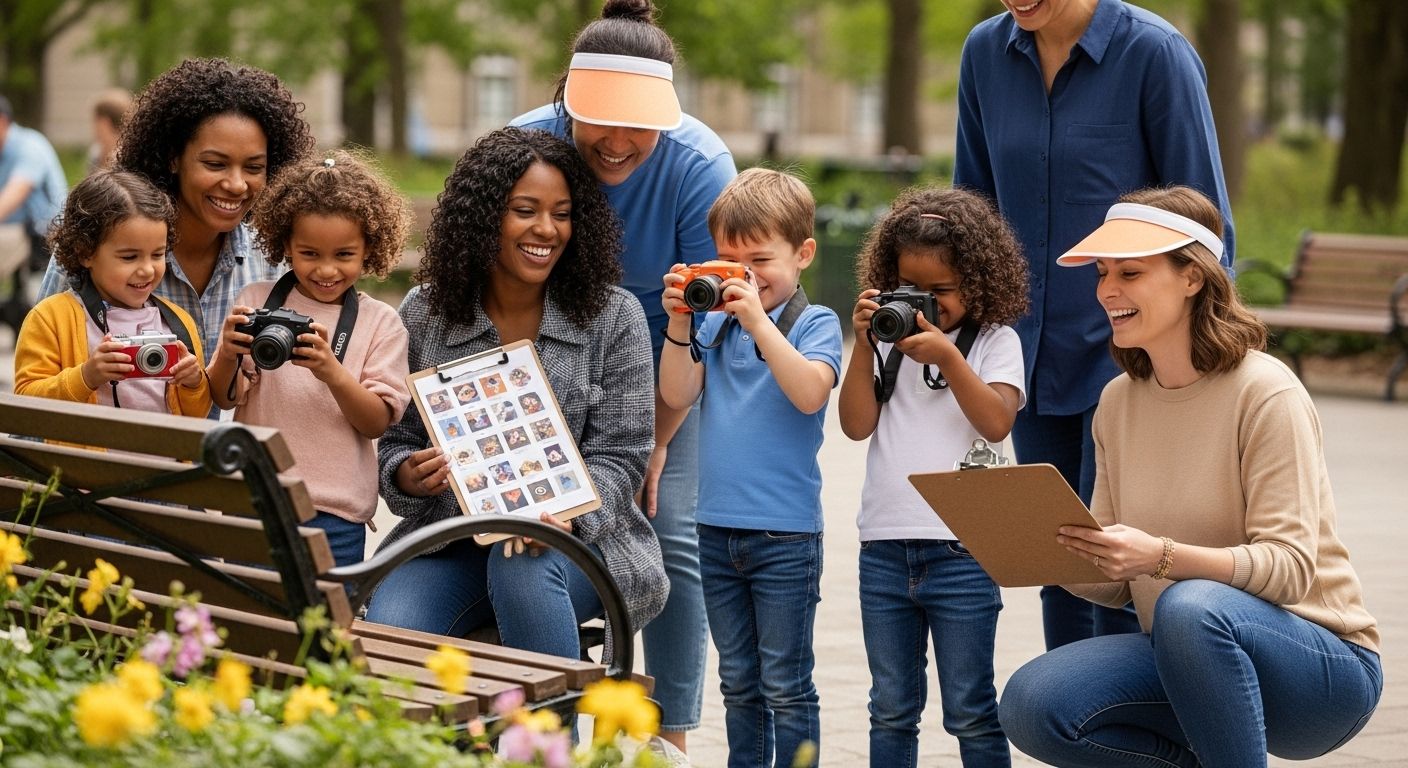
Photography scavenger hunts have quietly become a family favourite and for good reason. More than 60 percent of parents say these hunts inspire their kids to notice details in everyday life they usually ignore. That sounds impressive enough, right? Most people think it is all about snapping cute photos with your phone. Actually, the real magic happens before a single picture is taken, when families work together behind the scenes to spark creativity and turn ordinary moments into something unforgettable.
Table of Contents
- Choose A Theme For Your Scavenger Hunt
- Create A List Of Fun Photo Prompts
- Set Up Clear Rules And Guidelines
- Select An Appropriate Location
- Involve Your Kids In Planning The Hunt
- Use A Smartphone Or Camera For Best Results
- Celebrate With A Showcase Of Their Photos
Quick Summary
| Takeaway | Explanation |
|---|---|
| Select a Compelling Theme | A strong theme ignites creativity and guides participants on their photographic journey, enhancing engagement. |
| Craft Engaging Photo Prompts | Prompts should inspire exploration and creativity, balancing specificity with opportunity for personal interpretation. |
| Establish Clear Guidelines | Clear rules ensure safety and fairness, helping participants understand expectations and enjoy the experience. |
| Choose an Inspiring Location | The right location enhances visual diversity and aligns with the theme, making the hunt exciting. |
| Involve Children in Planning | Engaging kids in planning boosts their excitement and helps develop important skills like creativity and decision-making. |
1: Choose a Theme for Your Scavenger Hunt
Photography scavenger hunts transform ordinary exploration into extraordinary visual adventures. The secret to creating an unforgettable experience lies in selecting a compelling theme that sparks creativity and curiosity. A well-chosen theme provides structure, inspiration, and direction for participants, turning a simple photographic exercise into an engaging journey of discovery.
Themes can range from broad and imaginative to specific and focused. According to Michigan State University Extension, themes can be tailored to various environments and subjects, offering remarkable opportunities for learning and exploration.
When designing your photography scavenger hunt theme, consider the following strategic approaches:
-
Nature Explorer: Challenge participants to capture diverse plant species, wildlife interactions, or unique landscape features
-
Urban Storyteller: Encourage photographers to document architectural details, street scenes, or human interactions in city environments
-
Color Quest: Ask participants to find and photograph objects representing specific colours or colour combinations
-
Emotion Capture: Invite photographers to visually represent abstract emotions through creative compositions
The key is selecting a theme that matches your participants’ interests, skill levels, and the available environment. A thoughtful theme transforms a simple photography exercise into an immersive experience that encourages observation, creativity, and storytelling.
Remember that the most successful themes are those that challenge participants just enough to spark curiosity without feeling overwhelming. They should invite exploration, prompt critical thinking, and allow for personal interpretation. By carefully crafting your theme, you create a framework that turns photography into an exciting, educational adventure.
2: Create a List of Fun Photo Prompts
Photography scavenger hunts come alive through carefully crafted photo prompts that inspire creativity and challenge participants to see the world through a unique lens. Developing an engaging list of prompts requires imagination, strategic thinking, and an understanding of your participants’ skill levels and interests.
According to the National Park Service, photo prompts can transform an ordinary walk into an extraordinary visual exploration. The most compelling prompts push photographers to look beyond the obvious and capture unexpected perspectives.
When designing photo prompts, consider creating categories that encourage diverse and creative responses:
-
Sensory Prompts: Challenge photographers to capture images that represent sounds, textures, or emotions
-
Abstract Challenges: Ask participants to photograph shapes, patterns, or unusual perspectives that tell a unique story
-
Comparative Photography: Encourage images that showcase size, contrast, or unexpected relationships between objects
Effective photo prompts should strike a balance between being specific enough to provide clear direction and open enough to allow personal interpretation. Complexity matters. For younger participants, simpler prompts like “find something yellow” or “capture a moment of movement” work brilliantly. More advanced photographers might appreciate nuanced challenges such as “photograph something that represents hope” or “capture the contrast between nature and urban environments”.
Consider creating a mix of easy and challenging prompts to keep all participants engaged. Some photographers might feel intimidated by complex instructions, while others will thrive on creative challenges. The goal is to make the scavenger hunt accessible and enjoyable for everyone involved.
Timing is another crucial factor. Determine whether participants will have unlimited time or a specific window to complete their photo quest. This decision will influence the complexity and number of prompts you include. A well-designed list of photo prompts transforms a simple activity into an adventure of visual storytelling, encouraging participants to explore, observe, and capture the world around them with fresh eyes.
3: Set Up Clear Rules and Guidelines
Establishing comprehensive rules and guidelines is crucial for creating a safe, fair, and enjoyable photography scavenger hunt. Without clear parameters, participants might feel confused or uncertain about expectations, potentially diminishing the overall experience.
According to Education World, explicit guidelines are essential for maximizing engagement and preventing misunderstandings during photography activities.
Safety and Ethical Considerations should be at the forefront of your rules. Participants must understand boundaries and respect both their environment and fellow photographers. This means creating guidelines that protect individuals, property, and natural spaces.
Key rules to consider implementing include:
-
Photography Boundaries: Define specific areas where photography is permitted and prohibited
-
Participant Conduct: Establish expectations for respectful behavior and interaction
-
Equipment Handling: Provide clear instructions on camera care and responsible use
Time Management plays a critical role in structuring your photography scavenger hunt. Decide whether you want a fixed timeframe or a more flexible approach. Some hunts work best with strict time limits, while others benefit from a more relaxed schedule.
Consider creating a scoring system that encourages creativity and participation. This might involve awarding points for:
-
Unique photographic perspectives
-
Adherence to theme requirements
-
Technical skill and composition
-
Creativity in interpreting photo prompts
Ensure that all participants understand the rules before the hunt begins. A brief orientation session can help clarify expectations and address potential questions. Communication is key to creating a smooth and enjoyable experience.
Remember that rules should guide and inspire, not restrict. The goal is to create a framework that allows participants to explore their creativity, learn new skills, and have fun while capturing memorable images. Flexibility and a positive attitude can transform a simple set of guidelines into an exciting photographic adventure.
4: Select an Appropriate Location
Choosing the right location can transform a photography scavenger hunt from an ordinary activity into an extraordinary adventure. The perfect location offers diverse visual opportunities, ensures participant safety, and aligns with your chosen theme.
According to the National Park Service, strategic location selection is crucial for creating an engaging photographic experience that captures participants’ imagination and encourages exploration.
Urban environments and natural landscapes each offer unique photographic possibilities. When selecting a location, consider the following key factors:
-
Visual Diversity: Choose areas with multiple subjects and interesting backgrounds
-
Accessibility: Ensure the location is safe and easy to navigate for all participants
-
Permission Requirements: Confirm you have necessary permissions for group photography
Natural Settings provide extraordinary opportunities for photography scavenger hunts. Parks, botanical gardens, and nature reserves offer rich, dynamic environments with countless visual elements. Participants can capture everything from intricate plant details to sweeping landscape perspectives.
Urban Locations present equally compelling photographic challenges. City streets, museums, historical districts, and architectural landscapes create opportunities for capturing human interactions, structural details, and cultural nuances. Each urban environment tells a unique visual story.
Consider the skill levels and ages of your participants when selecting a location. Younger photographers might feel overwhelmed in complex environments, while experienced photographers will seek more challenging landscapes. Flexibility is key.
Safety should always be your primary consideration. Avoid locations with potential hazards, ensure good lighting conditions, and select areas with clear boundaries. Supervision is essential, particularly when working with younger participants.
Ultimately, the best locations inspire creativity, provide visual diversity, and make participants feel excited about exploring and capturing their surroundings through a photographic lens. A thoughtfully chosen location can turn a simple scavenger hunt into an unforgettable creative journey.
5: Involve Your Kids in Planning the Hunt
Turning a photography scavenger hunt into a collaborative planning experience can transform an ordinary activity into an extraordinary family adventure. Involving children in the planning process not only builds excitement but also develops critical skills like creativity, problem-solving, and decision-making.
Children bring unique perspectives and boundless imagination to project planning. By inviting them to contribute ideas, you create a sense of ownership and anticipation that makes the entire experience more engaging. Collaborative planning becomes a learning opportunity that extends far beyond the actual hunt.
Consider these strategies for meaningful kid involvement:
-
Brainstorm Theme Ideas: Let children suggest creative themes or photographic challenges
-
Location Selection: Discuss potential hunt locations and gather their input
-
Rule Creation: Encourage them to help establish fair and fun guidelines
Age-appropriate participation is crucial. Younger children might enjoy selecting bright, simple themes or suggesting easy photo challenges. Older kids can delve into more complex planning, such as designing intricate photo prompts or mapping potential routes.
Technology can be a fantastic planning tool. Create a shared digital document or use a family messaging app where everyone can contribute ideas. This approach makes planning feel like a collaborative game, building anticipation and excitement.
Remember that the planning process is as important as the hunt itself. Some of the most memorable moments will happen during these collaborative discussions. You are not just planning an activity, but creating lasting family memories and teaching valuable life skills.
Encourage creativity and remain open to even the most unusual suggestions. A seemingly silly idea from a child might spark an innovative and exciting approach to your photography scavenger hunt. The goal is to create an inclusive, enjoyable experience that makes every family member feel valued and heard.
By involving your children in planning, you transform a simple photography activity into a rich, interactive learning experience that strengthens family bonds and nurtures creative thinking.
6: Use a Smartphone or Camera for Best Results
Modern technology has revolutionized photography, making scavenger hunts more accessible and exciting than ever before. Smartphones and dedicated cameras offer powerful tools that transform children’s photographic experiences, enabling creative exploration and skill development.
According to Common Sense Education, leveraging technology can significantly enhance learning experiences by utilizing devices participants already understand and enjoy.
Smartphone Advantages make them ideal for photography scavenger hunts:
-
Instant Editing: Built-in filters and editing tools
-
Immediate Sharing: Quick photo upload and collaboration
-
GPS Tagging: Location tracking for hunt documentation
When selecting a device, consider the following key characteristics:
-
Camera Resolution: Higher megapixels provide clearer images
-
Storage Capacity: Ensure enough space for multiple photographs
-
Battery Life: Choose devices with long-lasting performance
Child-Friendly Considerations are crucial. For younger participants, consider devices with protective cases, simple interfaces, and parental controls. Some cameras designed specifically for children offer robust, drop-resistant construction and user-friendly features.
Technical skills develop naturally during photography scavenger hunts. Children learn composition, lighting, and perspective while having fun. Encourage experimentation and remind participants that mistakes are part of the learning process.
Be mindful of digital safety. Establish clear guidelines about photography boundaries, respect for privacy, and appropriate image sharing. Teaching responsible technology use becomes an invaluable lesson alongside photographic skills.
Whether using a smartphone or dedicated camera, the goal remains the same: creating an engaging, educational experience that sparks creativity and curiosity. The right device becomes a gateway to visual storytelling, helping children see the world through a unique, imaginative lens.
7: Celebrate with a Showcase of Their Photos
Celebrating children’s photographic achievements transforms a simple scavenger hunt into a meaningful, affirming experience. The showcase represents more than just displaying images - it’s an opportunity to recognize creativity, boost confidence, and create lasting memories.
According to Penn State Extension, displaying photographs helps children feel special and connected, enhancing their sense of belonging and accomplishment.
Showcase Options can range from simple to elaborate:
-
Digital Slideshow: Create a multimedia presentation of captured images
-
Physical Exhibition: Print photographs and create a gallery-style display
-
Online Album: Share images through a secure family platform
Consider these strategies for a memorable photo celebration:
-
Individual Recognition: Highlight unique perspectives from each participant
-
Storytelling Opportunity: Invite children to explain the story behind their photographs
-
Constructive Feedback: Offer gentle, encouraging comments about their creativity
Technology can enhance the showcase experience. Use projectors, digital frames, or create a shared online album where family members can view and appreciate the photographs. This not only celebrates the children’s achievements but also allows distant relatives to participate in the excitement.
Encourage children to discuss their photographic journey. What challenged them? What surprised them? What did they learn? These conversations transform the showcase from a simple display into a rich learning experience.
Remember that the goal is not perfection, but progression. Celebrate each child’s unique vision, creativity, and effort. Some photographs might be technically imperfect, but rich with emotion, humor, or unexpected insight.
A thoughtful showcase validates children’s creative expression, builds their confidence, and turns a photography scavenger hunt into an unforgettable family memory. It’s a celebration of exploration, imagination, and the unique way children see the world.
Below is a comprehensive table summarising the key steps, benefits, and outcomes of organising an exciting photography scavenger hunt, as detailed in the article:
| Step / Principle | Key Actions & Strategies | Educational or Family Benefits |
|---|---|---|
| 1. Choose a Theme | Select a creative, age-appropriate theme that sparks curiosity (e.g., Nature Explorer, Colour Quest) | Encourages observation, imagination, and storytelling |
| 2. Create Fun Photo Prompts | Design prompts balancing simplicity and complexity; cater to participants’ interests and skills | Inspires creativity, exploration, and visual thinking |
| 3. Set Clear Rules & Guidelines | Establish safety boundaries, fair play, respectful conduct, and simple scoring systems | Ensures safety, fairness, and structure |
| 4. Select an Inspiring Location | Opt for accessible, visually diverse settings tailored to age group and theme | Engages participants and promotes exploration |
| 5. Involve Children in Planning | Encourage kids to contribute ideas for themes, rules, and locations | Fosters ownership, confidence, and decision-making |
| 6. Use Age-Appropriate Technology | Select user-friendly cameras or smartphones with protective features, educating on responsible use | Develops technical skills and digital responsibility |
| 7. Celebrate with a Photo Showcase | Display photos via slideshows, galleries, or online albums; invite storytelling and positive feedback | Builds confidence, recognises creativity, and creates memories |
This table condenses the article’s main guidance, steps, and outcomes to support your next creative family photography scavenger hunt.
Spark Real-World Adventure with The Zoofamily’s Creative Tools
Do you find your children craving more than just digital entertainment? The article highlighted a common challenge for families: keeping kids truly engaged while sparking their curiosity for nature and creative discovery. With photography scavenger hunts, you encourage children to explore, observe, and tell stories through their own eyes. But without the right tools, it becomes hard for kids to fully immerse themselves and capture those captivating moments.
Give your next scavenger hunt a boost by choosing innovative gear from The Zoofamily which is designed especially for young explorers. Our range of kids’ cameras, walkie-talkies, and binoculars helps children turn outdoor activities into unforgettable journeys. Each product is thoughtfully crafted to connect kids to the beauty of the world around them, making every prompt and photo challenge from your hunt even more exciting. Take the next step—visit The Zoofamily now and see how easy it is to combine discovery, creativity, and care for our planet on your next family adventure. Plant a tree with every camera sold and inspire your children to make a lasting impact today.
Frequently Asked Questions
What is a photography scavenger hunt?
A photography scavenger hunt is an engaging activity where participants are challenged to take photographs based on specific themes or prompts, allowing for creative exploration and storytelling through images.
How do I choose a theme for my scavenger hunt?
Select a theme that resonates with the interests and skill levels of your participants, such as nature, urban environments, or emotions. A well-chosen theme will provide inspiration and structure for the hunt.
What types of photo prompts should I use?
Incorporate a variety of prompts that encourage creative interpretation, such as sensory prompts, abstract challenges, or comparative photography. This diversity allows participants to explore different aspects of their environment and enhances the scavenger hunt experience.
How can I ensure a smooth photography scavenger hunt?
Establish clear rules and guidelines to promote safety and fairness, select an appropriate location with visual diversity, and involve participants in the planning process for a more engaging experience.
Recommended
-
[ Prince Frog Kids Camera
– The Zoofamily](https://thezoofamily.com/en/products/prince-frog-kids-digital-camera)
-
[ Urban Zoo - Unicorn
– The Zoofamily](https://thezoofamily.com/en/products/periwinkle-the-unicorn)
-
[ Deer Kids Camera
– The Zoofamily](https://thezoofamily.com/en/products/brown-deer-kids-digital-camera)
-
[ Urban Zoo - Lion
– The Zoofamily