

By 9 months, most babies can transfer a toy from one hand to the other, use a raking grasp to scoop up food or small objects, and bang two items together with real intent. Some are already pinching small pieces between thumb and finger. If your baby shows none of these hand skills yet, mention it at your next check-up and ask about the 9-month developmental screening rather than waiting to see what happens.
TL;DR:
- Most babies should be able to transfer objects between hands and use a raking grasp by 9 months, with some demonstrating early pinching skills.
- Fine motor progress from 6 to 12 months typically moves from a palmar grasp to a pincer grasp, influenced by gross motor skills like sitting and crawling.
- Repetitive play with everyday objects, such as stacking cups or passing toys, effectively supports the development of the pincer grasp and hand-eye coordination.
- Red flags include the absence of hand-to-hand transfer by 10 months, persistent one-sided hand use, or no interest in exploring objects, warranting early medical consultation.
- Developmental screening at 9 months helps identify delays, especially if there is little hand use or regression, and early intervention can support further progress.
Table of Contents
- Typical 9 month old fine motor skills to look for
- From raking to pinching: how fine motor skills develop from 6 to 12 months
- Fine motor activities for a 9 month old that actually help
- A quick 9 month fine motor checklist and red flags to watch for
- When to seek help: screening, occupational therapy and early intervention
- Perspective: how nature-themed toys support repeated practice
- Editorial take: what to expect and how to help, honestly
- Where to see play-focused toys built for curious hands
- Sources
- FAQ
Typical 9 month old fine motor skills to look for
The hands do most of the talking at this age. A 9-month-old is no longer just swiping at objects. They are working out how to move, hold, and manipulate them with purpose, and you can see it happen in ordinary moments throughout the day.
The CDC’s 9-month milestone checklist lists hand-to-hand transfer and the raking grasp as two of the clearest markers of typical development at this stage. Raking means sweeping the fingers across a surface to drag small items, like peas or cereal pieces, towards the palm rather than picking them up individually. It looks clumsy, but it is the direct precursor to the neater pincer grasp that develops over the following months.
Watch for these behaviours during play and mealtimes:
- Hand-to-hand transfer: passing a toy or rattle from the left hand to the right without dropping it.
- Raking grasp: scooping small pieces of food towards themselves using the whole hand rather than individual fingers.
- Banging and clapping: striking two blocks together, or attempting to clap along to a song.
- Mouthing objects: bringing toys to the mouth as a way of exploring texture and shape, still very common at this age.
- Early pincer attempts: using thumb and index finger together, even imprecisely, to pick up something small like a piece of banana.
- Poking and pointing: using an extended index finger to poke at buttons, holes, or a sibling’s face.
Most parents notice raking and transferring first because they show up constantly at snack time. MedlinePlus notes that self-feeding with fingers, banging objects together, and grasping with thumb and index finger are all typical for this stage, and mealtimes tend to be where these skills get the most daily practice. If your baby seems to ignore small objects entirely, or never brings hands together in the midline, that pattern is worth flagging rather than assuming they will catch up unprompted.
From raking to pinching: how fine motor skills develop from 6 to 12 months
Fine motor progress between 6 and 12 months follows a fairly predictable sequence, even though the exact timing varies from baby to baby. At around 6 months, most infants use a palmar grasp, essentially clutching an object with the whole hand and little finger differentiation. By 9 months, the raking grasp takes over, and by 10 to 12 months, many babies refine that into a true pincer grasp using thumb and forefinger to pick up small objects.

That shift from raking to pincer does not happen in isolation. According to guidance on fine motor development between 6 and 12 months, babies move from tipping a container to dump everything out at once, to eventually removing items one by one, a shift that reflects growing dexterity and patience rather than just stronger fingers.
Gross motor stability plays a bigger role in this than most parents expect. A baby who can sit independently, without using their hands to prop themselves up, has freed those hands for exploration and manipulation. That link between trunk control and hand skill is well documented, and it explains why:
- Babies who are still working hard to balance while sitting often show slower fine motor refinement, simply because their hands are busy stabilising the body.
- Crawling and reaching in different directions strengthens shoulder and wrist control, which feeds directly into more controlled grasping.
- Tummy time earlier in infancy builds the core and shoulder strength that underpins steady hand use later on.
If your baby is sitting well but still relies entirely on raking with no sign of finger differentiation by 10 to 11 months, that is a reasonable moment to mention it to your paediatrician, particularly if other fine motor milestones also seem to be lagging.
Fine motor activities for a 9 month old that actually help
Babies do not need expensive toys to practise these skills. What they need is repetition, safe objects of varying sizes, and a bit of your patience while they fumble through it. Try building these into the day rather than treating them as separate “sessions”:
- Filling and dumping games. Give your baby a small, unbreakable container and a handful of large, soft blocks or fabric balls. Let them tip everything out repeatedly. This messy, repetitive play is one of the clearest indicators of emerging dexterity and spatial awareness at this age.
- Stacking soft cups. Nesting cups or stackable rings encourage controlled release, which is genuinely harder for babies than grasping. Model stacking one cup on another slowly so they can watch the hand movement.
- Passing small, safe objects. Hand your baby a large wooden bead or a chunky crayon and ask for it back, extending your palm. This builds the give-and-take of intentional release, which many babies have not mastered yet.
- Supervised finger-food practice. Offer soft, appropriately sized pieces of banana, avocado, or steamed carrot during meals. This turns hunger into motivation and gives natural, frequent repetitions of the raking-to-pincer movement.
- Poking and pointing games. Board books with textured pages, or toys with large buttons, invite that early index-finger poke that later becomes pointing to communicate.
Adjust the difficulty as your baby improves. If filling and dumping feels too easy, swap in slightly smaller objects (always larger than a choking hazard) to encourage more precise pinching rather than a full-hand grab.
Pro Tip: Keep each activity to five or ten minutes and repeat it across several short sessions a day rather than one long play block. Babies build motor patterns through frequent, low-pressure repetition, not marathon sessions, and short bursts also hold their attention far better.
A simple wooden spoon, an empty yoghurt pot, or a set of stacking cups from the kitchen cupboard works just as well as anything bought specifically for this purpose. For more structured ideas, this guide on developing fine motor skills through play covers activities that scale up as your baby’s grip matures.

A quick 9 month fine motor checklist and red flags to watch for
Run through this list during a normal play session rather than treating it as a test. You are looking for the presence of these skills somewhere in the last few weeks, not perfect execution every time.
- Transfers an object from one hand to the other
- Uses a raking grasp to gather small pieces of food
- Bangs two objects together or claps
- Brings toys to the mouth as part of exploring them
- Shows the beginnings of a pincer grasp, even if inconsistent
- Reaches for and grasps objects with reasonable accuracy
Screening note: CDC guidance lists 9 months as one of the recommended ages for developmental screening, alongside ongoing monitoring at every well-child visit. Screening uses a standardised tool rather than relying purely on a parent’s recollection, which is why it can pick up patterns that might otherwise get missed.
Certain patterns warrant a conversation with your paediatrician sooner rather than later:
- No hand-to-hand transfer at all by 9 to 10 months
- Little or no interest in using the hands to explore toys or food
- Strong, persistent one-sided hand use, ignoring the other hand almost entirely
- Any regression, where a skill your baby had previously shown seems to disappear
One-sided hand preference is the pattern parents most often dismiss as personality, when it can sometimes point to something affecting one side of the body. It rarely means anything serious, but it is exactly the kind of thing a screening is designed to catch early.
When to seek help: screening, occupational therapy and early intervention
Monitoring and screening are not the same thing, and it helps to know the difference. Developmental monitoring is the ongoing observation your paediatrician does at every visit, asking questions and watching your baby move. Screening is more formal: a validated checklist administered at specific ages, including 9 months, that flags whether a fuller evaluation is warranted.
The American Academy of Pediatrics recommends developmental screening at 9, 18, and 30 months. During a 9-month check-up, your paediatrician will often ask to play with your baby directly rather than relying only on what you report, since watching a baby reach, grasp, and transfer in real time gives a clearer picture than a verbal checklist alone.
If a screening raises concerns, the next step is usually a referral for a fuller occupational therapy assessment, which typically looks at grasp patterns, hand strength, bilateral coordination, and how your baby uses both hands together during play. Early intervention services, available from birth to age 3 in many regions, can then provide targeted support well before school age.
Before a check-up, it helps to:
- Note down specific examples of what your baby does and does not do with their hands
- Bring a favourite toy so the paediatrician can observe natural play
- Ask directly whether a 9-month screening is being done at this visit
- Write down any family history of developmental delays
Perspective: how nature-themed toys support repeated practice
Fine motor skill develops through repetition, and repetition only happens when a baby actually wants to keep picking something up. That is where object design matters more than parents often assume. A toy with an interesting texture, a simple animal shape, or a shifting weight gives a baby a reason to return to it again and again, which is exactly the kind of low-pressure practice occupational therapists describe as most effective.
Some brands build kids’ cameras, walkie-talkies, and binoculars around animal references specifically to spark curiosity, with straightforward grips designed for small hands to explore. Many product lines are designed for children aged 3 and up rather than infants, so they serve as future-proof play for toddlers moving past the 9-month stage. Some brands also plant a tree for every camera sold, creating a connection between purchase and environmental impact.
Editorial take: what to expect and how to help, honestly
Milestone checklists are intended as general reference points rather than strict pass or fail tests. The CDC’s own framing is closer to a shared reference point than a scorecard, and the biggest mistake I see parents make is panicking over a single missed item rather than watching the overall pattern across weeks.
What the evidence actually supports is simpler than most advice columns suggest: sitting stability, frequent hands-on repetition, and patient adults who let babies fumble through release and pinch attempts do more than any specific toy or programme. Conventional advice tends to overweight buying the “right” developmental toy and underweight the value of ordinary kitchen objects and unhurried mealtimes.
Prioritise watching for the pattern, not the perfection. A baby who transfers objects inconsistently but improves week on week is on track. A baby who shows no interest in using their hands at all, week after week, is the one worth raising with a paediatrician sooner rather than later.
— ALAIN
Where to see play-focused toys built for curious hands
Thezoofamily’s advantage is straightforward: every product is built around an animal design that gives children a reason to keep exploring it, and every camera sold funds a tree planted, so the purchase does something beyond the toy box.
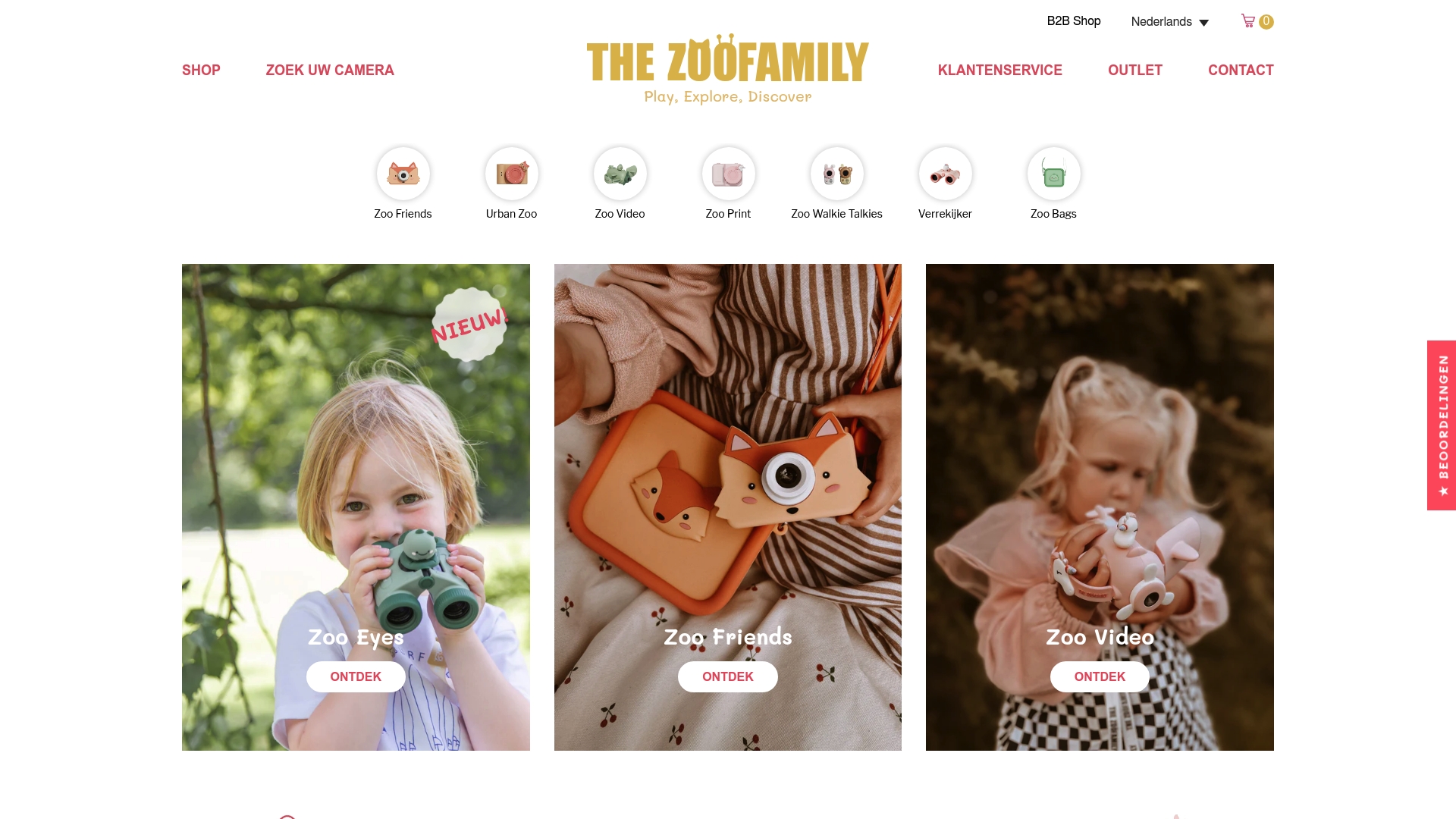
Most of the range, including Zoo Friends, Urban Zoo, and the Zoo Walkie-Talkie, is designed for children aged 3 and up, so for a 9-month-old these are best thought of as toys to grow into rather than something for right now. If you are already planning ahead for toddlerhood, or shopping for an older sibling while your baby practises those early pincer grasps, it is worth browsing the full range of Zoo Friends, Urban Zoo, and other product lines to see which designs might suit your family later on.
Sources
This guide draws on the CDC’s 9-month milestone checklist, MedlinePlus’s developmental milestone summary, HealthyChildren.org’s physical development guidance, and clinical guidance on fine motor development from 6 to 12 months. Screening pathways and early intervention services vary by country and region, so check with your local health authority or paediatrician for what is available where you live.
This article is general information, not a substitute for advice from a qualified doctor. Consult a qualified healthcare professional about your own circumstances before acting on anything here.
- Milestones by 9 Months | Learn the Signs. Act Early.
- Fine motor development: 6–12 months
- Healthychildren
FAQ
What are some red flags for a 9-month-old baby?
The main red flags are no hand-to-hand transfer by 9 to 10 months, little interest in using the hands to explore objects, strong one-sided hand use, or the loss of a skill your baby previously had. Any of these patterns is worth raising at your next check-up rather than waiting to see if it resolves alone.
Is a fine motor delay a sign of autism?
Not typically. Fine motor delays are far more often linked to general motor development variation, prematurity, or simply individual pace, and they are not, by themselves, a diagnostic sign of autism. A paediatrician can help sort out whether a delay needs further evaluation, which is exactly what the 9-month developmental screening is designed to do.
What should I be doing with my 9-month-old every day?
Short, frequent bursts of hands-on play work better than long structured sessions: think filling and dumping containers, supervised finger foods, passing objects back and forth, and stacking soft cups. Five to ten minutes repeated several times a day gives far more useful practice than one long play block.
What gestures should a 9-month-old be doing?
Most babies this age can wave, point with an extended index finger, bang objects together, and attempt to clap along to music or singing. These gestures typically appear alongside the raking grasp and hand-to-hand transfer that CDC milestones list for this age.
Does Thezoofamily make toys suitable for 9-month-olds?
Most Thezoofamily products, including the Zoo Friends and Urban Zoo lines, are designed for children aged 3 and older rather than infants. Current prices and full product details are available on the Thezoofamily website.