

People often think a sparkling home means harsh chemicals and piles of waste. Yet, traditional cleaning methods release toxins and put our health at risk, with studies showing that over 60 percent of household cleaning products contain substances harmful to both people and the planet. This might seem unavoidable, but a different approach is setting a new standard. Sustainable cleaning promises spotless spaces while caring for our wellbeing and the environment.
Table of Contents
- What Is Sustainable Cleaning And Its Principles?
- Why Sustainable Cleaning Matters For Families
- How Sustainable Cleaning Works: Products And Practices
- Key Concepts Behind Sustainable Cleaning Approaches
Quick Summary
| Takeaway | Explanation |
|---|---|
| Use eco-friendly cleaning products | Choose non-toxic, biodegradable agents to reduce environmental harm. |
| Reduce water and energy use | Implement strategies to conserve resources during cleaning activities. |
| Consider the lifecycle of products | Evaluate the environmental impact of cleaning products from production to disposal. |
| Minimise chemical exposure at home | Select safer cleaning options to protect family health, especially for children. |
| Teach children about eco-responsibility | Involve kids in sustainable cleaning practices for growing awareness of environmental issues. |
What is Sustainable Cleaning and Its Principles?
Sustainable cleaning represents a holistic approach to maintaining cleanliness while minimising environmental impact and protecting human health. Unlike traditional cleaning methods that prioritise immediate results, sustainable cleaning integrates ecological consciousness with effective sanitation practices.
Core Principles of Sustainable Cleaning
At its essence, sustainable cleaning encompasses several interconnected principles designed to create a responsible approach to hygiene. According to research from the International Journal of Environmental Research and Public Health, sustainable cleaning focuses on three fundamental aspects:
- Environmentally Friendly Chemicals: Using non-toxic, biodegradable cleaning agents that minimise ecosystem disruption
- Resource Conservation: Reducing water and energy consumption during cleaning processes
- Lifecycle Perspective: Considering the entire environmental impact from product manufacturing to disposal
The Ecological Impact of Cleaning Practices
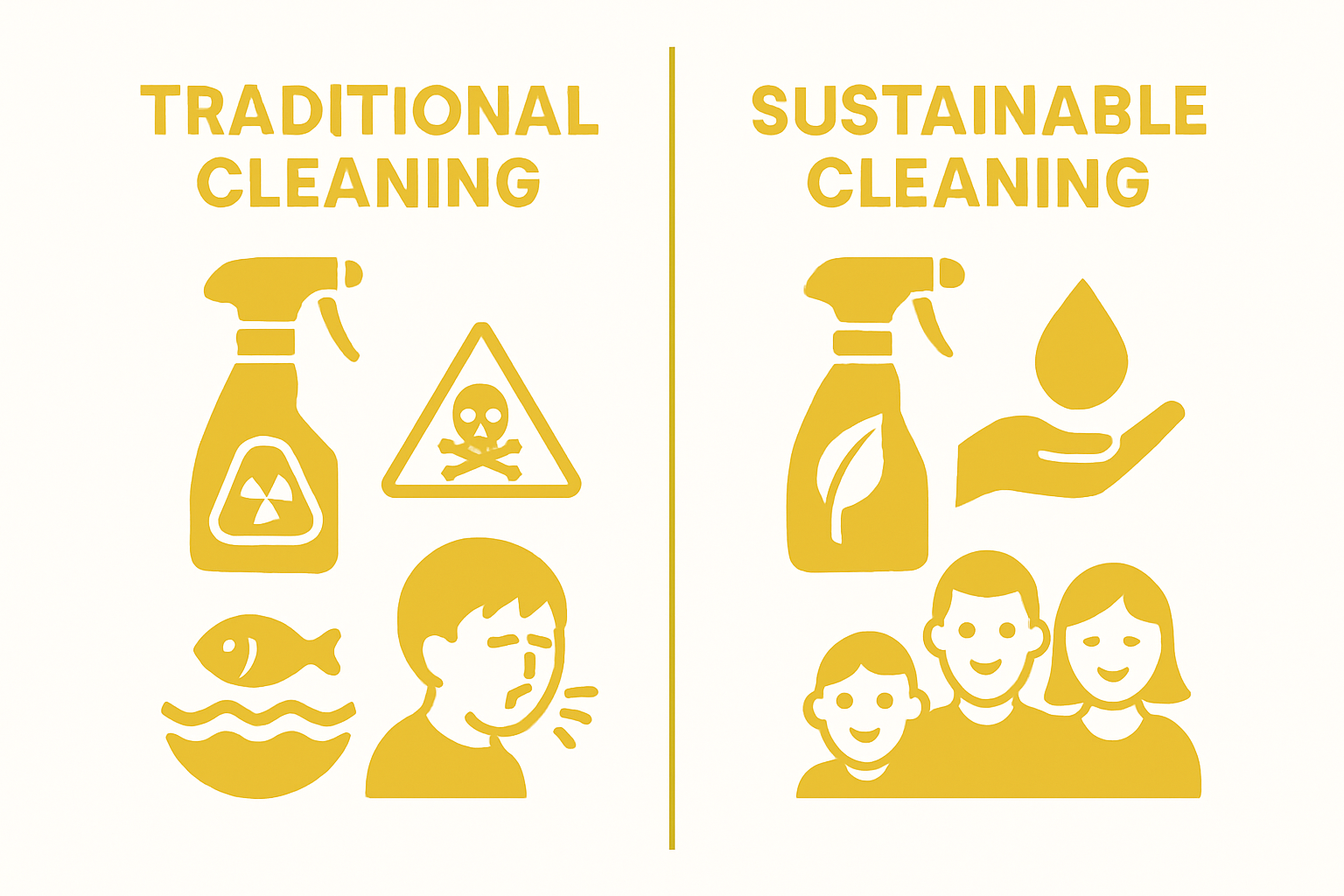
Traditional cleaning methods often involve harsh chemicals that can harm ecosystems, contaminate water sources, and pose risks to human health. Sustainable cleaning challenges these conventional approaches by prioritising natural, renewable resources and minimising chemical intervention.
The goal is not just clean surfaces, but a comprehensive strategy that protects both immediate environments and broader ecological systems.
The following table compares traditional cleaning with sustainable cleaning, clarifying their main differences to help readers understand the benefits of choosing a sustainable approach.
| Aspect | Traditional Cleaning | Sustainable Cleaning |
|---|---|---|
| Chemical Use | Frequently uses harsh, synthetic chemicals | Employs non-toxic, biodegradable agents |
| Environmental Impact | May harm ecosystems and contribute to pollution | Minimises ecosystem disruption and pollution |
| Resource Consumption | Often involves significant water and energy use | Actively conserves water and energy |
| Waste Generation | Typically generates more plastic and chemical waste | Reduces waste and promotes minimal packaging |
| Health Implications | Can expose households to harmful substances | Lowers chemical exposure and improves indoor air quality |
| Approach to Products | Focuses on immediate cleaning results | Considers whole product lifecycle from production to disposal |
For families seeking practical ways to implement sustainable cleaning, our guide on eco-friendly cleaning tips offers actionable strategies that transform everyday cleaning into an environmentally responsible practice.
Why Sustainable Cleaning Matters for Families
Sustainable cleaning is not merely an environmental trend but a critical approach to safeguarding family health and protecting our planet. Modern families increasingly recognise that everyday cleaning choices have profound implications beyond surface-level cleanliness.
Health Implications of Cleaning Practices
Traditional cleaning products often contain harsh chemicals that can significantly impact family wellness. According to the New York State Office of General Services, green cleaning practices can reduce exposure to toxic substances and improve indoor air quality. This is particularly crucial for families with children, who are more vulnerable to chemical sensitivities.
Key health benefits of sustainable cleaning include:
- Reduced Chemical Exposure: Minimising contact with potentially harmful synthetic substances
- Improved Respiratory Health: Decreasing risk of allergies and respiratory irritations
- Enhanced Indoor Environment: Creating safer living spaces for children and adults
Environmental Protection at Home
Every cleaning decision families make ripples through broader ecological systems. By choosing sustainable cleaning methods, households directly contribute to reducing environmental pollution, conserving resources, and supporting ecosystem health.
Moreover, adopting sustainable cleaning practices teaches children valuable lessons about environmental responsibility. Our guide on protecting the planet with children offers additional insights into integrating eco-conscious habits into family life.
Ultimately, sustainable cleaning represents a holistic approach that harmonises household hygiene with environmental stewardship, creating healthier spaces for families and the planet.
How Sustainable Cleaning Works: Products and Practices
Sustainable cleaning transforms traditional cleaning approaches by integrating environmentally conscious products, methodologies, and strategic practices that minimise ecological impact while maintaining exceptional hygiene standards.
Green Cleaning Product Selection
Selecting appropriate sustainable cleaning products forms the foundation of an eco-friendly cleaning strategy. According to the U.S. Environmental Protection Agency, green cleaning products are characterised by their reduced environmental footprint and safer ingredient profiles.
Key characteristics of sustainable cleaning products include:
- Plant-Based Ingredients: Utilising renewable, biodegradable components
- Minimal Packaging: Reducing plastic waste through concentrated formulations
- Non-Toxic Composition: Eliminating harmful chemicals and potential environmental contaminants
Efficient Cleaning Practices
Beyond product selection, sustainable cleaning encompasses holistic practices that conserve resources and minimise waste. This approach involves strategic cleaning techniques that reduce water consumption, energy use, and unnecessary chemical interventions.
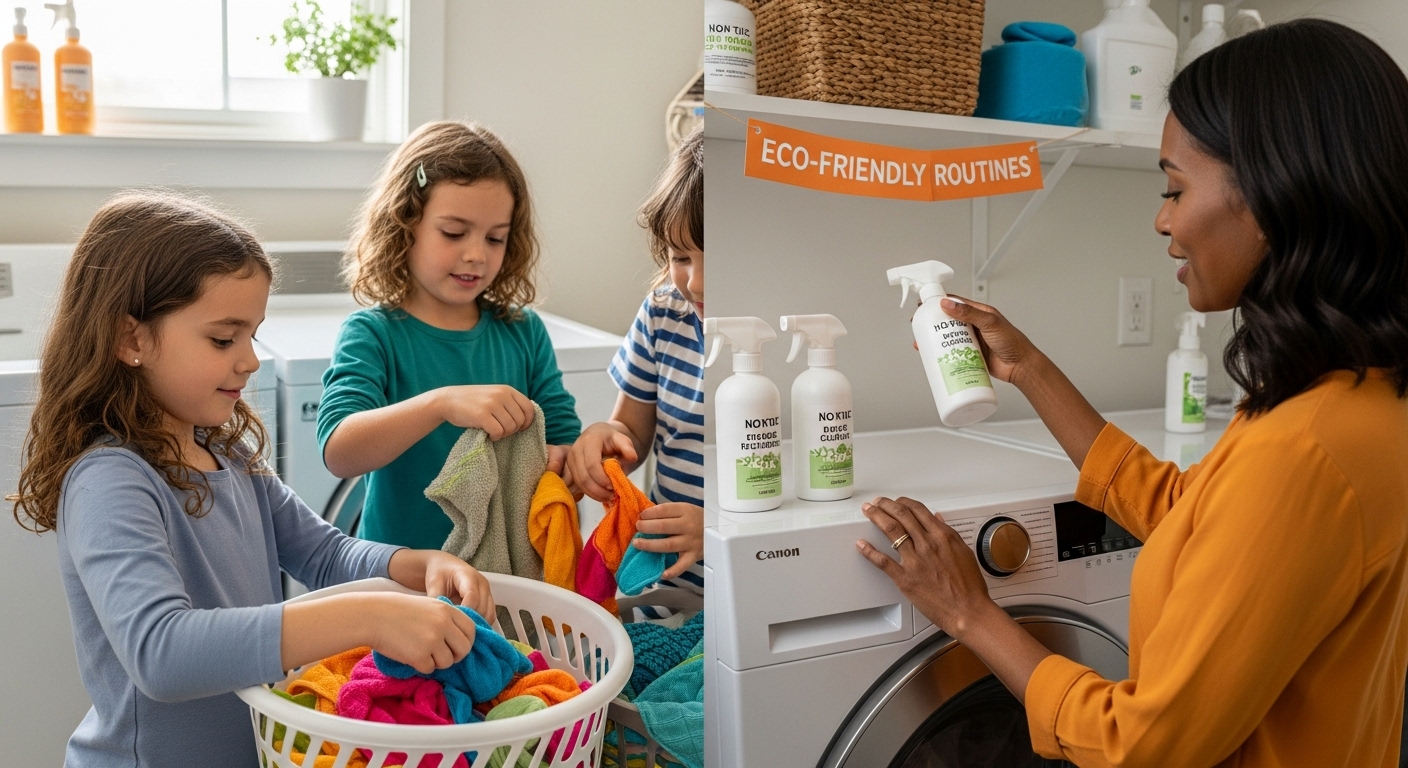
Implementing sustainable cleaning practices requires a comprehensive understanding of resource management and environmental impact. Our guide on eco-friendly routines provides deeper insights into integrating these principles into daily household management.
Sustainable cleaning is not about compromise but about making intelligent choices that protect both household health and global ecosystems. By adopting these practices, families can create cleaner, safer living environments while contributing to broader environmental conservation efforts.
Key Concepts Behind Sustainable Cleaning Approaches
Sustainable cleaning transcends traditional cleaning methodologies by integrating scientific principles, environmental consciousness, and holistic resource management. Understanding these foundational concepts enables families to make informed decisions about their cleaning practices.
Lifecycle Thinking in Cleaning
Lifecycle thinking represents a fundamental paradigm shift in approaching cleaning practices. According to the American Cleaning Institute, this approach considers the entire environmental journey of cleaning products from production to disposal.
Key elements of lifecycle thinking include:
- Origin Analysis: Examining the environmental impact of raw material extraction
- Production Evaluation: Assessing manufacturing processes and energy consumption
- Disposal Considerations: Understanding long-term environmental consequences of product waste
Green Chemistry Principles
Green chemistry provides the scientific foundation for sustainable cleaning approaches. This innovative framework focuses on designing chemical products and processes that inherently reduce or eliminate hazardous substances, addressing environmental challenges at their molecular level.
The core principles of green chemistry emphasise:
This table summarises the key principles of green chemistry mentioned in the article, providing readers with clear definitions for each term within the context of sustainable cleaning.
| Principle | Definition |
|---|---|
| Preventative Design | Creating cleaning products that are designed to minimise waste generation throughout their use and disposal |
| Reduced Toxicity | Developing chemical formulations that are safer for both human health and the environment |
| Energy Efficiency | Reducing the energy required in manufacturing and throughout the lifecycle of cleaning products |
- Preventative Design: Creating products that minimise waste generation
- Reduced Toxicity: Developing safer chemical alternatives
- Energy Efficiency: Minimising energy consumption during product lifecycle
By embracing these sophisticated yet practical approaches, families can transform cleaning from a routine task into a deliberate act of environmental stewardship. Our guide on eco-friendly routines offers practical strategies for implementing these principles in daily life.
Sustainable cleaning is not about perfection but continuous improvement, recognising that every conscious choice contributes to broader environmental protection efforts.
Bring Sustainable Cleaning to Life at Home With The Zoofamily
You have discovered how sustainable cleaning protects your family and the planet through responsible choices and resource conservation. If you want your children to truly appreciate the value of a cleaner, greener world, it helps to nurture their curiosity for nature and give them hands-on tools that spark eco-friendly habits.
The Zoofamily is dedicated to restoring natural beauty for future generations. For every kids’ camera sold, we plant one tree. This means your purchase supports both creative adventures at home and tangible positive change for the environment. Explore more about how our products and mission help children connect with sustainability on The Zoofamily’s home page. Take action today and encourage lifelong respect for the world by choosing gifts that inspire and protect.
Frequently Asked Questions
What is sustainable cleaning?
Sustainable cleaning is a holistic approach to maintaining cleanliness that minimises environmental impact and protects human health by using eco-friendly products, conserving resources, and considering the entire lifecycle of cleaning products.
What are the key benefits of using sustainable cleaning products?
The key benefits include reduced chemical exposure, improved indoor air quality, enhanced respiratory health, and a lower ecological footprint, contributing to a healthier environment for families.
How can I implement sustainable cleaning practices at home?
You can implement sustainable cleaning by selecting environmentally friendly products, conserving water and energy during cleaning, and using strategic cleaning methods to minimise waste and chemical use.
What are the principles of green chemistry in cleaning?
Green chemistry principles focus on designing safe chemical products that reduce or eliminate hazardous substances, prevent waste generation, and enhance energy efficiency throughout a product’s lifecycle.