


Photosynthesis keeps the entire planet breathing and thriving. Every blade of grass, towering tree, and patch of algae owes its existence to this hidden yet mighty process. Yet it is not just about making plants green. Photosynthesis is responsible for generating about 50% of Earth’s oxygen supply, which quietly supports every breath you take. Most people think of it as a background function of leaves and sunlight. The real surprise is that photosynthesis is nature’s ultimate survival trick, forging life and fighting climate change in ways more powerful than any human invention.
Table of Contents
- What Is Photosynthesis And Why Is It Important?
- The Key Components Of Photosynthesis Explained
- How Plants Convert Sunlight Into Energy
- The Role Of Photosynthesis In Our Ecosystem
- Real-World Applications Of Understanding Photosynthesis
Quick Summary
| Takeaway | Explanation |
|---|---|
| Photosynthesis converts sunlight into energy. | Plants transform light, water, and carbon dioxide into glucose and oxygen, crucial for their growth. |
| Chloroplasts are essential for photosynthesis. | These cellular structures capture sunlight and facilitate the conversion to chemical energy, enabling plant metabolism. |
| Photosynthesis produces significant oxygen globally. | It generates about 50% of Earth’s oxygen, vital for all aerobic organisms, including humans. |
| Plants play a key role in carbon cycling. | They absorb carbon dioxide and act as carbon sinks, helping mitigate climate change effects. |
| Understanding photosynthesis aids agricultural innovation. | Insights can lead to enhanced crop yields and sustainability, vital for food security amid population growth. |
What is Photosynthesis and Why is it Important?
Photosynthesis represents one of the most fundamental and remarkable processes sustaining life on our planet. At its core, this intricate biological mechanism allows plants, algae, and certain bacteria to transform sunlight into chemical energy that fuels their growth and supports entire ecosystems.
The Basic Science Behind Photosynthesis
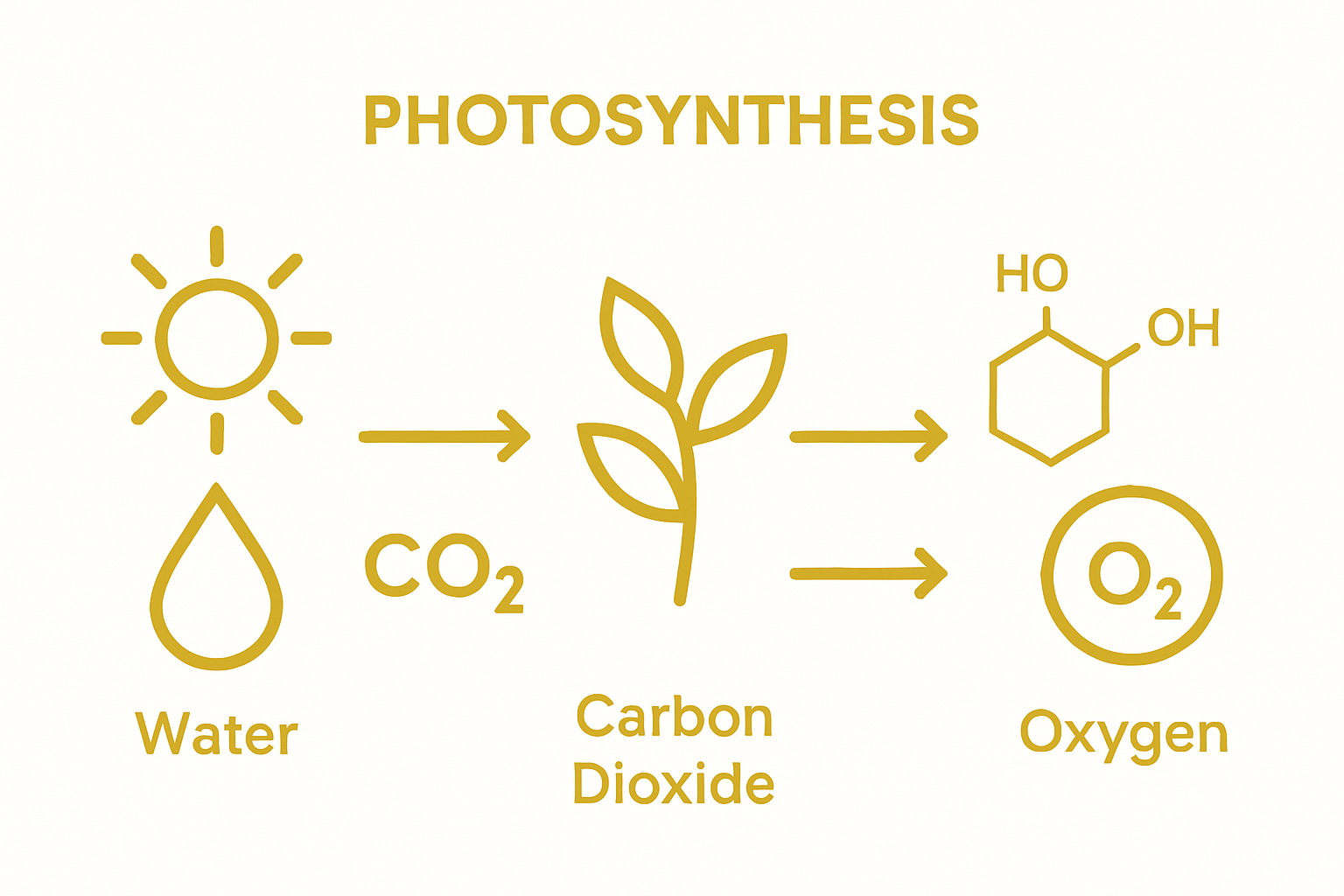
Understanding photosynthesis starts with recognising its core ingredients: sunlight, water, and carbon dioxide. Through an extraordinary chemical transformation, green plants absorb these simple components and produce oxygen and glucose. This process occurs primarily in the green leaves, specifically within specialised structures called chloroplasts.
The primary chemical equation for photosynthesis can be summarised as:
- Sunlight + Water + Carbon Dioxide → Glucose + Oxygen
Chloroplasts contain a vital green pigment called chlorophyll, which gives plants their characteristic colour and enables them to capture solar energy. This pigment acts like a microscopic solar panel, converting light into usable chemical energy with remarkable efficiency.
Global Significance of Photosynthetic Processes
Photosynthesis is not merely a plant survival mechanism but a critical global system. According to National Geographic, this process generates approximately 50% of the world’s oxygen, making it fundamental to sustaining life on Earth. Every breath humans and animals take depends on the oxygen produced by photosynthetic organisms.
Beyond oxygen production, photosynthesis plays a crucial role in the global carbon cycle. Plants absorb carbon dioxide during photosynthesis, effectively acting as natural carbon sinks that help mitigate climate change. This remarkable process transforms a potential greenhouse gas into oxygen and plant biomass, showcasing nature’s extraordinary self-regulating mechanisms.
Every green leaf represents a miniature factory working tirelessly to convert solar energy into the nutrients that support life. From the smallest blade of grass to massive rainforest trees, photosynthetic organisms form the foundation of nearly all food chains and ecological systems on our planet.
The Key Components of Photosynthesis Explained
Photosynthesis operates through a complex interplay of biological and chemical elements, each playing a critical role in transforming solar energy into sustaining life. Understanding these key components provides insight into one of nature’s most sophisticated energy conversion processes.
Essential Ingredients for Photosynthesis
Three primary components are fundamental to photosynthesis: sunlight, water, and carbon dioxide. These seemingly simple ingredients undergo an intricate chemical transformation within plant cells. Sunlight provides the energy, water contributes hydrogen atoms, and carbon dioxide supplies the carbon necessary for creating glucose.
The specific requirements for photosynthesis include:
- Chlorophyll (green pigment in plant leaves)
- Adequate sunlight exposure
- Sufficient water supply
- Atmospheric carbon dioxide
The Role of Chloroplasts
Chloroplasts serve as the microscopic factories where photosynthesis occurs. These specialised cellular structures contain chlorophyll and are responsible for capturing and converting solar energy. According to researchers at the University of California Berkeley, chloroplasts represent remarkable biological solar panels, transforming light energy into chemical energy with extraordinary precision.
Inside these green powerhouses, light energy triggers a series of complex chemical reactions. The process splits water molecules, releasing oxygen as a byproduct and generating energy-rich compounds that plants use for growth and metabolism. This intricate mechanism allows plants to produce their own food while simultaneously generating oxygen for other living organisms.
The following table summarises the essential components and their roles in the process of photosynthesis for better conceptual clarity.
| Component | Role in Photosynthesis |
|---|---|
| Sunlight | Provides the energy required for the conversion of raw materials |
| Water | Supplies hydrogen atoms and is split to release oxygen |
| Carbon Dioxide | Supplies carbon necessary to form glucose |
| Chlorophyll | Absorbs sunlight and powers the energy conversion process |
| Chloroplasts | Cellular organelles where the photosynthesis reactions take place |
| Glucose | Energy-rich sugar produced, supporting plant growth and metabolism |
| Oxygen | Byproduct released into the atmosphere, essential for life |
Energy Conversion Mechanism
Photosynthesis fundamentally operates through two interconnected stages: light-dependent reactions and light-independent reactions. During the light-dependent stage, solar energy is captured and converted into chemical energy. The subsequent light-independent stage uses this stored energy to convert carbon dioxide into glucose.
The entire process demonstrates an extraordinary example of biological efficiency, where plants transform simple ingredients into complex nutrients through an elegant chemical dance powered by sunlight.
How Plants Convert Sunlight into Energy
Converting sunlight into usable energy represents one of the most sophisticated biological processes in nature. Plants have developed an extraordinary mechanism that transforms solar radiation into chemical energy with remarkable precision and efficiency.
The Light Absorption Process
The journey of solar energy conversion begins in the green leaves, where chlorophyll plays a crucial role. This special pigment acts like a natural solar panel, capturing specific wavelengths of light and initiating the complex energy transformation process. When sunlight strikes a leaf, chlorophyll molecules absorb red and blue light wavelengths while reflecting green light, which gives plants their characteristic colour.
Key stages of light absorption include:
- Capturing solar radiation through leaf surface
- Directing light energy into chloroplasts
- Triggering chemical reactions within cellular structures
- Transforming light into storable chemical energy
Chemical Energy Conversion Mechanism
Research from the Massachusetts Institute of Technology reveals that photosynthesis occurs through two interconnected stages: light-dependent and light-independent reactions. During the light-dependent stage, solar energy splits water molecules, releasing electrons that create energy-rich molecules. These molecules then power the light-independent stage, where carbon dioxide is converted into glucose.
The entire process occurs with extraordinary speed, with each chlorophyll molecule capable of processing thousands of light photons per second. This rapid conversion ensures plants can continuously generate the energy required for growth and survival.
Below is a comparison of the two main stages of photosynthesis, highlighting their distinct characteristics and roles within the process.
| Stage | Where It Occurs | Main Function | Key Products |
|---|---|---|---|
| Light-Dependent Reactions | Thylakoid membranes | Capture solar energy, split water to release oxygen | ATP, NADPH, Oxygen |
| Light-Independent Reactions (Calvin Cycle) | Stroma of chloroplast | Use chemical energy to convert CO2 into glucose | Glucose, ADP, NADP+ |

Efficiency and Adaptation
Plants have evolved sophisticated mechanisms to manage solar energy efficiently. They can adjust their light-capturing processes based on environmental conditions, protecting themselves from potential damage during intense sunlight exposure. Some plants even develop specialized leaf structures that optimize light absorption, demonstrating nature’s incredible adaptive capabilities.
The energy conversion process is not just about survival but represents a fundamental mechanism supporting entire ecosystems. By transforming sunlight into chemical energy, plants create the nutritional foundation for most life forms on our planet, highlighting the extraordinary complexity of biological energy systems.
The Role of Photosynthesis in Our Ecosystem
Photosynthesis represents far more than a simple biological process. It is the fundamental mechanism that sustains life, interconnects diverse organisms, and maintains the delicate balance of our planet’s ecological systems. Understanding its broader ecological significance reveals the profound impact of this remarkable natural phenomenon.
Foundation of Food Webs
At the most basic level, photosynthesis establishes the primary energy source for nearly all terrestrial and aquatic ecosystems. Green plants, algae, and photosynthetic bacteria serve as the initial producers, converting solar energy into nutritional resources that support entire food chains. Every ecosystem, from dense rainforests to microscopic marine environments, depends on these photosynthetic organisms as the critical foundation.
Key ecological roles include:
- Generating oxygen for atmospheric renewal
- Producing primary nutrition for herbivores
- Supporting complex food web interactions
- Enabling energy transfer between different organism levels
Carbon Cycle and Climate Regulation
According to research from the National Center for Biotechnology Information, photosynthesis plays a crucial role in global carbon regulation. By absorbing carbon dioxide during their metabolic processes, photosynthetic organisms act as significant carbon sinks. Forests, grasslands, and oceanic phytoplankton collectively sequester massive amounts of atmospheric carbon, helping mitigate the impacts of climate change.
This process not only removes greenhouse gases but also generates biomass, creating a natural mechanism for environmental balance. The intricate relationship between photosynthetic organisms and atmospheric composition demonstrates the complex interconnectedness of ecological systems.
Biodiversity and Ecosystem Resilience
Photosynthesis supports biodiversity by creating habitats and nutritional resources for countless species. Different photosynthetic organisms have adapted to diverse environmental conditions, from scorching deserts to freezing arctic regions. These adaptations enable life to flourish in seemingly inhospitable environments, showcasing the remarkable versatility of photosynthetic processes.
Moreover, the ability of photosynthetic organisms to convert solar energy ensures ecosystem stability. When one species encounters challenges, others can often fill ecological niches, maintaining the overall system’s resilience and continuity.
Real-World Applications of Understanding Photosynthesis
Photosynthesis research extends far beyond academic curiosity, offering groundbreaking solutions to some of humanity’s most pressing challenges. By decoding the intricate mechanisms of how plants convert sunlight into energy, scientists are developing innovative technologies and strategies that address critical global issues.
Agricultural Productivity and Food Security
Understanding photosynthesis provides revolutionary insights into crop development and agricultural sustainability. Researchers can now design plant varieties with enhanced photosynthetic efficiency, enabling crops to produce higher yields while consuming fewer resources. This becomes increasingly crucial as global population growth demands more food production with limited agricultural land.
Key strategies for agricultural improvement include:
- Developing drought-resistant crop varieties
- Creating plants with faster growth rates
- Enhancing nutritional content of staple crops
- Reducing water consumption in agricultural systems
Renewable Energy and Climate Solutions
According to research from Arizona State University’s Bioenergy Program, photosynthesis research is instrumental in developing cutting-edge renewable energy technologies. Scientists are exploring artificial photosynthetic systems that mimic natural processes, potentially creating more efficient solar energy conversion methods. These innovations could transform how we generate and store clean energy, offering sustainable alternatives to fossil fuels.
By studying how plants capture and transform solar energy, researchers are developing:
- More efficient photovoltaic cells
- Advanced solar energy storage techniques
- Biotechnological approaches to carbon sequestration
Environmental Restoration and Conservation
Deep comprehension of photosynthetic processes provides powerful tools for environmental restoration. Genetic modifications and targeted breeding can help create plant species more resilient to climate change, capable of thriving in challenging environments and contributing to carbon dioxide reduction.
Moreover, understanding photosynthesis enables more precise environmental interventions. Researchers can now design strategies to rehabilitate degraded ecosystems, support biodiversity, and develop more sustainable agricultural and forestry practices. This knowledge represents a critical pathway towards mitigating climate change and preserving our planet’s ecological balance.
Spark a Love for Nature Through Exploration and Play
Many parents today worry their children are missing real connections to the natural world. As highlighted in Understanding Photosynthesis the Process That Feeds Life, the health of our planet depends on young minds understanding the vital role of plants, sunlight and ecological balance. Yet textbooks alone rarely spark lasting curiosity or care.

Imagine if your child could capture the beauty of green leaves and oxygen-producing forests with their own hands. When you choose The Zoofamily, you give more than just kids’ cameras and walkie-talkies. You nurture their fascination with photosynthesis and nature, thanks to animal-inspired designs that turn each adventure into a lesson. Plus, with every camera purchased, we plant a tree to restore natural beauty for future generations. Visit our main site today and inspire your child to discover the wonders of our living planet. There has never been a more important time to encourage children’s connection with the earth.
Frequently Asked Questions
What is photosynthesis?
Photosynthesis is a biological process through which plants, algae, and certain bacteria convert sunlight into chemical energy, producing glucose and oxygen from water and carbon dioxide.
Why is photosynthesis important for the environment?
Photosynthesis is vital as it generates approximately 50% of the Earth’s oxygen and acts as a carbon sink, absorbing carbon dioxide and helping to mitigate climate change.
How do chloroplasts function during photosynthesis?
Chloroplasts are specialized structures in plant cells that contain chlorophyll. They capture solar energy and carry out the chemical reactions necessary for converting light into chemical energy, producing glucose and oxygen in the process.
What are the two main stages of photosynthesis?
Photosynthesis consists of two main stages: light-dependent reactions, which capture solar energy and produce energy-rich molecules, and light-independent reactions (Calvin cycle), which use that energy to convert carbon dioxide into glucose.