

Organic house cleaning means cleaning your home with plant-based, biodegradable ingredients instead of synthetic chemicals like bleach, ammonia, or artificial fragrance. Done properly, it cleans just as well as conventional products for everyday grime, since plant-based surfactants can match conventional cleaning agents for routine jobs. The fastest first step: mix white vinegar with water in a spray bottle and use it on kitchen counters tonight.
TL;DR:
- Vinegar, baking soda, and lemon juice remain effective for routine cleaning tasks like counters, sinks, and grout, but not for disinfecting against pathogens.
- Check ingredient transparency and look for third-party certifications like EWG Verified, avoiding vague claims like “eco” or “natural.”
- Store undiluted concentrates in a cool, dark place and remember that DIY mixes are not registered disinfectants, requiring separate sanitization after illness or raw meat prep.
- Organic cleaners significantly reduce indoor air fumes from synthetic fragrances, bleach, or ammonia, especially benefiting households with pets, children, or respiratory sensitivities.
- Seasonal deep cleaning involves routine-specific practices, such as vinegar-based cleaning in summer and thorough upholstery and floor washes in autumn, to maintain a healthy home year-round.
Table of Contents
- Which ingredients are safe, and which should you bin?
- What DIY non-toxic cleaning recipes work today?
- How do you choose a genuinely eco-friendly cleaner?
- What should you ask before hiring an eco-friendly cleaning service?
- Room-by-room: what actually works where
- How should you store and dispose of organic cleaning products?
- What benefits does organic cleaning offer beyond your own health?
- What myths get in the way of organic cleaning?
- How does organic cleaning affect the air you breathe?
- How do you deep clean organically through the seasons?
- Balancing safety, effectiveness, and convenience
- Ready to bring that same thinking home?
- Sources
Which ingredients are safe, and which should you bin?
Four ingredients do most of the work in organic house cleaning. Vinegar cuts through grease and mineral buildup. Baking soda scrubs without scratching and neutralises odours. Lemon juice adds citric acid, which lifts limescale and leaves a natural shine. Plant-based surfactants, found in liquid castile soaps and modern natural cleaners, lift dirt from surfaces without the petrochemical base found in many mainstream detergents.
The ingredients to avoid are just as clear:
- Bleach (sodium hypochlorite): effective against germs but releases fumes that irritate lungs, especially dangerous mixed with ammonia.
- Ammonia: a strong respiratory irritant, commonly found in glass and window cleaners.
- Quaternary ammonium compounds (quats): linked to skin and respiratory sensitisation with repeated exposure.
- Phthalates: often hidden inside “fragrance,” used to make scents last longer, and linked to hormone disruption.
- Vague “fragrance” listings: a legal loophole that can conceal dozens of undisclosed chemicals in a single product.
Ingredient transparency is the single most reliable signal for comparing eco claims across brands, according to EWG’s own criteria for verified products. A brand that lists every ingredient, rather than hiding behind “proprietary blend,” is usually the safer bet. Look for the EWG Verified mark, which requires full disclosure and screens out the ingredients above.
What DIY non-toxic cleaning recipes work today?
You don’t need a cupboard full of specialist products to clean organically. Four recipes cover most household jobs, and each uses ingredients you probably already own.
- All-purpose spray: mix one part white vinegar to one part water in a spray bottle. Use on counters, sinks, and sealed worktops. Skip it on natural stone like marble or granite, since the acid can etch the surface over time.
- Glass cleaner: combine two tablespoons of vinegar, one litre of water, and a few drops of lemon essential oil. Wipe with a microfibre cloth for a streak-free finish, exactly the approach covered in Thezoofamily’s guide to eco-friendly glass cleaning.
- Scouring paste: make a thick paste from baking soda and a small amount of water. Use on sinks, tubs, and stovetops. The soda’s gentle abrasion lifts grime without scratching enamel or stainless steel.
- Wood floor cleaner: dilute one-quarter cup of vinegar into a bucket of warm water. Avoid this on unsealed hardwood, which can absorb moisture and warp.
These swaps mirror the everyday cleaning routines many households already use with vinegar, baking soda, and lemon juice, and they hold up fine for routine dirt and grease.
Pro Tip: DIY mixes are excellent for daily maintenance, but they aren’t registered disinfectants. After illness in the house, or on cutting boards used for raw meat, switch to a certified disinfectant for that one job, then go back to your usual organic routine.
How do you choose a genuinely eco-friendly cleaner?
Not every bottle with a green label deserves your trust. Vague terms like “eco” or “natural” carry no legal definition, and EWG’s cleaning guide flags this as one of the most common ways shoppers get misled.
Run through this checklist before you buy:
- Read the full ingredient list. If a brand won’t disclose it, walk away.
- Check for third-party certification, such as EWG Verified, rather than relying on the brand’s own claims.
- Look for concentration ratios. A concentrated formula, like Dr. Bronner’s Sal Suds, does more work per bottle and cuts down on plastic waste.
- Confirm biodegradability claims are backed by a standard, not just printed on the label.
- Compare cost per use, not shelf price. A £12 concentrate that makes 20 litres of spray often beats three £4 bottles of pre-diluted cleaner.
Concentrated, multi-use formulas reduce packaging waste and tend to be more economical over months of use, a trade-off worth explaining to anyone assuming “cheap” always means “better value.”
What should you ask before hiring an eco-friendly cleaning service?
Green cleaning services vary hugely in how genuinely eco-friendly they are. Some replace bleach and ammonia entirely with plant-based alternatives and market themselves as family- and pet-safe. Others simply add “eco” to their name with no change in products.
Before booking, ask these questions:
- What products do you use, and can I see the ingredient list? A confident answer with brand names is a good sign; a vague “eco-friendly supplies” answer is not.
- Are staff trained specifically in non-toxic cleaning methods? Training matters more than the products themselves for consistent results.
- Do you offer a satisfaction guarantee? Reputable services will redo a job that falls short.
- What’s included in a standard visit versus a deep clean?
Pricing varies by region and property size, and costs for standard or deep cleaning visits differ widely; treat any quoted figure as approximate until confirmed for your postcode. Treat any figure quoted to you as approximate until confirmed for your postcode. Red flags include vague product claims, no willingness to share ingredient names, and pricing that seems too low to cover genuinely certified supplies.
Room-by-room: what actually works where
Different rooms need different approaches, and treating your whole house with one spray rarely gets the best result.
- Kitchen: cut through grease with the vinegar all-purpose spray, and descale kettles and taps with a lemon juice soak. For food-contact surfaces like chopping boards, a hot soapy wash still beats any spray for genuine hygiene.
- Bathroom: control mould with a vinegar and baking soda paste on grout, left for ten minutes before scrubbing. Skip bleach on grout entirely. It whitens temporarily but doesn’t remove the mould root, so it returns within weeks.
- Floors and upholstery: hard floors respond well to a diluted vinegar mop, while upholstery usually needs a dedicated fabric-safe cleaner rather than a DIY mix, since vinegar can leave a lingering smell on soft furnishings. Machine cleaning fabric with something like a dedicated upholstery vacuum unit often lifts embedded dirt that spraying alone can’t reach.
- Pets and children: always rinse surfaces after cleaning products dry, ventilate the room while you work, and store every bottle out of reach, even “natural” ones, since concentrated vinegar and undiluted essential oils can still irritate skin and eyes. Non-toxic floor routines matter especially in homes with dogs, and the same rinse-and-ventilate logic applies to pet-accessible floor cleaning.
How should you store and dispose of organic cleaning products?
Storage matters more for organic cleaners than most people expect. Undiluted vinegar and citrus concentrates keep well in a cool, dark cupboard for months, but pre-mixed sprays with water lose potency within a few weeks, so label bottles with the date you mixed them and remake batches rather than trusting an old spray to still work.
Keep concentrates and essential oils on a high shelf away from children and pets, even though they’re plant-based. Undiluted citrus oil and concentrated vinegar can still sting eyes or irritate skin on contact.
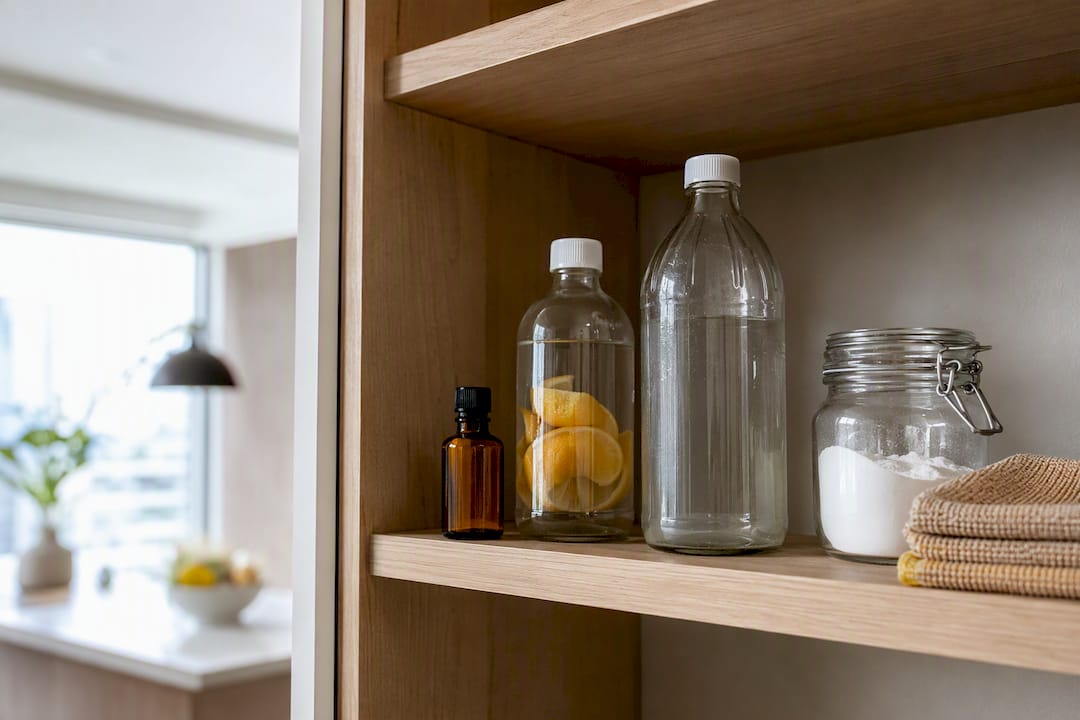
Disposal is where organic cleaning genuinely pulls ahead of conventional products. Vinegar, baking soda, and citrus-based mixes can go straight down the drain in normal household quantities, since they break down without harming waterways. That’s a real practical advantage over bleach and ammonia-based products, which many local authorities classify as hazardous waste requiring separate disposal. Empty concentrate bottles, particularly glass or PET plastic ones from brands like Sal Suds, are usually widely recyclable, unlike some trigger-spray bottles with mixed-material nozzles that recycling plants can’t easily process. Check your council’s guidance if you’re ever unsure, but as a general rule, if you made it from vinegar, soda, or lemon, your drain and your recycling bin can handle it.
What benefits does organic cleaning offer beyond your own health?
The health case for organic house cleaning gets most of the attention, but the environmental case is just as strong. Conventional cleaning chemicals, particularly bleach and quats, don’t fully break down before reaching waterways, where they can harm aquatic life long after they’ve left your sink. Vinegar, baking soda, and plant-based surfactants biodegrade far more readily, reducing that downstream impact considerably.
Allergen reduction is the other underrated benefit. Synthetic fragrances are one of the most common triggers for household allergy and asthma flare-ups, and removing them from your cleaning cupboard often reduces symptoms faster than removing dust or pet hair, which get more attention. Households with asthmatic children or allergy-prone family members frequently notice fewer flare-ups within weeks of switching, even before deep-cleaning habits change.
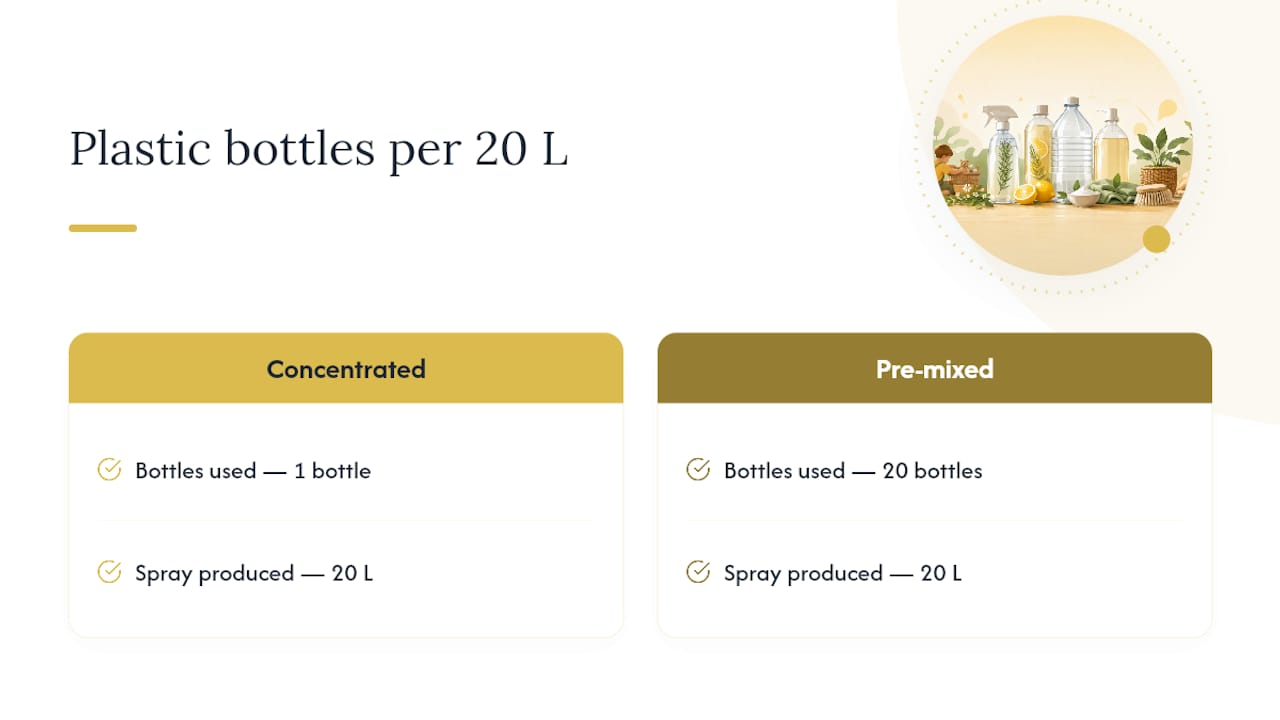
There’s also a packaging story worth telling. Concentrated organic cleaners, refill pouches, and multi-use products cut down on the sheer volume of plastic bottles a household throws away each year. A family using one concentrated bottle to make twenty litres of spray produces a fraction of the plastic waste of buying twenty pre-mixed bottles, a trade-off that adds up considerably over a year of ordinary cleaning.
None of this requires giving anything up. It’s largely a matter of switching what’s under the sink.
What myths get in the way of organic cleaning?
The biggest myth is that organic cleaning products are automatically weaker. This isn’t accurate for most everyday jobs. Modern plant-based surfactants have improved considerably, and for routine grease, grime, and surface dirt, natural cleaners can perform comparably to conventional agents. The gap that does exist shows up mainly in disinfection against specific pathogens, not general cleaning.
A second myth: that “natural” automatically means “safe.” Undiluted essential oils, concentrated vinegar, and even citrus extracts can irritate skin or eyes at full strength. Being plant-derived doesn’t remove the need for sensible dilution and storage.
Third, many people assume any product labelled “green” or “eco” has been independently checked. It usually hasn’t. These terms carry no legal definition, which is exactly why third-party marks like EWG Verified matter so much when comparing brands on a shelf.
Finally, there’s a persistent belief that organic cleaning takes far longer, requiring elaborate mixing and multiple steps for every job. In practice, most DIY recipes take under a minute to mix and work as fast as a shop-bought spray once they’re made. The extra effort is almost entirely front-loaded into the first batch.
How does organic cleaning affect the air you breathe?
Indoor air quality suffers more from cleaning products than most households realise, and it’s rarely the surface dirt causing the problem. Bleach and ammonia both release fumes that irritate the respiratory tract, and combining them, even accidentally, produces toxic gas. Quats and synthetic fragrances contribute their own load of volatile organic compounds that linger in enclosed rooms long after the cleaning is done.
Switching to vinegar, baking soda, and citrus-based cleaning removes most of that chemical load from the air. These ingredients evaporate cleanly or wash away without leaving behind the residual fumes that conventional sprays often do, particularly in smaller bathrooms and kitchens with limited ventilation.
The respiratory benefit shows up most clearly in households with asthma, eczema, or general chemical sensitivity. Removing synthetic fragrance alone, since it’s one of the most common airborne irritants in an ordinary home, often makes a noticeable difference within the first few cleaning cycles. Children, whose lungs are still developing, and pets, who spend far more time close to floor level where residues settle, tend to benefit the most from this switch.
Ventilation still matters, even with organic products. Open a window while you clean, particularly when using vinegar in a small space, since the smell is strong even though it’s harmless.
How do you deep clean organically through the seasons?
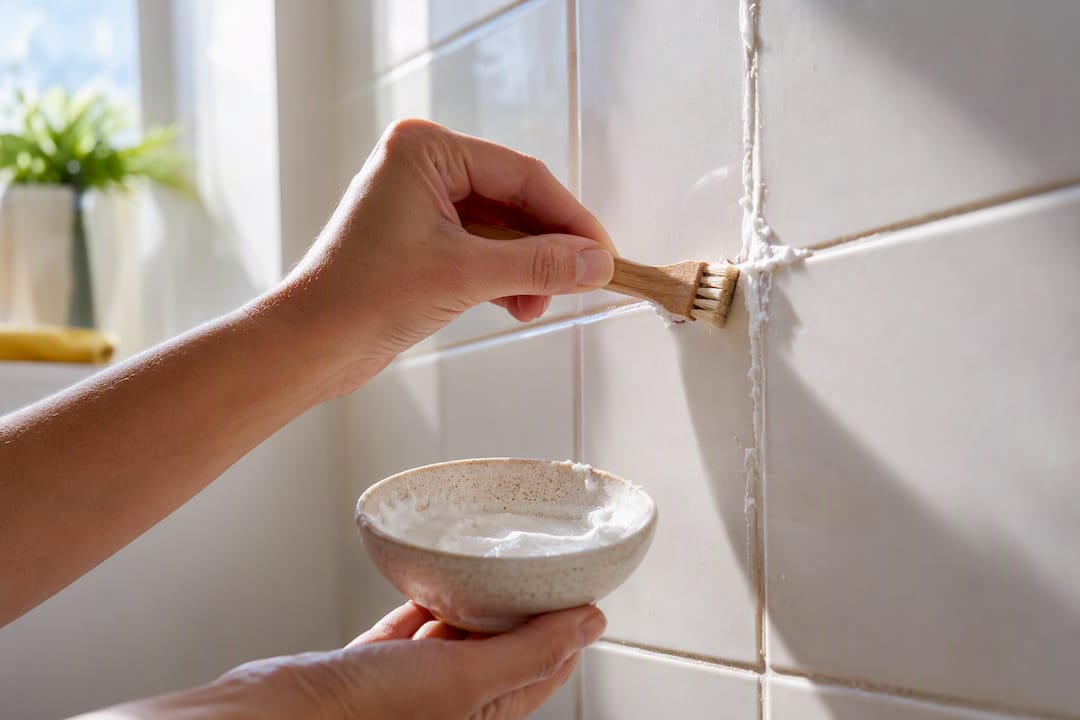
Deep cleaning doesn’t need harsher chemicals, just a different rhythm across the year. Spring is the natural moment for a full reset: strip and wash curtains, deep clean grout with a baking soda paste left to sit for a full hour rather than the usual ten minutes, and air out mattresses and upholstery that have been closed up over winter.
Summer’s higher humidity makes bathrooms and kitchens more prone to mould, so this is the season to increase ventilation and lean harder on vinegar sprays in damp corners, reapplying more often than you would in drier months.
Autumn is worth dedicating to floors and soft furnishings before winter traps everyone indoors. A thorough vinegar mop on hard floors, followed by a proper upholstery clean, clears out months of accumulated dust before heating systems start recirculating it.
Winter, with windows closed and heating running, is when indoor air quality matters most. This is the season to be strictest about ventilating while cleaning and to avoid stronger concentrations of any spray, organic or otherwise, in sealed rooms. A lighter, more frequent routine beats one heavy weekend blitz when there’s nowhere for fumes, even mild ones, to escape.
Balancing safety, effectiveness, and convenience
The trade-off people worry about most, that organic means less effective or more effort, mostly doesn’t hold up once you’ve made your first batch of spray. A simple starter plan works better than an overnight overhaul: swap your glass cleaner this week, your all-purpose spray next week, and hold off on anything else until those two habits stick. Prioritise ingredient transparency over any label’s marketing claim. It tells you more in ten seconds than a green logo ever will.
— ALAIN
Ready to bring that same thinking home?
Some companies build their products around the principle running through this whole article: check the claim, not just the label. For every animal-themed camera, walkie-talkie, or set of binoculars sold, they may plant a tree, giving families a concrete, checkable way to buy with the planet in mind rather than taking a green logo on trust.

If you’re already rethinking what goes under your sink, it’s worth applying that same scrutiny to what you buy for your kids. Browse the Thezoofamily range to see the nature-inspired cameras and outdoor gear behind that one-tree-per-sale promise, and pair it with the practical habits from Thezoofamily’s eco-friendly cleaning tips for busy households to keep building a genuinely healthier, greener home from the ground up.
Sources
Some brands plant a tree for every camera sold, a simple, checkable commitment for households who want the brands they buy from to match their own values around the house. If you’re building a genuinely non-toxic home, that same instinct applies to cleaning products: check the claim, not just the label colour.
For deeper reading, Thezoofamily’s guide to sustainable cleaning practices breaks down how EWG Verified screening works in more detail, and the eco-friendly glass cleaner guide expands on streak-free, ammonia-free window cleaning. Both back up the recipes and checklists above with more room for detail than a single article allows.
- EWG VERIFIED criteria (EWG)
- Non-toxic cleaners you can make at home (Sprouts)
- Natural non-toxic cleaning products (The Good Trade)
- EWG’s Guide to Healthy Cleaning (EWG)