

Every mum knows the challenge of finding a present that sparks imagination while supporting eco-friendly values. Choosing a camera for your child can feel overwhelming, especially when you want something that goes beyond simple toys. With a Hello Kitty digital camera, you get a blend of iconic style, genuine photography features, child-friendly controls, and durable design that encourages creativity. It’s not just a cute accessory—it’s a purposeful tool that inspires kids to explore their world visually and responsibly.
Table of Contents
- What Makes A Hello Kitty Digital Camera
- Unique Features Inspiring Kids’ Creativity
- Comparing Models, Types, And Age Suitability
- Eco-Friendly Materials And Safety Standards
- Choosing And Caring For Your Child’s Camera
Key Takeaways
| Point | Details |
|---|---|
| Well-Designed for Young Creators | Hello Kitty digital cameras combine playful branding with advanced features, encouraging children to explore photography creatively. |
| User-Friendly Interface | Simple controls and intuitive menus ensure that children aged 5 and up can navigate the camera independently, enhancing their confidence. |
| Durability and Safety | Reinforced designs and non-toxic materials ensure that cameras withstand drops and remain safe for children, promoting worry-free usage. |
| Age-Appropriate Models | Different models cater to various age groups, with features tailored to match developmental stages and interests, ensuring each child finds a suitable camera. |
What Makes A Hello Kitty Digital Camera
A Hello Kitty digital camera is far more than just a toy with a cute character slapped on the front. It’s a purposefully designed device that blends iconic Sanrio character appeal with genuine photography capabilities, creating something that genuinely engages young creators.
These cameras feature practical photography capabilities that go beyond what you’d expect from a children’s device. Dual cameras, 1080P video recording, and expandable storage via TF card slots mean your child can capture real moments with decent quality.
The design philosophy prioritises child-friendly controls without sacrificing functionality. Simple menus and intuitive buttons mean kids aged 5 and up can navigate independently, building confidence as they explore composition and lighting.
Key features typically include:
- Dual camera setup for front and rear shooting
- 1080P video recording for capturing movement and action
- TF card slot for expanding storage beyond internal memory
- Interactive games and creative modes that reward experimentation
- Durable, drop-resistant builds designed for active play
- LCD screens displaying real-time previews
Durability matters when a camera lives in a child’s rucksack. Most Hello Kitty cameras feature reinforced casings and shock-resistant design, handling the inevitable bumps and drops of childhood adventure.
The character branding serves a real purpose here. When your daughter or son sees Hello Kitty emblazoned across their camera, it becomes their creative tool, not just another gadget. This emotional connection transforms casual picture-taking into purposeful creative exploration.
A Hello Kitty camera isn’t just cute aesthetics—it’s a genuine entry point to developing visual storytelling skills whilst having fun.
These devices also bridge the gap between imagination and reality. Built-in filters, frames, and editing options let kids personalise their images immediately, reinforcing that photography is about creative expression, not just documentation.
Pro tip: Start with a starter memory card (16GB or 32GB) so your child has immediate storage for hundreds of photos without worrying about running out of space—this encourages confidence and experimentation without frustration.
Unique Features Inspiring Kids’ Creativity
A Hello Kitty camera isn’t just a device—it’s a creative playground. Every feature has been deliberately engineered to spark imagination and encourage young photographers to experiment without fear of judgment or technical complexity.
The dual HD lens setup gives kids real creative choices. Front and rear cameras mean your child can capture self-portraits, group moments, and landscape scenery with equal ease. This versatility naturally encourages exploration of different perspectives and compositions.
Built-in filters and cartoon frames transform basic snapshots into personalised creations instantly. Rather than requiring advanced editing skills, kids can apply effects in real-time, making photography feel instantly rewarding. The Hello Kitty-themed stickers and frames tie directly into their existing emotional connection with the character.
Key creative tools include:
- Front and rear HD lenses for diverse shooting angles
- 8x digital zoom for capturing distant subjects and details
- Built-in photo frames with playful cartoon designs
- Adjustable filters that change mood and tone instantly
- Protective IPS screens that resist damage from enthusiastic handling
The interactive games deserve particular attention. Five built-in games aren’t just filler—they’re creative breaks that keep motivation high during longer play sessions. When photography feels like play rather than work, children develop genuine enthusiasm.
Interactive gaming features reimagine what a camera can do beyond photography alone. Kids capture photos, then play games, then return to photography with renewed energy. This rhythm prevents fatigue whilst maintaining engagement across extended use.
The protective IPS screen matters more than you might think. Brighter, more durable displays mean your child can see what they’re photographing clearly, even outdoors in daylight. This reduces frustration and improves actual photo quality.
When photography tools feel intuitive and immediately rewarding, children transform from passive observers into active creators who genuinely want to explore their world visually.
Safety and durability go hand-in-hand with creativity here. A camera your child worries about dropping becomes a source of stress rather than joy. Reinforced designs and protective features remove that barrier entirely.
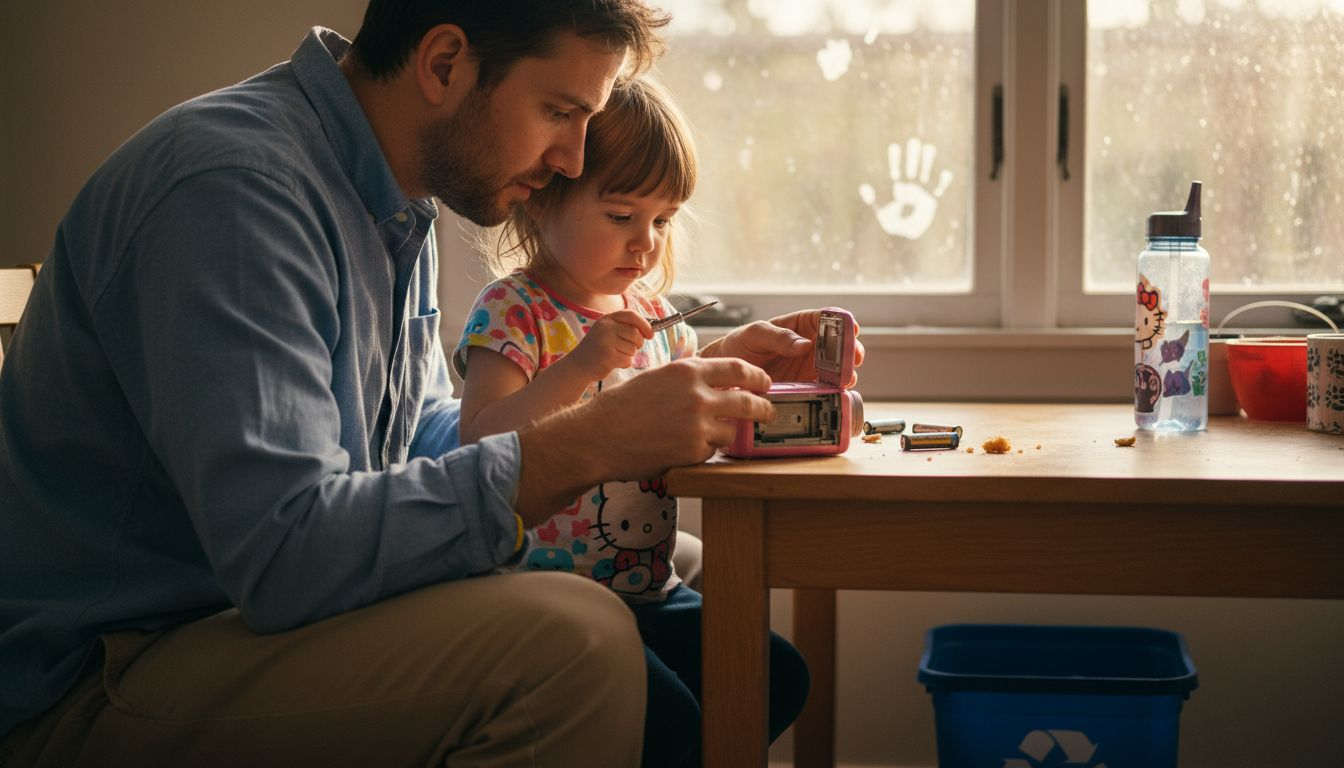
The combination of visual storytelling tools and interactive entertainment creates something special. Your child isn’t just learning photography—they’re developing compositional thinking, colour awareness, and personal creative voice naturally.
Pro tip: Encourage your child to create themed photo series (“My Week in Colours” or “Hidden Nature Details”) using the built-in frames and filters—this transforms random snapshots into intentional creative projects that develop genuine artistic thinking.
Comparing Models, Types, And Age Suitability
Not every Hello Kitty camera suits every child. Age, developmental stage, and individual interests all play a role in finding the right match. Understanding the differences between models helps you make an informed choice rather than guessing.
Toddler models (ages 3-5) prioritise durability and simplicity above all else. These cameras feature chunky buttons, reinforced frames, and minimal menus. Your child can press one button and capture photos without getting lost in settings. Think of them as training wheels for photography.
Younger children benefit from soft-grip designs and lightweight builds. A camera that feels comfortable in small hands encourages longer play sessions. Bright colours and fun textures add tactile appeal beyond just the screen.
Early primary models (ages 6-8) introduce modest complexity. These cameras offer dual lenses, basic video recording, and simple filter options. Your child can now explore different shooting modes without overwhelming them with choices.
Upper primary and tween models (ages 9-12) deliver more advanced camera capabilities including higher resolution sensors, expanded video features, and creative editing tools. Kids this age can manage menu navigation independently and appreciate the challenge of composition.
Key differences across age groups:
Here’s how major Hello Kitty camera models suit different ages and creative needs:
| Age Group | Best Model Attributes | Typical User Interest | Recommended Features |
|---|---|---|---|
| 3-5 years | Extra durable, simple operation | First experiences, ease and safety | One-button photo, large screen |
| 6-8 years | Dual lenses, playful filters | Exploring creativity, casual video | Simple editing, games, video |
| 9-12 years | High resolution, advanced editing | Storytelling, digital art, composition | Detailed editing, frame modes |
- Ages 3-5: Simple one-button operation, maximum durability, large screens
- Ages 6-8: Basic filters, dual cameras, video introduction, intuitive menus
- Ages 9-12: High-resolution imaging, advanced filters, editing software, competitive features
Consider your child’s actual interest level rather than just age. A disinterested ten-year-old might struggle with an advanced model, whilst an enthusiastic seven-year-old could thrive with more sophisticated features.
Video capabilities deserve special attention. Younger children typically enjoy recording short clips and playing them back. Older children might use video creatively, experimenting with storytelling and sequencing.
Resolution matters less than you might expect at younger ages. A five-year-old won’t notice the difference between 720P and 1080P video. By age ten, they likely will. Match technical specs to actual capability rather than assuming more is always better.
Age suitability isn’t just about safety—it’s about matching cognitive ability to feature complexity so your child feels confident rather than frustrated.
Think about your child’s history with technology. Have they used tablets or smartphones successfully? Do they follow multi-step instructions naturally? These indicators help predict whether they’ll navigate a more complex model confidently.
Pro tip: Watch your child interact with existing devices to predict camera model suitability—if they naturally tap and swipe through apps independently, they’ll likely handle a more advanced Hello Kitty camera effectively without becoming frustrated.
Eco-Friendly Materials And Safety Standards
As an eco-conscious parent, you already know that good intentions aren’t enough. Real environmental responsibility requires understanding what materials go into products and whether they’re actually safe for your child.
Hello Kitty cameras balance these concerns thoughtfully. Manufacturers increasingly incorporate recyclable plastics and reduced packaging into their designs, recognising that eco-friendly practices matter to families like yours. This isn’t greenwashing—it’s a genuine commitment to reducing waste at the source.
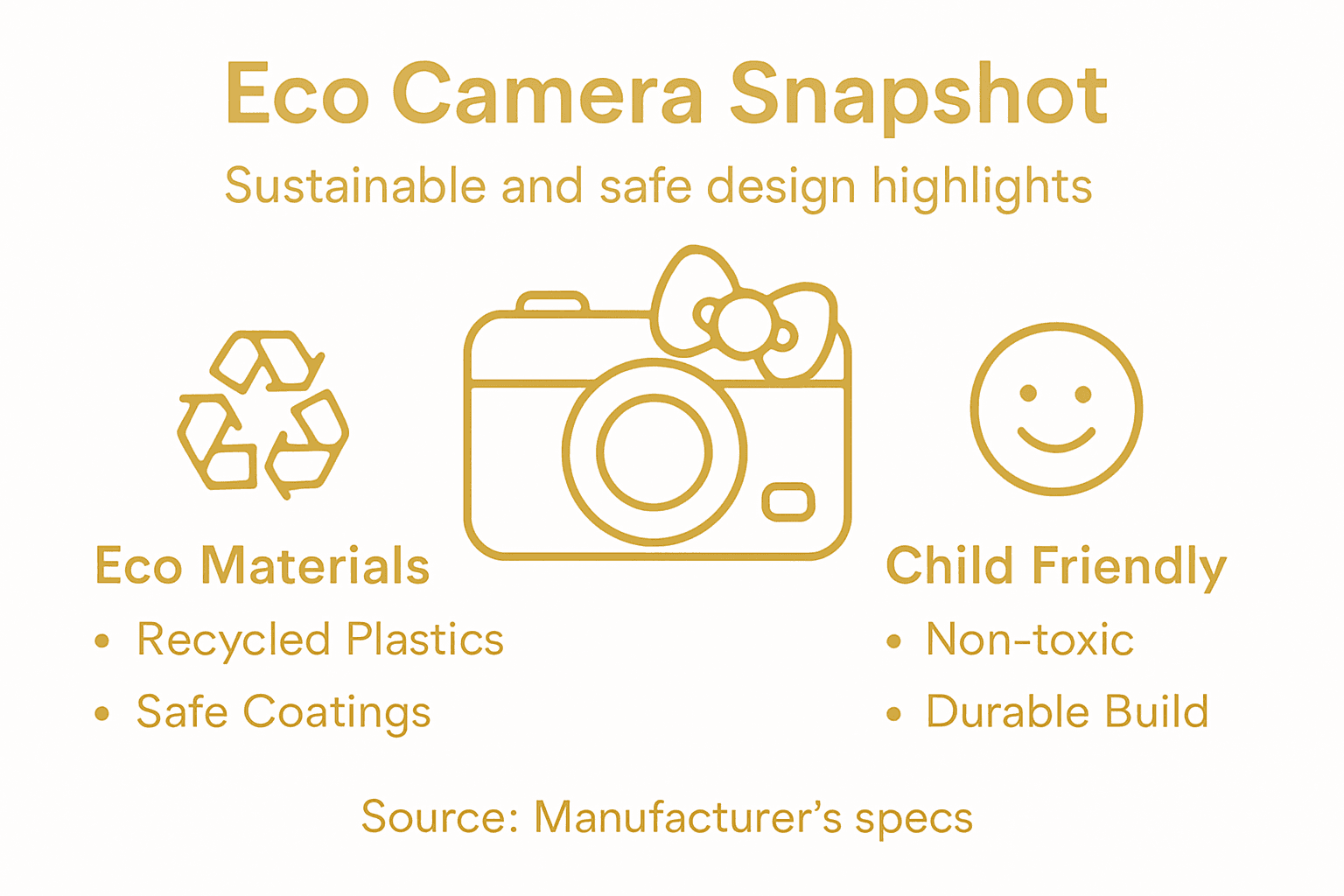
The materials used deserve careful attention. Quality Hello Kitty cameras avoid harmful chemicals and use child-safe components throughout. Non-toxic plastics, metal components, and glass lenses meet international safety standards. Your child’s hands won’t be exposed to dangerous substances during normal use.
CE certification signals compliance with rigorous European safety standards. This certification means the product has been independently tested and verified to meet strict requirements for electrical safety, mechanical durability, and material safety. It’s not optional—it’s evidence of genuine safety commitment.
Key safety standards typically include:
- Electrical safety: Rechargeable lithium-ion batteries or standard batteries tested for reliable performance
- Mechanical safety: No sharp edges, small choking hazards, or toxic components
- Chemical safety: Non-toxic plastics and materials verified safe for children
- Construction durability: Impact-resistant designs that withstand drops and rough handling
Battery safety warrants specific attention. Rechargeable lithium-ion batteries are more environmentally friendly than disposables, reducing landfill waste significantly. However, they require proper charging and adult supervision during initial setup. Standard batteries offer simplicity but generate ongoing waste.
Regulatory compliance across multiple jurisdictions—European, American, and Australian standards—demonstrates that manufacturers test products rigorously. A camera meeting CE, FCC, and ACMA standards has passed demanding independent evaluations.
Packaging matters too. Reduced packaging doesn’t just lower environmental impact—it aligns with The Zoofamily’s commitment to sustainability. Less cardboard, plastic wrap, and filler material means fewer resources consumed and less waste generated.
The table below compares battery options and eco-friendly practices in Hello Kitty cameras:
| Battery Type | Environmental Impact | Maintenance Required | Family Benefit |
|---|---|---|---|
| Lithium-ion (rechargeable) | Low waste, reusable | Needs safe charging routine | Long use, eco-friendly |
| Standard disposable | More landfill waste | Frequent replacement | Simple, but less sustainable |
| Recyclable packaging | Lower resources used | No ongoing care | Reduces home waste |
Safety standards and eco-friendly materials aren’t competing priorities—they’re complementary goals that responsible manufacturers pursue simultaneously.
Your child’s health and environmental responsibility go hand in hand. Choosing cameras manufactured to high safety standards whilst incorporating recyclable materials teaches your child that ethical choices matter in everyday decisions.
Reading product certifications might feel tedious, but it protects your investment and your child’s wellbeing. Look for clear labelling of safety certifications before purchasing.
Pro tip: Check the product packaging or manufacturer’s website for CE, FCC, or equivalent safety certification symbols before buying—this single verification step confirms the camera meets rigorous international safety standards rather than relying on marketing claims alone.
Choosing And Caring For Your Child’s Camera
Selecting the right Hello Kitty camera means thinking beyond the cute packaging. Your choice should align with your child’s actual interests, technical confidence, and creative aspirations. A camera that sits unused wastes money and opportunity.
Start by observing your child’s natural inclinations. Does she sketch constantly? Gravitate towards models with robust filtering and editing capabilities. Does he prefer action and movement? Look for cameras with strong video recording and playback features. Match features to personality rather than age alone.
Interest level matters enormously. A child obsessed with Hello Kitty will embrace the character branding as genuine motivation. A reluctant child might view it as babyish regardless of technical specs. Honest self-assessment prevents disappointing purchases.
Consider your family’s relationship with technology. Some children navigate menus intuitively; others need button-pushing simplicity. Neither is wrong. Choose accordingly.
Key selection criteria include:
- Child’s genuine creative interests and hobbies
- Technical confidence with existing devices
- Desired features (video, filters, games)
- Budget constraints and durability expectations
- Storage capacity needs for extended use
Once you’ve selected the right model, maintenance becomes crucial. Proper camera care and cleaning prevents damage and extends lifespan significantly. Regular attention to maintenance teaches your child responsibility whilst protecting your investment.
Moisture and dust are the primary enemies. Keep the camera in a dry environment away from direct water exposure. A protective carrying case prevents accidental drops and protects the lens during transport.
Battery management deserves specific attention. Follow manufacturer recommendations precisely regarding charging methods and battery types. Incorrect charging can damage lithium-ion batteries or drain standard batteries prematurely. Establish a routine—perhaps charging weekly—rather than waiting until the battery dies completely.
Clean the lens regularly using a soft, dry cloth. Dust accumulation affects photo quality gradually. Monthly gentle cleaning maintains optical clarity without risk of damage.
Choosing the right camera combines careful assessment of your child’s personality with realistic expectations about maintenance. The best camera is one your child will actually use consistently.
Store the camera safely between use sessions. A dedicated shelf or drawer prevents accidental crushing from heavier items. Temperature fluctuations damage electronics, so avoid direct sunlight exposure and extreme cold.
Teach your child basic care habits from day one. Simple practices—keeping it dry, not dropping it intentionally, closing protective covers—develop ownership and respect for their creative tool.
Replace batteries seasonally if using standard types. Lithium-ion cameras may go months between charges depending on usage frequency.
Pro tip: Before finalising your purchase, have your child test the camera model (or similar interface) in-store if possible—fifteen minutes of hands-on interaction reveals far more about comfort level than specifications alone.
Foster Your Child’s Creative Spirit with Eco-Friendly Confidence
The article highlights the importance of combining durable, child-friendly technology with a genuine connection to creativity and environmental responsibility. At its core, the challenge is helping young photographers explore visual storytelling while ensuring they use safe, sustainable devices that align with their values and developmental needs. Key pain points include the need for intuitive controls, engaging creative features like filters and games, and eco-conscious materials—all designed to nurture a child’s confidence and imagination.
At The Zoofamily, we share this vision deeply. We craft not only the best kids cameras, walkie-talkies, and binoculars but also design products that inspire a meaningful bond between children and nature. Each device is thoughtfully created with animal themes that spark curiosity about the natural world while using eco-friendly materials that meet strict safety standards. Plus, for every camera sold, we plant one tree—a simple yet powerful way to contribute to the planet your child will discover through their lens.
Ready to empower your child with a delightful, sustainable creative tool? Discover our range of innovative kids cameras at The Zoofamily and watch your childs imagination flourish in harmony with the environment.
Explore our collection and join us in nurturing future generations with technology that celebrates both creativity and our planet.
Frequently Asked Questions
What features make the Hello Kitty digital camera suitable for children?
The Hello Kitty digital camera features dual cameras for front and rear shooting, 1080P video recording, dual HD lenses, interactive games, and child-friendly controls, making it ideal for young creators.
How can I ensure my child takes care of their Hello Kitty camera?
To care for the camera, keep it in a protective case, clean the lens regularly with a soft cloth, manage battery life appropriately, and teach your child to handle it carefully to avoid drops.
At what age is the Hello Kitty digital camera appropriate for children?
The camera is designed for different age groups: toddler models (ages 3-5) focus on simplicity and durability, early primary models (ages 6-8) introduce more features, and upper primary models (ages 9-12) offer advanced capabilities for storytelling and creativity.
Why is environmental safety important when choosing a Hello Kitty camera?
Environmental safety is important because Hello Kitty cameras are made with recyclable materials and have CE certification. This ensures the product is safe for children and manufactured responsibly, aligning with eco-conscious values.
Recommended
- Toy Camera Digital: Inspiring Eco-Friendly Creativity – The Zoofamily
- Touchscreen Digital Camera: Inspiring Eco-Friendly Creativity – The Zoofamily
- Camera Features for Kids: Sparking Eco-Friendly Creativity – The Zoofamily
- Touchscreen Camera: Inspiring Eco-Friendly Play – The Zoofamily
- Best Digital Marketing Tools To Use In 2024 - Think Mad
- Selfie Wizard | Fresh Entertainments