

An environmentally friendly toilet cleaner is a product formulated to clean and disinfect toilets using natural, biodegradable ingredients that do not harm ecosystems, water systems, or human health. The industry term for this category is “bio-based cleaning formulation,” though most consumers and retailers use “eco-friendly” or “green toilet cleaner” interchangeably. What separates these products from conventional cleaners is not just the ingredient list. It is the entire lifecycle: from plant-derived actives and plastic-free packaging to safe breakdown in waterways and septic systems. Certifications such as EPA Safer Choice and Leaping Bunny give you a reliable way to verify those claims before you buy.
What ingredients make an environmentally friendly toilet cleaner work?
The most effective eco-friendly toilet cleaners rely on lactic acid and citric acid as their primary cleaning agents. Both are naturally derived, biodegradable, and proven to dissolve limescale and mineral deposits without corroding porcelain or pipes. They work by lowering the pH around calcium carbonate deposits, which breaks the bond between scale and the bowl surface.
Natural surfactants, typically derived from coconut or corn, lift grease and organic matter from surfaces. These replace synthetic surfactants like sodium lauryl sulphate, which persist in water systems and disrupt aquatic life. Essential oils such as tea tree, eucalyptus, and lavender add fragrance while contributing genuine antibacterial properties.
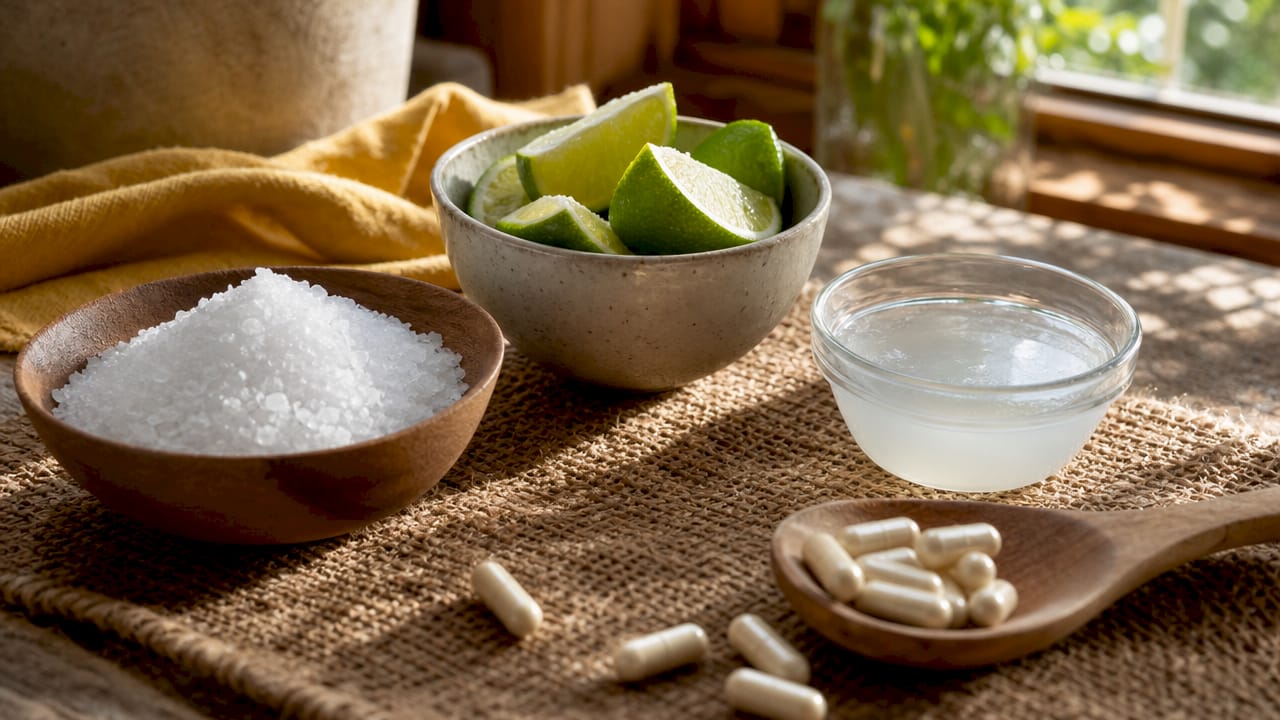
The most important absence in a sustainable toilet cleaner is what is not in it. Harsh chemicals like chlorine, ammonia, and phosphates can harm water systems and cause indoor air irritation. Phosphates in particular trigger algal blooms in rivers and lakes, stripping oxygen from the water and killing fish.
A newer category worth knowing is probiotic-based cleaners. These products contain food-safe microbial strains that colonise surfaces and prevent biofilm from forming under the rim and inside pipes, providing sustained odour control well beyond the initial clean. That is a fundamentally different approach to hygiene: instead of killing everything, you populate the surface with beneficial bacteria that outcompete odour-causing strains.
Pro Tip: Check the ingredient list for “QPS” (Qualified Presumption of Safety) microbial strains if you are considering a probiotic cleaner. This designation confirms the bacterial strains are food-safe and approved for use in consumer products.
How effective are eco-friendly toilet cleaners compared to conventional ones?
The most persistent myth about natural toilet cleaning products is that they sacrifice performance for sustainability. The evidence says otherwise. Some eco cleaners outperform leading non-eco brands by a factor of three in independent limescale removal and bacterial elimination tests. That result comes from the natural acidity of lactic and citric acid formulations, which are chemically well-suited to the calcium-based deposits that form in toilet bowls.
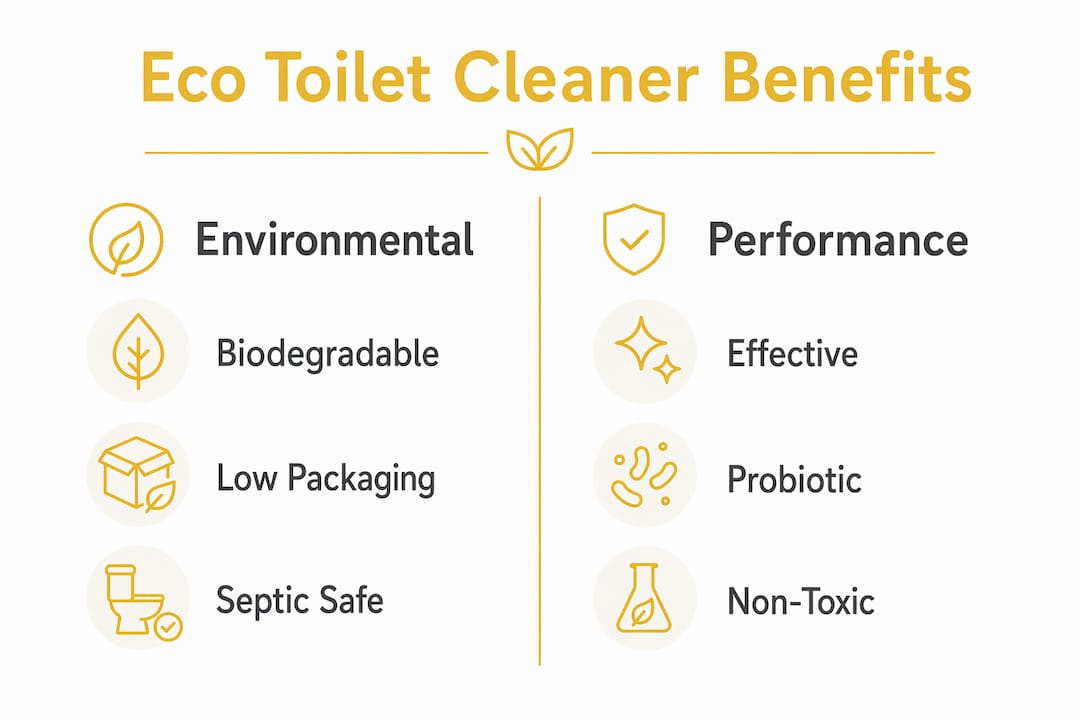
Performance also depends on format. Probiotic foam powders, dissolvable tablets, and concentrated gels each have different activation profiles.
| Format | Activation time | Frequency | Best for |
|---|---|---|---|
| Probiotic foam powder | 3–5 minutes | Monthly | General maintenance |
| Dissolvable tablets | 3–5 minutes | Weekly | Regular households |
| Concentrated gel | 5–10 minutes | Weekly | Stubborn staining |
| Overnight treatment | 8+ hours | As needed | Heavy limescale |
Standard probiotic foam requires monthly application, with a 3–5 minute activation time for routine maintenance. That is comparable to most conventional liquid cleaners. For heavy limescale, an overnight soak with a citric acid tablet or gel is the most effective approach without resorting to bleach.
“Probiotic-based cleaners continue breaking down grime and odours for up to 7 days post-application by colonising surfaces, unlike chemical cleaners which only work on contact.”
That seven-day window is the clearest performance advantage eco cleaners hold over conventional products. A bleach-based cleaner kills bacteria on contact, then leaves the surface bare and ready for recolonisation. A probiotic cleaner keeps working long after you have put the brush away.
What environmental benefits do eco-friendly toilet cleaners offer?
Biodegradability is the headline benefit of any earth friendly toilet bowl cleaner, but the full environmental picture goes much further. Formulations built on citric acid, lactic acid, and plant-derived surfactants break down fully in wastewater treatment systems. They do not accumulate in sediment or bioaccumulate in fish tissue the way synthetic chemicals do.
Packaging is the second major factor. Plastic-free formats like dissolvable tablets and bulk refills with compostable packaging reduce single-use plastic waste significantly. Subscription models for these formats can deliver cost savings compared to buying individual units, which means the sustainable choice is also the economical one.
Transport emissions are a less obvious but substantial benefit of concentrated formats. Concentrated powders and tablets reduce CO₂ emissions associated with transport by up to 90% per pallet compared to conventional liquid formulations. That reduction comes directly from lower shipping weight and volume. A box of 12 tablets weighs a fraction of 12 bottles of liquid cleaner.
Pro Tip: If you want to reduce your plastic footprint further, look for circular packaging models where empty bottles are returned, cleaned, and refilled. This eliminates single-use plastic entirely and represents the highest sustainability tier for household cleaners.
Septic system safety is a practical concern for many households. Conventional bleach-based cleaners kill the beneficial bacteria inside septic tanks that break down waste. Plant-based and probiotic formulations are safe for septic systems and do not disrupt aquatic ecosystems when they enter waterways.
Are eco-friendly toilet cleaners safe for families, pets, and plumbing?
Safety in this category comes down to what is absent rather than what is present. Removing chlorine, ammonia, and synthetic fragrances eliminates the most common causes of respiratory irritation and skin sensitisation from toilet cleaning products. Families with young children or pets benefit most from this, since those groups are more vulnerable to chemical exposure at floor level.
That said, “natural” is not a synonym for “harmless.” Bio-based or plant-derived labels are more reliable indicators of safety than generic “natural” claims, which have no legal definition or regulatory oversight. A product labelled “natural” can still contain concentrated acids or essential oils that irritate eyes and airways if mishandled.
Key safety checks when choosing an eco friendly toilet bowl cleaner:
- Look for certifications: EPA Safer Choice, Leaping Bunny, or B Corp confirm independently verified safety and sustainability claims.
- Check for essential oil allergens: tea tree and eucalyptus are effective but can trigger reactions in sensitive individuals.
- Confirm septic-safe labelling if your home uses a septic tank.
- Read dilution instructions carefully. Concentrated plant-based cleaners can still irritate eyes or respiratory tracts if used undiluted or in poorly ventilated spaces.
- Avoid products with vague “parfum” listings, which can mask synthetic fragrance compounds.
Certified eco standards like Leaping Bunny and EPA Safer Choice ensure products meet verified safety criteria that go well beyond what “natural” claims require. These certifications are your most reliable protection against greenwashing.
How to use eco-friendly toilet cleaners effectively
Frequency and method matter as much as product choice. A biodegradable toilet cleaner used incorrectly will underperform, which is the most common reason people abandon eco products and return to conventional ones.
- Choose the right format for your household. Tablets and foam powders suit monthly or weekly routines. Gels work better for households with hard water and frequent staining.
- Apply under the rim first. Most eco gels and liquids are formulated to cling to the bowl surface. Starting under the rim lets the product work downward, covering the full bowl.
- Allow full activation time. Do not flush immediately. The 3–5 minute window is when citric and lactic acids are actively dissolving mineral deposits.
- Use overnight treatments for stubborn stains. Drop a citric acid tablet into the bowl before bed. By morning, limescale that resisted weekly cleaning will scrub away easily.
- Complement with a sustainable cleaning routine. Wiping the exterior of the toilet with eco-friendly disinfectant wipes between deep cleans reduces the frequency of full treatments needed.
- Consider a subscription or refill model. Regular delivery of tablets or concentrated refills reduces packaging waste and keeps you consistent with your cleaning schedule.
The most common mistake is expecting an eco cleaner to work identically to a bleach product on the first use. If your toilet has years of limescale build-up, start with two or three overnight treatments before switching to a maintenance routine. After that, weekly or monthly eco cleaning is fully sufficient.
Key takeaways
Eco-friendly toilet cleaners built on lactic acid, citric acid, and probiotic strains clean as effectively as conventional products while eliminating harm to water systems, septic tanks, and household air quality.
| Point | Details |
|---|---|
| Performance is proven | Some eco cleaners outperform leading non-eco brands three times over in independent limescale and bacteria tests. |
| Certifications matter | EPA Safer Choice, Leaping Bunny, and B Corp verify claims that “natural” labels cannot. |
| Format affects impact | Tablets and powders cut transport CO₂ by up to 90% per pallet compared to liquid formulations. |
| Probiotics keep working | Probiotic cleaners continue breaking down grime for up to 7 days after application, unlike contact-only chemical cleaners. |
| Circular packaging wins | Refillable and return-and-reuse bottle schemes eliminate single-use plastic entirely. |
Why I think the “eco means weaker” assumption is the real problem
The biggest obstacle to widespread adoption of green toilet cleaner products is not performance. It is perception. I have spoken with dozens of consumers who tried an eco cleaner once, found it did not instantly obliterate a decade of limescale, and concluded the whole category was ineffective. That is a product education failure, not a chemistry failure.
The shift I find most compelling is the move from sterility obsession to microbial balance. Conventional cleaning culture treats the toilet as a battlefield where every microorganism must be destroyed. Probiotic cleaning science treats it as an ecosystem where beneficial bacteria hold territory against harmful ones. The second approach is more aligned with how biology actually works, and the seven-day residual activity data supports it.
What concerns me is the greenwashing problem. The word “natural” on a label means almost nothing without a certification to back it. I have seen products marketed as earth friendly toilet bowl cleaners that contain synthetic fragrances and non-biodegradable thickeners. The only reliable defence is third-party verification: EPA Safer Choice, Leaping Bunny, or B Corp. If a product cannot point to one of those, treat the eco claims with scepticism.
Consumer demand is the most powerful force driving genuine change in this category. Brands have adopted circular packaging and concentrated formats not because regulators required it, but because buyers asked for it. The more consistently you choose verified eco products, the faster the rest of the market follows.
— ALAIN
Sustainable cleaning starts at home with Thezoofamily
Thezoofamily was built on the belief that protecting the natural world starts with the choices made inside your home. For every camera sold, Thezoofamily plants a tree. That same commitment to the planet extends to the resources and guides available on the site, covering everything from eco-friendly cleaning to sustainable family living.
If you are ready to move beyond conventional cleaners, the family eco cleaning guide on the Thezoofamily website walks you through product selection, usage routines, and what certifications to look for. You can also find practical advice on automatic eco toilet cleaning for households that want a lower-effort sustainable routine. Every small switch adds up.
FAQ
What makes a toilet cleaner environmentally friendly?
An environmentally friendly toilet cleaner uses biodegradable, plant-derived ingredients such as citric acid, lactic acid, and natural surfactants. It avoids chlorine, ammonia, phosphates, and synthetic fragrances that harm water systems and indoor air quality.
Are eco-friendly toilet cleaners as effective as bleach?
Independent tests show some eco cleaners outperform leading non-eco brands three times over in limescale removal and bacterial elimination. For heavy build-up, an overnight citric acid treatment delivers results comparable to bleach without the chemical harm.
How do I know if an eco toilet cleaner is genuinely sustainable?
Look for third-party certifications such as EPA Safer Choice, Leaping Bunny, or B Corp. These verify safety and sustainability claims independently, unlike unregulated terms such as “natural” or “green.”
Are probiotic toilet cleaners safe for septic tanks?
Probiotic cleaners are not only safe for septic tanks but actively beneficial. The microbial strains they contain support the bacterial breakdown of waste that septic systems depend on, unlike bleach-based products which kill those bacteria.
Can I use eco-friendly toilet cleaners if someone in my household has allergies?
Check the essential oil content before buying. Tea tree and eucalyptus are common in natural toilet cleaning products and can trigger reactions in sensitive individuals. Choose fragrance-free or hypoallergenic certified options if allergies are a concern.