

Daily family rituals are purposeful, small moments infused with emotional meaning that strengthen bonds and bring consistency to family life. Unlike routines, which are purely functional, rituals carry symbolic weight. Washing up before dinner is a routine. Washing up together while each person shares one thing they are looking forward to tomorrow is a ritual. Research from Nicole Anson and Exceptional Wellness Counselling confirms that micro-moments under 10 minutes anchored to existing daily habits reduce household stress and deepen connection more reliably than elaborate weekly traditions. The good news for busy parents: you do not need more time. You need more meaning in the time you already have.
What makes daily family rituals actually work
Not every repeated action qualifies as a meaningful ritual. The difference lies in emotional intention. According to Exceptional Wellness Counselling, emotional rituals communicate love, build family identity, and serve as safe harbours during stressful periods. That distinction matters when you are deciding what to keep, what to start, and what to let go.
Effective daily family rituals share several characteristics:
- They are short. Ten minutes or fewer is the target. Anything longer becomes a project, not a ritual.
- They are anchored. Layer them onto moments that already happen: morning wake-up, snack time, dinner, bedtime. Nicole Anson recommends anchoring to non-negotiable moments like setting the dinner table or getting dressed, so the ritual becomes automatic rather than effortful.
- They carry a symbolic element. A specific phrase, a handshake, a song, or a candle. The symbol is what separates a ritual from a task.
- Children help shape them. When children name or modify a ritual, their willingness to participate rises significantly. Ownership converts resistance into enthusiasm.
- They are never used for correction. Using a ritual moment to address behaviour destroys its emotional safety. Connection before correction is the rule, every time.
Consistency matters far more than depth. A 30-second morning hug with the same phrase, done every day, outperforms a beautifully planned Sunday ritual that happens twice before fading.
Pro Tip: If you miss a day, simply restart the next morning without commentary. Rituals are not rules. They are invitations.
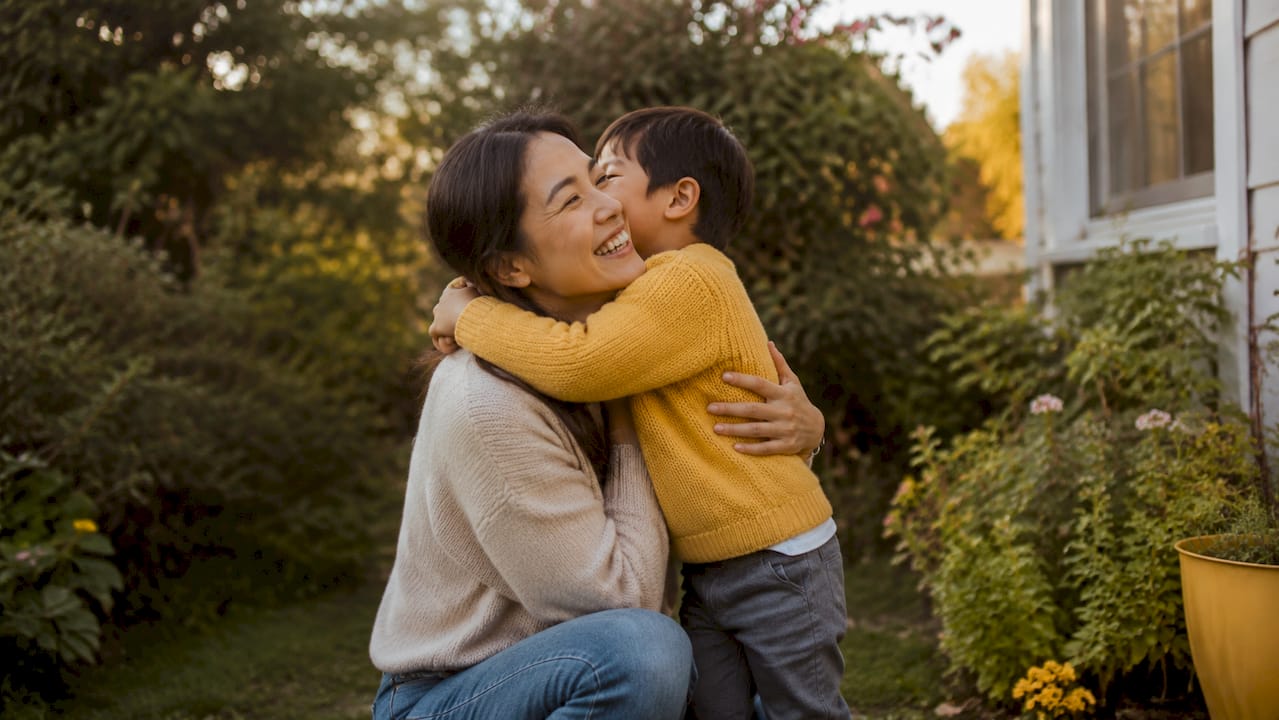
10 daily family rituals you can start today
1. The morning greeting phrase
Choose a short, specific phrase or gesture that opens the day together. “Good morning, sunshine squad” or a three-tap shoulder squeeze. The content matters less than the consistency. Children who begin the day with a predictable, warm exchange carry that emotional security into school and social situations.
2. The afternoon snack check-in
Replace passive screen time during the after-school snack with one simple question: “What was the weirdest thing that happened today?” or “Who made you laugh?” Childhood.live research shows that replacing screen time with focused interaction during natural pause points cuts household tension and improves bonding. Keep it light. This is not a debrief. It is a conversation.
3. The Rose, Thorn, Bud dinner round
At dinner, each person shares one rose (something good), one thorn (something hard), and one bud (something they are looking forward to). This structure gives children a framework for emotional vocabulary without pressure. Nicole Anson’s research confirms that consistent dinner questions build the habit of emotional reflection over time. Children begin scanning their day for positive moments because they know they will be asked.
4. The bedtime reflection question
Before lights out, ask one question: “What was your favourite moment today?” or “What are you proud of?” This takes under two minutes and creates a positive emotional close to the day. It also gives you genuine insight into what your child values, which shifts as they grow.
5. The tech-free 15 minutes after dinner
Designate the 15 minutes after dinner as phone-free family time. No screens, no background television. Use it for a card game, a puzzle, or simply sitting together. The activity is secondary. The undivided presence is the ritual. Peacefully Proven notes that shared meals with minimal phones improve family atmosphere even without structured activity.
Pro Tip: Keep a small basket of low-prep games near the dinner table so the transition to tech-free time requires zero decision-making.
6. The family handshake or song
Create a handshake or a short song together. Let the children design it. This becomes a private family language, something that belongs only to you. It can open the school run, close a bedtime, or mark a moment of celebration. The sillier, the better. Laughter is the fastest route to connection.
7. The shared task ritual
Turn a daily chore into a ritual by adding a consistent emotional element. Folding laundry while listening to one song chosen by a different family member each day. Unloading the dishwasher while each person names one thing they appreciate about someone in the family. The task stays functional. The layer on top becomes meaningful.
8. The symbolic opening or closing
Light a small candle at dinner and blow it out together at the end of the meal. Make a simple toast with water glasses before eating. These symbolic acts signal that this time is different from the rest of the day. They create a psychological boundary around family time that children recognise and respond to.
9. The Sunday planning mini-ritual
Spend five minutes on Sunday evening looking at the week ahead together. Each person names one thing they are excited about and one thing they might need help with. This builds anticipation, normalises asking for support, and gives children a sense of agency in family life. It also reduces Monday morning chaos because everyone knows what is coming.
10. The seasonal small celebration
Once a month or at the start of each season, mark the change with a small, repeatable act. The first hot chocolate of autumn. A spring walk to find the first flowers. These seasonal family traditions build anticipation across the year and give children a sense of time, memory, and belonging that extends beyond the daily.
Brief vs elaborate rituals: which actually lasts?
Parents often begin with ambitious plans. A weekly family meeting with an agenda. A monthly themed dinner night. A seasonal scrapbook. These ideas are genuinely lovely, and they collapse within weeks. Exceptional Wellness Counselling identifies ambition fatigue as the primary reason elaborate rituals fail. The more complex the ritual, the more variables can derail it.
Here is a direct comparison:
| Ritual type | Ease of maintenance | Emotional impact | Risk of drop-off |
|---|---|---|---|
| Micro-ritual (under 10 min, daily) | High | Consistent, cumulative | Low |
| Weekly themed activity | Moderate | High when it happens | Moderate to high |
| Monthly or seasonal tradition | Low effort per occurrence | Strong for milestones | Low if kept simple |
| Elaborate weekly ritual | Low | Inconsistent | Very high |
The pattern is clear. Daily simplicity builds the emotional foundation. Occasional elaborate traditions mark milestones and create memories. The mistake is trying to use elaborate rituals as the primary connection strategy. Start with micro-rituals and layer in seasonal traditions once the daily habits are solid.
How to involve children in designing your family rituals
Children who help create rituals treat them as their own rather than as something imposed on them. Childhood.live research confirms that child involvement in ritual design increases engagement and reduces resistance. The practical application is straightforward.
- Let children name the ritual. “The Sunshine Round” or “The Thorn Club” carries more weight than “our dinner chat.”
- Give children rotating choices within the ritual. Who picks the song this week? Who asks the question tonight?
- Ask children to modify rituals that feel stale. “Should we change the question we ask at bedtime?” This signals that their opinion shapes family life.
- Use age-appropriate variations. A four-year-old’s version of the Rose, Thorn, Bud ritual is “something happy, something hard, something exciting.” A twelve-year-old’s version can go much deeper.
- Celebrate when a child invents a new ritual element. If your child starts adding a secret knock to the bedtime routine, adopt it officially.
The result is not just higher participation. Children who co-create family rituals develop a stronger sense of family identity. The ritual becomes a marker of who your family is, not just what your family does.
Adapting rituals as your children grow
A ritual that works beautifully with a five-year-old will feel awkward with a thirteen-year-old. That is not failure. That is development. The goal is to evolve the ritual, not abandon connection.
- Simplify for toddlers, deepen for teens. Bedtime questions can shift from “What made you smile?” to “What is something you are still figuring out?”
- Replace without guilt. Nicole Anson is direct: a ritual that feels forced should be changed or dropped. Forcing a dead ritual teaches children that family connection is an obligation, not a gift.
- Keep rituals separate from discipline. As children enter adolescence, the temptation to use ritual moments for correction increases. Resist it. The ritual’s value depends entirely on its emotional safety.
- Schedule a family check-in once or twice a year. Ask everyone which rituals they still enjoy and which feel outdated. This keeps the practice alive and relevant.
- Carry the spirit, not the script. The specific act matters less than the consistent intention behind it. A family that has always shared a morning phrase can shift that phrase as children grow, and the connection remains.
For families who enjoy the outdoors, rainy day activities can become seasonal ritual anchors that evolve naturally with children’s interests and ages.
Key takeaways
Daily family rituals work because they are brief, consistent, and emotionally meaningful, not because they are elaborate or time-consuming.
| Point | Details |
|---|---|
| Keep rituals under 10 minutes | Short rituals anchored to existing routines are the most sustainable and effective. |
| Involve children in design | Child ownership of rituals increases participation and builds shared family identity. |
| Prioritise daily over elaborate | Micro-rituals build cumulative connection; complex weekly rituals are prone to drop-off. |
| Adapt without guilt | Rituals should evolve with children’s ages and be dropped or changed when they feel forced. |
| Connection before correction | Never use ritual moments for behaviour management; emotional safety is the ritual’s entire value. |
Why I stopped overcomplicating our family rituals
I spent a long time believing that meaningful family time required planning. A proper activity, a clear purpose, enough energy at the end of the day to make it count. What I actually found was that the moments my children remember are not the elaborate ones. They are the small, repeated ones. The specific way we say goodnight. The question we ask at dinner that has not changed in three years. The handshake my daughter invented when she was six that we still use now she is nine.
What shifted for me was accepting that connection does not require performance. The ritual does not need to be impressive. It needs to be present. When I stopped treating family rituals as something to achieve and started treating them as something to inhabit, the friction in our household dropped noticeably. Less resistance at bedtime. More spontaneous conversation at dinner. Children who feel consistently seen do not need to work as hard for attention in other ways.
The one principle I return to constantly is connection before correction. The moment a ritual becomes a vehicle for addressing behaviour, it loses its power. Children feel the shift immediately. Keep the ritual clean. Keep it warm. Let it be the one part of the day that belongs entirely to belonging.
— ALAIN
How Thezoofamily helps you build lasting family moments
Thezoofamily was built around one conviction: that the best memories children carry into adulthood come from shared moments of curiosity, play, and presence. The kids’ cameras, walkie-talkies, and binoculars Thezoofamily designs are not just toys. They are tools for the kind of creative family bonding that turns an ordinary afternoon into a ritual worth repeating. Every camera sold plants a tree, because Thezoofamily believes the natural world is one of the richest backdrops for family connection. Explore the full range of ideas, activities, and products at Thezoofamily and find the tools that fit your family’s daily rhythm.
FAQ
What is the difference between a routine and a ritual?
A routine is a repeated action done for function. A ritual is a repeated action infused with emotional meaning, such as a specific phrase, symbol, or shared intention. The structure can be identical; the intention is what differs.
How long should a daily family ritual take?
Ten minutes or fewer is the target for daily rituals. Research from Nicole Anson confirms that micro-moments under 10 minutes, anchored to existing routines, are the most sustainable and effective for building family connection.
How do I get my children to participate in family rituals?
Let children name or help design the ritual. Childhood.live research shows that child involvement in ritual creation significantly increases participation and reduces resistance, because ownership converts obligation into identity.
When should I change or drop a family ritual?
Change or drop a ritual when it consistently feels forced or meets resistance. Nicole Anson advises that adapting or replacing rituals without guilt is healthy, and that a ritual which has become a chore no longer serves its purpose.
Can pets be part of family rituals?
Pets can anchor rituals naturally, from a morning walk to an evening feeding routine shared with children. Families who integrate pets into daily bonding often find that animal care becomes one of the most consistent and emotionally resonant rituals in the household.