

Over 80 percent of british parents agree that nurturing creativity gives children a lasting advantage in life. Kids naturally see the world in fresh and imaginative ways, yet many adults overlook how these creative sparks shape learning, social skills, and emotional growth. Understanding what fuels natural creativity empowers families to support confident, original thinkers ready for tomorrow’s challenges.
Table of Contents
- Defining Natural Creativity In Children
- Key Benefits Of Creative Development
- Nature-Based Activities That Spark Ideas
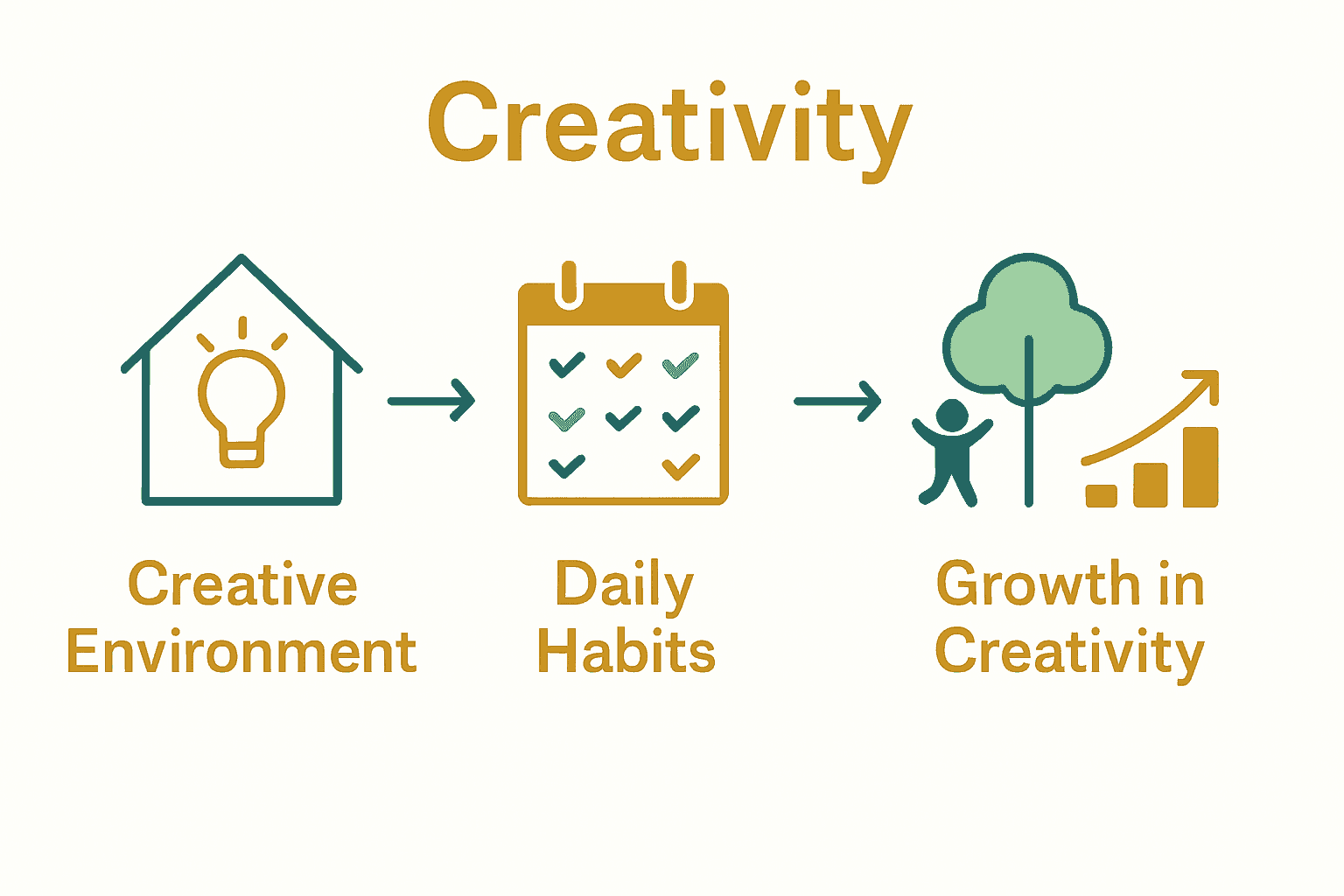
- Daily Habits For Nurturing Creativity
- Mistakes To Avoid When Encouraging Creativity
Key Takeaways
| Point | Details |
|---|---|
| Encouraging Natural Creativity | Foster a supportive environment that values exploration, curiosity, and open-ended play to nurture children’s innate creative potential. |
| Significance of Creative Development | Engaging in creative activities enhances children’s cognitive, emotional, and social skills, laying the groundwork for future academic success and resilience. |
| Leveraging Nature for Imaginative Play | Outdoor exploration offers rich resources for creative expression, stimulating children’s imagination and critical thinking through interaction with natural materials. |
| Daily Creative Habits | Incorporate consistent creative rituals into family routines to cultivate creativity, such as storytelling during meals and encouraging unstructured play. |
Defining Natural Creativity in Children
Natural creativity represents a child’s extraordinary capacity to perceive and interact with the world through unique, imaginative lenses. According to ccrnj, children are intrinsically creative beings who view their environment with fresh perspectives, expressing themselves through diverse channels like art, music, language, and fantasy play.
Children’s creativity emerges as an organic process of exploration and discovery. en highlights that play is fundamentally interconnected with learning, serving as a powerful mechanism through which young minds develop problem-solving skills, acquire language, and cultivate social understanding. By actively engaging with their surroundings, children transform ordinary moments into opportunities for imaginative expression.
The essence of natural creativity lies not in producing masterpieces, but in the uninhibited approach children take towards understanding their world. It manifests through spontaneous storytelling, inventive problem-solving, and the ability to see possibilities where adults might see limitations. Whether constructing elaborate narratives with toy animals, transforming cardboard boxes into magical vehicles, or creating intricate drawings that defy conventional representation, children demonstrate an remarkable capacity for original thinking that transcends traditional boundaries.
Encouraging this innate creative potential requires a supportive environment that values curiosity, tolerates experimentation, and provides open-ended opportunities for self-expression. Parents play a crucial role in nurturing this creative spark by offering materials, time, and space for unstructured play, asking open-ended questions, and celebrating the process of creativity rather than focusing solely on the end result. When children feel secure in their exploratory impulses, their natural creativity can flourish without constraint.
Learn more about supporting your child’s imaginative development in our guide on benefits of imaginative play.
Key Benefits of Creative Development
Creative development offers profound advantages that extend far beyond artistic expression, fundamentally shaping a child’s cognitive, emotional, and social growth. According to orchidsinternationalschool, creative engagement significantly boosts emotional resilience, self-esteem, problem-solving capabilities, and concentration, ultimately contributing to comprehensive well-being and academic success.
Children who engage in creative activities develop critical cognitive skills that become foundational for future learning. Through imaginative play and expressive pursuits, they learn to think flexibly, approach challenges from multiple perspectives, and develop innovative solutions. These skills are not confined to artistic domains but translate directly into academic and real-world problem-solving scenarios, enabling children to become adaptable and resourceful learners.
Emotional intelligence emerges as another crucial benefit of creative development. By exploring different modes of expression, children learn to understand and communicate complex feelings, develop empathy, and build stronger interpersonal connections. Creative activities provide safe spaces for emotional exploration, allowing children to process experiences, manage stress, and build psychological resilience in a supportive, non-judgmental environment.
Moreover, creativity nurtures intrinsic motivation and confidence. When children experience the joy of creating something unique, they develop a sense of personal agency and self-worth. This internal validation becomes a powerful driver for future learning and personal growth, encouraging them to take intellectual risks, embrace challenges, and maintain a positive attitude towards learning.
Learn more about supporting your child’s developmental journey in our guide on making learning fun.
Nature-Based Activities That Spark Ideas
Nature offers an extraordinary classroom for nurturing children’s creativity, providing rich, multisensory experiences that stimulate imagination and learning. According to pepperpot-nursery, engaging in creative play through exploration and interaction with natural environments stimulates cognitive development, problem-solving abilities, and critical thinking skills.
Outdoor exploration presents numerous opportunities for imaginative discovery. Children can transform simple natural objects like leaves, stones, and branches into storytelling props, art materials, or construction elements. By collecting unique rocks, creating leaf rubbings, building miniature landscapes, or designing nature-inspired sculptures, kids learn to see potential and beauty in ordinary materials. en confirms that through such learning-based play, children actively explore their environment, developing crucial problem-solving and social skills.
Seasonal nature activities provide dynamic platforms for creativity. During autumn, children might collect fallen leaves for collage projects, create leaf prints, or design woodland creature habitats. Winter offers opportunities for snow sculpture, tracking animal prints, or constructing intricate ice decorations. Spring invites seed planting, garden design, and observational drawing of emerging plants, while summer encourages butterfly catching, rock painting, and outdoor storytelling sessions.
Parents can further enhance these experiences by asking open-ended questions that provoke curiosity and deeper observation. Prompts like “What story might this pinecone tell?” or “How could we use these twigs to build something interesting?” transform simple nature walks into rich creative adventures. The key is maintaining a sense of wonder, allowing children to lead their explorations and interpret their discoveries through their unique perspectives.

Discover more exciting ways to make learning an adventure in our photography scavenger hunts guide.
Daily Habits for Nurturing Creativity
Cultivating creativity requires consistent, intentional practices integrated seamlessly into everyday family life. According to lingokids, engaging children in creative arts daily offers remarkable benefits, enhancing fine motor skills, academic performance, language development, and emotional well-being.
Establishing daily creative rituals transforms ordinary moments into opportunities for imaginative exploration. Simple practices like dedicating 15-20 minutes each evening to unstructured drawing, storytelling, or imaginative play can significantly stimulate creative thinking. Encourage children to experiment without judgment, providing open-ended materials like blank paper, colorful markers, building blocks, or recyclable craft supplies that invite unconventional use and innovative thinking.
Mealtime and bedtime present unique opportunities for creativity. During dinner, introduce storytelling games where each family member contributes a sentence to an evolving narrative, fostering collaborative imagination. Before bedtime, replace traditional reading with collaborative story creation, where parents and children take turns inventing characters, settings, and plot twists. These interactive experiences not only nurture creativity but also strengthen family bonds and communication skills.
Technology and screen time can also be reimagined as creative platforms when approached thoughtfully. Instead of passive consumption, encourage children to create digital art, compose simple music, design virtual worlds, or document their experiences through photography. The key is maintaining a balance, using digital tools as creative instruments rather than entertainment substitutes. Parents should actively participate, demonstrating that creativity is a lifelong journey of exploration and joy.
Learn more about supporting your child’s developmental journey in our guide on making learning fun.
Mistakes to Avoid When Encouraging Creativity
Parents often unknowingly create barriers that can inadvertently suppress their children’s creative potential. According to tutordoctor, over-structuring activities can critically stifle creativity; allowing children genuine freedom to explore and express themselves is fundamental to fostering confidence and developing critical thinking skills.
One significant creative roadblock emerges when parents become overly focused on perfection or predetermined outcomes. Children need space to experiment, make mistakes, and discover unique solutions without constant correction or judgment. When every art project becomes a technical exercise or every story must follow a specific narrative structure, children learn to fear creativity rather than embrace it. Genuine creative expression requires permission to be messy, unpredictable, and wonderfully imperfect.
Another common mistake is neglecting creative development, which c4l warns can significantly hinder problem-solving and critical thinking skills essential for academic success. Parents sometimes prioritize structured learning and academic achievements over imaginative exploration, inadvertently sending a message that creativity is less valuable than traditional educational metrics. In reality, creative thinking is a cornerstone of innovation, adaptability, and intellectual growth.
Additionally, comparing children’s creative outputs or establishing competitive frameworks can be deeply damaging. Each child’s creative journey is unique, and creativity isn’t about producing museum-worthy artwork or writing prize-winning stories. It’s about self-expression, exploration, and joy. Parents should focus on celebrating individual effort, encouraging experimentation, and demonstrating that creativity is a process of continuous learning and discovery, not a competition to be won.
Discover more insights about supporting your child’s developmental journey in our guide on making learning fun.
Unlock Your Child’s Natural Creativity with The Zoofamily
Is your child ready to explore the world around them in new and imaginative ways? The article outlines common challenges parents face such as over-structuring activities, limiting unstructured play, and missed opportunities to connect creativity with nature. We understand how important it is to provide children with tools that inspire curiosity and allow creativity to flourish freely while discovering natural beauty.
At The Zoofamily, we have created more than just the best kids’ cameras, walkie-talkies, and binoculars. Our products are designed with animal references to spark children’s interest in nature and encourage exploration that ties perfectly into the principles of natural creativity discussed. Plus for every camera sold, we plant a tree helping to ensure a thriving planet for generations to come. Begin cultivating your child’s imaginative development today by visiting The Zoofamily and discover ways to make learning an adventure with tools that nurture creativity and connection to the environment. For more inspiration on boosting imaginative play and making learning fun, explore our guide on benefits of imaginative play and photography scavenger hunts guide. Take the first step now to empower your child’s creative journey naturally.
Frequently Asked Questions
How can I encourage my child’s natural creativity?
To foster your child’s natural creativity, provide them with open-ended materials, ample time, and a safe space for unstructured play. Encourage exploration and experimentation, allowing them to express their ideas without fear of judgment.
What are the benefits of nurturing creativity in children?
Nurturing creativity in children enhances their cognitive skills, emotional intelligence, and problem-solving abilities. It promotes self-esteem, resilience, and a love for learning, which translates into academic success and better interpersonal relationships.
How do nature-based activities stimulate creativity in children?
Nature-based activities engage children’s senses and imagination, allowing them to interact with their environment. Collecting natural materials and using them in creative projects helps children see beauty and potential in the ordinary, fostering innovative thinking.
What daily habits can help develop my child’s creativity?
Incorporate daily creative rituals, such as dedicated time for drawing or storytelling. Engage in collaborative story creation during mealtimes or bedtime. Balancing technology use by encouraging digital creativity can also enhance their imaginative skills.
Recommended
- Making Learning Fun: Engaging Activities for Your Kids – The Zoofamily
- Making Learning Fun: Engaging Activities for Your Kids – The Zoofamily
- Childhood Brain Development: A Guide for Modern European Mums – The Zoofamily
- Understanding the Benefits of Imaginative Play – The Zoofamily
- How Toys Inspire Creativity: Complete Guide for Parents – Learning Bugs
- Wie funktioniert kindliche Fantasie? Kompletter Eltern-Guide – Edory AI – Edukative Kindergeschichten