

Most british parents are surprised to learn that over 60 percent choose kids’ cameras based on durability rather than advanced features. Choosing the right camera shapes a child’s first experiences with technology, creativity, and storytelling. This guide breaks down what defines a kids’ camera, clears up common myths, and highlights what matters most so british families can confidently support young imaginations behind the lens.
Table of Contents
- Kids’ Cameras Defined And Common Misconceptions
- Types Of Children’s Cameras And Key Differences
- Encouraging Creativity And Real-World Exploration
- How Cameras Promote Connection With Nature
- Safety, Privacy, And Responsible Camera Use
- Choosing The Right Camera For Your Child
Key Takeaways
| Point | Details |
|---|---|
| Kids’ Cameras Encourage Exploration | Designed for durability and user-friendliness, kids’ cameras enable children to explore their creativity and the world around them without the pressures of technical perfection. |
| Diverse Types for Different Ages | Cameras are tailored for various age groups, with options ranging from simple point-and-shoot models for young children to advanced compact cameras for teens, catering to different developmental stages. |
| Skills Development through Photography | Engaging with cameras helps children enhance observational and storytelling skills, boosting their confidence and fostering a deeper appreciation for their environment. |
| Importance of Responsible Use | Parents should educate children on responsible camera use, including privacy considerations and the importance of consent, to promote ethical photographic practices. |
Kids’ Cameras Defined and Common Misconceptions
A kids’ camera is a specialised photographic device designed specifically for children, offering simplified controls, robust construction, and child-friendly features that make capturing memories both accessible and enjoyable. Unlike standard adult cameras, these devices are engineered to withstand drops, resist moisture, and provide intuitive interfaces that encourage young photographers to explore their creativity.
Many parents harbour misconceptions about children’s photography equipment, believing that sophisticated technology is necessary for meaningful image creation. However, photography for children is more about exploration and learning than technical perfection. Young photographers benefit most from cameras that spark curiosity, enable easy use, and withstand typical childhood adventures.
The primary characteristics of quality kids’ cameras include durability, simple button layouts, shock-resistant exterior materials, and age-appropriate resolution capabilities. Some key features parents should consider are:
- Lightweight design
- Substantial rubber or silicone protective casing
- Large, clearly marked buttons
- Basic menu systems
- Moderate megapixel count (sufficient for childhood memories)
- Built-in safety features like wrist straps
Pro Tip - Camera Selection: Choose a camera that feels comfortable in your child’s hands and matches their current motor skill level, prioritising fun and ease of use over technical sophistication.
Common misconceptions often revolve around image quality and cost. Parents mistakenly assume children’s cameras must be expensive or produce professional-grade photographs. In reality, these devices are tools for developing visual storytelling skills, encouraging outdoor exploration, and building confidence through creative expression.
Types of Children’s Cameras and Key Differences
Children’s cameras represent a diverse range of photographic devices tailored to different age groups, skill levels, and intended uses. Comparing different camera models reveals significant variations in design, functionality, and learning potential for young photographers.
Basically, children’s cameras can be categorised into three primary types:
-
Entry-level Point-and-Shoot Cameras: Designed for children aged 4-7, featuring extremely simple controls, chunky buttons, and robust plastic exteriors. These cameras prioritise durability and ease of use over image quality.
-
Intermediate Digital Cameras: Suitable for children aged 8-12, these devices offer more advanced features like basic zoom capabilities, modest resolution (around 5-8 megapixels), and slightly more sophisticated menu systems.
-
Advanced Compact Digital Cameras: Targeted at older children and teenagers, these cameras provide near-professional features, including better lens quality, higher resolution sensors, and more complex photographic controls.
Key differences between these camera types extend beyond mere technical specifications. Entry-level models focus on making photography a fun, tactile experience, while advanced models begin introducing more serious photographic concepts and techniques.
The selection process involves carefully matching the camera’s complexity to the child’s motor skills, curiosity level, and potential interest in visual storytelling. Factors like weight, grip size, button placement, and overall ergonomics play crucial roles in determining a child’s engagement with photography.
Pro Tip - Camera Matching: Observe your child’s current technological comfort and select a camera that feels like an exciting challenge rather than an insurmountable technical obstacle.
Parents should remember that the goal of a children’s camera transcends technical perfection. These devices are tools for developing creativity, encouraging outdoor exploration, and providing a unique medium for self-expression.
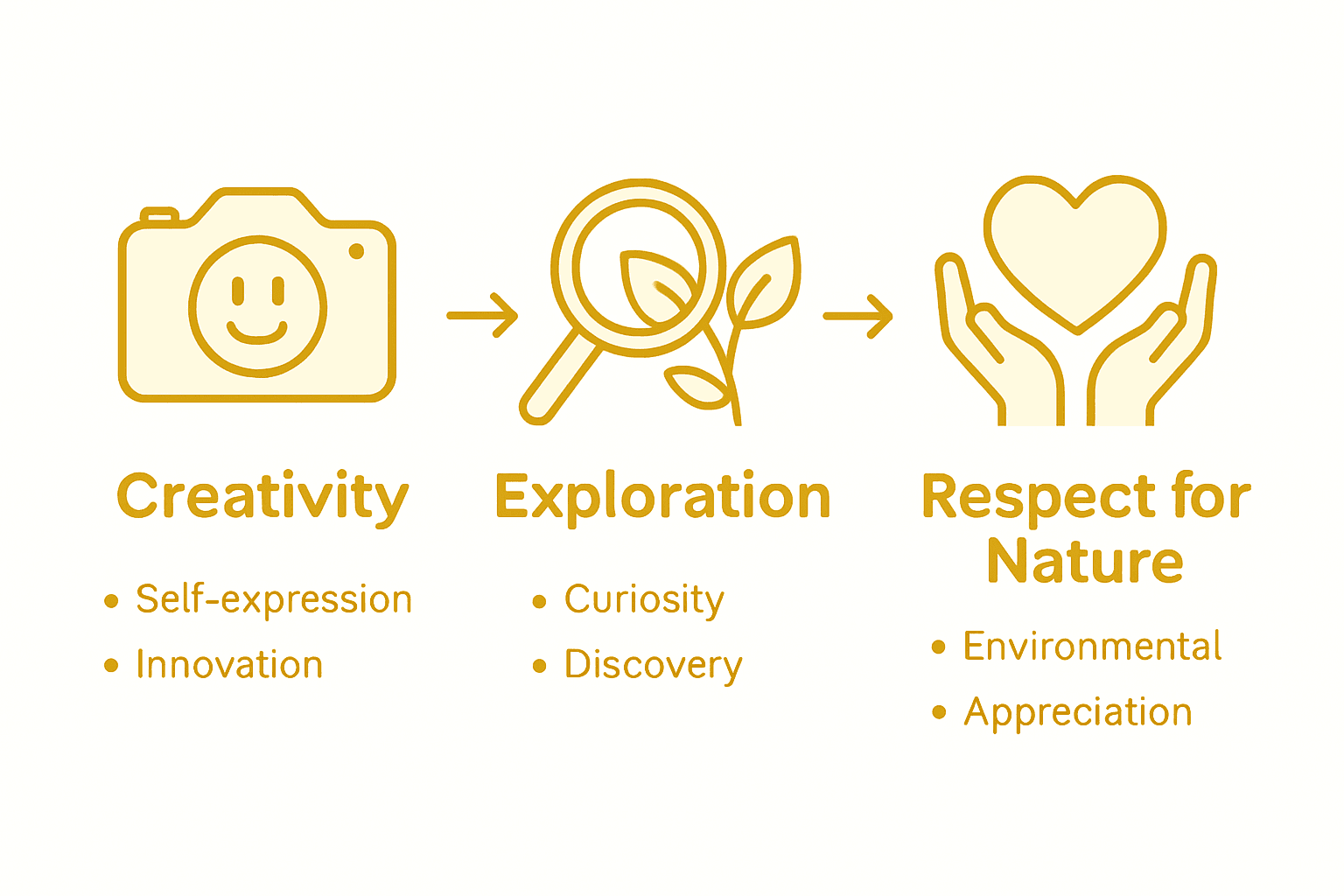
Here’s a summary comparing the three main types of children’s cameras and their ideal users:
| Camera Type | Ideal Age Range | Typical Features | Best For |
|---|---|---|---|
| Entry-level Point-and-Shoot | 4–7 years | Simple controls, robust body | First experiences, fun snaps |
| Intermediate Digital Camera | 8–12 years | Basic zoom, modest resolution | Developing interest, learning |
| Advanced Compact Digital | 13+ years | High-quality lens, advanced controls | Creative teens, skill-building |
Encouraging Creativity and Real-World Exploration
Children’s cameras serve as powerful tools for nurturing creativity and encouraging active exploration of the natural world. Engaging activities that stimulate imaginative play demonstrate how photography can transform a child’s perception of their environment, turning ordinary moments into extraordinary visual narratives.
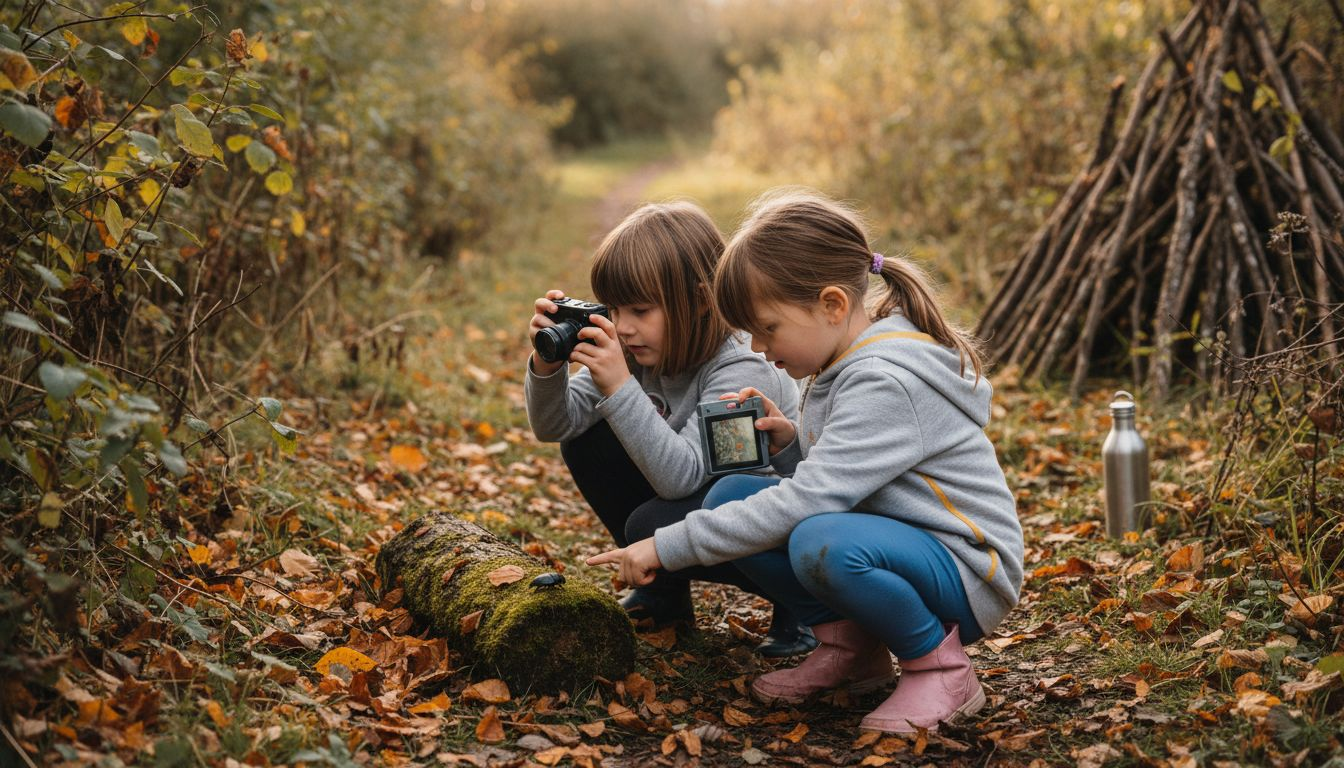
The process of photographing the world around them helps children develop critical skills beyond mere technical proficiency. By framing landscapes, capturing wildlife, or documenting family adventures, children learn to observe details, understand composition, and express their unique perspectives. Making learning fun through interactive exploration becomes a natural outcome of providing children with cameras that inspire curiosity.
Key developmental benefits of real-world photographic exploration include:
- Enhanced observational skills
- Improved spatial awareness
- Increased environmental consciousness
- Development of storytelling capabilities
- Boost in self-confidence
- Cultivation of patience and focus
Children who engage with photography as a medium of exploration learn to see the world differently. They begin to notice intricate textures, subtle colour variations, and unique perspectives that adults might overlook. This heightened awareness extends beyond photography, contributing to a more mindful and engaged approach to learning and experiencing their surroundings.
Pro Tip - Exploration Challenge: Create weekly photography missions that encourage children to capture something unexpected in their environment, transforming ordinary spaces into exciting visual discovery zones.
Ultimately, kids’ cameras are more than just devices for taking pictures. They are passports to creativity, tools for understanding the world, and catalysts for developing a lifelong appreciation for visual storytelling and environmental observation.
The following table outlines how children’s photography develops valuable skills beyond taking pictures:
| Skill Developed | Real-World Application | Lifelong Benefit |
|---|---|---|
| Observation | Noticing details outdoors | Enhanced awareness and mindfulness |
| Storytelling | Creating photo essays | Improved communication skills |
| Patience | Waiting for the right moment | Greater resilience and focus |
| Environmental Care | Documenting nature and wildlife | Stronger ecological responsibility |
How Cameras Promote Connection with Nature
Nature photography transforms children’s interactions with the natural environment from passive observation to active engagement. Exploring cameras designed for experiential learning enables children to develop a profound understanding of ecological systems, wildlife, and environmental dynamics through a unique visual medium.
When children use cameras to document their outdoor experiences, they become more than casual observers. They transform into visual storytellers, capturing intricate details of natural landscapes that might otherwise go unnoticed. Understanding the positive impact of nature interactions reveals how photographic exploration can deepen environmental awareness and create meaningful connections with the natural world.
The process of nature photography for children involves several critical developmental stages:
- Developing keen observational skills
- Learning to appreciate environmental complexity
- Understanding ecosystem interdependencies
- Cultivating patience and stillness
- Recognising biodiversity
- Building visual storytelling capabilities
Children who regularly photograph natural environments begin to see landscapes as living, dynamic systems rather than static backdrops. They learn to appreciate subtle changes in light, understand animal behaviours, and recognise the delicate balance of ecological interactions. This heightened awareness transforms casual outdoor experiences into profound learning opportunities.
Pro Tip - Nature Exploration: Create a weekly nature photography challenge that encourages children to document a specific aspect of their local environment, such as tracking seasonal changes or capturing wildlife interactions.
Ultimately, cameras become bridges connecting children to the natural world, teaching them to observe, respect, and protect the intricate ecosystems that sustain our planet.
Safety, Privacy, and Responsible Camera Use
Responsible camera use for children requires a delicate balance between encouraging creativity and maintaining appropriate boundaries. Understanding the essential differences between point-and-shoot cameras helps parents establish clear guidelines for safe and ethical photographic exploration.
Parents must proactively address privacy and safety considerations when introducing children to photography. This involves establishing clear rules about what can and cannot be photographed, teaching respect for personal boundaries, and ensuring children understand the importance of consent when capturing images of others. Digital literacy becomes crucial in helping children navigate the complex landscape of visual documentation.
Key principles of responsible camera use include:
- Always ask permission before photographing people
- Respect private spaces and personal boundaries
- Never share photographs without consent
- Understand the difference between public and private imagery
- Learn about digital privacy and online safety
- Recognise potential risks of inappropriate photography
Technology provides unique opportunities for learning, but it also requires careful guidance. Parents should engage in open conversations about responsible image creation, helping children develop critical thinking skills about visual representation and personal privacy. This approach transforms camera use from a potential risk into a valuable learning experience.
Pro Tip - Consent Education: Create a family agreement about photography rules, discussing why consent matters and how to respectfully interact with others when taking pictures.
Ultimately, teaching responsible camera use is about nurturing empathy, respect, and understanding in children’s interactions with the world around them.
Choosing the Right Camera for Your Child
Selecting the perfect camera for a child requires careful consideration of their age, developmental stage, and individual interests. Comprehensive camera guides for children highlight the importance of matching technological capabilities with a child’s unique learning potential.
Parents should consider several critical factors when evaluating children’s cameras:
- Age-appropriate complexity
- Durability and robust construction
- Intuitive user interface
- Battery life and charging options
- Size and weight
- Ease of transferring and storing images
- Built-in safety features
For younger children aged 4-8, simple point-and-shoot cameras with large buttons and minimal settings work best. As children grow, more sophisticated devices with additional features become appropriate. Advanced cameras for teenage photographers can introduce more complex photographic techniques and creative possibilities.
The ideal children’s camera should strike a delicate balance between being challenging enough to maintain interest and straightforward enough to prevent frustration. Ergonomic design, shock-resistant exteriors, and child-friendly colour schemes can transform a simple device into an exciting tool for creative exploration.
Pro Tip - Technology Matching: Observe your child’s current technological comfort level and select a camera that feels like an exciting challenge rather than an overwhelming technical obstacle.
Ultimately, the right camera is one that sparks curiosity, encourages creativity, and provides a comfortable gateway into the fascinating world of visual storytelling.
Inspire Creativity and Connect Your Child with Nature Today
Discover how kids’ cameras unlock creativity while fostering a deep connection with the natural world. This article highlights challenges such as choosing durable, age-appropriate cameras that encourage exploration, storytelling, and environmental awareness. It emphasises the importance of nurturing observational skills and responsible photography from an early age.
At The Zoofamily, we understand these goals and address them directly. Our specially designed kids’ cameras combine robust construction with fun animal-inspired designs to spark curiosity and make outdoor adventures unforgettable. Each camera sold also supports ecological restoration because for every purchase, we plant a tree — helping to preserve the very nature your child will explore.
Give your child the perfect gateway to creativity and nature with our thoughtfully crafted cameras. Visit The Zoofamily now to find the ideal camera that matches your child’s age and interest while contributing to a greener planet. Start your family’s exciting journey of discovery and responsibility today.
Frequently Asked Questions
What are the main benefits of kids’ cameras?
Kids’ cameras foster creativity, enhance observational skills, and promote a deeper connection with nature. They encourage children to explore their surroundings and develop visual storytelling abilities.
What age group is best suited for entry-level point-and-shoot cameras?
Entry-level point-and-shoot cameras are designed for children aged 4 to 7, offering simple controls and robust construction to ensure a fun experience as they begin to explore photography.
How can parents encourage their children to use cameras creatively?
Parents can create weekly photography challenges that inspire children to capture unexpected moments in their environment, transforming ordinary spaces into opportunities for imaginative exploration.
What should parents consider when selecting a camera for their child?
Parents should consider factors such as the child’s age, motor skills, the camera’s durability, user-friendliness, and whether the features match the child’s current level of interest and curiosity in photography.
Recommended
- Meilleurs gadgets plein air enfants – Comparatif 2025 – The Zoofamily
- Top caméras ludiques nature – Comparaison des 7 meilleures en 2025 – The Zoofamily
- 7 Tips for Exciting Photography Scavenger Hunts – The Zoofamily
- Meilleurs appareils photo pour enfants – Comparatif 2025 – The Zoofamily
- 7 Anwendungsbeispiele für Batterien im Alltag - accu.blog